
Introduction
Winter hits differently on the homestead — especially when you’re juggling goats, chickens, ducks, horses, and a million little chores that don’t slow down just because it’s cold.
But winter doesn’t have to feel chaotic. With the right routine, you can keep your animals healthy, your property running smoothly, and your future spring projects on track.
In this guide, I’m breaking down the essential winter homestead chores you should be doing right now, even if your setup is small, simple, or still evolving.
1. Check & Reinforce All Animal Shelters
- Inspect roofs for leaks or sagging from snow load
- Add windbreaks, plywood, or tarps to the windy side
- Check for drafts near the floor and around doors
- Ensure goats, chickens, and horses have a dry, safe, enclosed place to stand
- Patch any small openings where wind, snow, or predators might get in
Tip: Goats especially need dry bedding — wet + cold = sickness fast.
2. Deep Clean & Winterize Water Systems
- Scrub all buckets, troughs, and waterers before freezing weather hits
- Add water heaters (heated buckets, tank heaters, or de-icers)
- Prevent hose freezing by draining it fully after every use
- Keep backup water containers for power outages
Water is the #1 challenge on most winter homesteads.
3. Feed Adjustments for Winter
Winter requires more calories because animals burn extra energy to stay warm. Even a mild cold snap can cause livestock to lose weight quickly if their diet isn’t adjusted.
Cold weather also increases the need for constant access to forage, because the fermentation of hay in the rumen (for goats) and the hindgut (for horses) naturally produces heat. This is why winter feeding isn’t just about more food — it’s about the right kind of food.
For goats:
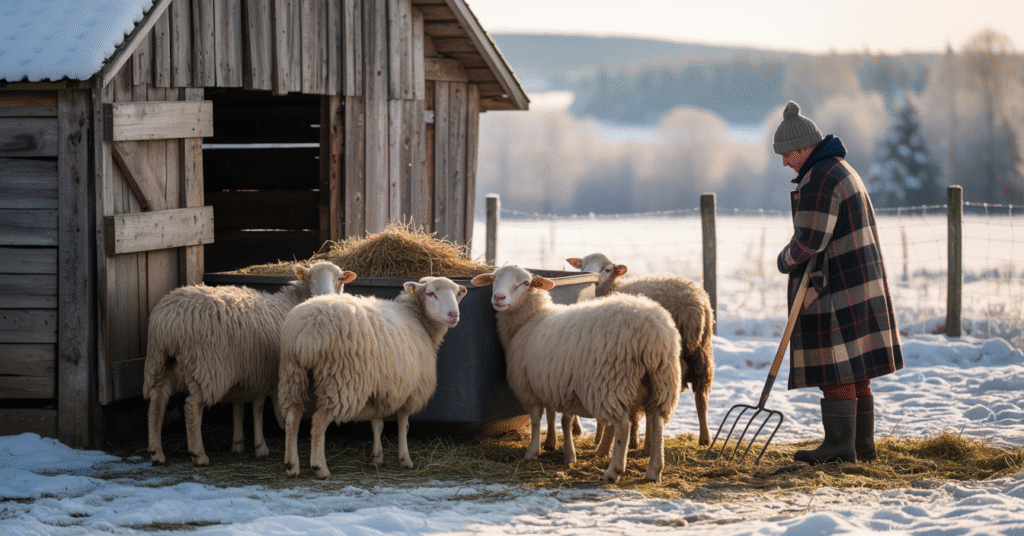
- Increase hay access (they generate body heat from constant nibbling)
- Provide free-choice minerals so their immune system stays strong
- Add a small amount of grain only if needed (pregnant does, thin goats, fast metabolisms)
Goats can drop weight FAST in winter, especially smaller breeds. Checking body condition weekly can prevent problems before they start.
For chickens:
- Offer higher-protein pellets (protein supports feather regrowth and warmth)
- Give cracked corn in the evening to raise body heat overnight
- Ensure constant access to dry feed
Cold temperatures + fewer daylight hours mean chickens naturally lay fewer eggs, but proper nutrition helps prevent a full production crash.
For horses:
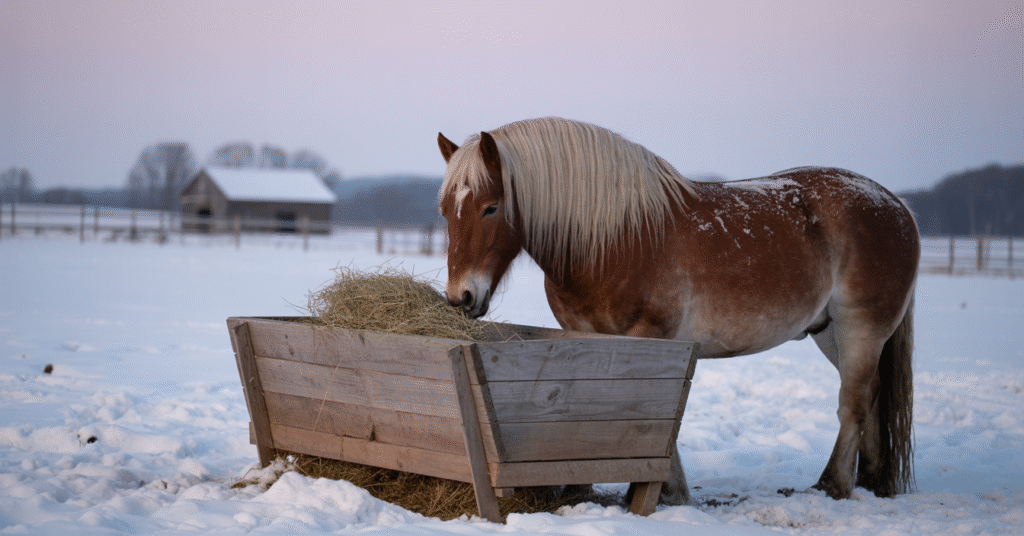
- Increase hay — forage generates heat better than grain
- Add extra hay if your horse is stalled more due to snow or ice
- Keep salt blocks available to encourage drinking
Horses burn more calories simply staying warm, so steady hay access keeps their digestion and body heat stable.
Winter requires more calories because animals burn extra energy to stay warm.
4. Bedding, Warmth & Draft Control
- Deep litter method works great for chickens
- Extra straw or shavings for goats
- Add extra bedding for horses, especially if confined more during storms
- Block drafts close to the ground where cold air settles
Warmth isn’t about insulation — it’s about staying dry.
5. Daily Ice + Snow Management
- Clear pathways to the barn, coop, and water stations
- Salt or sand the most-used walking areas
- Knock ice off gates so they don’t freeze shut
- Keep doors and latches clear to avoid breakage
A little daily work prevents huge headaches later.
6. Winter Garden Tasks
Even if everything looks “dead,” winter gardening tasks matter. Winter is when you protect your perennials, plan next year’s garden, and prevent losses from rodents or freeze-thaw cycles.
- Mulch garlic, strawberries, and perennial beds to insulate roots
- Protect young fruit trees with wraps or guards (rabbits LOVE bark in winter)
- Start planning next season’s garden layout and seed list
- Check stored produce (onions, potatoes, squash) weekly for soft spots
- Look for vole or mouse tunnels under the snow and set out deterrents early
Tip: Winter is also the BEST time to map the sun patterns on your homestead, since you can clearly see shadows from trees and buildings.
Even if everything looks “dead,” winter gardening tasks matter.
Note: what you’re able to do here will vary depending on your weather and location.
- Mulch garlic, strawberries, and perennial beds
- Protect young fruit trees with wraps or guards
- Start planning next season’s garden layout
- Check stored produce (onions, potatoes, squash) weekly

7. Barn & Coop Maintenance
- Remove old bedding and add fresh, dry layers
- Improve ventilation without creating drafts
- Check ammonia smell levels (especially in coops)
- Tighten screws, hinges, and latches before they freeze
Winter is when little problems become big problems.
8. Predator-Proofing
Winter predators get bold because food is scarce, and snow cover makes it easier for them to sneak up to barns and coops.
- Reinforce coop doors and nighttime locks so nothing can pry or wiggle in
- Add hardware cloth to weak spots — chicken wire is NOT predator-proof
- Check for tracks around your barn and coop (fox, raccoon, coyote, weasel)
- Ensure all animals are locked up securely before dark
- Use motion lights or cameras to monitor nighttime activity
Fresh snow is an excellent predator detector. You can often see exactly where something has been circling or testing your fencing.
Winter predators get bold because food is scarce.
- Reinforce coop doors and nighttime locks
- Add hardware cloth to weak spots
- Check for tracks around your barn and coop
- Ensure all animals are locked up securely before dark
Foxes, raccoons, and coyotes are more active in cold weather.
9. Homestead Safety Checklist
- Keep a shovel outside and inside every main building
- Stock up on batteries, propane, and emergency lighting, and make sure your winter livestock emergency kit is ready before you need it
- Make sure heated waterers are plugged into safe outlets
- Have halters readily accessible for livestock emergencies
- Keep backup feed in waterproof containers
Winter rewards preparation.
10. What’s Next?
Looking for more winter content? Here are some posts you’ll love next:


Post your Comment About This Product