
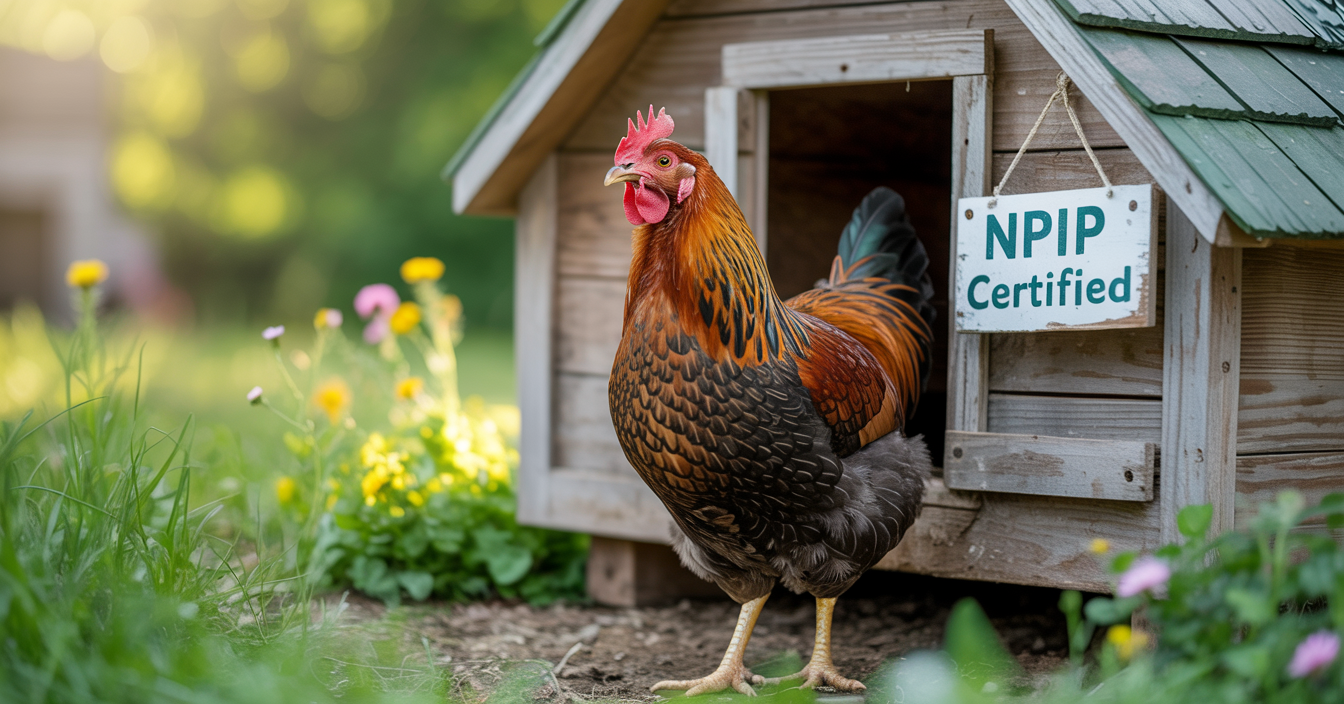
If you raise quail and plan to sell anything beyond eating eggs locally, you’ve probably heard about NPIP—and you’ve probably wondered if it’s actually worth the hassle.
Some people swear you need it.
Others insist it’s unnecessary for small flocks.
The truth? It depends on what you’re selling, who you’re selling to, and how far you want to scale.
This post breaks down what NPIP really is, when it matters, and when small quail keepers can safely skip it. If you’re still deciding how quail fits into your income plans, this pairs well with a broader look at how to make money with quail.
Note: this post is not to replace legal advice. Please check your local and federal regulations.
What Is NPIP?
NPIP stands for the National Poultry Improvement Plan (NPIP). It’s a voluntary disease‑testing and certification program coordinated at the federal level and administered through individual state agriculture departments.
Despite how official it sounds, NPIP is not a license to raise poultry and it is not a permit to farm. It does not regulate how you house, feed, or manage your birds.
At its core, NPIP exists to reduce the spread of serious poultry diseases when birds or eggs move between flocks, farms, and states.
For quail keepers, NPIP primarily focuses on testing for diseases such as:
- Pullorum‑Typhoid
- Avian Influenza (in certain states or when shipping across state lines)
When you are NPIP‑certified, it means:
- Your flock has been tested by an authorized NPIP tester
- The tested birds were negative for specific regulated diseases
- Your operation is issued a unique NPIP number
- You are legally eligible to ship qualifying poultry products where NPIP is required
What NPIP does not do:
- It does not inspect your cages, housing, or setup
- It does not dictate how you raise or breed your quail
- It does not limit flock size
- It does not give the government ongoing access to your property
For small quail flocks, NPIP is best thought of as a market‑access tool, not a management rulebook. Nothing about your day‑to‑day care changes before or after certification—the difference is in what selling options become legally and practically available to you.
NPIP certification reflects your flock’s health status at the time of testing, which is why renewal is required on a regular basis.
Why NPIP Exists (And Why Buyers Care)
NPIP isn’t about paperwork for the sake of paperwork.
It exists to:
- Prevent the spread of poultry diseases
- Protect commercial and small-scale flocks
- Create trust when birds or eggs move between farms
Buyers—especially experienced ones—care about NPIP because it reduces risk.
When NPIP Is Worth It (Even for Small Flocks)
NPIP is often framed as something only “big operations” need—but in reality, many small quail flocks benefit from it earlier than expected.
NPIP is worth serious consideration if any of the following apply to you.
Selling Hatching Eggs Across State Lines
If you’re selling hatching eggs at all, this topic ties closely into pricing, demand, and buyer expectations. You may also want to read how to sell quail hatching eggs successfully to understand why NPIP comes up so often in these conversations.
Federal law generally requires NPIP certification for interstate shipment of hatching eggs and live poultry.
If you want to ship:
- Hatching eggs
- Live quail
…NPIP is often non‑negotiable, even if you only ship occasionally.
Shipping without required certification can expose you to:
- Shipment seizure
- Forced destruction of birds or eggs
- Fines that can reach thousands of dollars per violation, depending on state and federal enforcement
Even if enforcement feels unlikely, penalties are steep enough that many small sellers choose NPIP simply as risk management.
Selling to Serious Breeders or Commercial Buyers
Many buyers will only purchase from NPIP‑certified flocks, regardless of size.
This commonly includes:
- Established breeders
- Hatcheries
- Commercial or semi‑commercial farms
For these buyers, NPIP isn’t optional—it’s a baseline requirement.
Without NPIP, you may:
- Lose sales entirely
- Be forced to sell at lower prices
- Be limited to casual buyers only
NPIP signals professionalism, biosecurity awareness, and lower risk.
Avoiding Fines, Penalties, and Legal Headaches
One of the least discussed benefits of NPIP is legal protection.
Selling or shipping poultry products without required certification can result in:
- Civil fines (often cited around $10,000–$25,000 in serious cases)
- Orders to stop sales immediately
- Confiscation of birds or eggs
- Loss of selling privileges on platforms or through carriers
Even if enforcement is inconsistent, being NPIP‑certified removes most of this risk.
Building a Long‑Term Quail Business
If your goal is to grow beyond casual, local sales, NPIP becomes a foundation rather than an add‑on.
It allows you to:
- Ship legally when opportunities arise
- Charge higher prices with confidence
- Work with repeat and professional buyers
- Avoid scrambling to “get compliant” later
Many quail keepers find it easier to get NPIP before they need it than after demand suddenly increases.
Sell to Serious Breeders or Commercial Buyers
Many buyers will only purchase from NPIP-certified flocks, regardless of size.
This includes:
- Established breeders
- Hatcheries
- Larger farms
NPIP signals professionalism and lowers buyer hesitation.
Build a Long-Term Quail Business
If your goal is to scale beyond casual local sales, NPIP becomes more valuable.
It allows you to:
- Charge higher prices
- Expand your customer base
- Avoid legal gray areas later
For many people, it’s easier to get NPIP early than scramble to add it later.
When NPIP Might NOT Be Necessary
NPIP is not always required for small quail flocks.
You may be able to skip it if you:
Only Sell Eating Eggs Locally
If your focus is strictly food eggs, NPIP may not be immediately necessary. For a deeper dive into what actually works at the local level, see how to sell quail eggs locally (even in saturated markets).
In many states, selling quail eating eggs directly to consumers does not require NPIP.
Local sales like:
- Farm pickup
- Roadside stands
- Farmers markets
…often fall under cottage food or direct-sale exemptions.
Always verify your local regulations.
Only Sell Live Birds In-State (Small Scale)
Some states allow in-state sales of live birds without NPIP, especially at small volumes.
However, this varies widely by state, and rules can change.
You’re Raising Quail for Personal Use Only
If you’re not selling birds or hatching eggs at all, NPIP provides little benefit.
The Real Pros and Cons of NPIP for Small Flocks
Pros
- Builds trust with buyers
- Expands where and how you can sell
- Makes shipping legal and simpler
- Positions you as a serious operation
Cons
- Requires testing and coordination
- Some paperwork involved
- Not always necessary for hyper-local sales
How NPIP Testing Usually Works
For most small quail flocks, NPIP testing is far more straightforward than people expect.
Here’s what the process usually looks like:
- You contact your state NPIP office or authorized tester
- A testing appointment is scheduled (either on-farm or at a clinic/event)
- A sample of birds is tested (initial certification often requires all adult birds)
- Blood samples are taken quickly and humanely
- Results are recorded and filed with the state
- Your NPIP number is issued once birds test negative
After initial certification, annual renewal usually requires testing only a percentage of the flock.
In many states, testing itself is free or very low cost, especially for small producers. The main investment is coordination and time, not money.
If you’re not sure who handles NPIP in your state, the official NPIP site maintains a directory of state agencies and contacts. You can find your state’s NPIP office here:
➡️ Official State NPIP Agencies & Contacts
Working directly with your state contact makes the process smoother and helps you understand any state‑specific requirements before you start selling or shipping.
Common NPIP Myths (That Confuse Quail Keepers)
Myth: NPIP covers your entire farm forever
Reality: NPIP reflects testing at a specific time and often must be renewed.
Myth: NPIP means zero disease risk
Reality: It reduces risk—it doesn’t eliminate it.
Myth: Small flocks don’t qualify
Reality: Small flocks can and do get NPIP.
So… Is NPIP Worth It for You?
Ask yourself:
- Do I want to ship eggs or birds?
- Do I want to sell to serious buyers?
- Do I plan to grow this beyond a hobby?
If you answer yes to any of those, NPIP is often worth it—even for small quail flocks.
If your sales stay local and small, you may not need it right away.
Final Thoughts
If you’re still in the planning stage, you may also find it helpful to read how to start a quail business from scratch to see where NPIP fits into the bigger picture.
NPIP isn’t about being “big” or “small.” It’s about what kind of business you’re building.
For some quail keepers, NPIP unlocks growth.
For others, it’s unnecessary overhead.
The key is understanding your goals first—then choosing the certification that supports them, not stresses you out.


Post your Comment About This Product