
Introduction
Pigs are amazing animals to raise, but they are also one of the biggest tests of your fencing.
A chicken might sneak through a gap. A goat might climb something ridiculous. But a pig? A pig will root, push, lean, lift, dig, and test every weak spot you thought was “probably fine.”
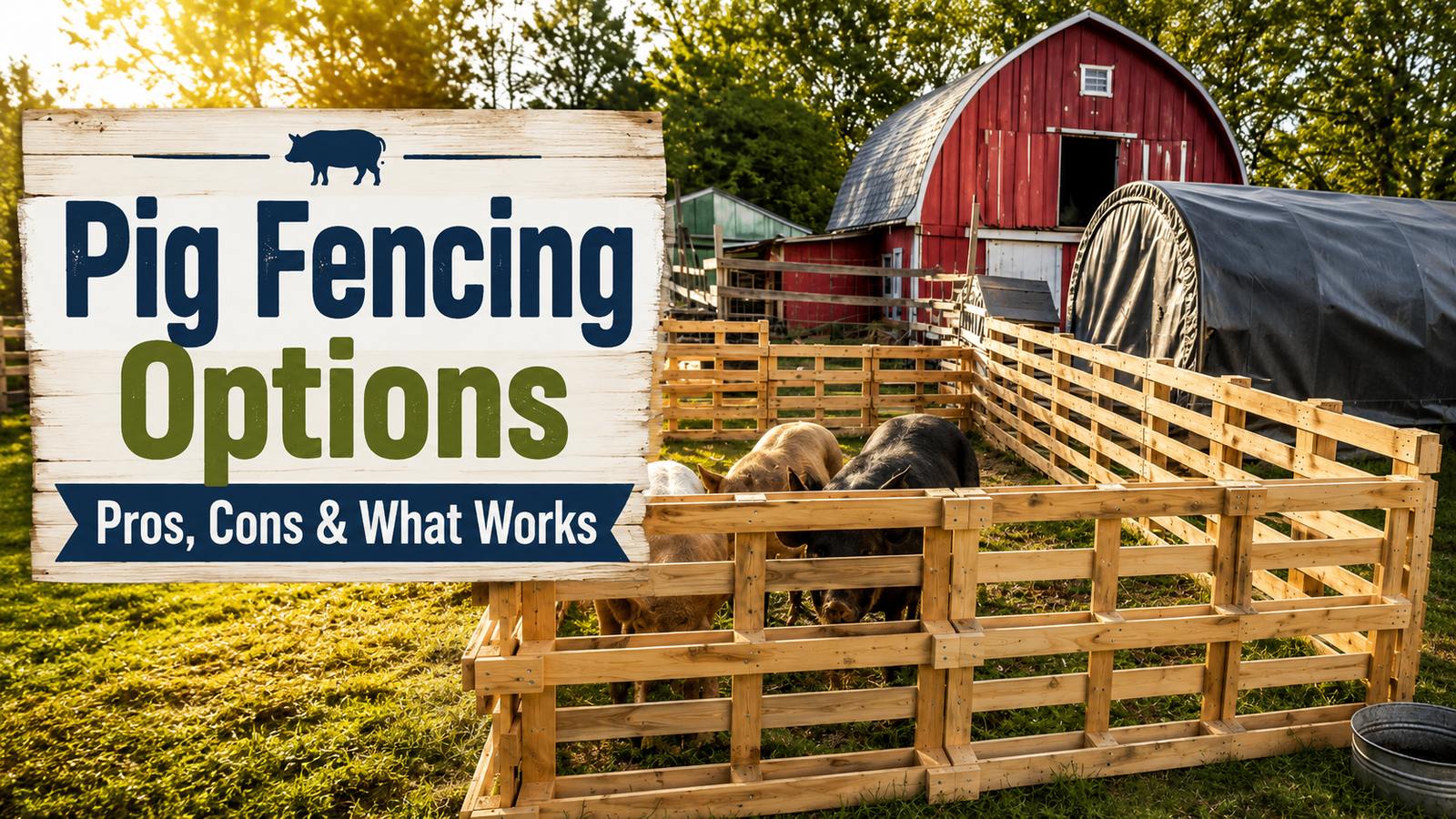
When we first set up our pig area, we used pallets for fencing. It was cheap, easy to find, and honestly? It held up for about three years. That is pretty impressive for something many people treat like a temporary fix.
But pallet fencing is only one option. Depending on your budget, your pigs’ size, your setup, and whether you need temporary or permanent fencing, there are several pig fencing options that can work.
In this post, we will go over the most common types of pig fencing, the pros and cons of each, and what I would consider before choosing a fence for pigs on a small homestead.
Affiliate Disclaimer: This post may contain affiliate links. This means I may earn a small commission if you purchase through my links, at no extra cost to you. I only recommend products and ideas that are helpful for homesteaders, backyard farmers, and small-scale livestock owners.
What Makes a Good Pig Fence?
Before choosing a pig fence, it helps to understand what pigs actually do to fencing.
Pigs are low to the ground, strong, and extremely curious. They use their noses like a tool. If there is a loose bottom edge, they may lift it. If there is soft dirt under the fence, they may root under it. If a post is weak, they may lean on it until it shifts.
A good pig fence should be:
- Strong enough to handle pressure
- Low enough to prevent pigs from rooting underneath
- Secure at the corners
- Safe with no sharp edges
- Appropriate for the size of the pig
- Easy enough for you to access for feeding, watering, and cleaning
The best pig fence is not always the most expensive one. It is the one that matches your setup and keeps your pigs where they belong.
Pallet Pig Fencing
Pallet fencing is one of the most budget-friendly pig fencing options, especially if you have access to free or cheap pallets.
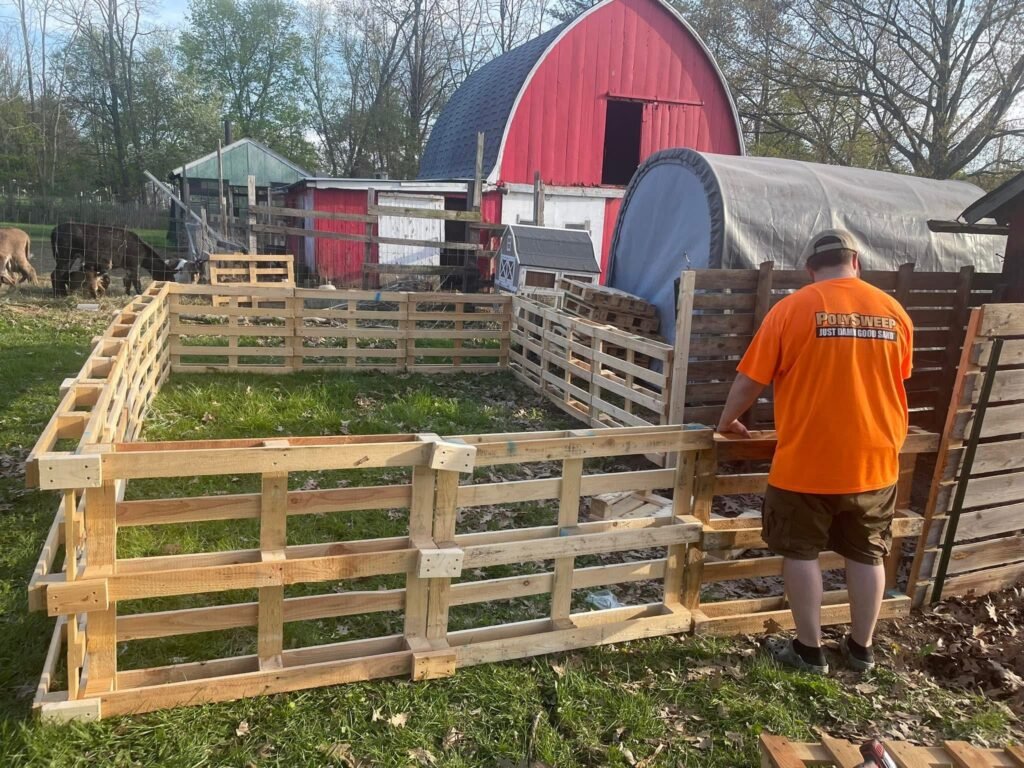
This is what we used for our pig fence, and it held up for three years. For a low-cost fencing option, that is not bad at all.
Pallets work well because they are sturdy, easy to line up, and create a solid visual barrier. Pigs are less likely to challenge a fence when they cannot see through it as easily. Pallets can also be attached to T-posts, wooden posts, or other supports to make the fence stronger.
Pros of Pallet Pig Fencing
Pallet fencing is very affordable. In many areas, you can find pallets for free or cheap, which makes this a great option if you are starting pigs on a budget.
It is also fairly easy to build with basic tools. You can stand the pallets upright, connect them together, and reinforce them with posts.
Another benefit is that pallet fencing creates a solid wall. This can help reduce visual distractions and make pigs feel more contained.
I also made a cheap DIY pig waterer, which you can see here
Cons of Pallet Pig Fencing
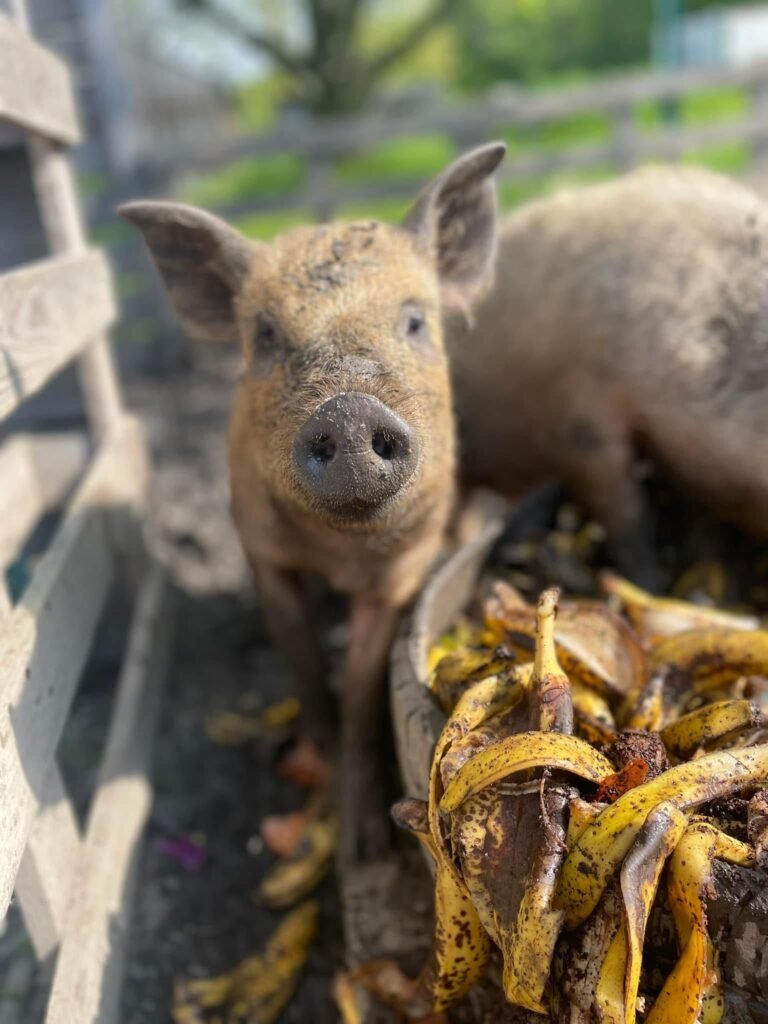
The biggest downside is that not all pallets are the same quality. Some are strong and heavy, while others are lightweight and weak.
Pallets can also rot over time, especially where they touch the ground. If your pig area gets muddy, the bottoms may break down faster.
Another issue is spacing. Some pallets have gaps large enough for small piglets to squeeze through or get stuck. You may need to add wire or boards to make the fence safer.
Best For
Pallet fencing is best for budget homesteads, small pig pens, feeder pigs, and people who already have access to free pallets.
Hog Panels
Hog panels are one of the most popular fencing choices for pigs. They are heavy-duty livestock panels with smaller openings near the bottom and larger openings toward the top.
They are usually made from welded wire and are stiff enough to stand up with strong posts.
Pros of Hog Panels
Hog panels are strong, durable, and designed for pigs. The smaller openings near the bottom help keep pigs contained better than cattle panels.
They are also easier to install than some permanent fencing options. You can attach them to T-posts or wooden posts and create a solid pen fairly quickly.
Hog panels also work well for gates, sorting areas, and smaller pig enclosures.
Cons of Hog Panels
The biggest downside is cost. Hog panels are more expensive than pallets or basic wire fencing.
They are also heavy and awkward to move. If you are building a large pig area, hauling and installing them can be a workout.
Hog panels may still need electric wire along the inside bottom if your pigs are especially determined rooters.
Best For
Hog panels are great for permanent pig pens, small breeding setups, feeder pigs, and areas where you need reliable containment.
Cattle Panels
Cattle panels are similar to hog panels, but they usually have larger openings. Many homesteaders already have cattle panels around because they are useful for many animals and projects.
They can work for pigs, but they are not always ideal by themselves.
Pros of Cattle Panels
Cattle panels are strong and widely available. They are also versatile, so you can reuse them later for goats, garden trellises, chicken runs, or other livestock projects.
They are easier to move than some permanent fencing options and can be used for temporary pens if properly secured.
Cons of Cattle Panels
The larger openings can be a problem, especially with piglets or smaller pigs. Young pigs may squeeze through, get their heads stuck, or push at the lower gaps.
Cattle panels also need strong posts. If they are not secured well, pigs may push the bottom out.
Best For
Cattle panels can work for larger pigs, temporary sorting areas, or pens where you add extra reinforcement along the bottom.
Electric Fence for Pigs
Electric fencing can be extremely effective for pigs when they are properly trained to it.
This can include electric wire, polywire, electric tape, or high-tensile electric fencing. The key is that pigs need to learn the fence before they are turned out into a large area.
Electric fence works as a psychological barrier. The pig learns, “Do not touch that.” Once trained, many pigs respect electric fencing very well.
Pros of Electric Fence
Electric fencing can be one of the most affordable ways to contain pigs over a larger area.
It is also great for rotational grazing, moving pigs through wooded areas, or letting pigs clear brushy spaces.
Electric fencing is flexible. You can move it, adjust it, and set up new areas without building a full permanent fence every time.
Cons of Electric Fence
Electric fencing is not foolproof if pigs are not trained.
If a pig runs through the fence before understanding it, the fence may not physically stop them. This is why training is so important.
Electric fence also requires maintenance. Grass, weeds, poor grounding, weak chargers, and dead batteries can all reduce the shock.
It may also be less reliable in very dry soil or very weedy areas unless you are checking it regularly.
Best For
Electric fencing is best for trained pigs, rotational grazing, pasture pigs, wooded areas, and homesteaders who want flexible fencing.
Woven Wire Fence
Woven wire is a more traditional livestock fencing option. It is flexible wire fencing that comes in rolls and is attached to posts.
It can work well for pigs, especially when combined with an electric wire along the inside bottom.
Pros of Woven Wire
Woven wire can cover a large area more affordably than panels. It is a good option for permanent or semi-permanent pig areas.
It is also easier to follow uneven ground than rigid panels.
When properly stretched and secured, woven wire can create a strong perimeter fence.
Cons of Woven Wire
The main issue is that pigs may push under it if the bottom is not secured. They may also root along the fence line and loosen it over time.
Woven wire usually needs good corner posts, strong bracing, and proper installation. If it is loose, pigs will take advantage of it.
For pigs, woven wire is often best with a hot wire placed low on the inside to keep them from rooting or leaning into the fence.
Best For
Woven wire is best for larger permanent pig areas, pasture perimeters, and homesteads that want a longer-term fencing solution.
Wooden Board Fence
A wooden board fence can look beautiful and feel very sturdy. It is often used for larger livestock, but it can work for pigs if it is built low and strong enough.
Pros of Wooden Board Fence
Wood fencing is strong, visible, and attractive. It creates a clear barrier, which can help animals understand where the fence is.
It can also be repaired board by board if something breaks.
A well-built wooden fence can last a long time if the posts and boards are treated or protected from rot.
Cons of Wooden Board Fence
Wood fencing can get expensive quickly. Lumber costs, posts, screws, gates, and time all add up.
Pigs may also root under the bottom board if it is too high off the ground. If the boards are spaced too far apart, small pigs may squeeze through.
Wood can also rot in muddy areas, especially if it sits close to the ground.
Best For
Wood fencing is best for visible permanent pens, barnyard areas, and homesteads that want a sturdy, attractive setup.
Chain Link Fence
Chain link fence can work for pigs in certain situations, especially if you already have an existing fenced area.
It is strong, visible, and can contain pigs if the bottom is secured well.
Pros of Chain Link Fence
Chain link is durable and long-lasting. It can handle weather well and creates a secure barrier when properly installed.
It is also useful if you are converting an existing dog run, yard area, or old fenced space into a pig pen.
Cons of Chain Link Fence
Chain link can be expensive if you are installing it from scratch.
The bottom must be secured very well. Pigs may root under chain link if there is any loose edge. You may need to bury the bottom, pin it down, or add a hot wire inside the fence.
It can also be harder to repair than wood or panels if it gets bent.
Best For
Chain link is best for existing fenced areas, small pig pens, or permanent setups where the bottom can be reinforced.
Pig Fencing for Piglets
Piglets are a whole different fencing challenge.
A fence that holds a full-grown pig may not hold a piglet. Small pigs can squeeze through gaps, crawl under loose spots, or get stuck in openings that larger pigs would never fit through.
For piglets, pay special attention to:
- Small openings near the bottom
- No loose gaps under gates
- No sharp wire edges
- Secure corners
- Solid gates
- Extra wire or boards along the lower portion of the fence
Hog panels are usually better than cattle panels for piglets because the bottom openings are smaller. Pallet fencing may also need extra wire added to prevent piglets from slipping through gaps.
Temporary vs. Permanent Pig Fencing
Before choosing a fencing option, decide whether you need a temporary setup or a permanent one.
Temporary pig fencing is useful if you are raising feeder pigs for one season, rotating pigs through brush, or testing a new area.
Permanent pig fencing is better if you plan to raise pigs every year, keep breeding pigs, or have a dedicated pig pen near your barn.
Temporary Pig Fence Options
Good temporary options include:
- Electric polywire
- Electric tape
- Hog panels
- Cattle panels with reinforcement
- Pallets for seasonal pens
Temporary fencing should still be safe and strong. Temporary does not mean weak.
Permanent Pig Fence Options
Good permanent options include:
- Hog panels with wooden posts
- Woven wire with electric offset wire
- Wood board fencing
- Chain link with reinforced bottom
- Pallet fencing with strong posts and maintenance
For many small homesteads, the best option is a combination. For example, hog panels or pallets for the main pen, plus electric wire along the inside bottom to stop rooting and pushing.
Best Pig Fencing Option by Situation
Here is a simple breakdown:
| Situation | Best Pig Fencing Option |
|---|---|
| Cheapest pig fence | Pallet fencing |
| Best all-around pig pen fence | Hog panels |
| Best for rotational grazing | Electric fence |
| Best for large permanent area | Woven wire with hot wire |
| Best for piglets | Hog panels or reinforced pallet fence |
| Best if you already have it | Chain link or cattle panels with reinforcement |
| Best-looking option | Wooden board fence |
| Best for determined pigs | Solid fence plus electric wire inside |
My Honest Opinion on Pig Fencing
If you are raising a couple of feeder pigs on a small homestead, you do not have to start with the fanciest fence.
A pallet fence can absolutely work if it is built well and maintained. Ours held up for three years, which made it a great budget-friendly option.
That said, if I were building a stronger long-term pig setup, I would think about using hog panels or woven wire with an electric wire along the inside bottom. The solid fence gives physical containment, and the electric wire teaches pigs not to push or root at the fence line.
With pigs, the best fence is usually not just one material. It is a system.
Strong posts matter. Gates matter. Corners matter. The bottom of the fence matters most of all (some people will concrete the floor so they can’t dig out even if they tried, and others will run a line of hot wire).
Tips for Making Any Pig Fence Stronger
No matter what type of fencing you choose, these tips can help:
- Use strong corner posts
- Keep the bottom edge tight to the ground
- Add electric wire along the inside bottom
- Reinforce gates because pigs will test them
- Check for gaps after heavy rain or mud
- Avoid sharp edges or broken wire
- Train pigs to electric fencing before relying on it
- Walk the fence line regularly
Pigs are smart. Once they find a weak spot, they will remember it.
Final Thoughts
Pig fencing does not have to be fancy, but it does need to be strong.
Pallets, hog panels, cattle panels, electric wire, woven wire, wood fencing, and chain link can all work depending on your setup. The right choice depends on your budget, whether your pigs are temporary or permanent, and how much space you need to fence.
For a budget homestead, pallet fencing can be a surprisingly practical option. For a stronger long-term setup, hog panels or woven wire with a hot wire inside the fence are hard to beat.
Whatever you choose, build it with the pig’s nose in mind. If they can lift it, push it, root under it, or wiggle through it, they probably will.
A good pig fence saves you stress, protects your animals, and keeps your homestead running a whole lot smoother.


Post your Comment About This Product