
Introduction
Pig fencing does not have to be fancy to work.
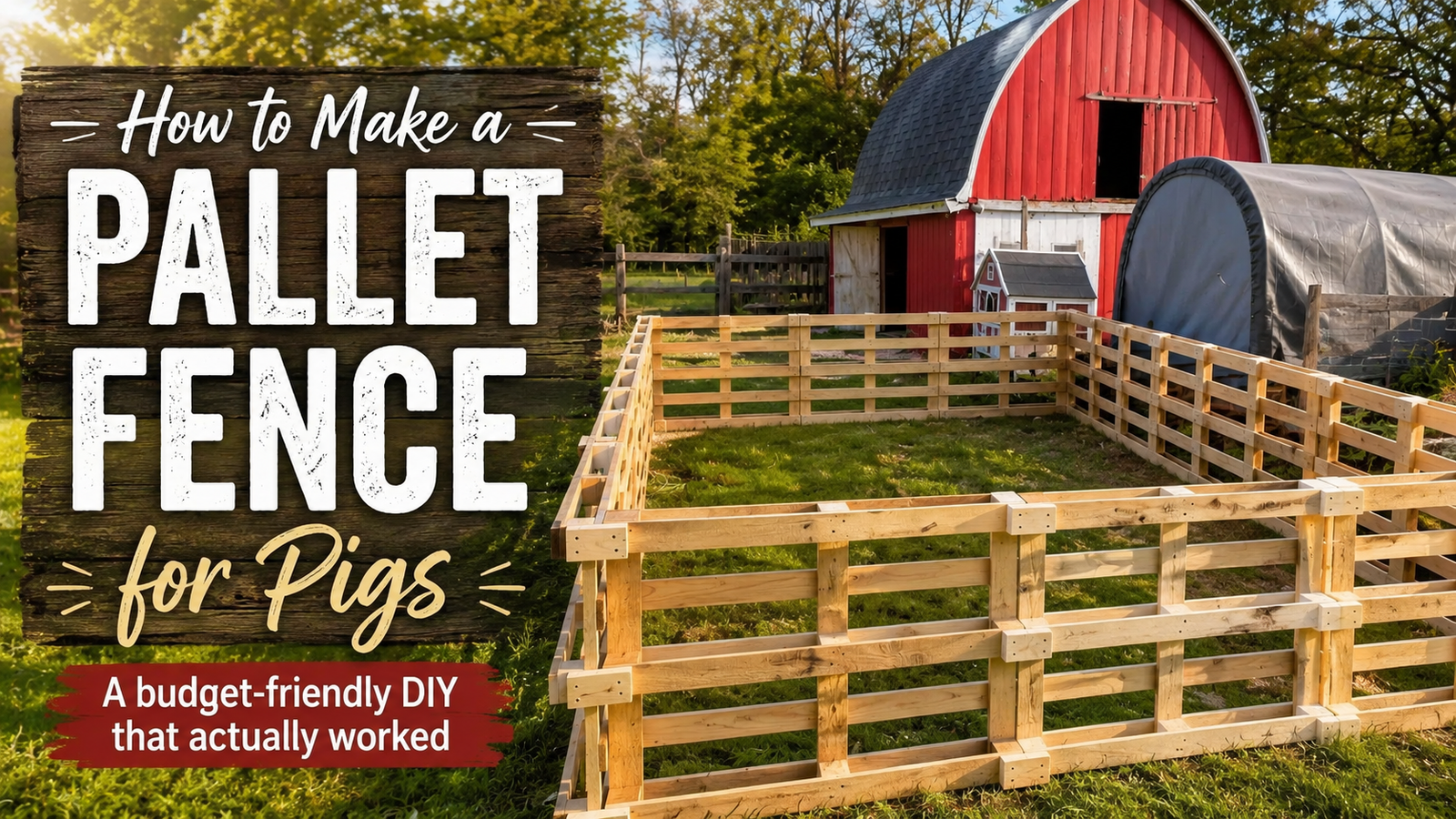
When we first set up our pig area, we built our fence out of free pallets. We used good-quality pallets, T-posts for support, and small 2×4 sections to brace the pallets together.
And honestly? It worked.
Our pallet pig fence lasted about three years before it finally started coming down and the pigs started rooting underneath it. For a free or very low-cost fencing option, I think that is pretty impressive.
Now we are taking it down and rebuilding it bigger, and we are planning to use pallets again. The one thing I would do differently this time is add a hot wire along the bottom to keep the pigs from rooting under the fence.
So if you are wondering whether a pallet fence can work for pigs, my answer is yes. I 100% recommend it for the right setup, especially if you are trying to build a practical pig pen on a budget.
In this post, I will walk you through how we built our DIY pallet pig fence, what worked, what finally failed, and what I would change next time.
Affiliate Disclaimer: This post may contain affiliate links. This means I may earn a small commission if you purchase through my links, at no extra cost to you. I only recommend products, tools, and supplies that are helpful for homesteaders, small farms, and DIY livestock setups.
Can You Use Pallets for a Pig Fence?
Yes, you can use pallets for a pig fence.
Pallets can make a surprisingly strong pig fence if you use sturdy pallets, support them well, and brace them together. They create a solid visual barrier, they are easy to find for free or cheap, and they can work really well for a small homestead pig pen.
That said, pigs are hard on fencing. They root, push, lean, and test weak spots. So a pallet fence needs more than just pallets leaned up in a row.
The key is support.
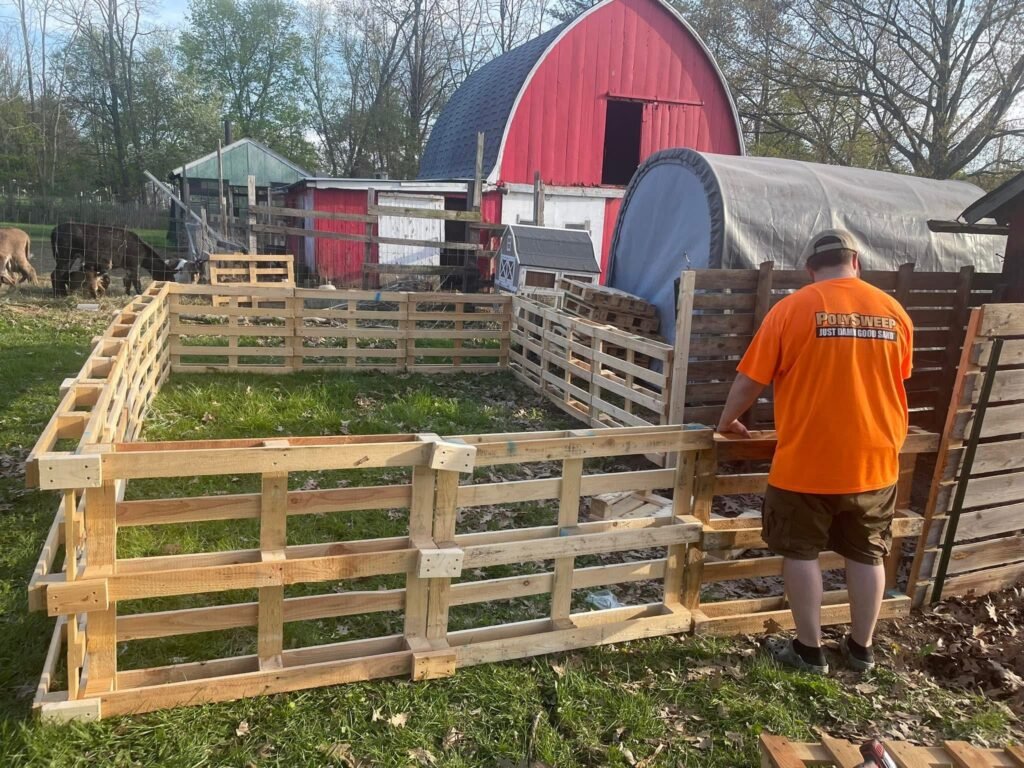
For our pallet pig fence, we used good-quality pallets, strong T-posts, and small pieces of 2×4 to connect and brace the pallets together. That setup lasted us about three years before the fence finally started breaking down.
Why We Chose Pallets for Pig Fencing
We chose pallets because they were free, easy to find, and strong enough to make a solid fence.
When you are building a homestead setup, fencing costs can add up fast. Hog panels, woven wire, posts, gates, electric chargers, and hardware can get expensive, especially if you are trying to fence a decent-sized pig area.
Pallets gave us a way to build a functional pig pen without spending a fortune upfront.
The other reason I liked pallets is that they create a solid wall. Pigs cannot see through them as easily as they can see through wire or panels, and that can make the fence feel more like a real barrier.
Supplies We Used
Here is what we used to build our pallet pig fence:
- Good-quality pallets
- Heavy-duty T-posts
- 2×4 boards
- Screws
- Drill or impact driver
- Saw for cutting 2x4s
- Tape measure
- Work gloves
- Level, optional
- Electric fence supplies, optional but recommended
- Hot wire for the bottom, recommended
- Fence charger, if adding electric
- Insulators
- Ground rod
- Fence tester
We did not use full 8-foot 2×4 boards as long braces. Instead, we cut the 2x4s into short sections, around 6 inches long, and used those pieces to connect the pallets together.
That made the fence stronger without using a ton of extra lumber.
We also did not use hot wire, but if we had, it would have lasted longer than 3 years.
Step 1: Find Good-Quality Pallets
Not all pallets are worth using for pig fencing.
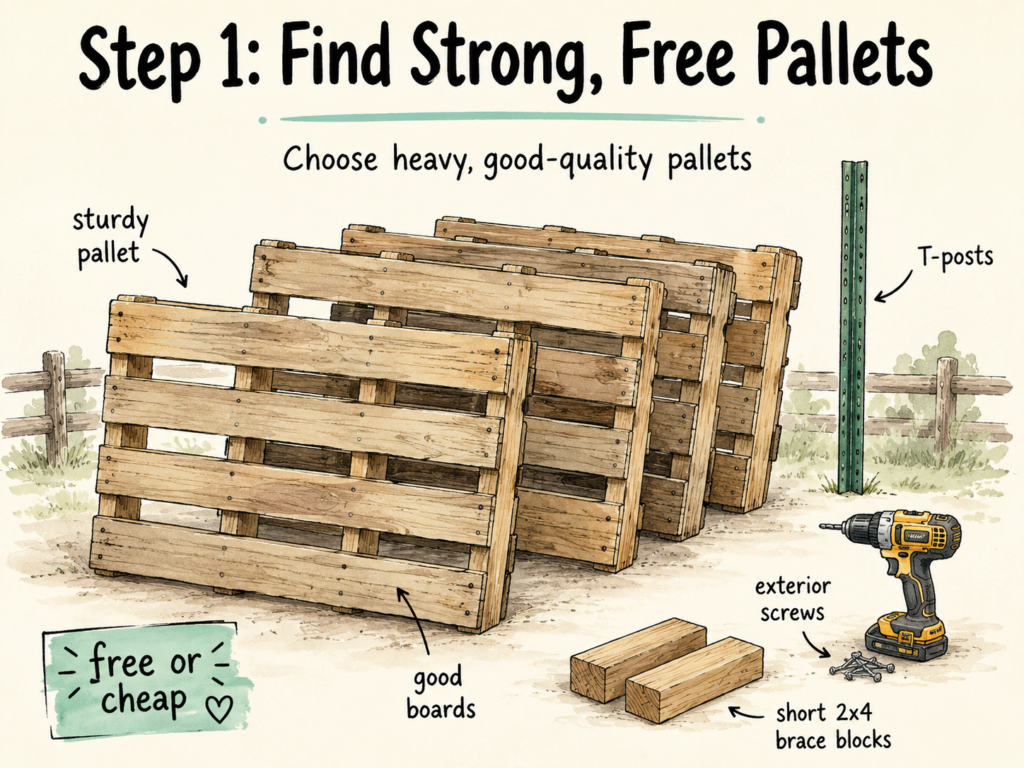
Some pallets are thin, broken, rotting, or made with weak boards. Those are not the ones I would use for pigs.
Look for pallets that are:
- Heavy and sturdy
- Not rotted
- Not falling apart
- Built with thick boards
- Similar in size, if possible
- Free from sharp broken pieces
- Safe enough to use around animals
The better the pallets, the better your fence will hold up.
We used good-quality pallets, and I really think that is one of the reasons our fence lasted as long as it did.
Before building, check every pallet for nails sticking out, broken boards, loose slats, and sharp edges. Fix those before the pigs go anywhere near it.
Step 2: Set Your T-Posts First
One thing we did that helped a lot was putting in the T-posts before setting the pallets up.
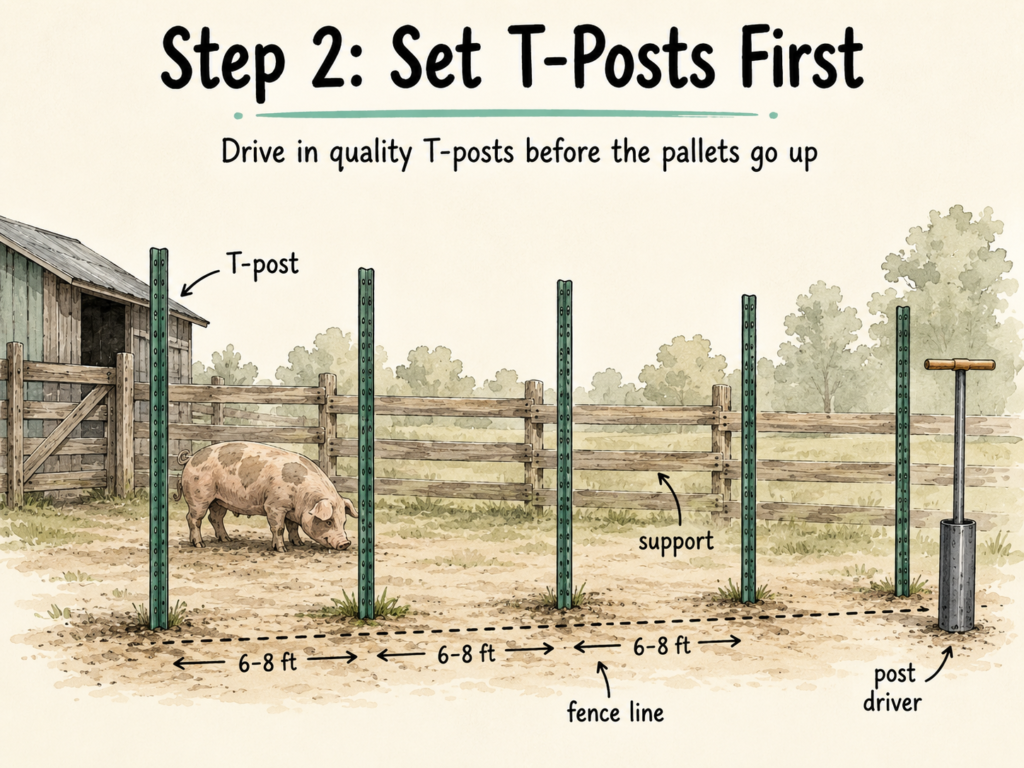
The T-posts gave the pallets support and helped them stand upright. Pigs are strong, and if you only connect pallets to each other without posts, they can start to shift, lean, or get pushed over.
We used quality T-posts, not flimsy ones.
You want the posts to be strong enough to support the weight of the pallets and handle pressure from pigs rubbing, scratching, or leaning against the fence.
Place the T-posts along the fence line where the pallets will go. The spacing depends on your pallet size, but the goal is to have enough support that the pallets do not wobble or lean.
Step 3: Stand the Pallets Up
Once the T-posts are in, stand the pallets up along the fence line.
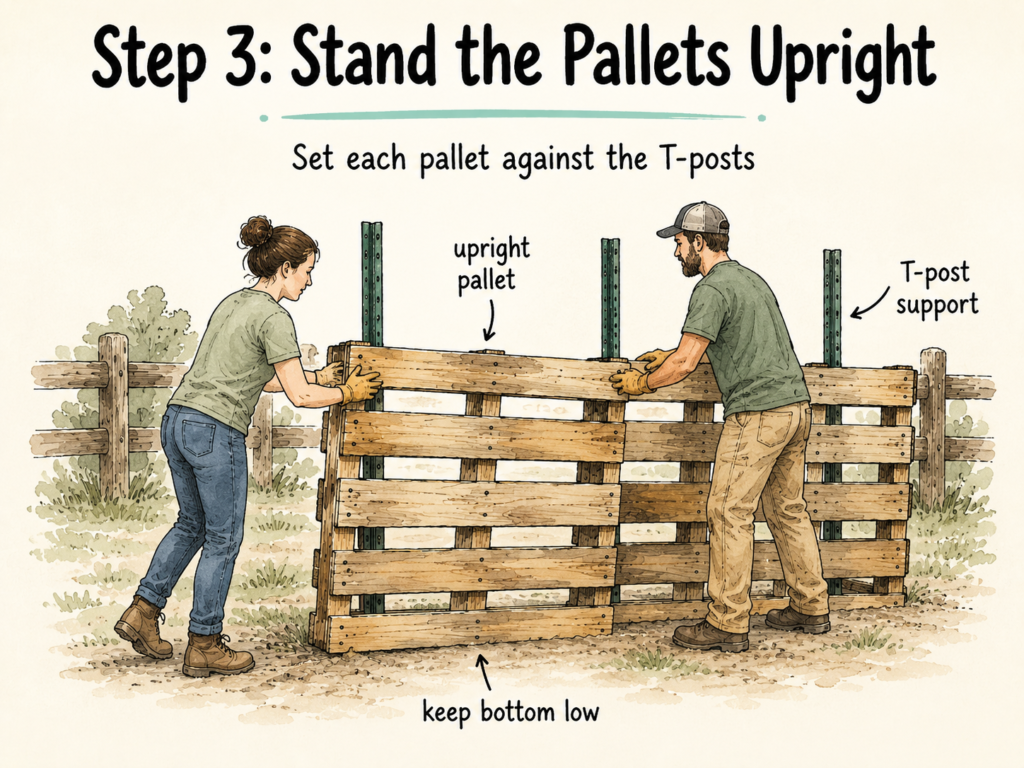
It helps to have two people for this part. Pallets can be awkward and heavy, especially if you are using the good sturdy ones.
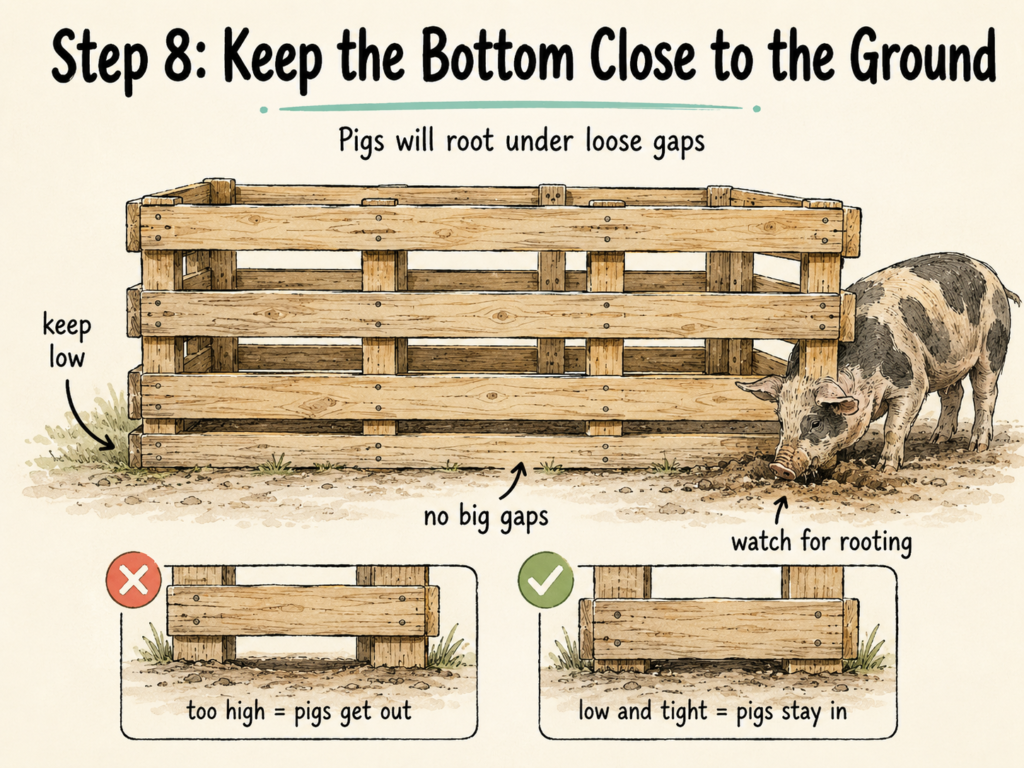
Line the pallets up so the bottom edge sits close to the ground. This matters because pigs root low. If there is a gap at the bottom, they may eventually find it.
When we first built ours, it held up well for a long time. It took about three years before we really started seeing the pigs root underneath it.
Still, if I were building it again from the beginning, I would pay even more attention to the bottom edge and add a hot wire right away.
Step 4: Brace the Pallets Together with 2×4 Pieces
This is the part that made our pallet fence work.
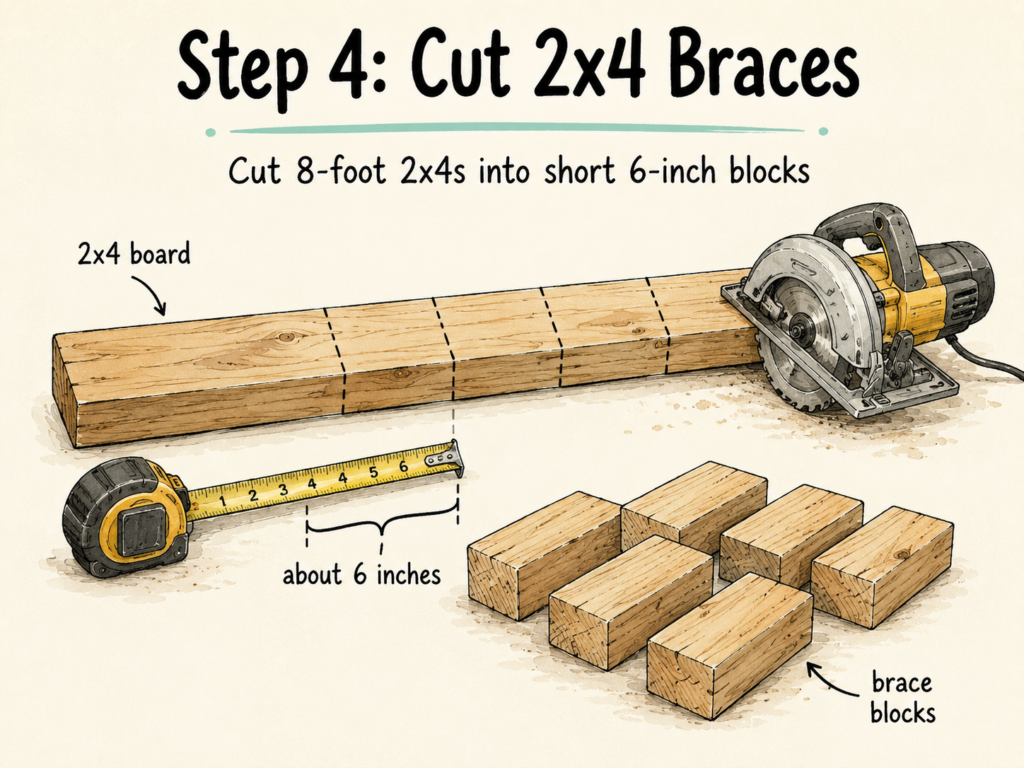
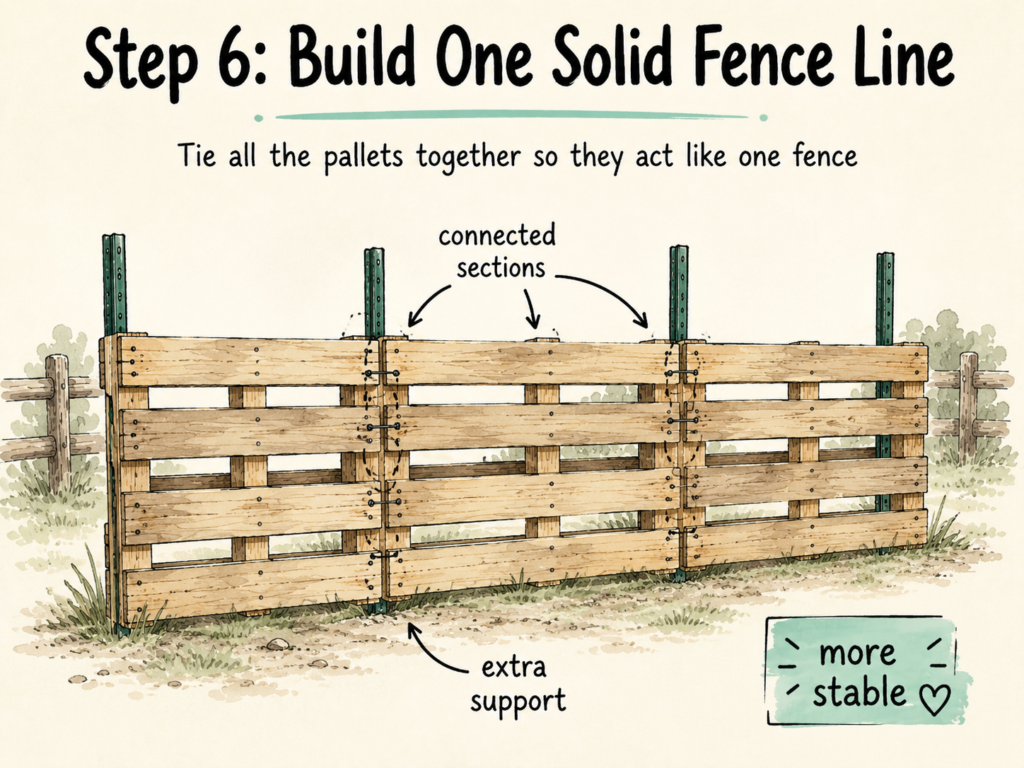
We cut 2×4 boards into short sections, around 6 inches long, and used those pieces to connect the pallets together.
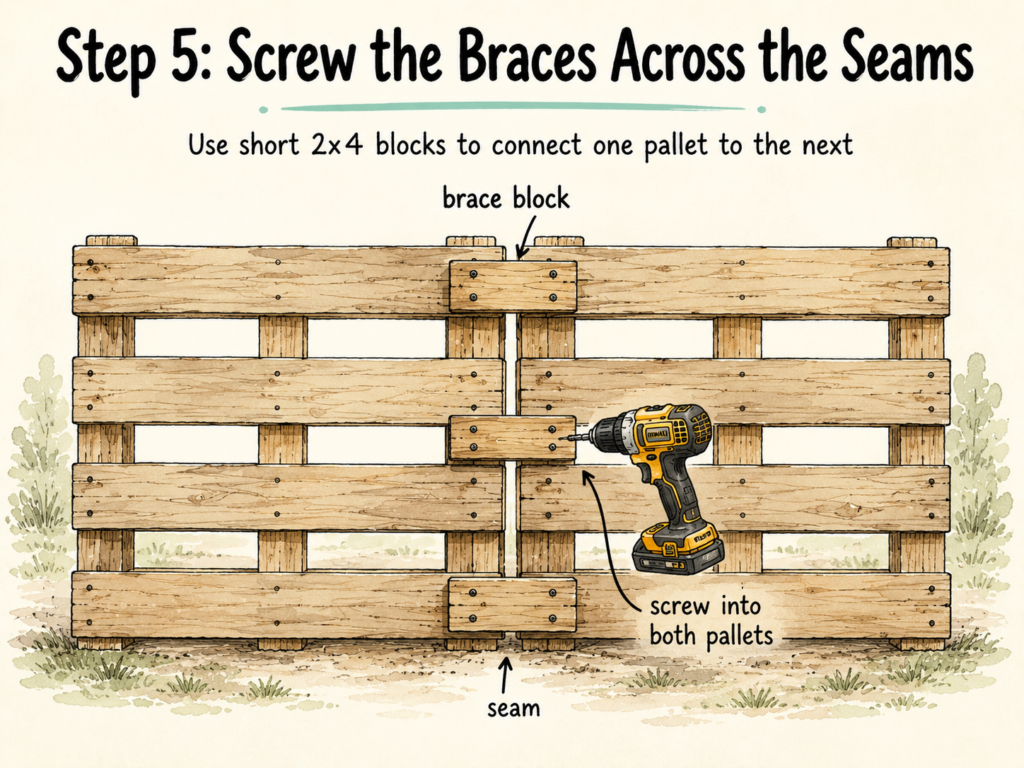
Instead of trying to run one full 8-foot 2×4 across the pallets, we used small brace pieces at the joints. We screwed the 2×4 sections into the pallets where they met, which helped tie each pallet to the next one.
This made the fence feel more like one connected structure instead of a bunch of separate pallets standing beside each other.
To do this:
- Line two pallets up next to each other
- Place a short 2×4 piece across the seam
- Screw the 2×4 into both pallets
- Add more braces as needed
- Repeat along the fence line
You can brace near the top, middle, and bottom depending on how sturdy your pallets are.
The goal is to stop the pallets from shifting independently.
Step 5: Reinforce Corners and Weak Spots
Corners matter a lot with pig fencing.
Pigs will find the weak spots. If a corner can wiggle, open, or shift, they may eventually push it.
Make sure your corners are extra strong. Use more bracing, stronger posts, and extra screws where needed.
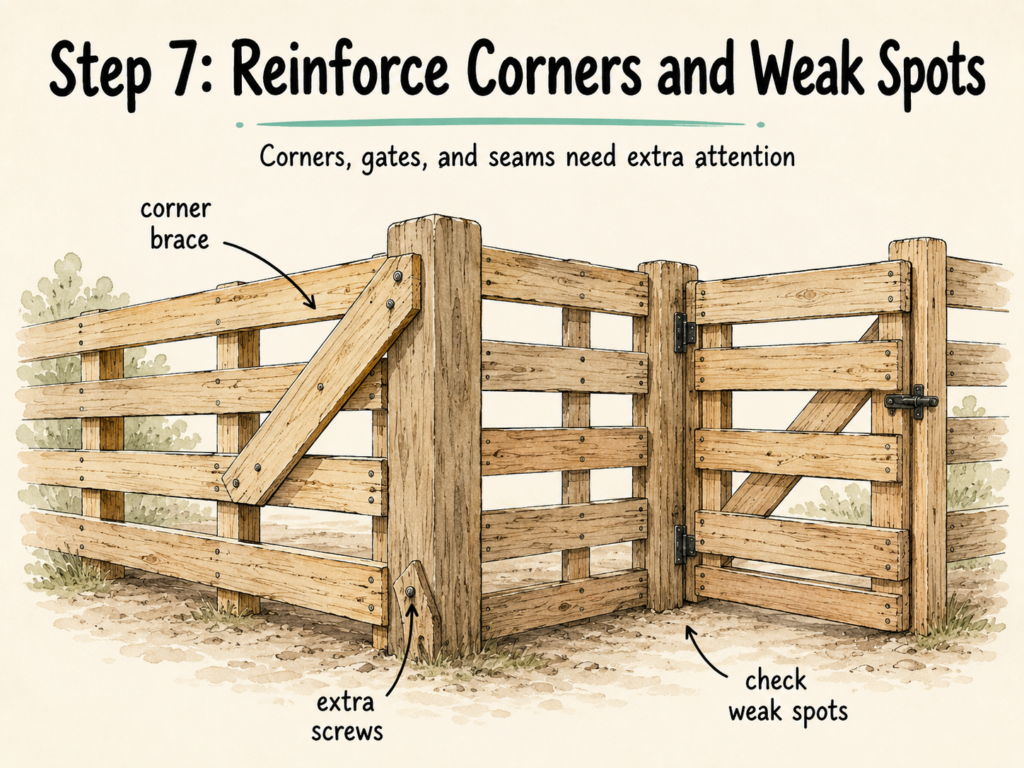
Pay attention to:
- Corners
- Gates
- Pallet seams
- Low spots under the fence
- Broken boards
- Areas pigs already show interest in
A pig fence is only as strong as the weakest section. Walk the fence line regularly and fix small problems before they become big problems.
Add a Bottom Hot Wire
This is the thing I would do differently.
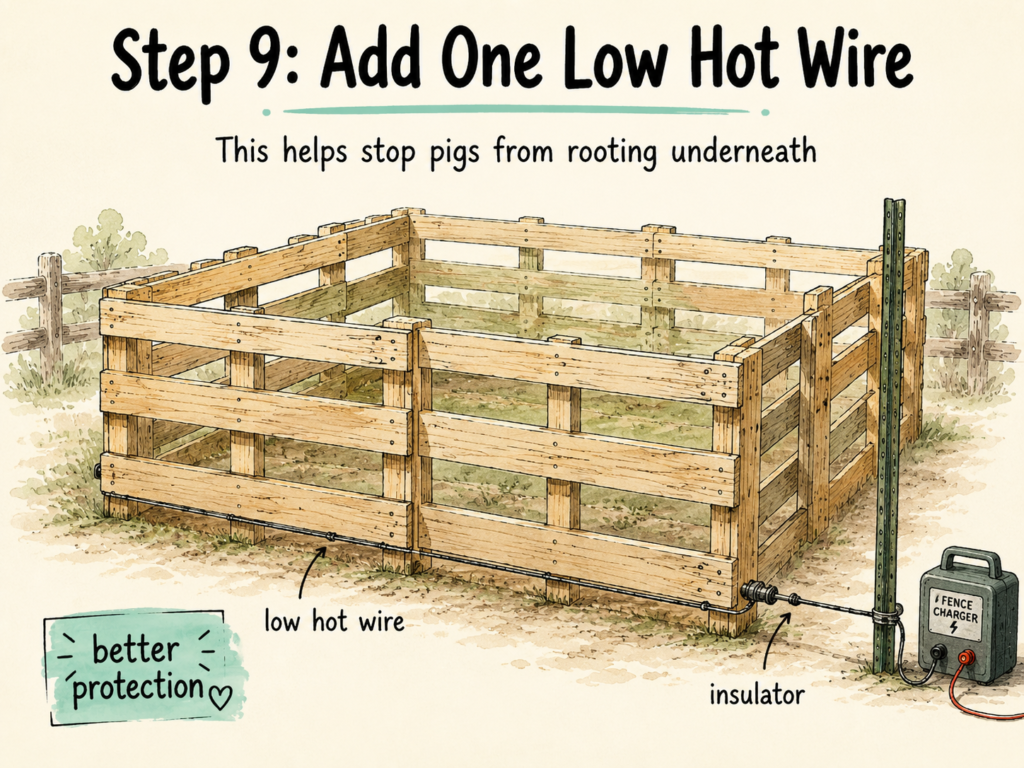
Our pallet pig fence lasted about three years without a hot wire along the bottom. But eventually, the pigs started rooting underneath it.
When we rebuild, I want to add one line of hot wire along the bottom of the fence.
I think this would help the fence last longer because it teaches the pigs not to mess with the bottom edge. Instead of rooting, pushing, or testing the pallets, they learn to stay off the fence line.
For pigs, a low hot wire can make a huge difference.
Place it low enough that the pigs encounter it before they start rooting under the fence, but not so low that it constantly shorts out on grass, dirt, or bedding.
You will need:
- Fence charger
- Electric wire or polywire
- Insulators
- Ground rod
- Fence tester
Check the wire often, especially if your pig area gets weedy or muddy.
How Long Our Pallet Pig Fence Lasted
Our pallet pig fence lasted about three years.
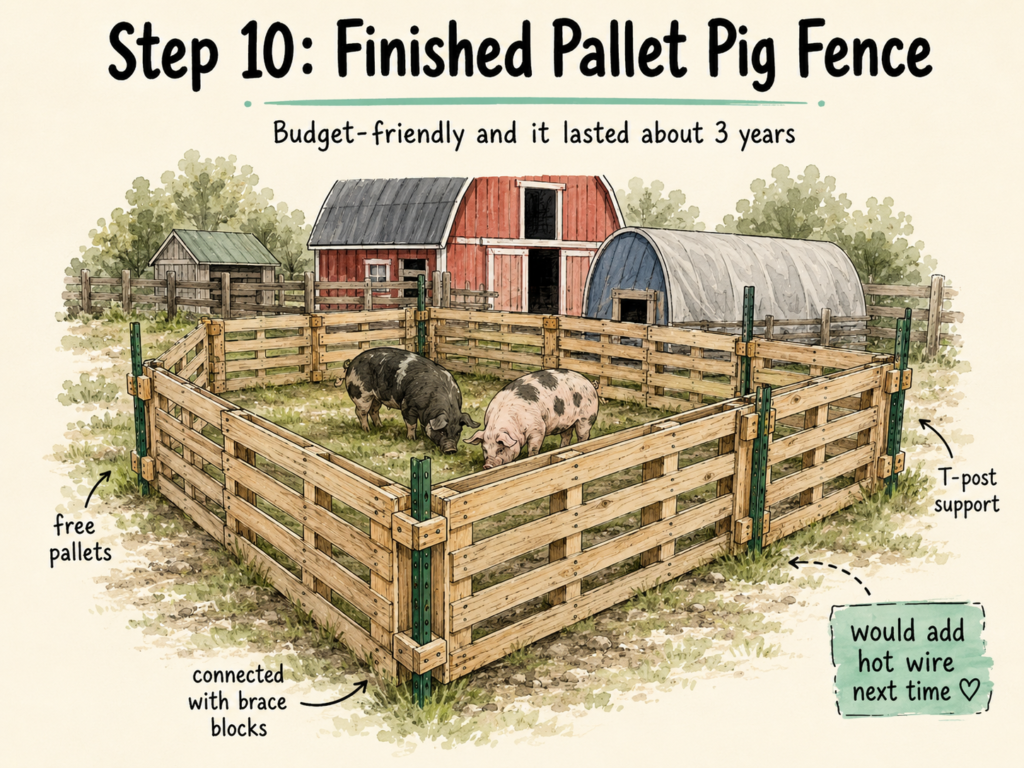
For a fence made from free pallets, I consider that a win.
After three years, it started coming down and the pigs finally started rooting underneath it. That is why we are taking it down now and rebuilding.
But overall, I was really happy with how it performed.
It was affordable, practical, and strong enough for our setup for several years. It gave us time to raise pigs without investing in a much more expensive permanent fencing system right away.
We love using pallets (and other free things) to build around our homestead! We made a goat playground out of pallets, as well as a hay feeder!
What I Would Do Differently Next Time
I would absolutely build a pallet pig fence again, but I would change a few things.
The biggest thing I would do differently is add a hot wire at the bottom from the start.
I think one low strand of electric wire would have helped prevent the rooting underneath and probably would have extended the life of the fence.
I would also:
- Use only the strongest pallets
- Replace weak pallets sooner
- Reinforce corners even more
- Keep the bottom edge tighter to the ground
- Add a better gate setup if needed
- Make the pen bigger from the start
When we rebuild, we plan to get more pallets and make the pig area bigger.
Pros and Cons of a Pallet Pig Fence
Pros of a Pallet Pig Fence
Pallet pig fencing can be very affordable, especially if you can get good pallets for free.
It is also simple to build with basic tools. You do not need fancy equipment or a big budget.
Pallets create a strong visual barrier, and when they are braced together well, they can make a solid fence.
For us, the biggest pro was that it worked. It lasted three years, and I would use this method again.
Cons of a Pallet Pig Fence
The biggest downside is that pallets eventually break down.
They can rot, shift, or weaken over time, especially if they are sitting in mud or exposed to weather year after year.
Another issue is that pigs may eventually root under the fence if there is no hot wire at the bottom.
Pallets also vary a lot in quality. If you use weak pallets, the fence will not last as long.
Piglets may also be able to fit through larger gaps depending on the pallet design, so always check spacing if you are fencing small pigs.
Is a Pallet Fence Strong Enough for Pigs?
A pallet fence can be strong enough for pigs if it is built correctly.
I would not just lean pallets against each other and hope for the best. But with strong pallets, T-posts, bracing, and a low hot wire, I think it can be a very practical pig fencing option.
Our fence worked for three years before it started to fail, and even then, the main issue was the pigs eventually rooting underneath.
That tells me the basic design was good. It just needed a little more protection at the bottom.
Would I Recommend a Pallet Pig Fence?
Yes. I 100% recommend it for the right situation.
A pallet pig fence is a great option if:
- You can get good-quality pallets for free
- You are raising feeder pigs
- You need a budget-friendly setup
- You are willing to reinforce it
- You can check and maintain it
- You add a hot wire along the bottom
It may not be the prettiest or most permanent pig fence, but it can absolutely work.
For a small homestead, that matters.
Final Thoughts
Our DIY pallet pig fence was one of those projects that proved you do not always need the most expensive setup to make something work.
We used free pallets, quality T-posts, screws, and short pieces of 2×4 to brace the pallets together. The fence held up for about three years, and now that it is finally coming down, we are planning to rebuild it bigger using the same basic idea.
The one change I would make is adding a hot wire along the bottom from the beginning.
If you are trying to build a pig fence on a budget, a pallet fence can be a very real option. Build it strong, brace it well, support it with T-posts, and do not ignore the bottom edge.
Pigs are strong, but a well-built pallet fence can absolutely hold up.
For us, it worked — and I would do it again.
Check out other pig fencing options here
next up: make your own DIY pig waterer!


Post your Comment About This Product