
Running a small farm in Western New York has never been simple, but the cost of keeping livestock, powering equipment, transporting animals, and navigating local rules can make getting started especially challenging.
On October 1, 2026, approximately 40 farmers and agricultural leaders from Erie, Wyoming, and Genesee counties gathered in Varysburg for a roundtable hosted by State Senators Patrick Gallivan and George Borrello. They described increasing electricity, diesel, and labor expenses, along with local rules that sometimes conflict with New York’s agricultural protections. Read the official October 2 meeting summary.
New York Lost 500 Farms in One Year
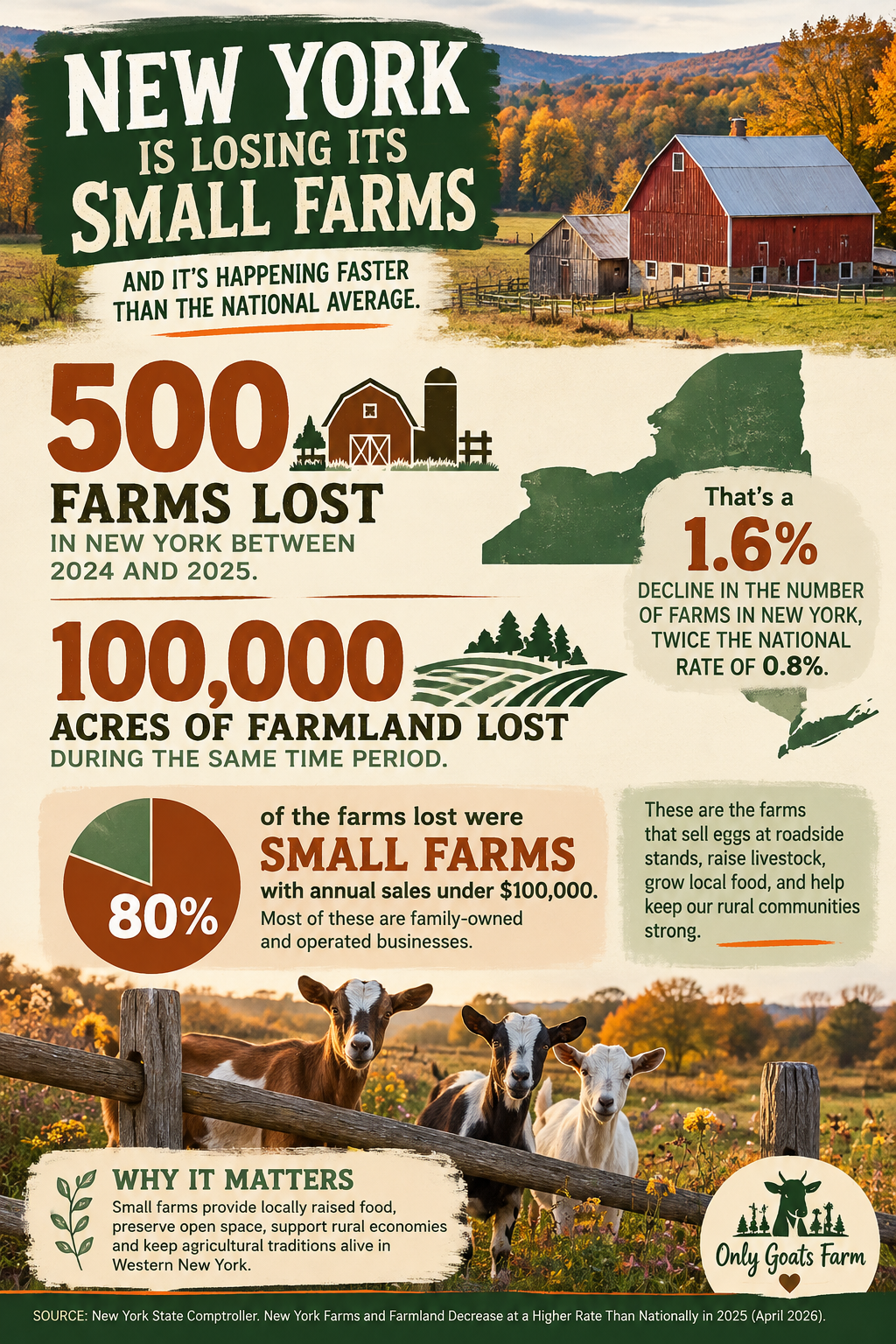
According to the New York State Comptroller, New York lost 500 farms and 100,000 acres of farmland between 2024 and 2025. The number of farms fell 1.6%, twice the national rate. Eighty percent of the decline in farm numbers came from small farms with annual sales below $100,000. Those are the kinds of businesses operating farmstands, raising small livestock, and selling products directly to neighbors. Source: State Comptroller.
Why the Everyday Costs Add Up
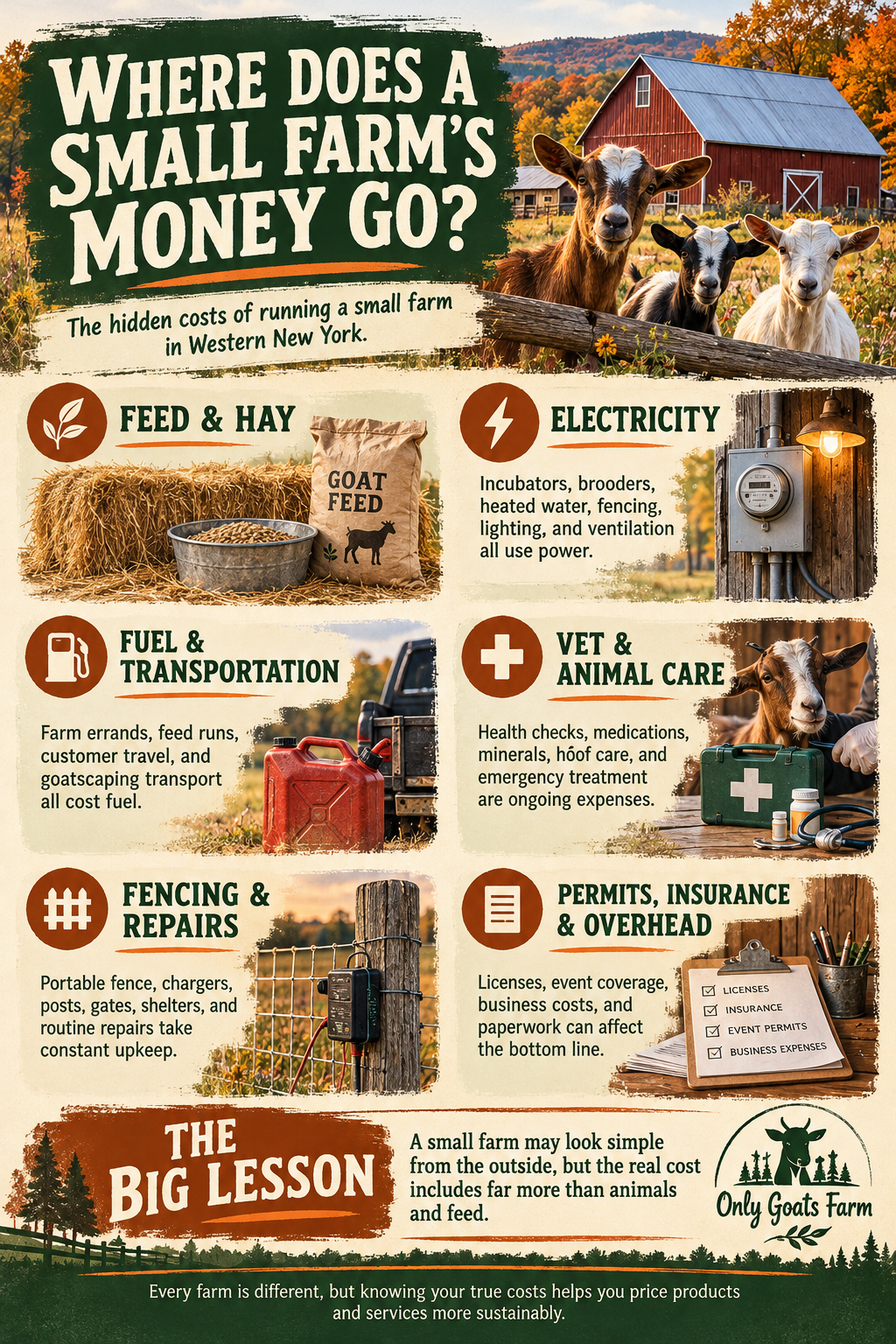
Electricity isn’t optional for livestock
Incubators, brooders, heated water in winter, fencing systems, lighting, and ventilation can all rely on electricity. A small operation may use several modest pieces of equipment rather than one enormous piece, but the monthly charges still add up. At the roundtable, farmers also described difficulty obtaining the electrical service necessary to expand.
Fuel affects even farms without giant tractors
At Only Goats Farm, our goatscaping work means transporting animals, portable fencing, and equipment to customers and bringing everything home safely. A job’s real cost includes the driving, setup, pickup, equipment wear, and animal care—not just the hours the goats spend clearing brush.
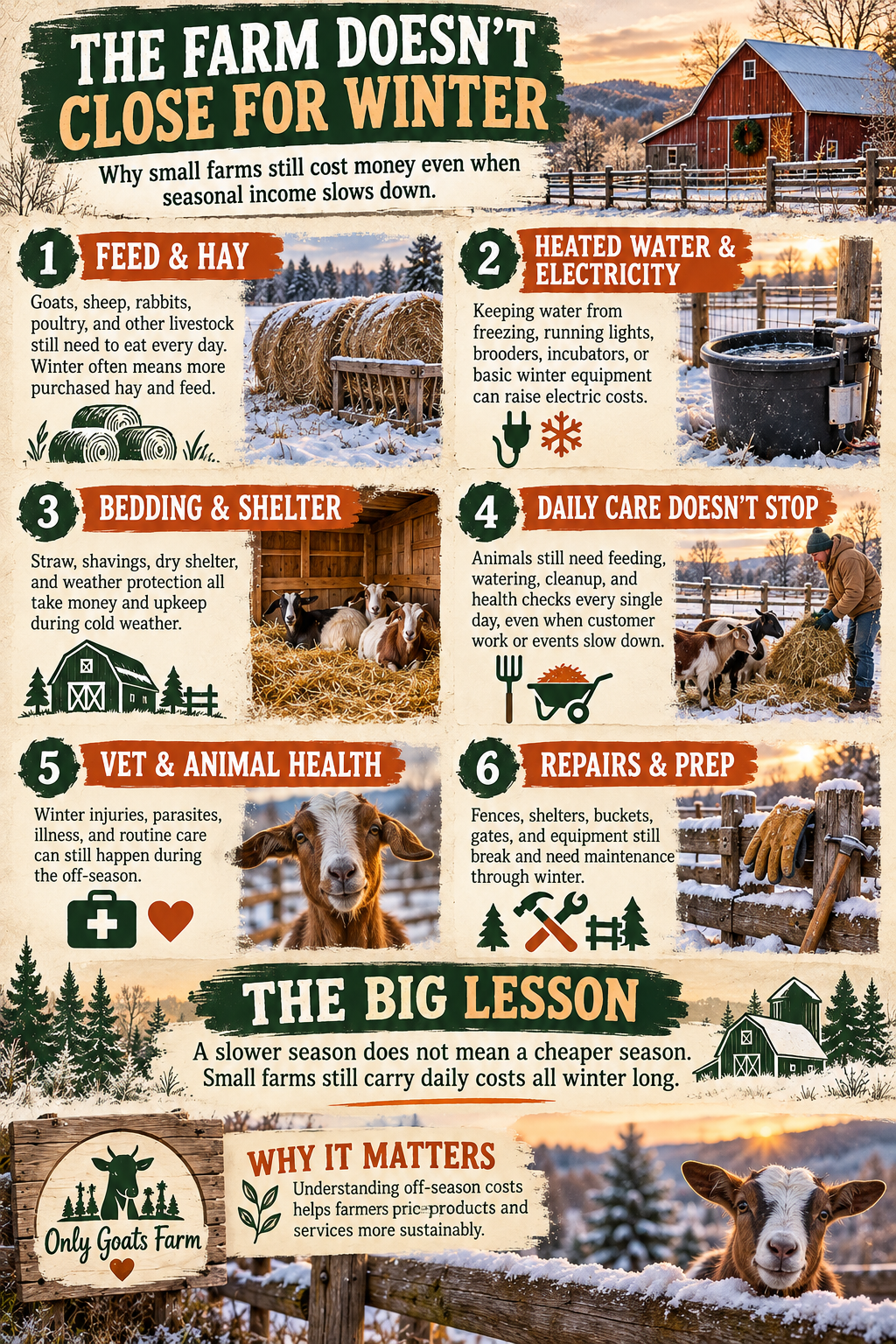
Feed and animal care don’t stop in winter
Hay, grain, bedding, fencing repairs, animal healthcare, and fresh water remain expenses even when farm events or seasonal services slow down. Revenue is not the same thing as profit, and a small farm can be busy without actually covering all its operating costs.
What Local Regulations Are Farmers Talking About?
The October meeting’s press release did not identify specific towns or ordinances. Jeffrey Fisher of the Erie County Farm Bureau said conflicts between town laws and state agricultural protections can force new farmers into an expensive administrative review just to establish the right to operate. But there are documented New York cases that show what these disputes can look like.
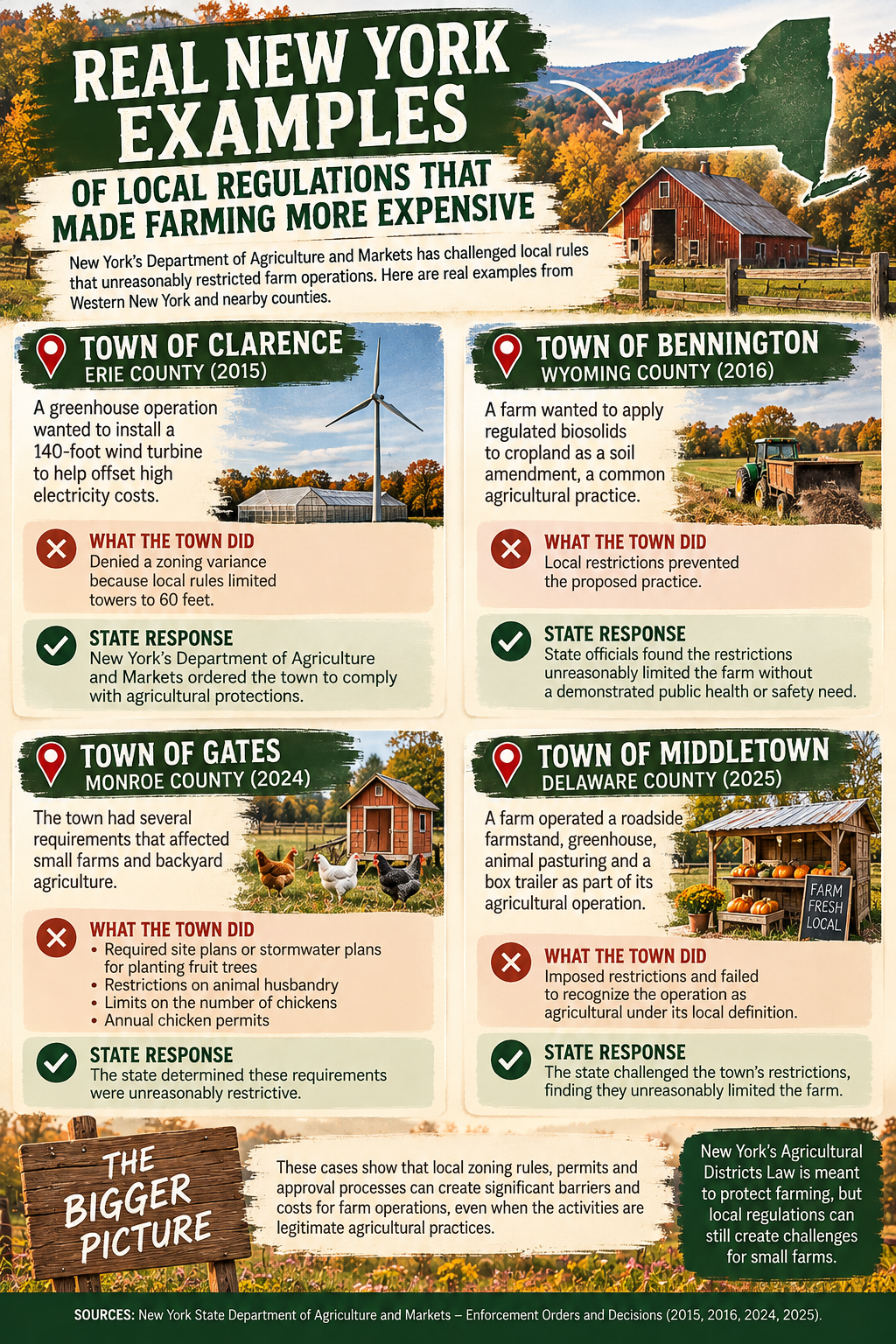
Clarence, Erie County: Restrictions on a Farm Wind Turbine
In 2015, the Town of Clarence denied a variance for a greenhouse farm seeking to construct a 140-foot wind turbine to offset energy needs. A local zoning rule limited towers to 60 feet. The New York State Department of Agriculture and Markets issued an order under Agricultural Districts Law Section 305-a concerning the restriction. This is a striking local example because energy costs were also a major concern in the 2026 discussion.
Bennington, Wyoming County: Restrictions on Cropland Practices
In 2016, the state issued a Section 305-a order involving Bennington’s restrictions on material applied to farmland. The agricultural operation worked across Erie and Wyoming counties and proposed using biosolids in corn and soybean production. This example concerns a different kind of operation from a backyard livestock farm, but shows how a town-level rule can affect an established agricultural practice.
Gates, Monroe County: Poultry, Fruit Trees, and Farm Permits
A December 2024 state order addressed restrictions in the Town of Gates, including requirements affecting fruit-tree planting, animal husbandry, chicken numbers, and annual chicken permits. The case is relevant to small growers and poultry keepers, although whether a particular property or activity qualifies for state agricultural protection always requires a fact-specific review.
Middletown, Delaware County: Farmstands and Agricultural Definitions
A June 2025 state order concerned a roadside farmstand, greenhouse, pasturing animals, and farm equipment, as well as the town’s treatment of the operation under its local definition of agriculture. Although Middletown is outside Western New York, the dispute illustrates issues that may matter to farms combining livestock and direct-to-consumer sales.
Important: These are real historical state enforcement matters, not confirmed examples cited by participants at the October 1, 2026 meeting. The state’s orders are case-specific and do not automatically invalidate similar rules in other towns. See the Department of Agriculture and Markets’ official list of Section 305-a orders.
Why a Permit Process Can Become a Significant Expense
Even when an approval is ultimately granted, the process may involve application fees, special-use permits, site-plan review, surveys, professional drawings, hearings, delays, and uncertainty. For a startup with limited cash, those requirements can affect whether an expansion is financially practical.
New York’s Agriculture and Markets Department has published guidelines for evaluating local zoning and planning laws. The guidance discusses potential problems with excessive agricultural setbacks, screening requirements, farm signage limits, and overly narrow definitions of farming. It does not mean every local permit or health-and-safety rule is unlawful.
Does Agricultural District Status Protect Your Farm?
Section 305-a of New York’s Agricultural Districts Law says local governments cannot unreasonably restrict qualifying farm operations in agricultural districts contrary to the law’s purposes unless a public health or safety threat can be shown. That protection can be powerful, but it isn’t a blanket exemption from all zoning, building, traffic, event, or food-safety requirements.
It’s also important to know that not every activity involving animals is automatically a protected farm operation. Selling farm products, running a roadside stand, offering goatscaping, and hosting ticketed goat events may present different questions under local rules and state law. Each situation deserves its own review. Learn about New York agricultural districts.
What This Means for Our Small Farm
At Only Goats Farm, we raise goats, poultry, quail, and rabbits and offer services such as goatscaping and goat events. Operating a small farm isn’t just about the number of acres or animals. Transportation, fencing, equipment, and year-round animal care all cost money, whether customers see those expenses or not.
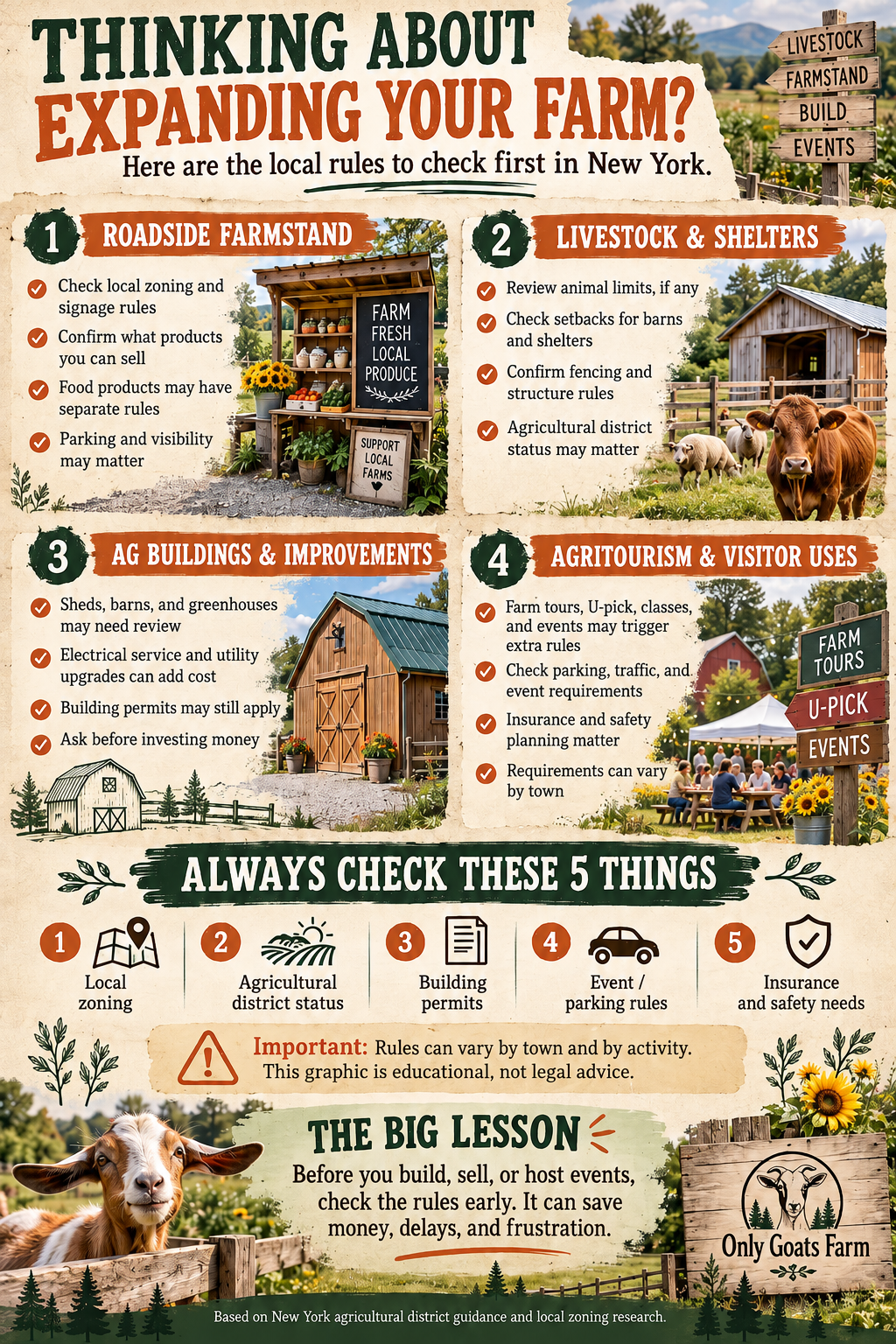
For farms like ours, it is also important to understand which local approvals apply before investing in a farmstand, new animal shelter, or visitor-based service. We aren’t claiming that any particular town is currently blocking our farm. The broader lesson is to research the rules early and to understand the protections available to qualifying agricultural operations.
Practical Steps for New Farmers
- Track costs by activity. Separate feed, electricity, transport, equipment, and event expenses so you know what each product or service actually earns.
- Check the parcel and local zoning. Confirm applicable farm, farmstand, animal, and visitor-use requirements before paying for construction or expansion.
- Find out whether the operation is in a certified agricultural district. District status is relevant to protections under New York law, but it is not the only factor.
- Keep copies of requests and decisions. If a local rule seems unreasonably restrictive, review the state’s Section 305-a process rather than assuming an exemption applies.
- Compare the true cost of growth. Include both operating expenses and potential permit or professional-service costs in your business plan.
Small Farms Are Worth Keeping
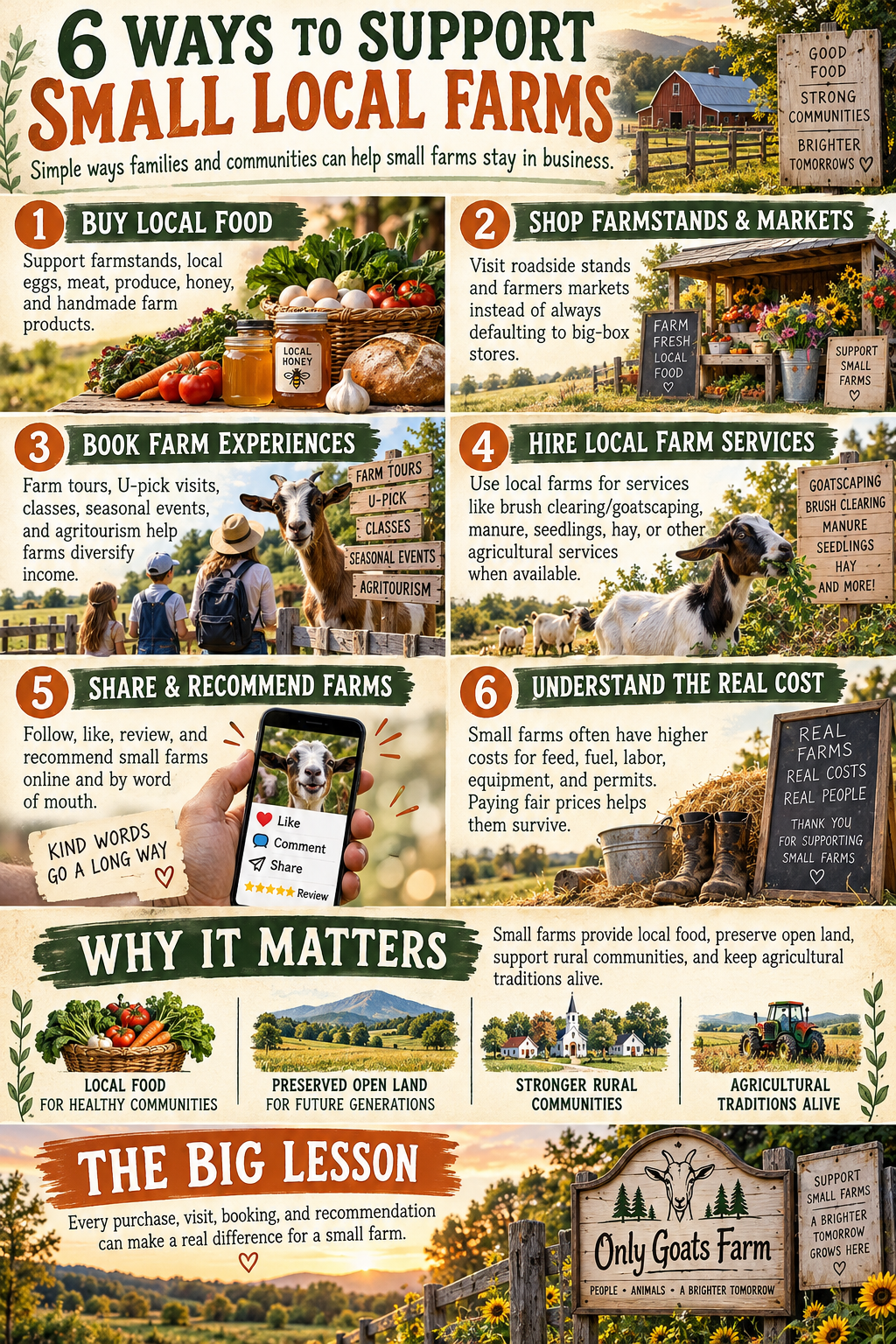
A roadside stand, a few acres of livestock, or a small seasonal farm business may look simple from the outside. Behind it are daily responsibilities and costs that never entirely disappear. The Varysburg roundtable made those concerns visible, while New York’s enforcement records show that conflicts over local rules have been occurring for years.
Whether the October 2026 discussions produce legislative changes remains to be seen. In the meantime, understanding both the real costs of farming and the rules that govern it is essential for anyone trying to build a sustainable farm business in Western New York.
If you farm or homestead in New York, what’s your biggest expense right now—feed, electricity, fuel, equipment, or permits? Share your experience in the comments.


Post your Comment About This Product