
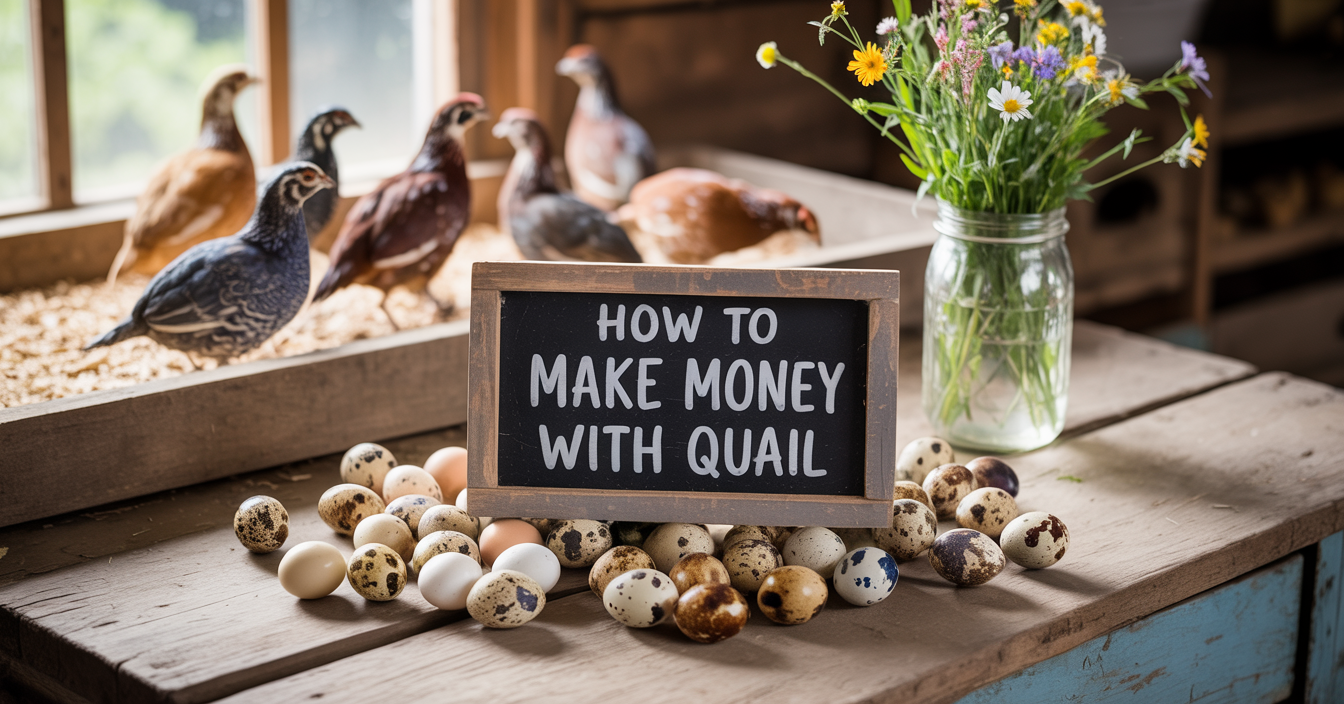
Raising quail isn’t just a quirky homestead hobby—it can be a real income stream if you know where the money actually is.
The mistake most people make is assuming quail income starts and ends with selling eggs.
In reality, quail are one of the most versatile, stackable income animals you can raise on a small footprint. They fit naturally into many broader strategies for building income streams on a homestead. Whether you want a side hustle or a scalable business, there are multiple ways to monetize the same birds—often at the same time.
Below are 15+ proven ways people are actually making money with quail.
1. Eating Eggs (Local Sales)
Selling quail eggs locally is often the first income stream people try. If you want a deeper breakdown of pricing, demand, and strategies that work even when competition is high, you can read more about selling quail eggs locally even in saturated markets.
Common outlets include:
- Roadside stands
- Farmers markets
- Livestock auctions (where available)
- Direct pickup orders
- CSA add-ons
Reality check: In some areas, quail eggs sell extremely well. In others, they barely move. Local demand matters more than effort.
Quail eating eggs tend to work best as a gateway product—they introduce customers to quail, start conversations, and build trust. However, relying on eating eggs alone often limits growth. Margins are thin, and volume matters. Many successful sellers use eating eggs as an entry point, then upsell customers into hatching eggs, live birds, or repeat weekly orders where profitability improves.
Best for: Direct-to-consumer sales
Profit potential: Low to moderate unless stacked with other income streams
2. Hatching Eggs
Hatching eggs often outperform eating eggs in profit, especially when demand is high.
Buyers include:
- Independent quail growers
- New homesteaders
- Small farms expanding flocks
People are willing to pay for the chance to hatch their own birds without waiting months to build breeding stock. Some independent quail growers also choose to source breeding stock or hatching eggs from established hatcheries like Guidroz Family Farm when starting or expanding their flocks. This approach is especially common for those starting or expanding a quail operation, and it often pairs well with a broader guide on how to start a quail business from scratch.
Hatching eggs often outperform eating eggs because buyers see them as an investment, not just food. Many customers return repeatedly as they grow or replace flocks. This is also where certifications and reputation matter most, since buyers care deeply about fertility, hatch rates, and consistency.
3. Selling Live Quail
Live birds are consistently strong sellers in many regions.
You can sell:
- Day-old chicks
- Grow-outs
- Adult laying hens
- Breeding pairs or trios
Adult laying hens often command higher prices due to the time and feed invested.
Selling live birds allows you to capture value for your labor and patience. While chicks sell quickly, adult layers appeal to buyers who want immediate production. The key is pricing appropriately so feed, housing, and time are fully covered—undercutting here quickly leads to burnout.
4. Meat Quail (Where Legal)
If your state allows it, processed quail meat can be profitable.
Common buyers include:
- Ethnic markets
- Restaurants
- Direct freezer customers
Always check state and local regulations before selling processed meat.
5. Selling to Restaurants
Quail eggs and meat are specialty products that many restaurants seek out.
Target:
- Farm-to-table restaurants
- Asian cuisine
- Upscale brunch spots
Restaurants value consistency and reliability more than the cheapest price.
6. Balut
Balut is a niche product, but it comes with loyal, repeat customers.
Once you establish trust within a community, word-of-mouth often drives sales.
If you already incubate eggs, this can be an easy additional income stream.
7. Button Quail
Button quail can be profitable if you have a market lined up.
They are commonly used for:
- Reptile feeders
- Zoos and exotic animal facilities
They reproduce quickly and require careful containment.
8. Reptile and Exotic Animal Feed
Whole quail and quail eggs are in high demand for reptile and exotic animal feeding.
Potential buyers include:
- Reptile breeders
- Falconers
- Zoos
- Exotic pet stores
Many buyers purchase in bulk, creating consistent contracts.
9. Auctions and Livestock Swaps
In areas where they exist, auctions can help move excess birds or eggs.
This is often a backup option rather than a primary income source.
10. Selling Quail Parts
Processing birds creates valuable byproducts.
Commonly sold parts include:
- Wings
- Feet
- Heads
These are used for pet food, reptile feeding, and specialty markets.
This is where many quail businesses dramatically increase per-bird profit. Parts are byproducts of processing—meaning you’re not raising extra birds to sell them. With basic processing and storage, one quail can generate multiple saleable items instead of a single transaction.
11. Oddity and Curiosity Markets
Quail skulls, feet, and bones are used by:
- Artists
- Jewelry makers
- Curiosity shops
This is a small but high-margin niche.
12. Feathers
Quail feathers can be sold as:
- Craft supplies
- Jewelry materials
- Bonus items included with orders
Many sellers simply air-dry and package feathers.
13. Value-Added Products (Where Legal)
Depending on local laws, value-added products may include:
- Pickled quail eggs
- Preserved eggs
Always verify cottage food laws before selling.
14. Education and Consulting
Knowledge itself becomes income once you gain experience.
Examples include:
- Workshops
- Consulting calls
- Farm tours
- Online coaching
This is often one of the highest-margin income streams.
Education income scales differently than livestock. If you already create content, teach, or share behind-the-scenes insights, this can overlap naturally with monetized education and audience-based income streams. Your experience—mistakes included—becomes valuable to others. Troubleshooting calls, startup guidance, and navigating regulations often generate income without increasing feed costs or daily chores.
15. Breeding Stock and Specialty Lines
Selective breeding allows premium pricing for specific traits such as:
- Size
- Productivity
- Color lines
People pay more for predictability and quality.
16. Saving Money Counts Too
Replacing store-bought protein with quail meat and eggs keeps money in your pocket.
Reduced grocery bills are real financial wins.
The Power of Stacking Income Streams
The most successful quail businesses rarely rely on one product.
They combine:
- Eggs and birds
Many quail keepers start this way and then branch out as part of a larger plan for starting a profitable quail business.
- Birds and byproducts
- Products and education
- Local sales and shipping
One quail can generate multiple income streams.
Final Thoughts
Quail are not easy money, but they are flexible money.
Success comes from starting small, understanding your market, staying compliant with laws, and getting creative with income streams.
If you enjoy raising quail and are willing to think beyond eggs, they can become one of the most profitable small-scale homestead animals.
Read more from Guidroz Family Farms: How to Maximize Your Profit
Leave a Reply