
Goats can be more than pets. They can be an investment that helps pay for their own feed, and for many of us, they can become a full-time business. I started with one accidental goat from an auction and quickly learned that one goat is not a thing. From that chaotic beginning I built Only Goats Farm, experimented with different income streams, and found a handful of favorites that replaced other parts of my income. Below I lay out 17 realistic ways to make money with goats, price ranges you can expect, practical tips, and what has worked for me—plus the pitfalls to avoid.
Why Goats Make a Smart Investment
Goats are multi-purpose, compact, and adaptable. One small animal can provide milk, meat, fiber, land management through browsing, and companionship for people and other animals. They generally have lower feed costs than larger livestock, adapt well to a range of climates, and, when handled right, are extremely friendly. New goats can be flighty at first, but with time and attention they warm up and become people-oriented animals that love to interact.
That said, goats are not the hardiest livestock by default. They have specific medical needs and require good management. Learn basic herd health, parasite control, and vaccination protocols before scaling into a business. A healthy, well-socialized herd will open more income opportunities than a neglected one.
Overview: The 17 Ways
Below I break down traditional income streams and the more creative or experiential things you can offer. I include typical price points, estimated annual earnings, and practical tips so you can pick the ones that match your resources and temperament.
1. Selling Kids
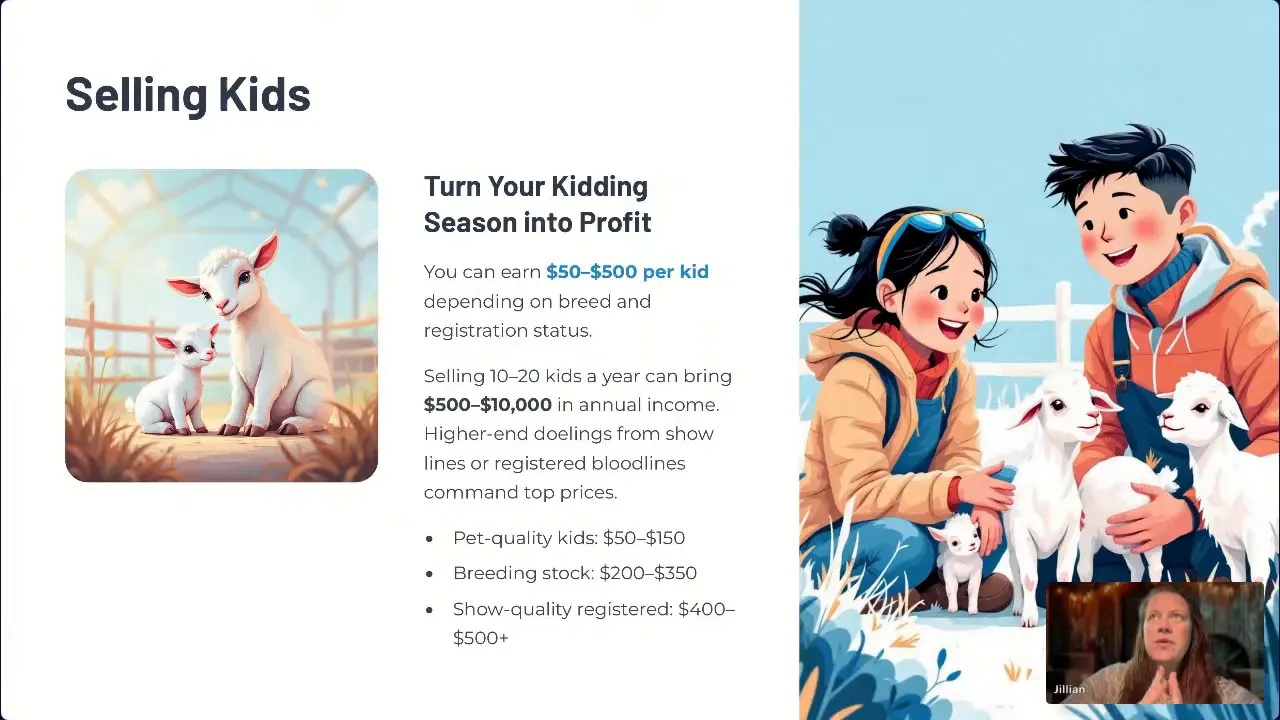
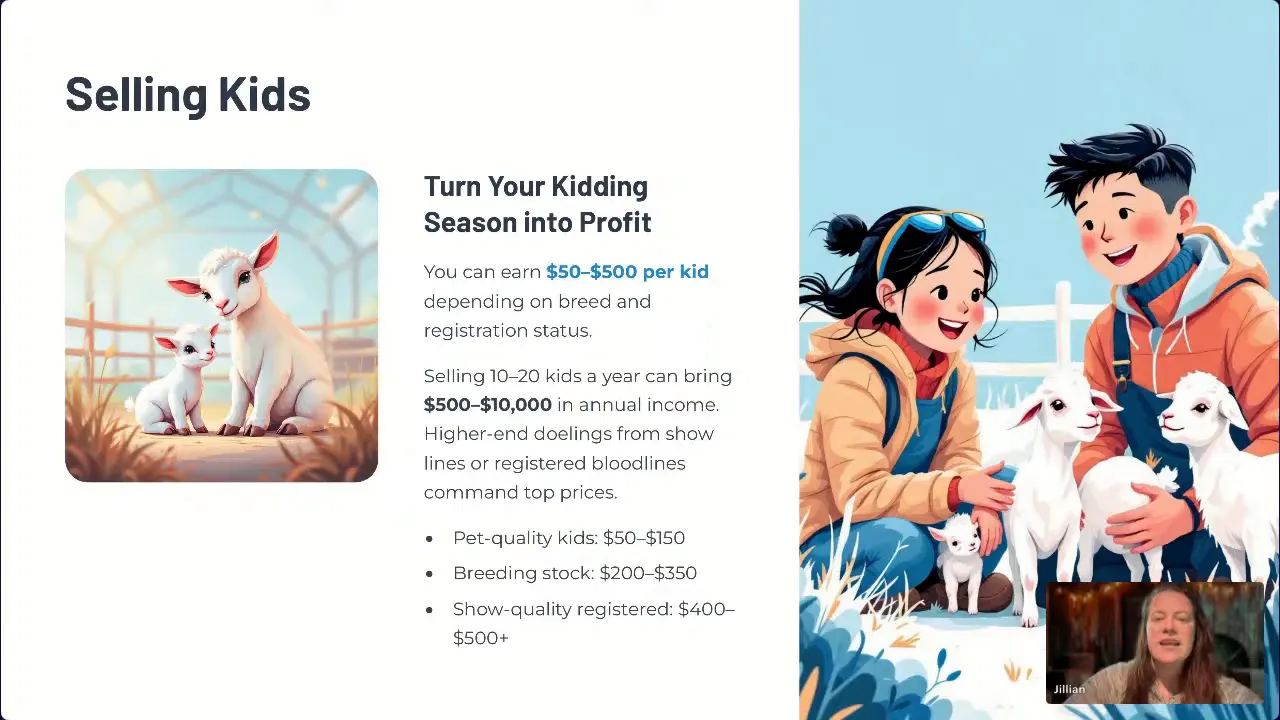
Selling kids is one of the most straightforward ways to monetize a breeding herd. Prices depend on breed, registration status, genetics, time of year, and local demand. Expect anywhere from $50 to $500 per kid. If you breed registered, show-quality stock with strong lines and herd testing, prices can reach the upper end. Even average kids commonly sell for $50–$200.
Annual income from selling kids can range widely—somewhere between $500 and $10,000 depending on herd size and market. If you plan to rely on kid sales, map local demand and how many kids you can realistically raise without compromising herd health.
2. Stud Services
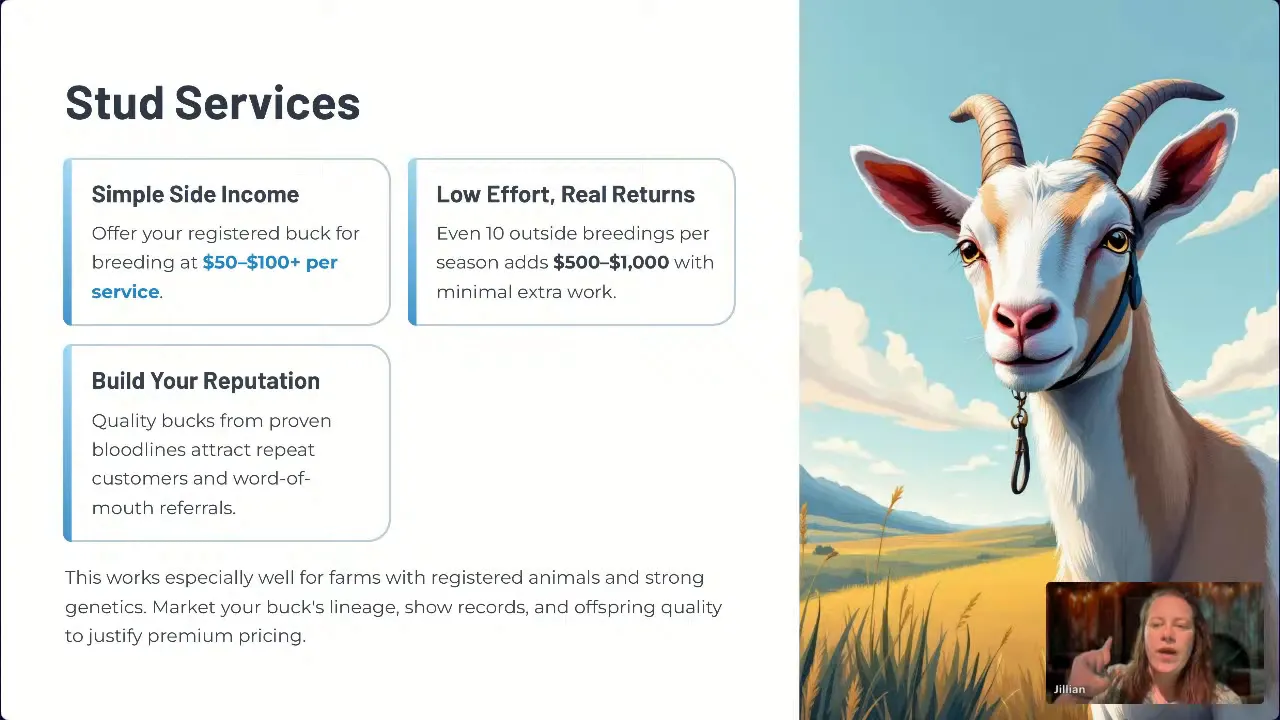
If you have a quality registered buck, offering stud services is simple and profitable. Typical fees run from $50 to $100 per breeding, but a sought-after buck with desirable genetics can command higher fees. Ten breedings in a season could bring in $500–$1,000 or more.
Important caution: herd testing and disease control are essential. Do not breed with or transport bucks without clear testing and documentation. One transmittable disease can devastate multiple herds and your reputation.
3. Selling Raw Milk
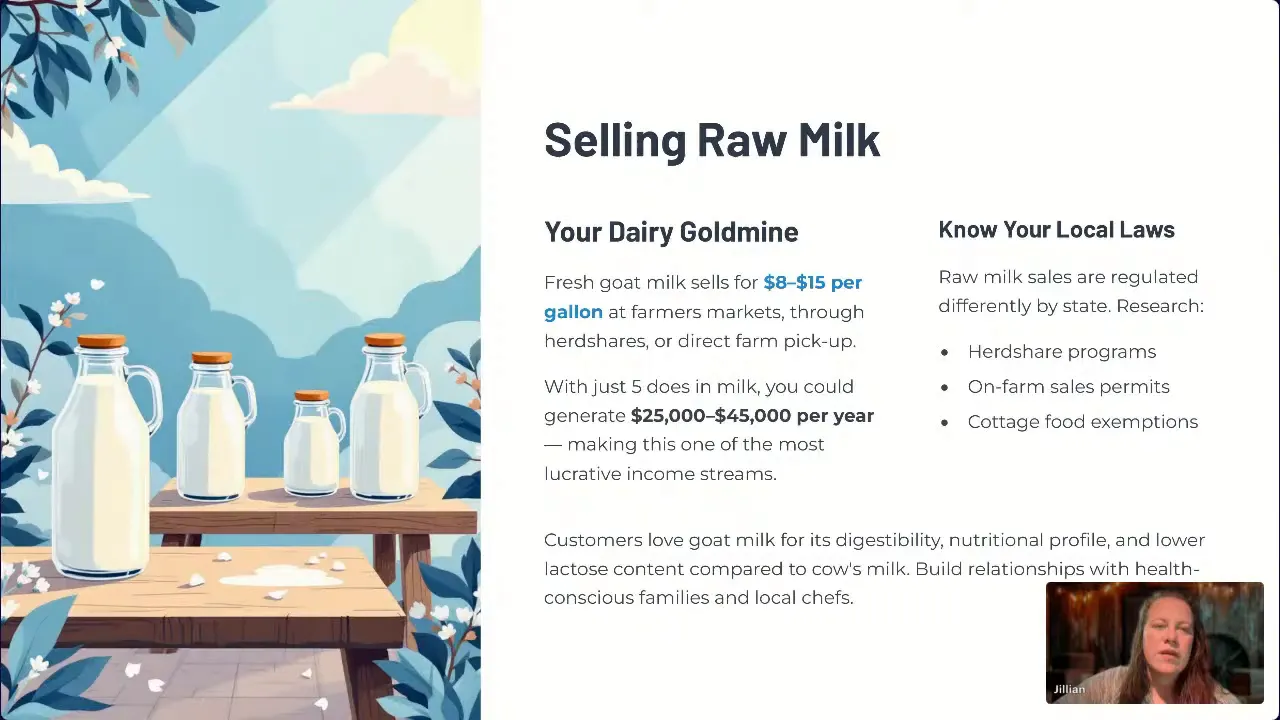
Raw goat milk has a market for both human consumption and pet use. Laws vary wildly by state and country. Fresh goat milk can sell for about $8 to $15 per gallon. With a 5-doe milking herd, some producers estimate tens of thousands annually in areas where raw milk sales to consumers are legal—figures like $25,000 to $45,000 are mentioned by producers in permissive jurisdictions.
If you live where raw milk is restricted for human consumption, you might sell milk marketed for pets or craft uses (soap making, soap supplies). Always check local regulations before planning milk sales and invest in sanitary handling, refrigeration, and clear labeling.
4. Cheese Making
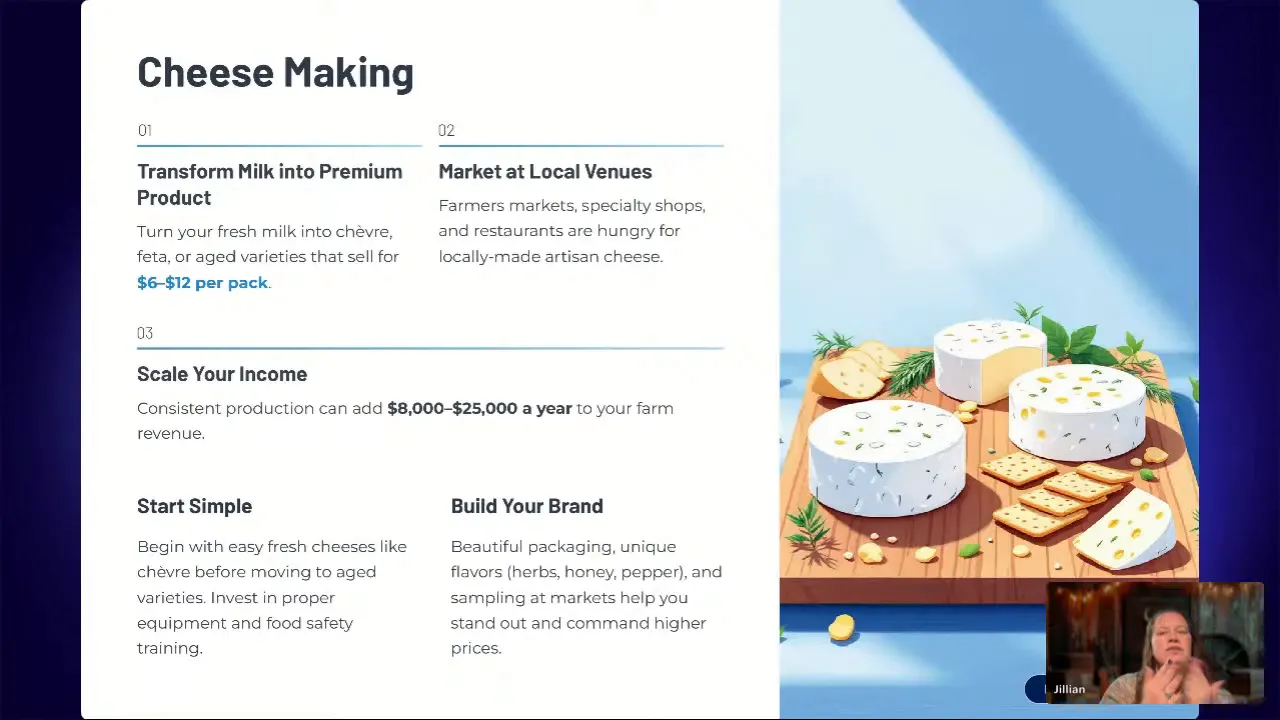
Cheese is a natural value-added product for milk producers. Where cottage food laws allow it, artisanal goat cheeses command strong prices and loyal customers. Small producers report income potential of $8,000 to $25,000 a year from cheese, depending on production volume and distribution through farmers markets, specialty shops, or restaurants.
Cheese-making requires practice to get consistent flavor and texture. If local laws restrict home-made cheese sales, consider partnering with a licensed dairy or using shared commercial kitchen space to stay compliant.
5. Soap Making
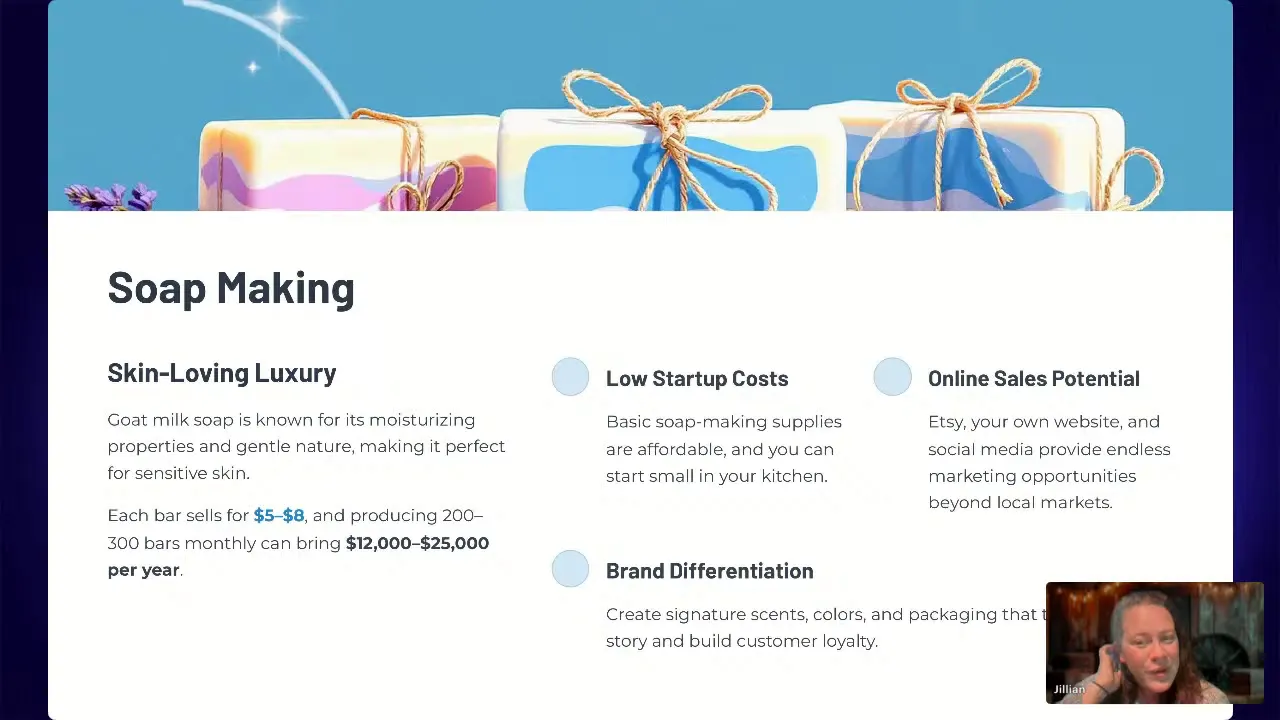
Goat milk soap is popular and an accessible value-added product. Bars commonly sell for $5 to $8, and producers selling 200–300 bars per month can generate $12,000 to $25,000 per year. Soap making has low startup costs; many people start in a home kitchen and scale to a dedicated workspace as demand grows.
Sell soap through Etsy, local markets, craft fairs, or your farm stand. Combine soap sales with other offerings—customers who try your soap at an event often buy more or book experiences.
6. Goat Milk Fudge and Confections
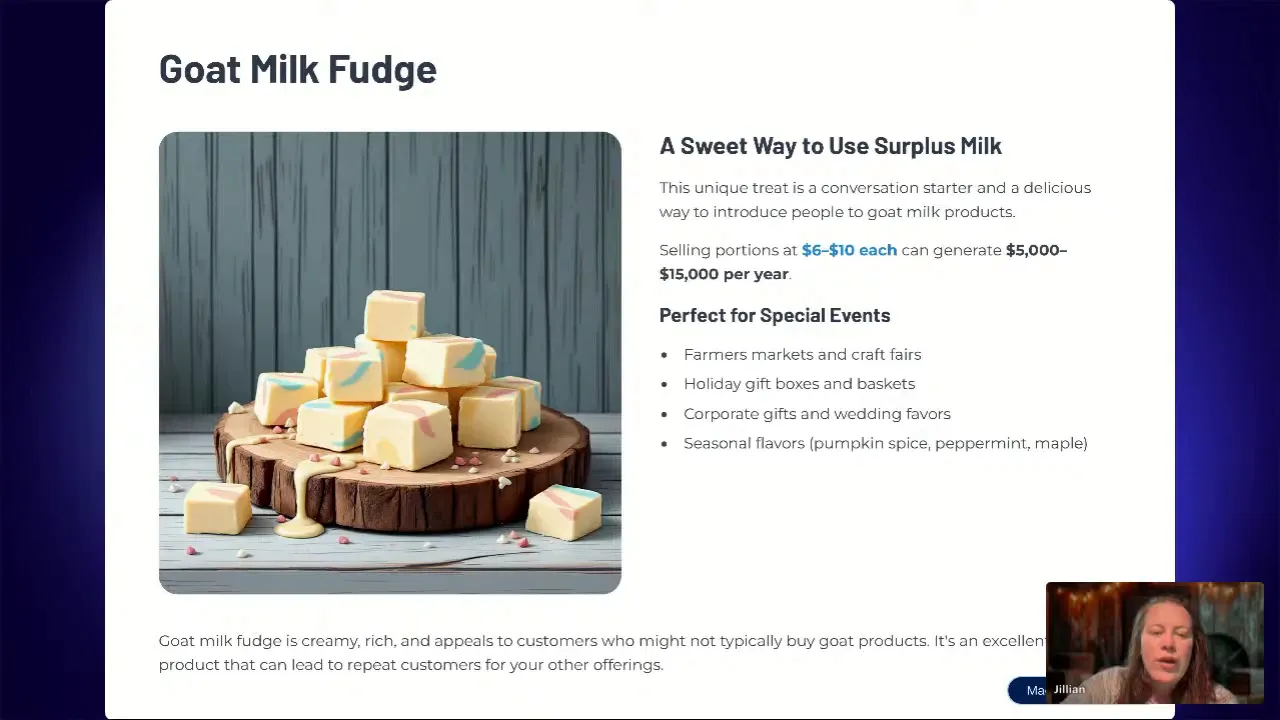
Goat milk fudge resonated strongly with customers in my area. It is relatively easy to make and can sell well as a specialty treat. Typical retail prices are $6 to $10 per piece. Producers selling fudge at markets and vendor events often make between $5,000 and $15,000 per year depending on seasonality and marketing.
Fudge can be sold in themed gift boxes for Valentine’s Day, weddings, or holiday baskets, which helps add margin and increase average sale value.
7. Selling Goat Meat
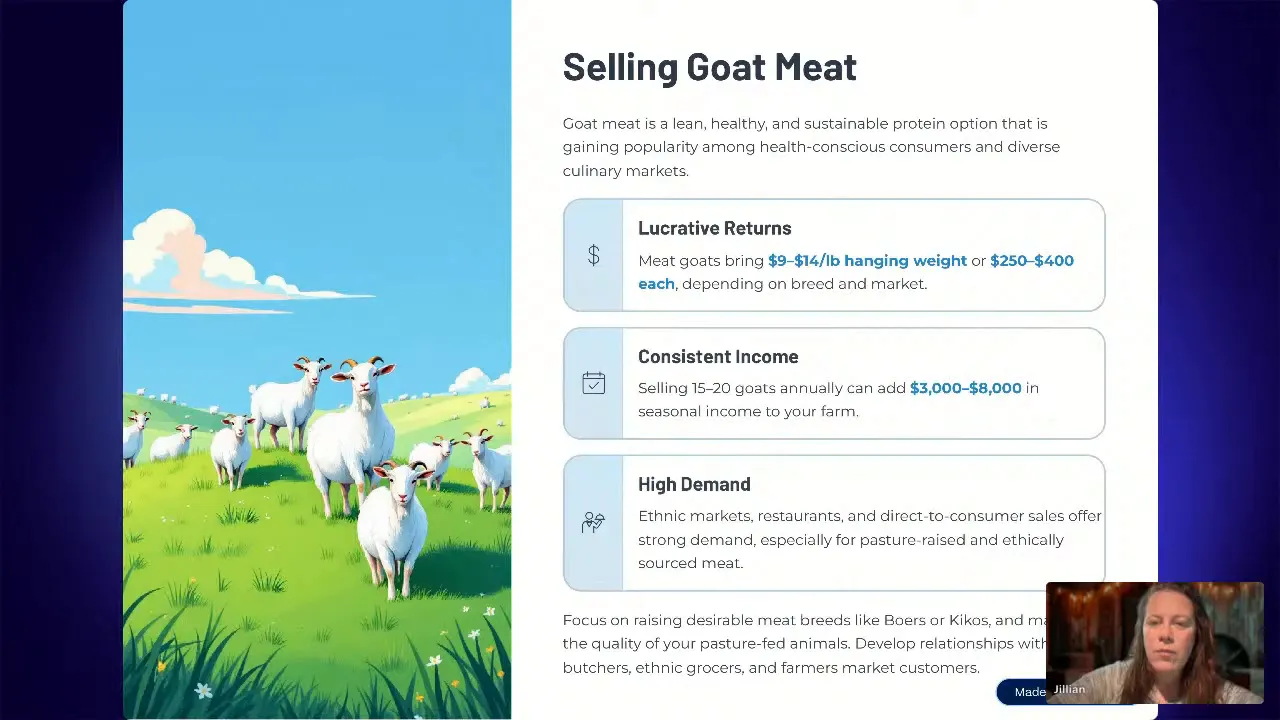
There is strong local demand for goat meat in many communities, especially in areas with cultural preferences for goat. Typical direct-sale prices can be $250 to $400 per animal, or you can sell by hanging weight through a butcher if permitted. Selling 15–20 animals per year could net $3,000 to $8,000.
If you plan to raise meat goats, choose appropriate breeds, such as Boer or Kiko, that grow fast and have the right frame. Also research slaughter, processing, and inspection laws so you can legally deliver product to customers.
8. Selling Registered Show Goats
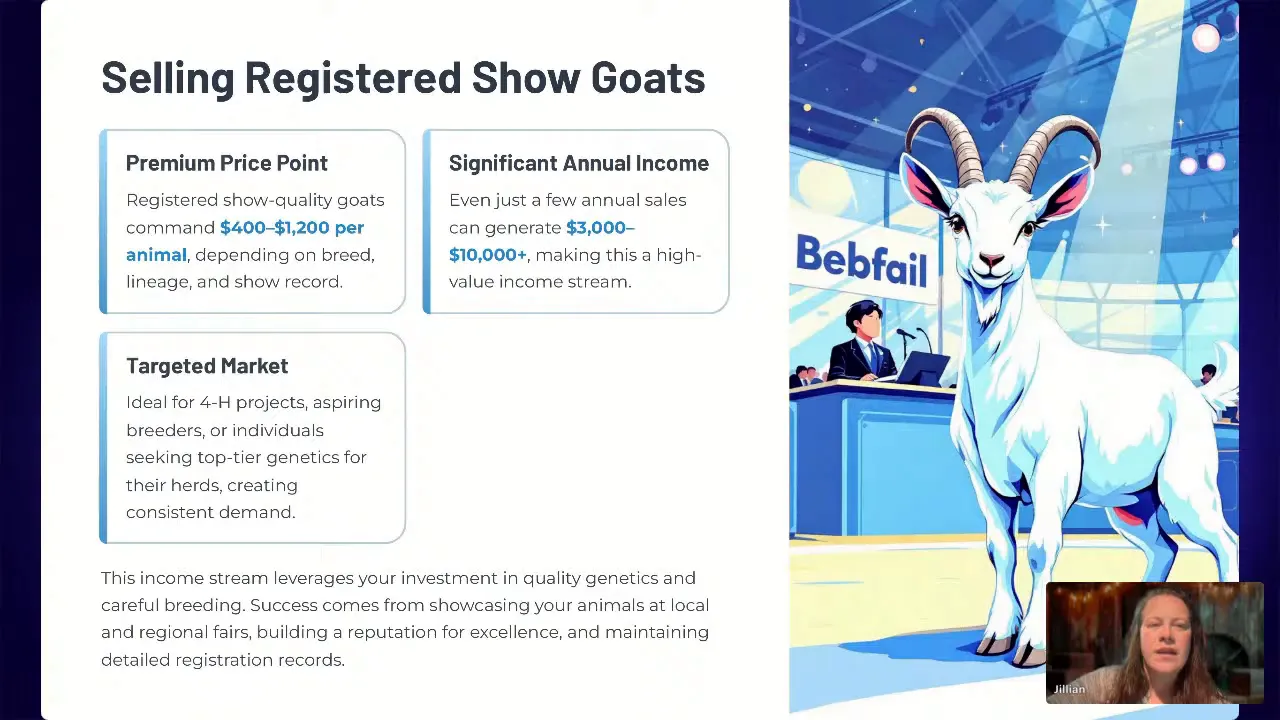
Breeding and selling registered show-quality goats can be lucrative if you invest in genetics and a good reputation. Show goats can sell for $400 to $1,200 or more, depending on breed, lineage, and show record. With the right network, selling registered stock can bring $3,000 to $10,000 annually or higher.
This path requires attention to breed standards, herd testing, and careful record keeping. It also requires time to travel and network at shows to establish credibility.
9. Goatscaping and Land Management
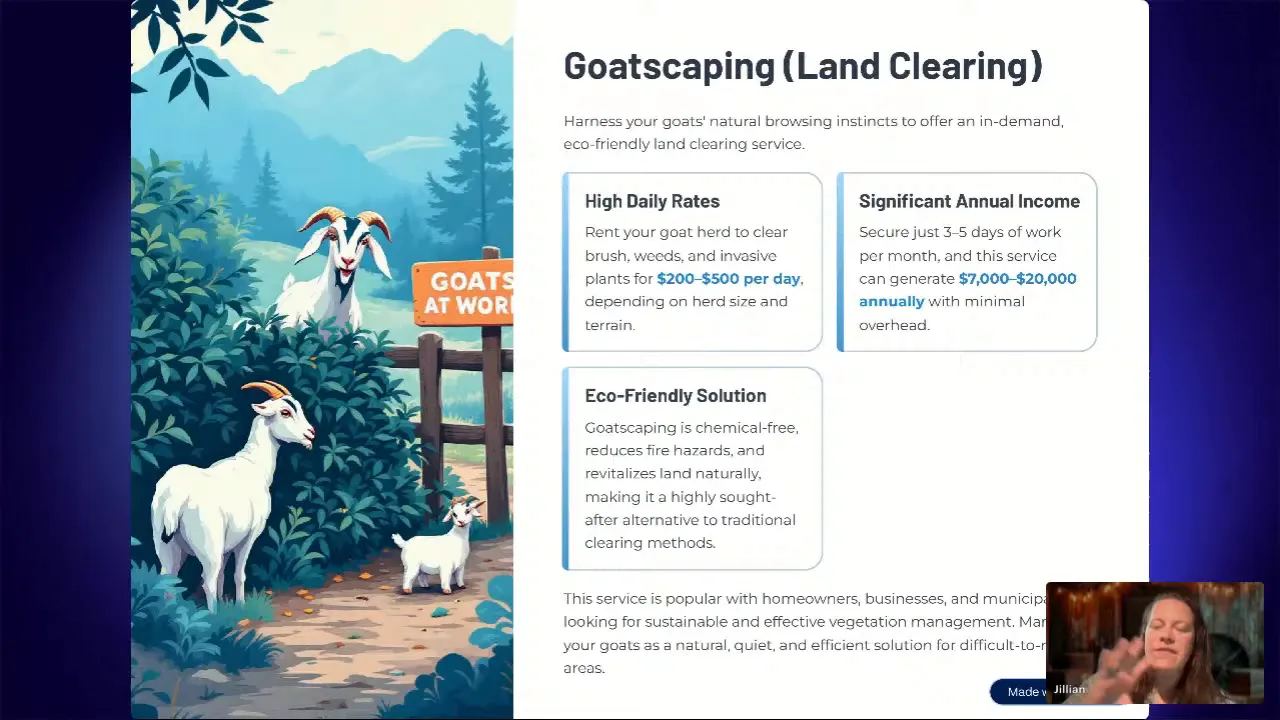
Goatscaping—the practice of bringing goats to a property to clear brush and invasive plants—is one of my favorite revenue streams. Essentially you transport your herd, set up temporary electric fencing, provide water and shelter, and charge a daily or flat fee. Local rates I’ve seen range from $200 to $500 per day.
With only a few jobs per month, this service can produce $7,000 to $20,000 a year. It is labor intensive—loading, transporting, and setting up fencing on difficult terrain is physically demanding and weather dependent. But the demand is high, and word of mouth brings repeat and referral clients.
10. Mobile Petting Zoo
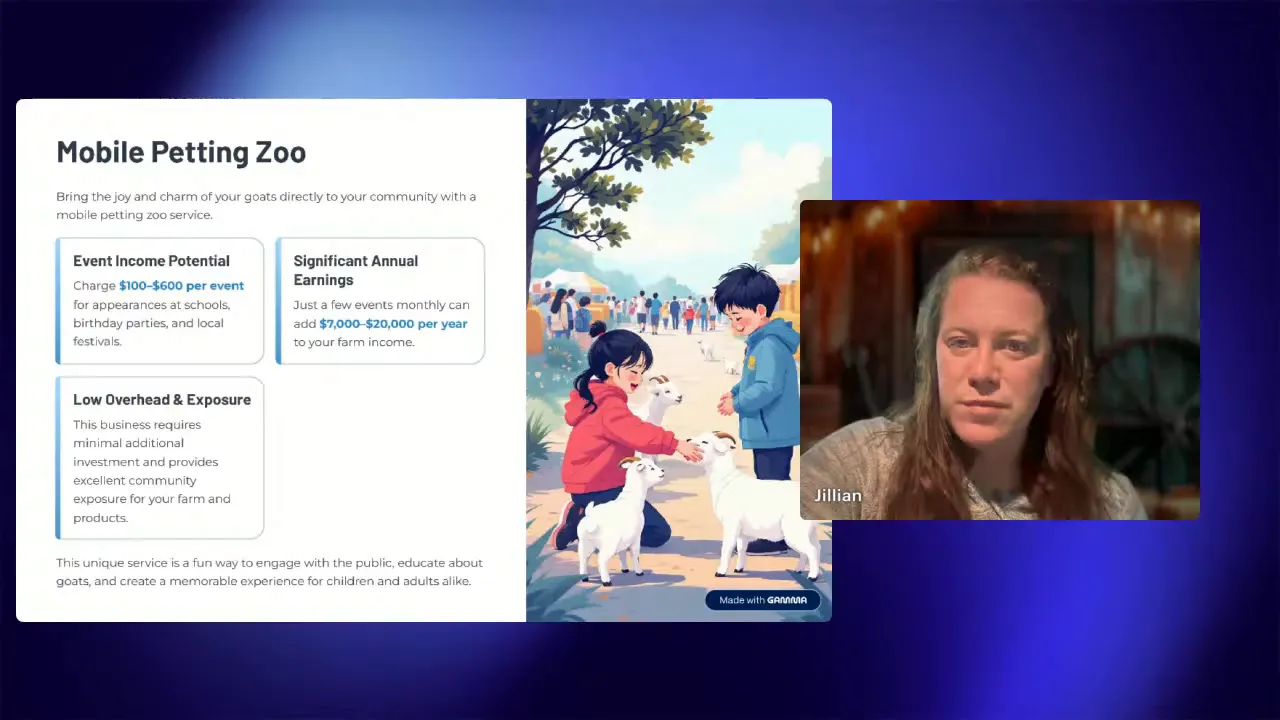
A mobile petting zoo is a great event-based revenue stream. Pricing varies by scale: bringing only goats to a backyard event might be $100, while a full farm animal lineup including ponies, rabbits, or miniature cattle can go for $600 or more per event. Annual earnings often sit in the range of $7,000 to $20,000, though this service also serves as marketing for other offerings.
Temporary fencing and animal containment are the main investments. Events connect you to your community and often lead to sales of products, bookings for parties, or farm visits.
11. Farm Tours and Workshops
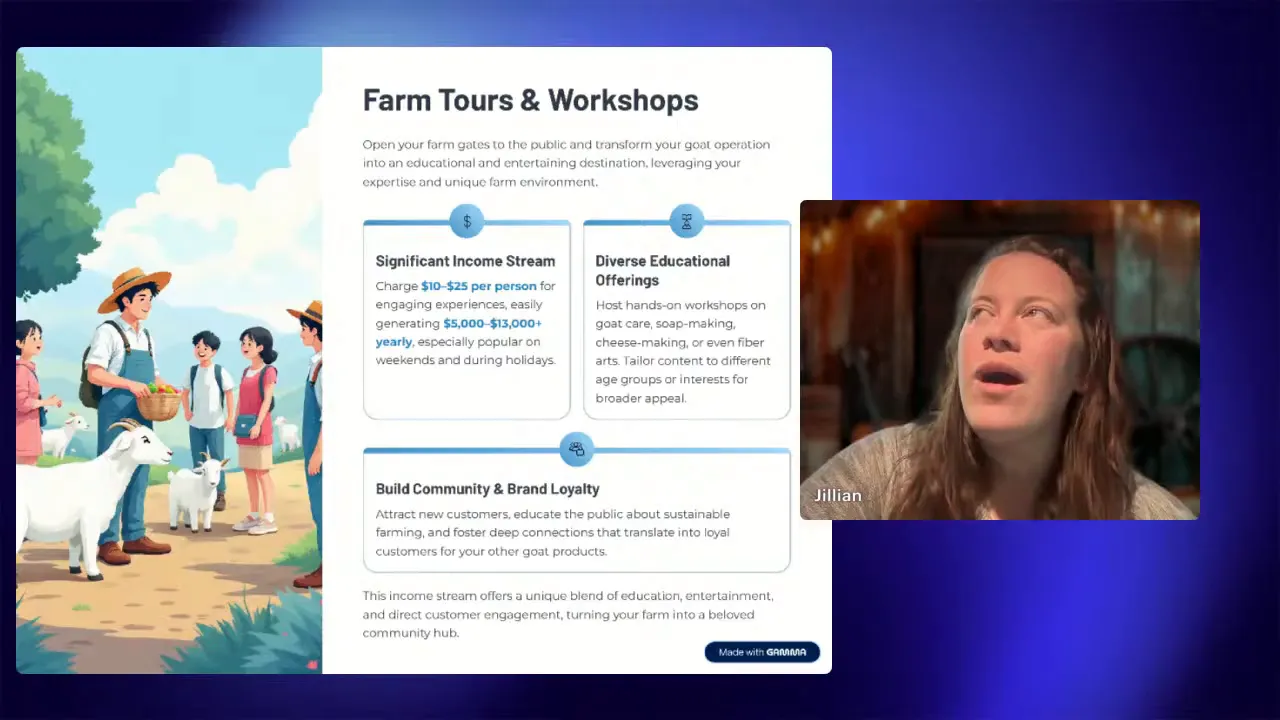
Farm tours, workshops, and hands-on classes are excellent for connecting customers to your brand. Charge $10 to $25 per person for tours and workshops such as goat care classes, soap making, or fiber arts. With regular weekend sessions and holiday events, this can bring in $5,000 to $13,000 per year.
If you prefer privacy, offer tap-in online workshops or partner with local organizations to host off-site classes. These events also serve as cross-promotion for your products and services.
12. Baby Goat Parties
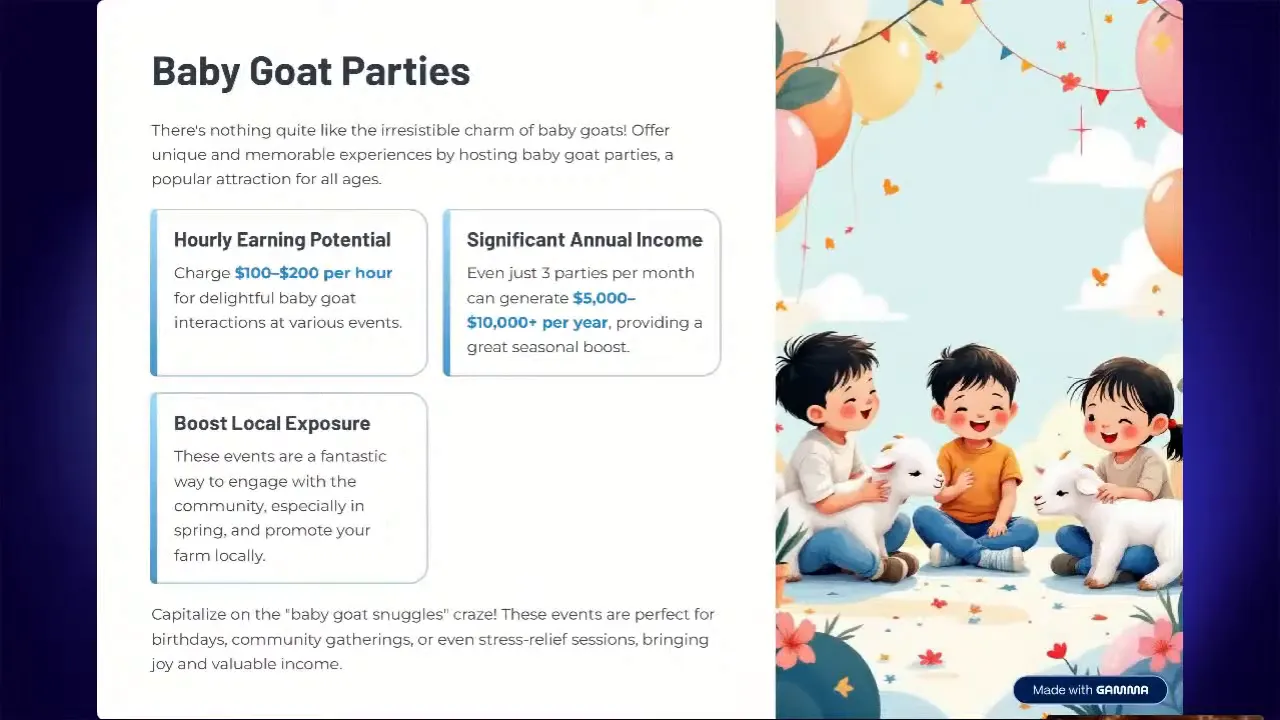
Baby goat parties are irresistibly cute and a major draw. Charge by the hour to bring baby goats to birthday parties and similar gatherings. Seasonal demand is strong; you can expect to earn $5,000 to $10,000 a year with repeat clients and a steady calendar.
These parties are highly repeatable: families often book goats annually for birthday celebrations. Have a scripted child-friendly safety and holding tutorial to reduce stress and create a consistent, safe customer experience.
13. Goat Yoga
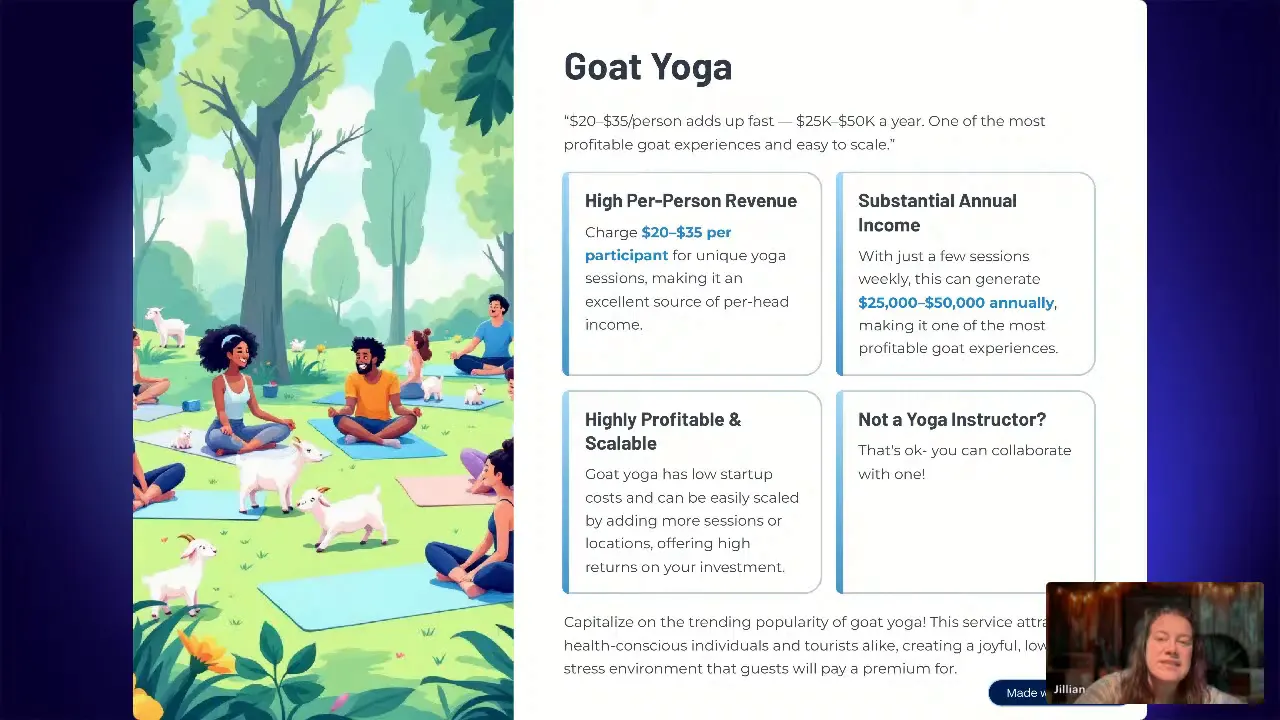
Goat yoga has exploded in popularity and is one of the highest earning experiences for goat farms. Typical prices per participant are $20 to $35, which scales quickly. Some operators report making $25,000 to $50,000 annually, and hourly rates of $600 to $1,000 are not unheard of when classes fill.
You do not need to be a yoga instructor yourself. Collaborate with a certified instructor and rent your goats for the session, or share revenue 50/50. Carry liability insurance and put basic animal-handling rules in place for participants.
14. Goat Hikes
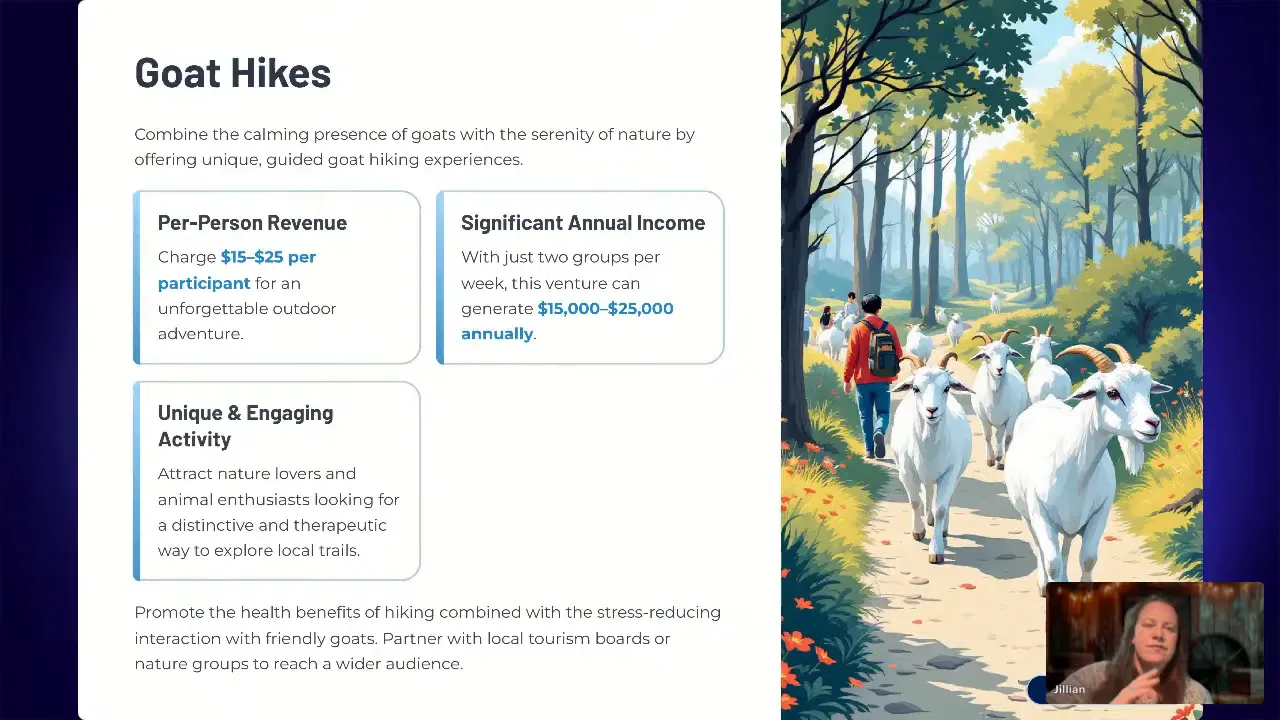
Guided goat hikes combine outdoor recreation with animal interaction. Charge $15 to $25 per person for hikes, and with a couple of groups per week you could earn $15,000 to $25,000 annually. Partner with local tourism boards or parks to reach hikers and visitors.
Hikes are therapeutic and attract people who prefer a mobile, active farm experience. Keep group sizes small for safety and ensure you have good trail insurance and permissions.
15. Airbnb and Farm Stays
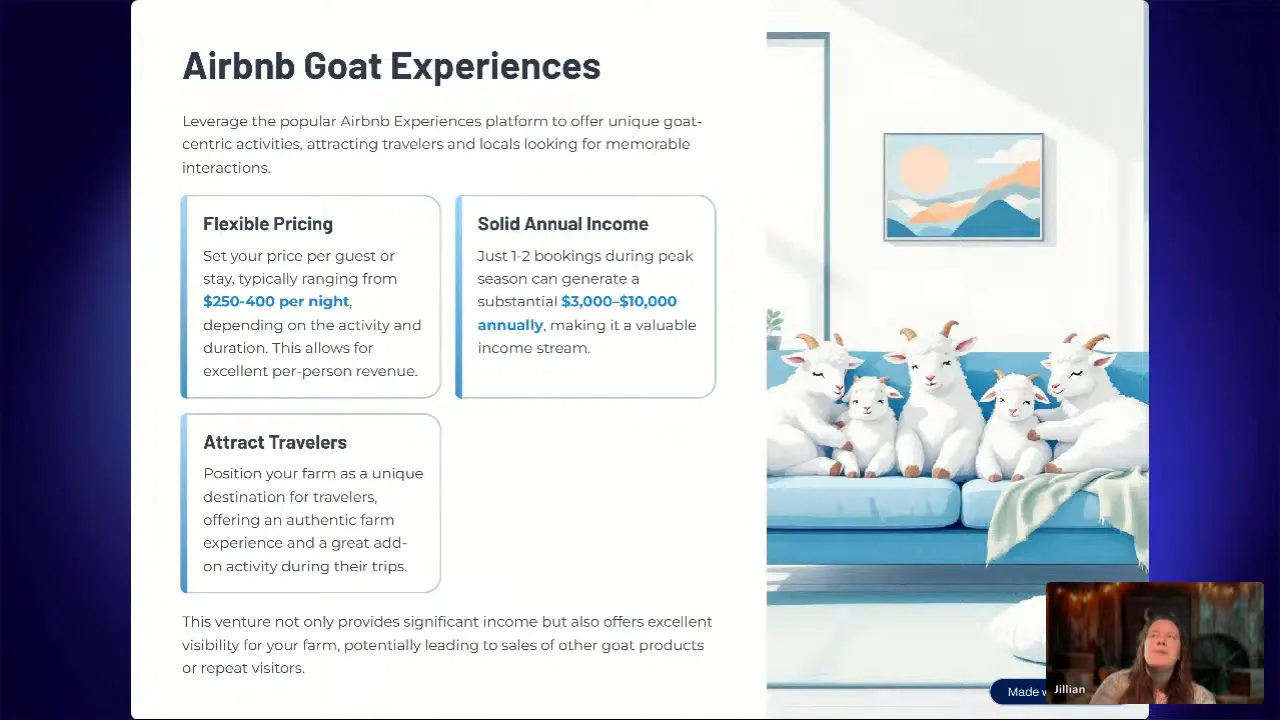
Renting a guesthouse or offering a farm stay experience lets travelers experience real farm life. Typical nightly rates range from $250 to $400 per night, and themed packages with goat hikes or yoga can command even higher rates. Just a handful of bookings per season can yield $3,000 to $10,000 or more.
Farm stays work best when paired with add-on activities so guests get a hands-on farm experience. Make sure you comply with local short-term rental regulations and keep clear safety rules for interactions with animals.
16. Goat Photography
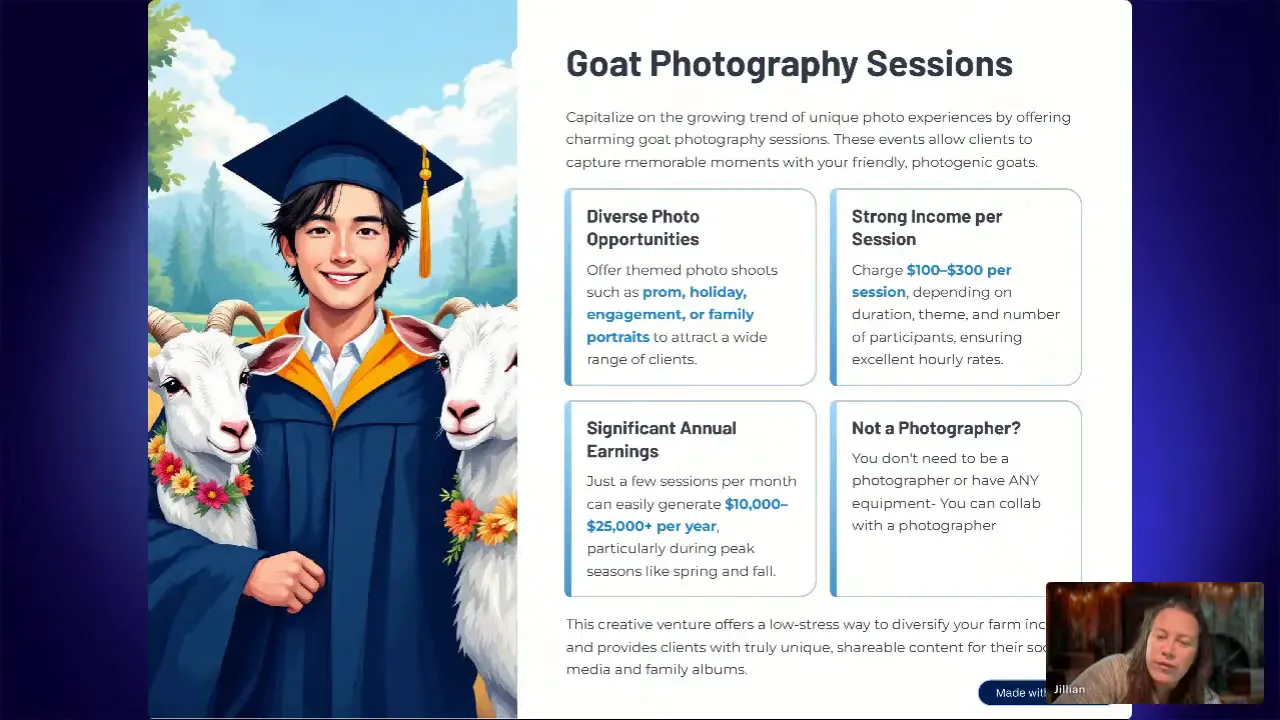
Goats make a charming addition to portrait sessions—prom photos, engagement shoots, family portraits, graduation pictures, and holiday minis. Photographers often want animal presence and will pay for experienced handlers and well-behaved goats. Charge anywhere from roughly $100 to $300 per session and expect to earn $10,000 to $25,000 per year if you host regular shoots or collaborate with local photographers.
If you are not a photographer, partner with one and offer a split or convenience fee for your time and animal handling. Prom and graduation sessions are especially popular and repeatable.
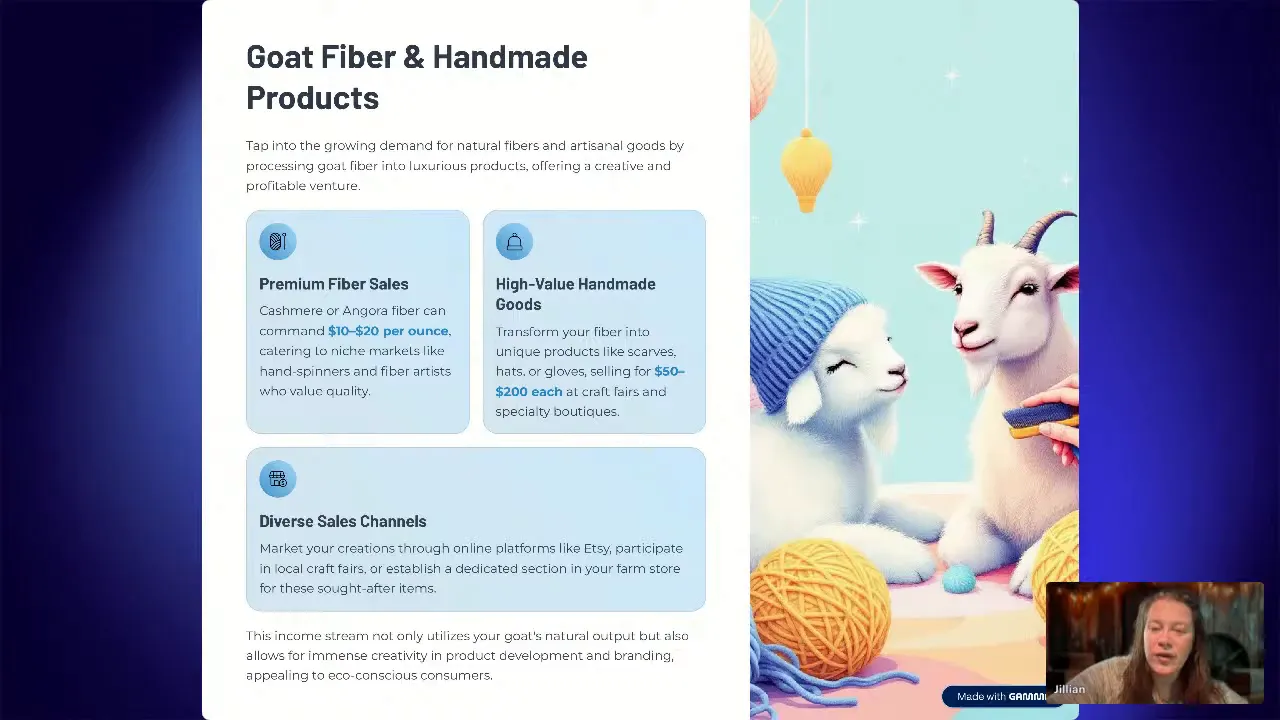
17. Goat Fiber and Handmade Products
If you have fiber-producing goats like angora or cashmere breeds, you can sell raw fiber at $10 to $20 per ounce or turn fiber into handcrafted goods. Scarves, hats, and sweaters made from angora or cashmere can sell for $50 to $200 or more depending on craftsmanship.
Fiber products do require time and skill, but they can command high prices on platforms like Etsy and at craft fairs. If you have a crafting talent, combining fiber sales with farm experiences can create a unique niche.
Tips for Success
Turning goats into a sustainable income stream is part animal husbandry and part small-business strategy. These practical tips will help you set realistic expectations and scale safely.
- Know your local sales laws: Raw milk regulations, cottage food laws, and short-term rental rules vary. Research your jurisdiction before offering products or experiences.
- Herd health and testing: For stud services, sales, and events, herd testing and good biosecurity are essential to avoid spreading disease.
- Insurance: Liability insurance is recommended for activities that involve the public such as yoga, parties, and petting zoos.
- Brand your farm: Create a clear identity and story people can connect with. Mine is Only Goats Farm—a name that sparks curiosity and laughter and helps people remember us.
- Combine services and products: Cross-promote—sell soaps and fudge at events, offer add-on goat hikes to Airbnb guests, or have signups at petting zoos for future goat yoga classes.
- Market seasonally: Plan product production in slower months. Make soap in winter so you can focus on kidding season in spring and goatscaping in summer.
- Set expectations and processes: For activities with the public, have scripted safety talks, basic rules for handling animals, and a clear cancellation policy for weather-dependent services.
- Build community partnerships: Work with photographers, yoga instructors, tourism groups, schools, and local businesses. Referrals and collaborations expand your reach.
Practical Logistics and Safety
Many of these income streams require more than just goats. Plan for transport, waterproof covers, temporary fencing, water containers, shelters, and contingency plans for weather. For goatscaping and mobile events, a reliable trailer or vehicle and well-practiced loading routines reduce stress and save time. For public events, carry first aid kits, have clear handwashing stations, and make sure your animals are well trained to tolerate handling.
Liability insurance is a must for public-facing activities. I carry insurance for goat yoga, parties, and similar events even though I have never had a major issue. Insurance protects you, your clients, and your business reputation.
Packing It All Together: Building a Year-Round Strategy
Most goat-based income streams are seasonal, but if you combine products and services you can create year-round cash flow. Here is a sample strategy:
- Winter: Focus on value-added products like soap, fudge, and fiber processing.
- Spring: Kidding season. Sell kids, retain desired stock, and start offering baby goat parties as kids get to an appropriate age.
- Summer: Goatscaping and mobile events. Host goat hikes, yoga, and petting zoo bookings when weather is favorable.
- Fall: Run workshops, photography minis for back-to-school and prom seasons, and market holiday gift boxes combining soap, fudge, and fiber goods.
By staggering activities and product production around kidding and pasture cycles, you can keep busy without burning yourself out. Repeat customers from parties, yoga, and events form the backbone of a thriving local business.
Final Thoughts
Goat enterprises suit a wide range of goals. If you want supplemental income, start small: soaps, a few parties, and weekend markets. If you want a full-time business, combine high-margin experiences like goat yoga and goatscaping with year-round product sales and lodging experiences. Be creative, know your local rules, and think about customer experience. Word of mouth is powerful in farming communities—do a great job and you will find your calendar filling up.
If you are just starting, pick one or two income streams that match your temperament and resources. For me those are goatscaping and baby goat parties. They fit my love of hauling the herd to new places and the joy of seeing people light up with baby goats. Your favorites may differ, and that is fine. There are so many ways to build a goat-powered business; find the sweet spot between what you enjoy and what your local market demands.
“You can make a really good income from goats. You just have to be creative, think outside the box, and learn what works locally.”
Want to share your experience? Which of these paths sounds most appealing to you? Tell me which one you would try first and any local tips you have for others starting out.
Leave a Reply