
Introduction
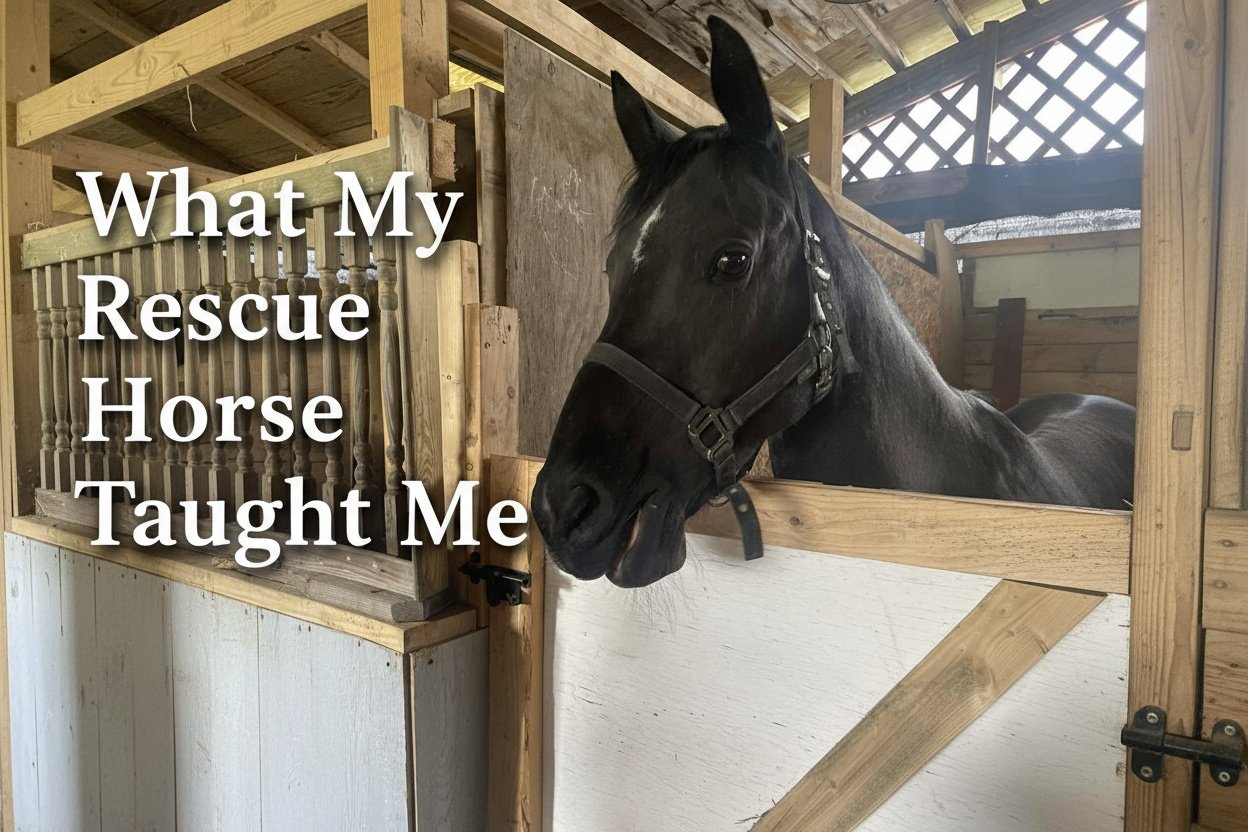
A few months ago, I brought my first horse home. She was a rescue — sweet, unsure, and carrying a history I will never fully know. She had been through five different homes in a matter of five years, and then sat, unadopted, at a rescue for another two years.
All I wanted was to love her and give her the best life possible. What I didn’t realize was just how much she was about to teach me.
I thought I was prepared. I read the books, asked questions, and watched an embarrassing number of YouTube videos. But nothing compares to the real-life lessons that come from working with a living, breathing, opinionated, 1,000‑pound animal. Some lessons were heartwarming… others were humbling.
Whether you’re about to bring home your first horse or you’ve been dreaming about it for years, I hope sharing my experience helps make your journey smoother. These are the things no one warned me about — but I’m so glad I learned.
Lesson 1: They Might Have Medical Issues
When I brought my mare home, I knew horses could come with health needs—but I was not prepared for how quickly those needs would stack up. Within the first few weeks, I learned she needed her teeth floated, her back was out of alignment, and she was showing signs of ulcers.
I had pictured long trail rides, brushing her in the sunshine, and bonding over quiet moments together. Instead, I was scheduling vet visits, talking to a chiropractor, and looking into ulcer treatments.
It was overwhelming—financially and emotionally. But I’m so grateful I caught these issues early. Once she began feeling better, her personality started to shine. She became more willing, softer, and more comfortable in her body.
What I learned:
- Always assume your new horse will need some medical support.
- Rescue horses often haven’t had consistent care.
- Dental work, bodywork, and ulcer treatment are more common than you’d think.
- Budget for more than the purchase price—your horse’s comfort depends on it.
Being proactive with her care changed everything. If you’re bringing home a new horse—especially a rescue—get them checked sooner rather than later. Their body might be holding onto more than you can see.
Lesson 2: You Can Be Too Nice
I didn’t understand this at first because, honestly, I wasn’t trying to be a trainer—I just wanted to love my horse and make her feel safe. She had bounced between homes and spent years without a person of her own. Of course I wanted to make up for that.
But horses don’t think like humans. They think like… horses.
To them, there’s always a leader. If it’s not you, it’s them.
I was so gentle and unsure that my mare decided she was the one calling the shots. She began crowding my space, ignoring cues, and walking all over me—literally and figuratively. I mistook her pushiness for affection. Other people saw what I didn’t: she didn’t see me as her leader.
Everything changed when I learned that being a leader and being loving are not opposites.
You can still snuggle your horse. You can still bond deeply. But boundaries make that bond safer and stronger.
One of the most surprising things I learned was how much my voice mattered. My vet once told me about a client who transitioned from female to male. During the physical transition, they noticed the horse responded dramatically differently to the rider’s tone. A more masculine, firmer voice translated to clearer leadership—and the horse listened better.
I didn’t need to sound like a cowboy, but I did need to sound confident.
And when I held my boundaries?
She respected me.
When I slipped back into being too soft?
She pushed right through me.
It was instant feedback.
What I learned:
- Horses need clarity more than coddling.
- You can be kind and still enforce boundaries.
- Tone and confidence matter.
- Your horse will mirror the energy you bring.
Learning to be a leader was uncomfortable for me at first. But now, our relationship is safer, calmer, and more connected—because she knows I’ll show up for her with love and direction.
Lesson 3: Treats & Training Go Hand-in-Hand
I’ll be honest — I love spoiling my horse. Treats felt like such an easy way to build trust. And at first, it was sweet… until it wasn’t.
Pretty quickly, I noticed she was getting a little too interested in my pockets. She began nudging me, searching me, and getting pushy when she thought I had food. It was still “cute”… until it crossed a line.
That’s when I learned:
A treat‑obsessed horse isn’t spoiled — they’ve simply learned that asking works.
To them, food is a resource, and if they think they can demand it, they will. That doesn’t make them bad — it just means the boundaries aren’t clear.
So during training, I took treats out of the equation. No bribing, no food in pockets. Everything became about focus, respect, and communication.
And honestly? It helped a TON.
She stopped mugging me. She paid attention to my cues. She learned that working with me wasn’t about hunting for snacks — it was about listening and responding.
Do I still give her treats? Absolutely. But now she earns them respectfully.
What I learned:
- Treats are fine — but timing and intention matter.
- If your horse gets pushy, remove treats during training.
- Keep treats out of your pockets to protect your space.
- Reward manners, not demand behavior.
When treats became a tool instead of a default, our bond became healthier — and so did her behavior.
Lesson 4: Cute Behaviors Can Become Problems
When you first bring your horse home, everything they do feels adorable. The little nudges, the curious sniffing, the way they step into your space — it all feels like affection.
At least, that’s what I thought.
What I didn’t realize was that many of those “cute” behaviors were actually my mare testing boundaries.
A gentle nose nudge turned into a push.
Standing close became crowding.
Her curiosity about my hands turned into taking treats without being asked.
None of it happened overnight — but it added up.
I remember thinking, “Aww, she just loves being close to me.” But what she was actually learning was that she could be in my space any time she wanted.
That’s not connection — that’s a safety issue.
Once I started treating these small behaviors as information — not affection — everything improved. I began rewarding respectful distance, inviting her into my space only when asked, and redirecting behaviors before they escalated.
What I learned:
- “Cute” behavior often becomes pushy over time.
- Early boundaries prevent safety issues later.
- Horses don’t automatically know what’s allowed — we teach them.
- A respectful horse is a safer, more relaxed horse.
The good news? Correcting these habits early is much easier than trying to fix them later. It’s not about being strict — it’s about setting your horse up to succeed.
Lesson 5: Take All Advice With A Grain of Salt
One of the most surprising parts of horse ownership wasn’t the horse — it was the people.
Everyone has an opinion.
And they are very confident about it.
Some advice I received was truly life‑changing. Other advice… not so much.
I quickly learned that just because someone has been around horses a long time doesn’t mean they practice great horsemanship. Some people rely on outdated methods, others use harsher techniques than I’m comfortable with, and some simply repeat what they were taught without understanding why.
It took time to develop the confidence to say, “Thank you — but that’s not for us.”
At the same time, I found mentors whose guidance has shaped everything about how I work with my mare. Their knowledge, patience, and explanations helped me learn why something matters — not just what to do.
The key is learning to filter.
What I learned:
- Take advice, but weigh it carefully.
- Just because it’s common doesn’t mean it’s correct.
- Good horsemanship feels fair, calm, and logical.
- You’re allowed to say no to techniques that don’t align with your values.
Your relationship with your horse is unique. Seek help — but don’t be afraid to trust your instincts.
Lesson 6: Enjoy Every Moment + Keep Learning
Even on the hard days — especially on the hard days — I try to remind myself how lucky I am to have a horse. Not everyone gets the chance to bond with an animal like this.
In the beginning, I thought the “real” horse time would happen once she was fully trained. But I quickly learned that every single interaction is an opportunity to build connection and confidence.
Sometimes that means taking her for a hand‑walk around the property. Other times, it’s just brushing her while she eats hay. Or sitting in her pasture while she grazes. All of it counts.
I also started intentionally exposing her to new things — tarps, obstacles, different areas of the barn, trails, puddles — not to overwhelm her, but to show her that the world is safe.
Every experience became a lesson for both of us.
What I learned:
- Bonding doesn’t just happen during “training.”
- Small, consistent moments matter.
- New experiences help build confidence.
- Learning never stops — for both horse and human.
This horse is teaching me patience, kindness, and curiosity. I’m learning to celebrate small wins, laugh at mistakes, and keep showing up. Because every day, we’re building something together.
Lesson 7: Get Support Early
I used to think that horse ownership was something you just figured out with time. But the truth is — getting support early saved me from making a lot of mistakes and helped me build a much stronger relationship with my horse.
I joined the Horse Help Challenge, and it was a game‑changer. It walks you through training from the very beginning — even if all you’re doing right now is learning groundwork or trying to create calm, safe routines.
Some people in the group are doing amazing things like horse soccer or liberty work. Others — like me — are focusing on the basics: respect, confidence, and connection.
What I loved most is that it didn’t make me feel silly for being new. It celebrated the small wins.
It gave me structure, steps, and encouragement… things I didn’t even realize I needed.
What I learned:
- You don’t have to do this alone.
- Structured guidance builds confidence.
- Groundwork is just as important as riding.
- Support helps you grow faster — and safer.
If you’re brand‑new (or just feeling stuck), this is one of the best places to start:
👉 Free 30‑day Horse Help Challenge: https://www.gethorsehelp.com/?sca_ref=9801154.ViJ3JZFd77
11. Conclusion / What’s Next
Bringing home my first horse has been one of the most meaningful (and humbling) experiences of my life. I thought I was just getting a riding partner — but I ended up with a mirror, a teacher, and a daily reminder to slow down and learn.
I’ve made mistakes. I’ve doubted myself. I’ve celebrated tiny wins most people would never notice. But every single moment has been worth it.
If you’re new to horse ownership — or considering it — here’s what I hope you take away:
- You don’t have to have all the answers.
- Leadership and love go hand-in-hand.
- Boundaries make your relationship safer.
- Learning is ongoing.
- You are absolutely capable of doing this.
Your horse doesn’t need you to be perfect — just present.
If you’re looking for support, structure, and a community that gets it, I can’t recommend starting here enough:
👉 Free 30-day Horse Help Challenge: https://www.gethorsehelp.com/?sca_ref=9801154.ViJ3JZFd77
And if you’re already on your journey, I’d love to hear your stories — the messy, the magical, and everything in between.
Here’s to more tiny victories, bigger confidence, and the incredible horses who teach us along the way. 🤎
Leave a Reply