
Introduction
Every single year, I do the same thing.
I think about starting my seeds… but it’s still freezing out, so I don’t do it.
Then weeks go by. I forget. Life happens. And suddenly it’s too late to start seeds.
That’s when I end up at the nursery, spending way more money than I planned on started plants—knowing full well that if I had just started seeds on time, I’d have more than enough for a huge garden.
And not just that. I’d have extra plants I could sell at my roadside stand and make a little extra money on the side.
This year, I finally decided to break that cycle.
I found out about winter sowing, and for the first time ever, I’m actually doing it. No overthinking. No waiting for the “perfect” time. Just planting seeds in milk jugs and letting nature handle the timing.
For me, winter sowing completely eliminates my biggest problem: failing to plan—and then paying for it later.
If you’ve ever thought, “I should’ve started seeds earlier,” this might be the method that finally makes it stick.
What Is Winter Sowing?
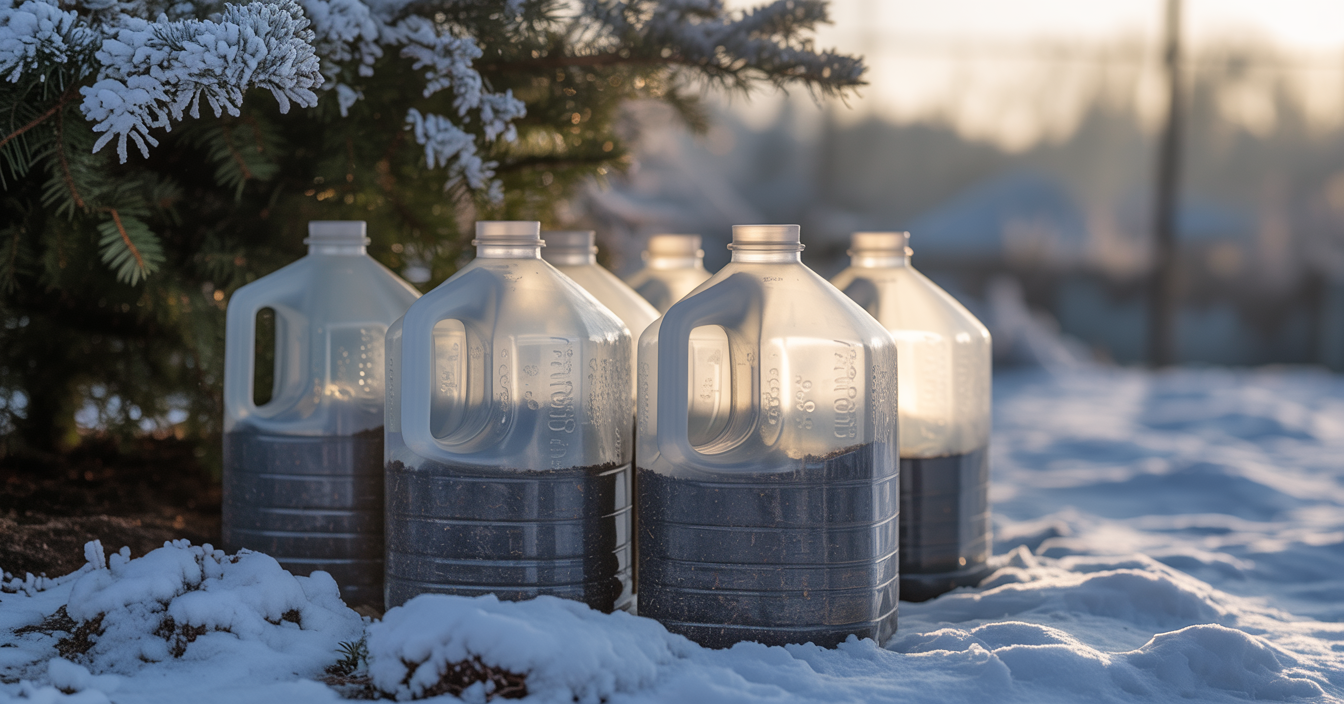
Winter sowing is a method of starting seeds outdoors in recycled containers—most commonly milk jugs—that act like mini greenhouses. The jugs protect seeds from extreme conditions while still exposing them to natural temperature changes.
The freeze‑thaw cycles, snow, rain, and gradual warming tell the seeds exactly when to sprout. This mimics how seeds behave in nature, which is why the process is so effective.
Why Winter Sowing Works So Well
Winter sowing works because it lets nature do what it’s already really good at—telling seeds when it’s safe to grow.
Instead of guessing dates or trying to time things perfectly indoors, winter sowing exposes seeds to natural freeze‑thaw cycles, snow, rain, and gradual warming. Those temperature changes act like a built‑in signal system. When conditions are right, the seeds sprout. When they’re not, they wait.
Here’s why gardeners love it:
- Seeds naturally cold‑stratify when they need it
- Freeze‑thaw cycles help break seed dormancy
- Seedlings emerge at the right time for your climate
- Plants grow stocky and strong instead of tall and leggy
- No hardening off required—these plants are born outdoors
- Uses free or recycled containers
Because winter‑sown seedlings start their entire life outside, they’re already adjusted to wind, sun, and temperature swings. That usually means tougher plants and better survival once they’re in the garden.
It’s a low‑effort system that rewards you for not overthinking—something a lot of us could use when it comes to seed starting.
What You Need to Get Started
You don’t need fancy supplies.
Basic winter sowing supplies:
- Clean milk jugs or similar containers
- Potting soil (not garden soil)
- Seeds
- A utility knife or scissors
- Tape (duct tape works well)
- A marker for labeling
That’s it. No lights. No heat mats.
How to Winter Sow in Milk Jugs (Step‑by‑Step)
- Prep the jug
Cut the milk jug almost in half, leaving a hinge near the handle. Poke several drainage holes in the bottom. - Add soil
Fill the jug with about 3–4 inches of damp potting soil. - Plant seeds
Follow the depth instructions on the seed packet. Most seeds only need to be pressed lightly into the soil. - Water gently
Moisten the soil thoroughly but don’t flood it. - Seal it up
Close the jug and tape it shut. Remove the cap so rain and snow can enter. - Label clearly
Write the plant name directly on the jug. Labels inside will fade. - Put it outside
Set the jug in a spot where it will get sun and weather exposure. Don’t worry about it getting covered with snow- that’s all part of the process. Set it and forget it!
What Seeds Are Best for Winter Sowing
One of the biggest questions with winter sowing is: Will this actually work for what I want to grow?
The short answer is yes—for a lot more plants than people expect.
Winter sowing works best for seeds that are naturally adapted to cool weather or that benefit from cold exposure. These are the types of plants that, in nature, would drop seed in fall and sprout on their own in spring.
Almost foolproof choices:
- Cold-hardy vegetables (kale, lettuce, spinach, broccoli, cabbage)
- Herbs like parsley, cilantro, dill, and chives
- Perennials
- Native plants
- Hardy annual flowers (calendula, snapdragons, sweet peas)
These seeds tend to germinate reliably with winter sowing and are great confidence builders if this is your first year.
Try these once you’re comfortable:
- Semi-hardy annual flowers
- Brassicas you want in larger quantities
- Herbs that usually reseed easily in the garden
What to skip (for now):
- Heat-loving crops like tomatoes, peppers, eggplant, and basil
These plants need consistently warm soil temperatures to germinate. While they can technically be winter sown in late winter or early spring, most gardeners have better success starting them indoors or waiting until conditions are reliably warmer.
If you’re unsure about a specific plant, a good rule of thumb is this: If it can handle a light frost as a seedling, it’s usually a good candidate for winter sowing.
When to Put Jugs Outside

This is the part that makes people nervous—but it’s also where winter sowing shines.
The truth is, winter sowing is very forgiving. You don’t need perfect timing, and you’re far more likely to be late than too early.
If it’s still winter where you live—freezing temperatures, snow, cold rain—you can usually put your jugs outside with confidence. The seeds won’t sprout until conditions are right, no matter how early you set them out.
A simple timing guide:
- Mid-winter: Cold-hardy vegetables, perennials, and native plants
- Late winter: Semi-hardy annuals and herbs
- Early spring: Tender annuals
Snow is not a problem. In fact, snow helps regulate temperature and provides moisture as it melts. Your jugs can be buried, iced over, or soaked—and the seeds will simply wait.
If you’re unsure, here’s a good rule of thumb: If you would normally still be waiting to start seeds indoors, winter sowing is probably safe.
Set the jugs outside, walk away, and let the weather handle the rest.
Common Mistakes (and How to Avoid Them)
- Too much water: Drainage holes are non‑negotiable.
- Sealing the cap: Always leave it off for airflow.
- Using garden soil: It compacts and drains poorly.
- Forgetting labels: You will forget what you planted.
When and How to Harvest and Transplant Seedlings

This is where winter sowing really pays off.
You’ll know your seedlings are ready to be harvested from the jug when they have multiple sets of true leaves and daytime temperatures are consistently above freezing. Because these plants have been growing outside their entire lives, there’s no hardening-off process needed.
When to harvest seedlings from the jug:
- Seedlings have at least 2–3 sets of true leaves
- Roots are holding the soil together when gently loosened
- Overnight temperatures are no longer extreme (hard freezes are mostly done)
Don’t stress about exact dates. Winter-sown seedlings are patient and forgiving. If they need to stay in the jug a little longer, they’ll be fine.
How to harvest seedlings:
- Water the jug well before harvesting to loosen the soil
- Open the jug completely and gently scoop seedlings out with your hands or a small tool
- Separate seedlings carefully by teasing roots apart (they’re tougher than they look)
- Transplant directly into the garden or into larger pots if needed
If seedlings are crowded and it’s still too early to plant outside, you can pot them up temporarily and keep them outdoors in a protected area.
Because these plants were grown outdoors, they adjust quickly once transplanted and usually take off faster than indoor-started seedlings.
What’s Next?
If you’re a homesteader- be sure to join the homestead hustle society! It’s our free Skool group for homesteaders!

Leave a Reply