
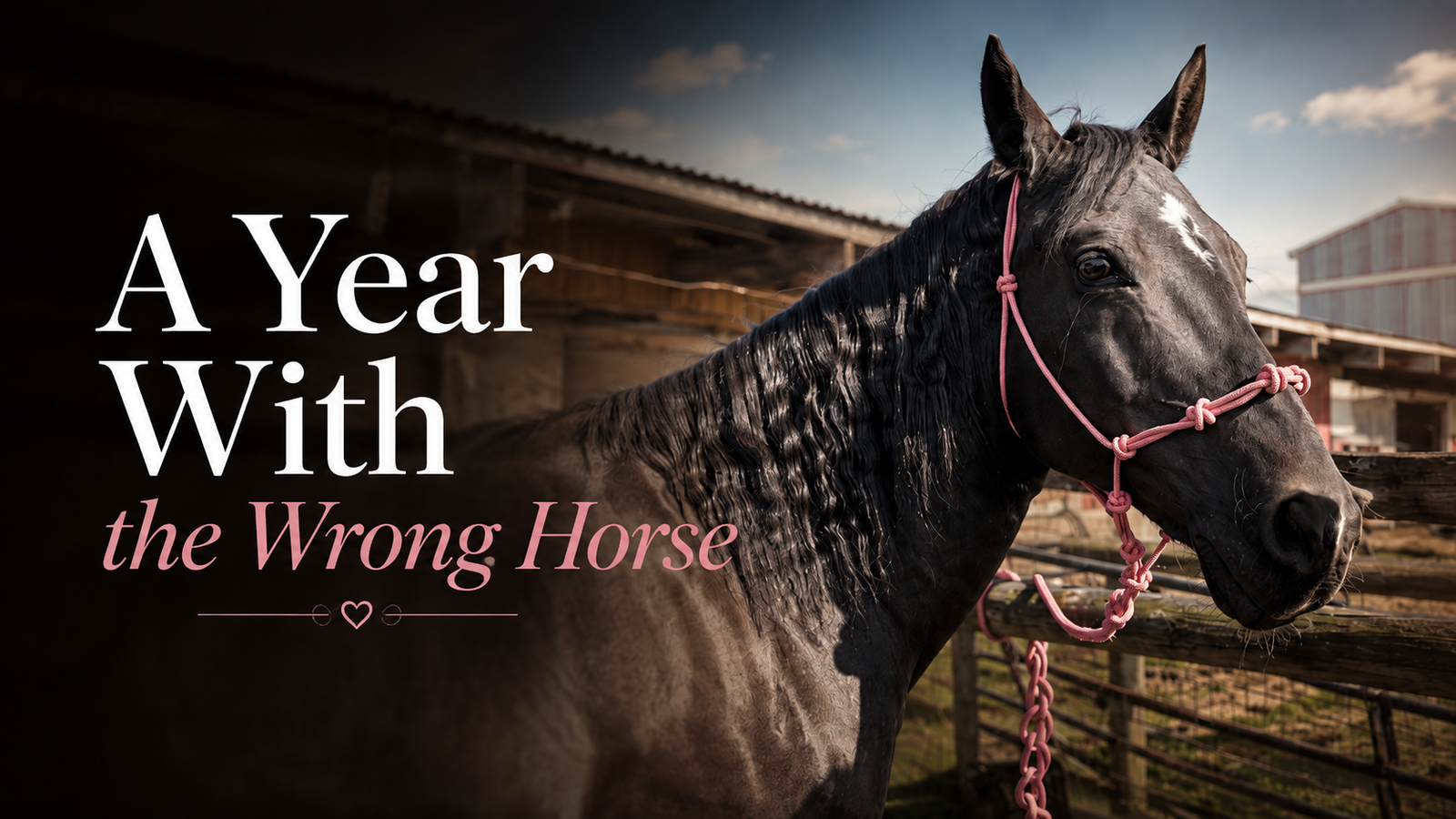
There is a point in horse ownership where perseverance stops being admirable and starts becoming a problem.
It took me almost a year to figure out where that line was.
When I got my first horse, I was determined to make it work. I wasn’t looking for a perfect horse, and I certainly wasn’t expecting horse ownership to be easy. I wanted the responsibility that came with owning my own horse. I wanted to become a better horsewoman. I wanted to learn.
So when things got difficult, I did what I thought a responsible horse owner was supposed to do:
I tried harder.
I called another vet.
I hired another professional.
I changed the tack.
I treated the medical problem.
I did more groundwork.
I waited.
I spent more money.
And every time we uncovered one problem, I thought, Okay. This is it. This is the thing we needed to fix.
Except… it never was. Every time I thought we were on the right track to “fixing” her, something else came up.
Eventually, I had to accept something that was much harder for me than any of the medical diagnoses or behavioral problems:
I had spent almost a year trying to make the wrong horse work.
Why I Bought a Rescue Horse
I want to be very clear about something from the beginning: I didn’t get a rescue horse because I was trying to save a horse.
I wasn’t trying to be altruistic.
I was cheap.
I had heard plenty of stories about people finding wonderful horses without spending a fortune, and I thought maybe I could do the same.
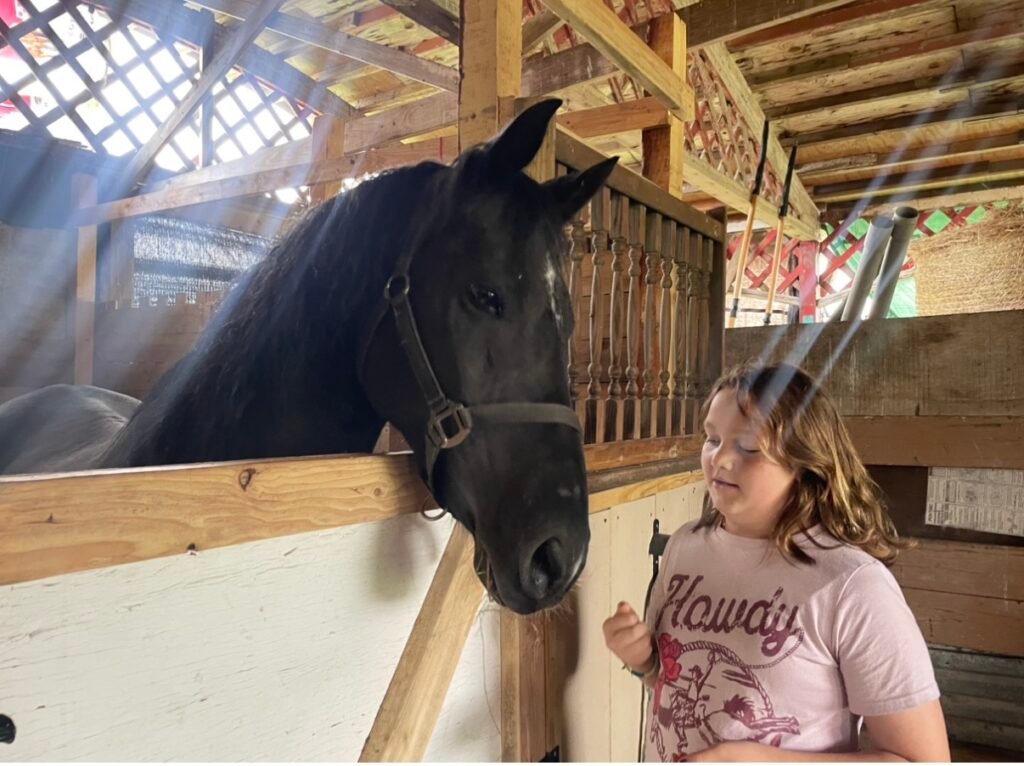
I also wanted the experience of actually owning a horse.
There is a big difference between riding someone else’s horse and being responsible for one yourself. When the horse is yours, everything is your responsibility—the feed, the vet care, the training decisions, the farrier, the day-to-day handling and the consequences when something isn’t going right.
I wanted that responsibility because I wanted to improve my horsemanship.
I was a rusty beginner rider coming back into horses after years away. I knew I didn’t need a green horse. I wanted something experienced enough that I could continue learning.
I also had daughters who were learning around horses, so safety mattered.
I thought I was shopping carefully.
Looking back, I know there were warning signs I didn’t understand at the time. That’s a whole story of its own, and I’ll dig much deeper into those in another post.
At the time, though, I believed I had found my horse.
I Thought I Had Found the Right Horse
The rescue sounded excited when I described what I was looking for.
They told me they had the perfect horse.
She had experience being ridden English and Western. I was told that someone had worked on barrels with her in the past. She had apparently been through multiple homes, but the impression I came away with was that no one really understood her.
She wasn’t described as a beginner horse, but I was upfront about being a beginner and told them I would have help.
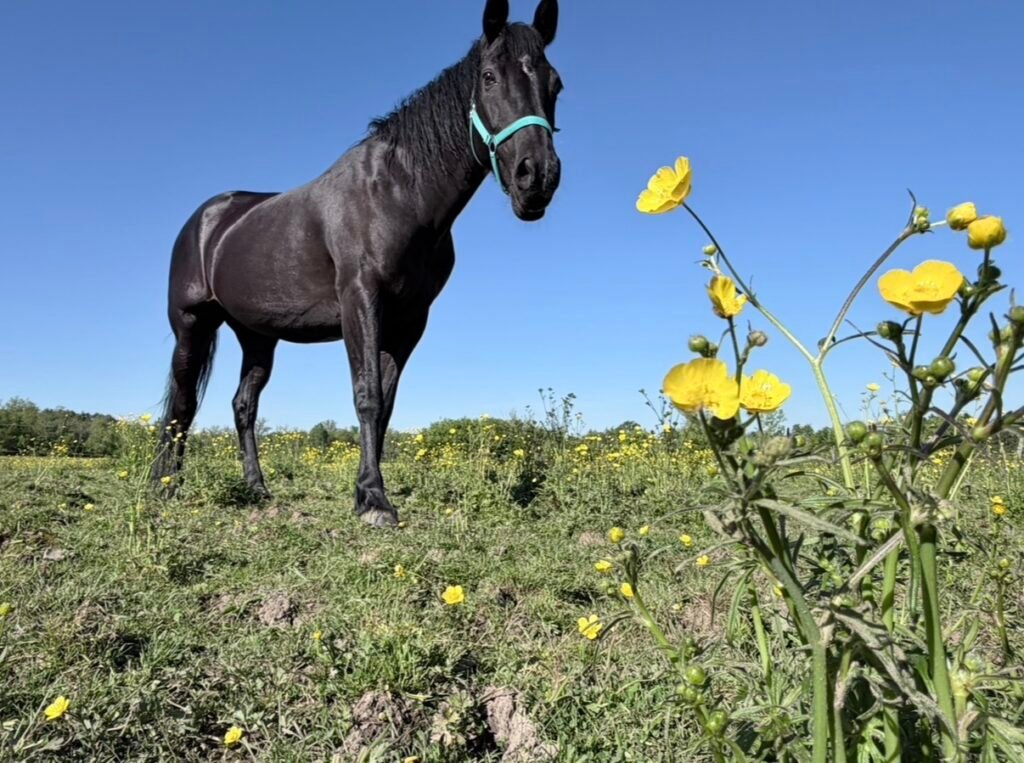
I thought we could make it work.
I renamed her Diamond, and there was meaning behind that name.
She was supposed to be my diamond in the rough. And as cheesy as it sounds, I thought of a diamond as forever. This was supposed to be her forever home.
That idea would eventually make it much harder for me to admit that the situation wasn’t working because once I committed to her, I felt responsible for making it work.
The Problems Started Almost Immediately
After Diamond came home, I learned from someone who had known her from when they volunteered at the rescue that there had been concerns about riding her.
I wasn’t about to climb on a horse with a history I didn’t fully understand, so I had a very experienced, lightweight rider test her.
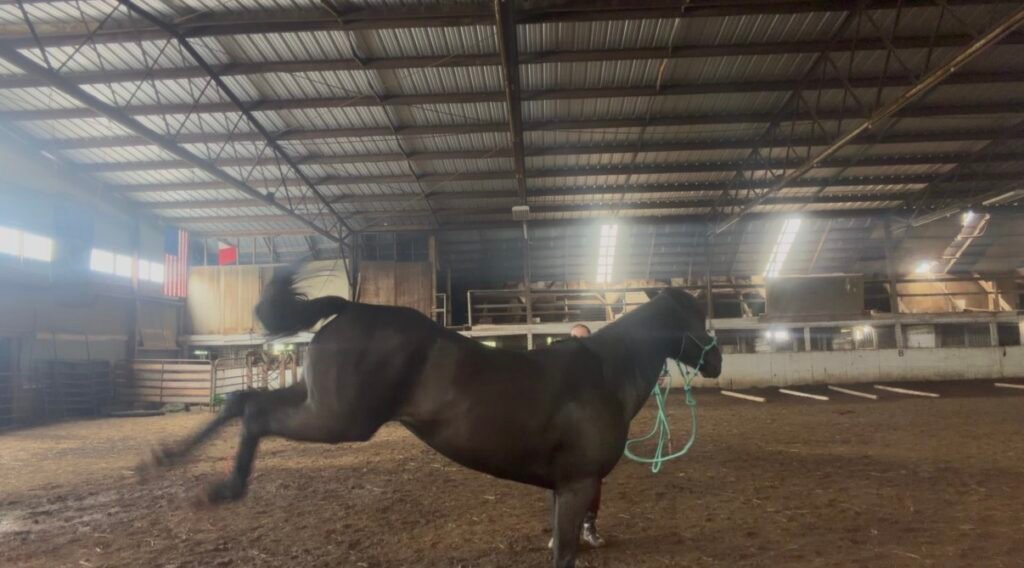
At the walk, Diamond was tense.
When asked to trot, she started crow hopping and kicking out.
That should probably have been a much bigger moment for me than it was.
Instead, I tried to explain it.
Maybe she needed a relationship with someone.
Maybe she was rusty.
Maybe she needed groundwork.
Maybe she had been misunderstood.
Maybe she just needed time.
And to be fair, sometimes horses do need those things.
But there is a danger in constantly searching for an explanation that allows you to keep going.
I became very good at saying, “Maybe it’s this.”
Was It Behavior—or Was She Hurting?
One of the biggest themes of my year with Diamond was trying to answer one question:
Was this a behavioral problem, or was my horse in pain?
The only health issue I originally knew much about was TMJ.
Because she tended to carry her head high and seemed uncomfortable in some of the older riding videos I had seen, I thought the bit might be contributing to the problem. I planned to ride bitless anyway, so initially I didn’t think it would prevent us from eventually riding together.
Then I suspected ulcers.
She had experienced stress, changes in environment and periods of being stalled, so treating for ulcers seemed reasonable.
Then I enrolled her in a 30-day training program.
The trainer noticed something wasn’t right in her hind end. She wasn’t moving normally on one side and failed a tail-pull test, so we started investigating the possibility of EPM.
We treated her.
And then something incredible happened.
She changed.
Within a few weeks, she had energy I had never seen before. She was running and cantering around when previously she had often just stood quietly.
For a moment, I thought we had finally found the answer.
Maybe this had been the problem all along.
Maybe now we could finally move forward.
Every Answer Led to Another Problem
After the EPM treatment, I went back to groundwork.
My mentor was cautious about me getting on her.
He wanted a much higher level of softness and responsiveness on the ground before I rode her because nobody wanted me getting hurt.
So I worked.
And worked.
And worked.
By this point, Diamond had seen multiple veterinarians and chiropractors. I had sought professional training. I had treated possible medical conditions. I had invested money, time and an enormous amount of emotional energy into figuring this horse out.
Eventually, I felt like we were ready.
I had owned her for around ten months.
I finally got on my horse.
And I was terrified… That alone probably should have told me something.
The Ride That Changed Everything
The video of that ride ended up going viral online.
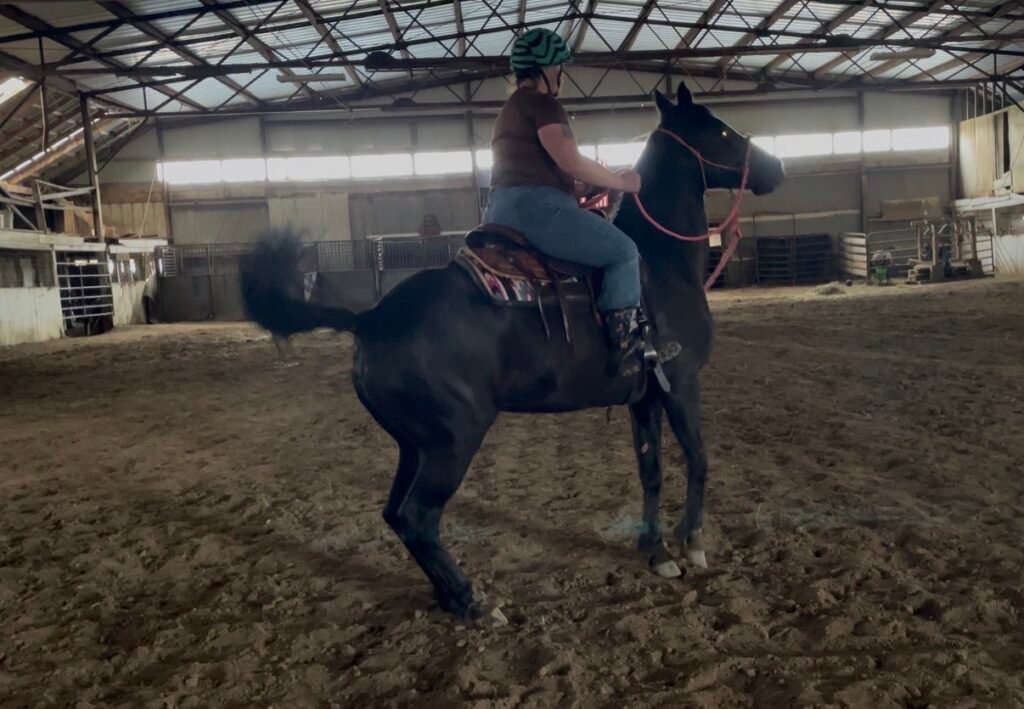
A lot of the conversation around the video focused on me—my riding, my body and whether I was too heavy for the horse.
But behind that short video was nearly a year of trying to answer a much bigger question:
Why was this horse reacting this way under saddle?
I started going through the comments looking for useful advice.
One suggestion was saddle fit.
So I had a saddle fitter come out.
We experimented with saddles. We considered whether tack could explain what we were seeing.
But Diamond was also reacting when ridden bareback by someone considerably smaller than me.
The saddle fitter recommended that before I invested in the saddle she liked for us, I have Diamond evaluated by a veterinarian she trusted.
That became vet number five.
And that appointment changed everything.
Finally, Someone Said She Was Lame
This veterinarian specialized in equine lameness.
She spent hours evaluating Diamond.
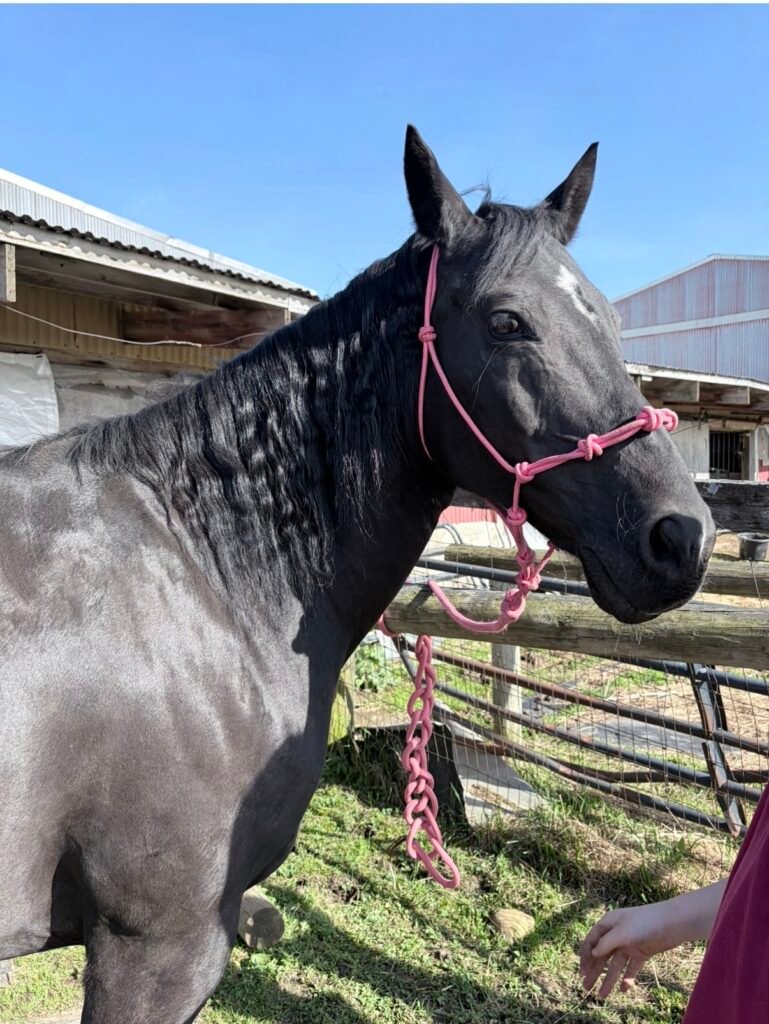
Her assessment was that Diamond was somewhere between a grade two and three lame.
She also found significant problems through her body. Her pelvis appeared uneven, which was affecting alignment through her back and possibly contributing to problems farther forward.
There were recommendations for ongoing chiropractic care and the possibility that we might need to consider even more intervention.
During that appointment, I asked the question I had been asking in one form or another for almost a year:
“Will I ever be able to ride this horse?”
The veterinarian didn’t give me a simple yes or no.
Instead, she stopped and asked me:
“Are you having fun right now?”
I knew exactly what she meant.
And I immediately became defensive.
Of course I was having fun.
I loved my horse.
I was committed to her.
I had worked so hard for her.
But the truth?
I wasn’t having fun.
I was stressed all the time.
And There Was Still More
Even the lameness evaluation wasn’t the end of the story.
Diamond also began showing increasingly concerning behaviors.
She became extremely possessive of me around other horses. She would become upset when I worked with another horse.
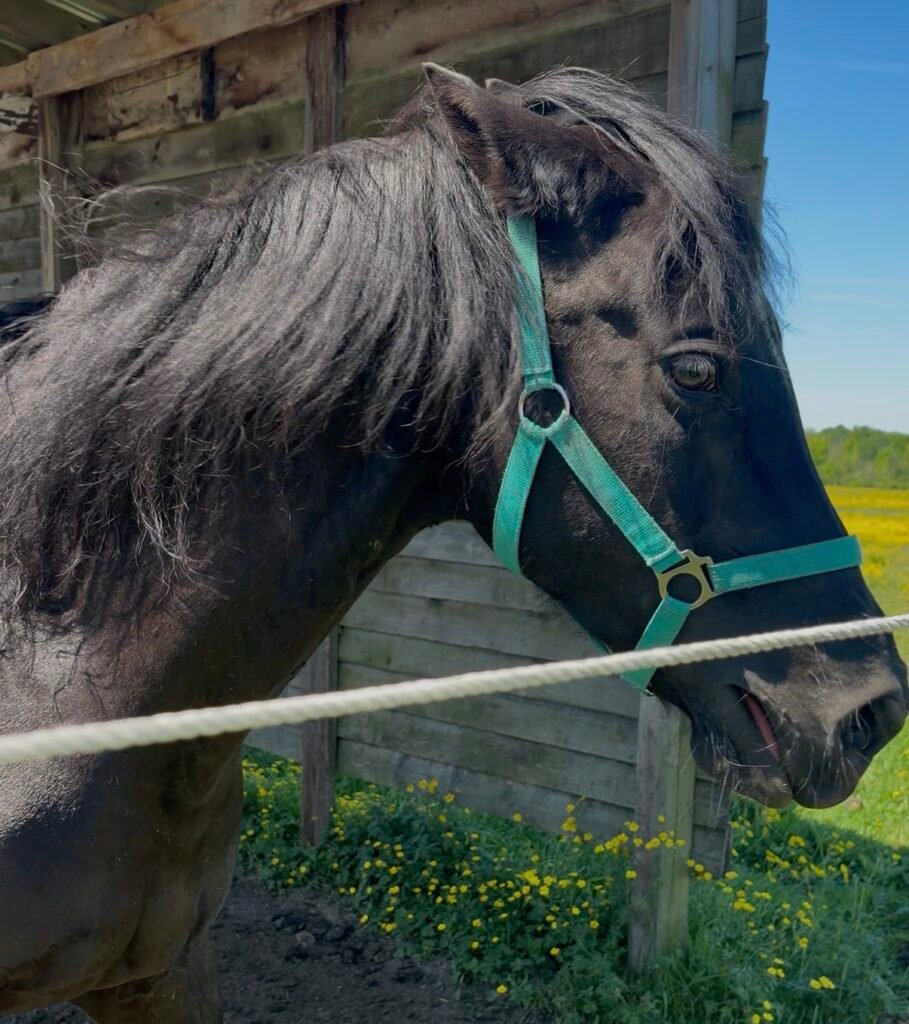
She was painful around her ovaries when she was in heat.
My mentor recommended hormone testing and an ultrasound.
The ultrasound ultimately wasn’t performed because of how difficult and potentially dangerous it would have been to do safely with her behavior around veterinarians, but we were able to get bloodwork.
Her testosterone was elevated.
That created yet another medical question that needed further investigation.
At the same time, her behavior around people had become increasingly concerning.
There were incidents involving kicking and biting.
She nearly kicked someone in the head.
She attempted to bite a child.
I had people I trusted telling me something I did not want to hear:
This was not the horse for me.
When “Trying Harder” Stops Being the Answer
I think this is where stubborn people like me can get themselves into trouble.
There is a very popular message in the horse world—and really, everywhere—that you shouldn’t quit when things get hard.
Sometimes that’s true.
Sometimes the answer really is more training, more patience or more education.
But sometimes continuing isn’t perseverance.
Sometimes continuing means refusing to acknowledge reality.
I kept thinking that if I could find the next problem, I could fix it.
If the ulcers were making her uncomfortable, we’d treat the ulcers.
If the EPM was affecting her movement, we’d treat the EPM.
If the saddle didn’t fit, we’d find another saddle.
If her body was out of alignment, we’d do chiropractic work.
If her hormones were contributing to her behavior, we’d investigate that.
I wasn’t ignoring her problems.
I was doing the opposite.
I was chasing every single one of them.
And somehow that made it even harder to recognize that the overall situation wasn’t working.
The Moment I Knew
There was another horse at the barn that I enjoy riding.
To get to that horse, I had to walk past Diamond.
And one day, while I was walking past my own horse to go ride someone else’s, something finally clicked.
The moments when I was enjoying horses weren’t happening with my horse.
The times I felt relaxed, happy and excited about riding weren’t with Diamond.
I had spent so much time telling myself that I loved my horse and that I was having fun that I hadn’t stopped to ask whether I actually was.
I wasn’t.
I realized that if I continued down this path, there was a very real chance that this horse was going to destroy my love of horses entirely.
And I started crying.
That was the moment I knew.
Sending My Horse Back
My contract required Diamond to return to the rescue if I could no longer keep her, so that is where she went.
Even though it was my decision, it still felt like I had failed.
Part of me still struggles with that feeling…I’ve cried so many tears.
I had named her Diamond because I thought she was forever.
I had promised myself I wasn’t going to be another person who gave up on her.
But keeping a horse simply because you’re afraid of being a quitter isn’t automatically the kind thing to do.
And it isn’t necessarily the safe thing to do.
By the end, I strongly believed Diamond should not be sold as a riding horse again.
Just because a horse is physically capable of carrying a rider does not necessarily mean that horse should be ridden.
Whatever happens next in Diamond’s story, I hope she ends up somewhere that can meet her needs without asking her to do something she physically or mentally cannot comfortably do.
What I Would Tell Another Horse Owner
If you are struggling with a horse right now, I am not going to tell you to give up.
I am also not going to tell you to keep going.
I don’t know your horse.
But I will tell you something I wish I had understood sooner:
You are allowed to evaluate the entire situation—not just the next problem in front of you.
Ask whether the horse is safe for you.
Ask whether you have the experience the horse needs.
Ask whether the horse is physically comfortable doing the job you want them to do.
Ask whether you have the financial resources to provide the care the horse is going to require.
And ask yourself the question that veterinarian asked me:
Are you having fun?
Horse ownership doesn’t have to be easy.
Training isn’t always fun.
There will be scary moments, expensive vet bills, setbacks and days when everything goes wrong.
But if months go by and your entire relationship with your horse has become fear, stress, medical investigations and trying desperately to reach a version of the horse that may never exist, it is okay to reevaluate.
I spent almost a year trying to make the wrong horse work.
I learned an incredible amount in the process.
I learned about lameness. I learned about saddle fit. I learned about ulcers, EPM, bodywork, hormones and horse behavior.
But the biggest thing I learned wasn’t medical at all.
Sometimes being a responsible horse owner doesn’t mean trying harder.
Sometimes it means accepting that this horse and this human are not the right match.
And walking away from the horse I thought would be mine forever may have been one of the hardest horsemanship decisions I’ve ever made.
But I think it was also one of the most important.
Overall… I wanted to get my horse to improve my horsemanship.
…And that certainly happened.


Post your Comment About This Product