
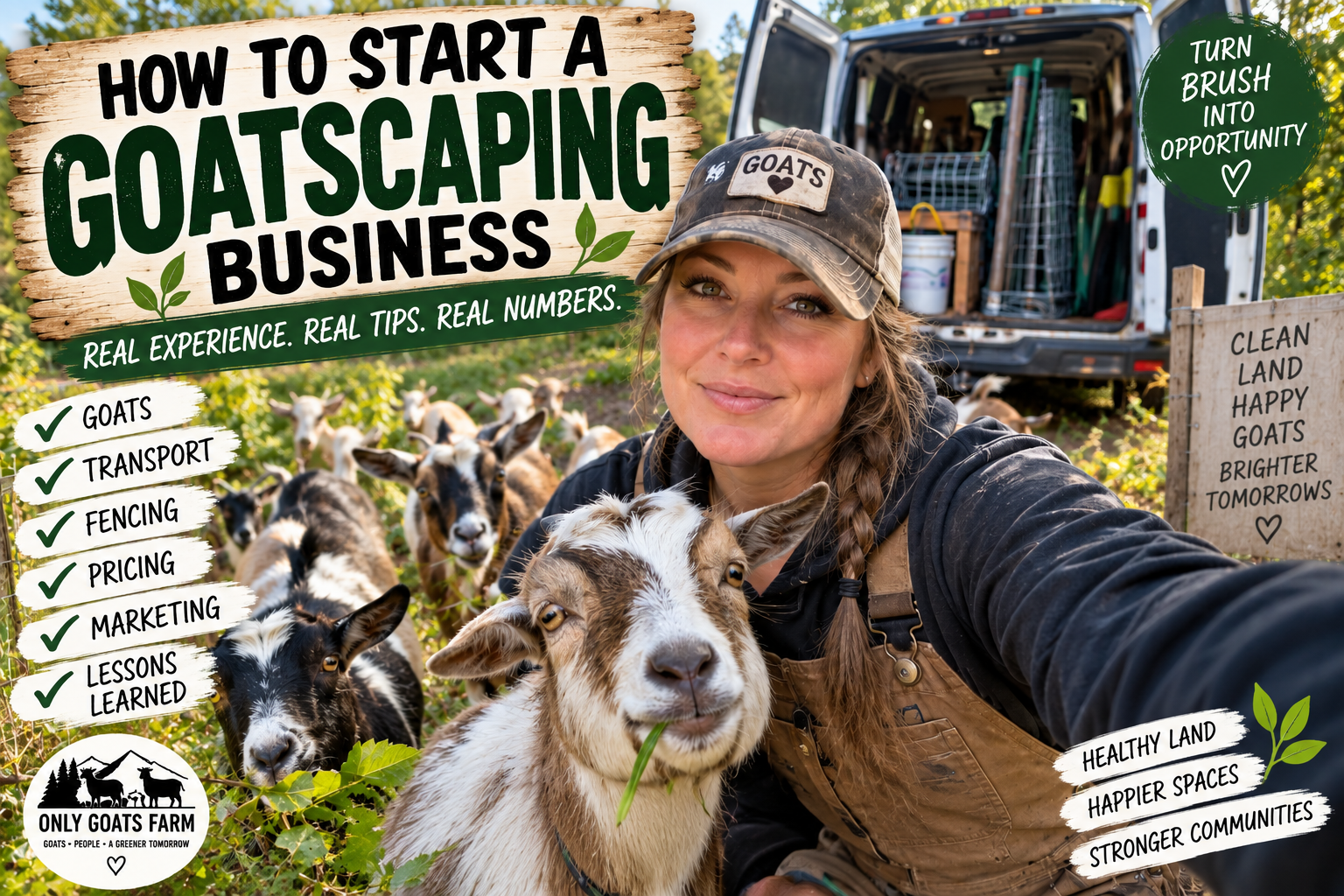
If you have goats and you have ever looked at an overgrown property and thought, “Could I actually get paid to have my goats clear this?” the answer is yes—but there is a lot more to running a goatscaping business than dropping goats off and letting them eat.
I’m in my second year of running a goatscaping business, and I have learned a lot through trial and error. Some of those lessons were easy. Others I learned the hard way. If you’re thinking about starting a goat grazing or goatscaping business, here’s what I wish I had known before I started.
Affiliate disclosure: This post contains Amazon affiliate links. If you purchase through one of these links, I may earn a commission at no additional cost to you. As an Amazon Associate I earn from qualifying purchases.
What Is a Goatscaping Business?
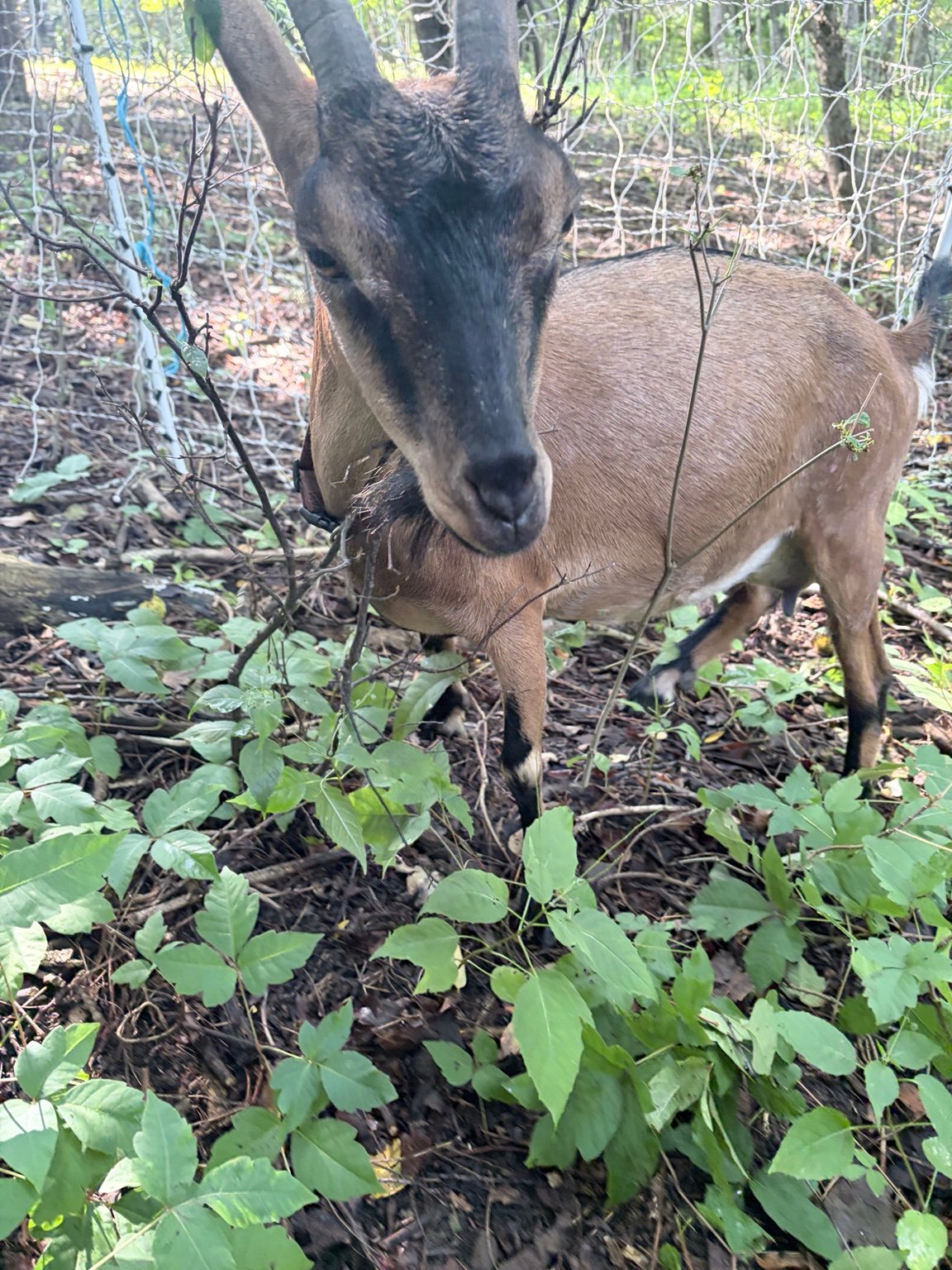
Goatscaping uses goats to browse unwanted vegetation on a customer’s property. Depending on the job, that may include brush, vines, brambles, poison ivy, Japanese knotweed, tall weeds, and other overgrowth. The goats do the eating, but the business owner is responsible for transportation, fencing, water, animal care, job-site safety, customer communication, and a surprising amount of physical labor.
1. You Need Goats—but They Don’t Have to Be Fancy
I started with Nigerian Dwarfs and later added Nubians, Mini Nubians, and other goats. In my experience, you can use different breeds and you don’t necessarily need a herd of expensive breeding animals. Wethers can work perfectly well for vegetation-clearing jobs and can sometimes be inexpensive to acquire. Does can be useful if you want animals that serve more than one purpose on your farm.
2. Figure Out How You’ll Transport Your Herd
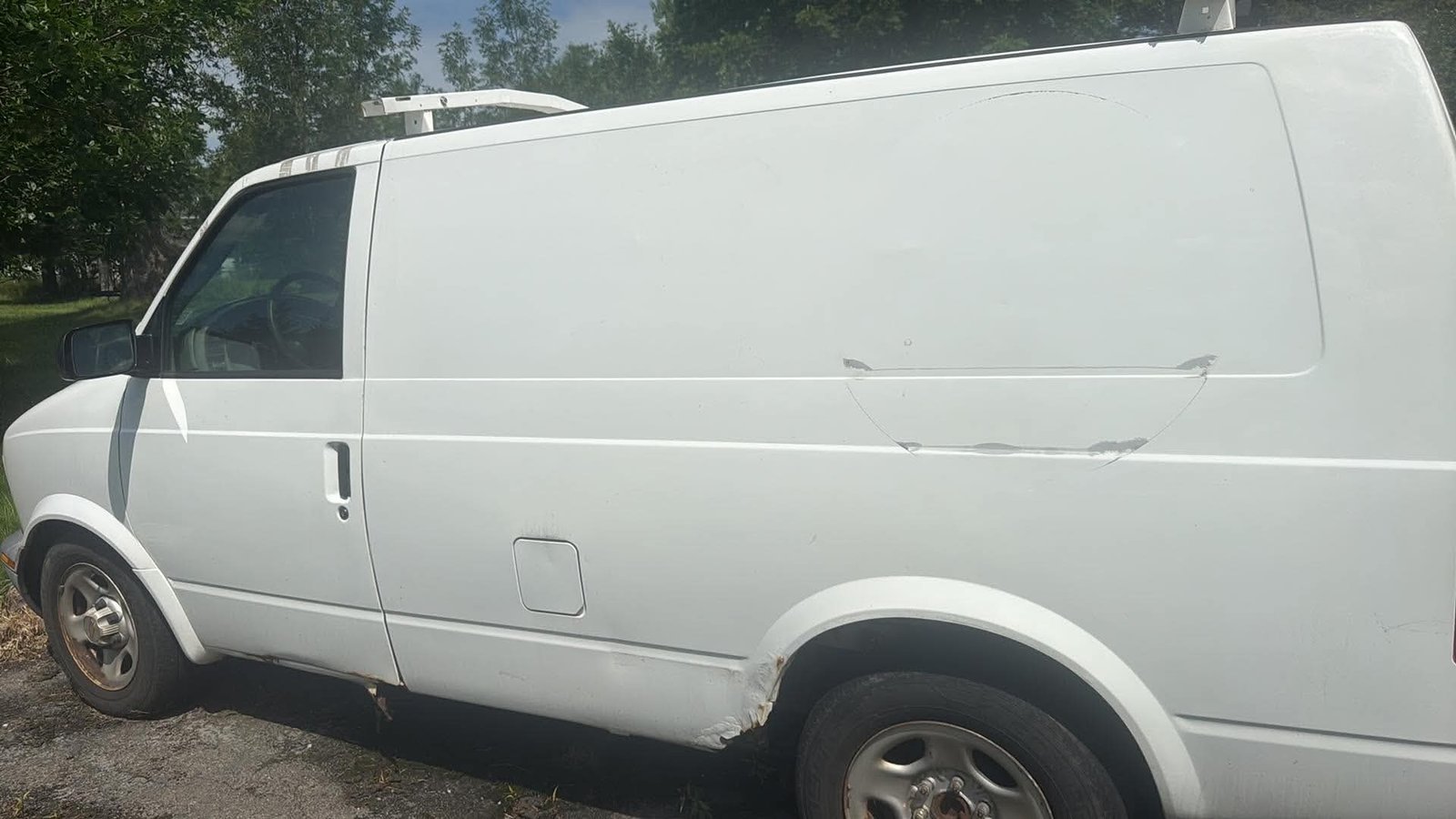
You need a safe, practical way to get goats and equipment to each property. I started small, transporting four goats in a Jeep, later used a Chevy Suburban, and now use a Chevy Astro that I converted for transporting my goats. Many goatscaping businesses use trailers, but a trailer isn’t automatically necessary for a small residential operation.
For me, a van works especially well because some residential jobs have narrow driveways, difficult turnarounds, steep areas, or limited room for a truck and trailer. Start with a setup that safely fits the size and type of jobs you actually plan to take.
3. Keep Your Goats Healthy
Goats used for goatscaping leave your property and encounter environments they would not normally encounter at home. Staying on top of routine health care matters, including knowing the signs that a goat may be sick, is especially important when your animals are working off-property. Work with your veterinarian to decide which vaccinations and preventive care are appropriate for your herd and your area, including rabies vaccination where recommended.
4. Invest in a Good Portable Fencing Setup
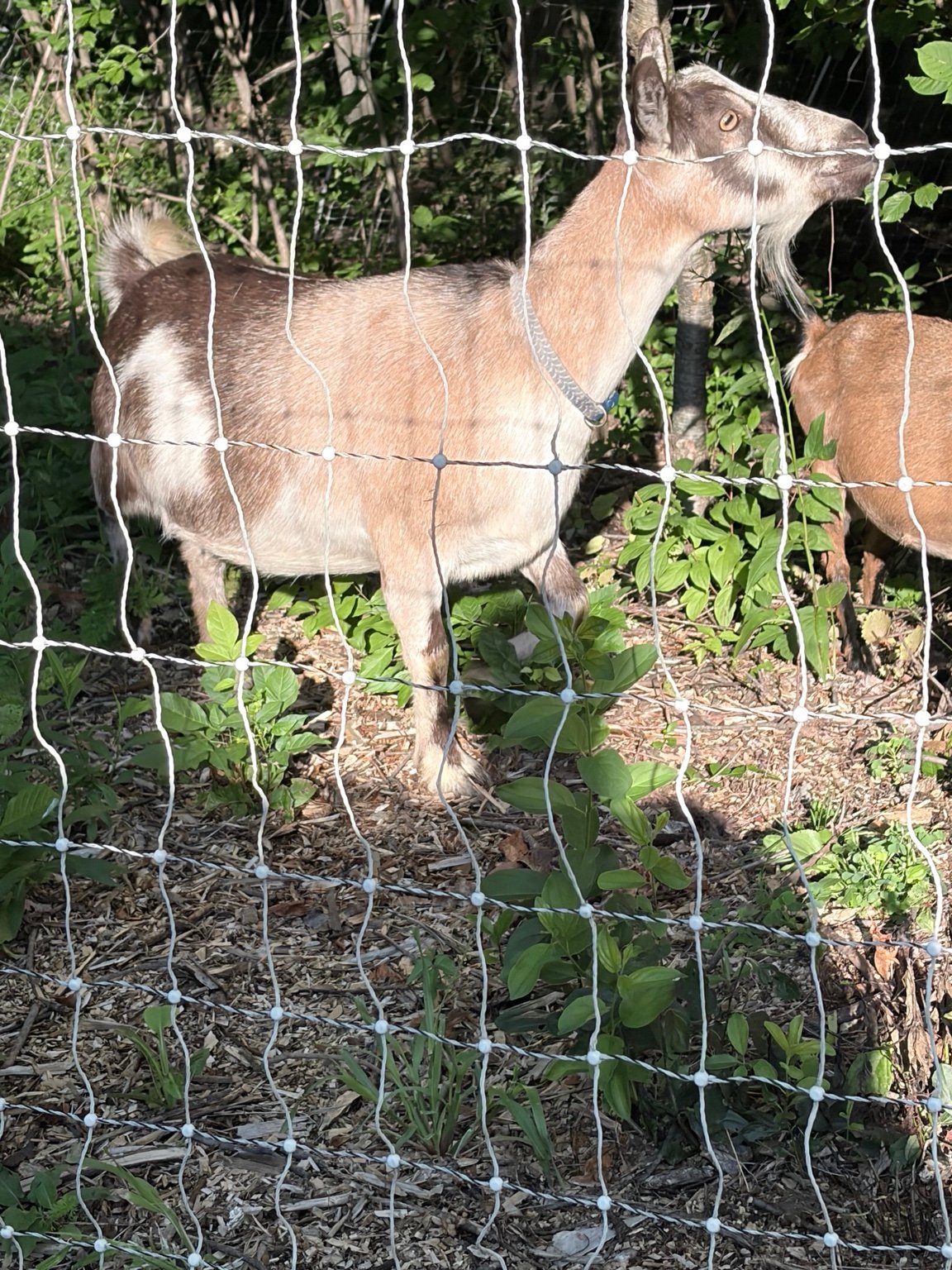
Portable fencing is one of the most important pieces of goatscaping equipment I own. My basic setup includes portable electric net fencing, a charger, a grounding rod, a way to drive the grounding rod, and water buckets.
I’ve had good experiences with both Starkline fencing setups (paid link) and Premier 1 fencing (paid link). If you’re still figuring out what kind of fence will work for your herd, I also have an in-depth guide to fencing options for goats. Whatever brand you choose, learn your system before taking it to a customer’s property.
Always walk the entire perimeter after setting the fence. Trees, branches, uneven ground, rocks, and slopes can lift sections and create escape routes. I often use sturdy sticks found on site to pin down or tighten problem areas.
5. Goatscaping Is a Manual-Labor Business
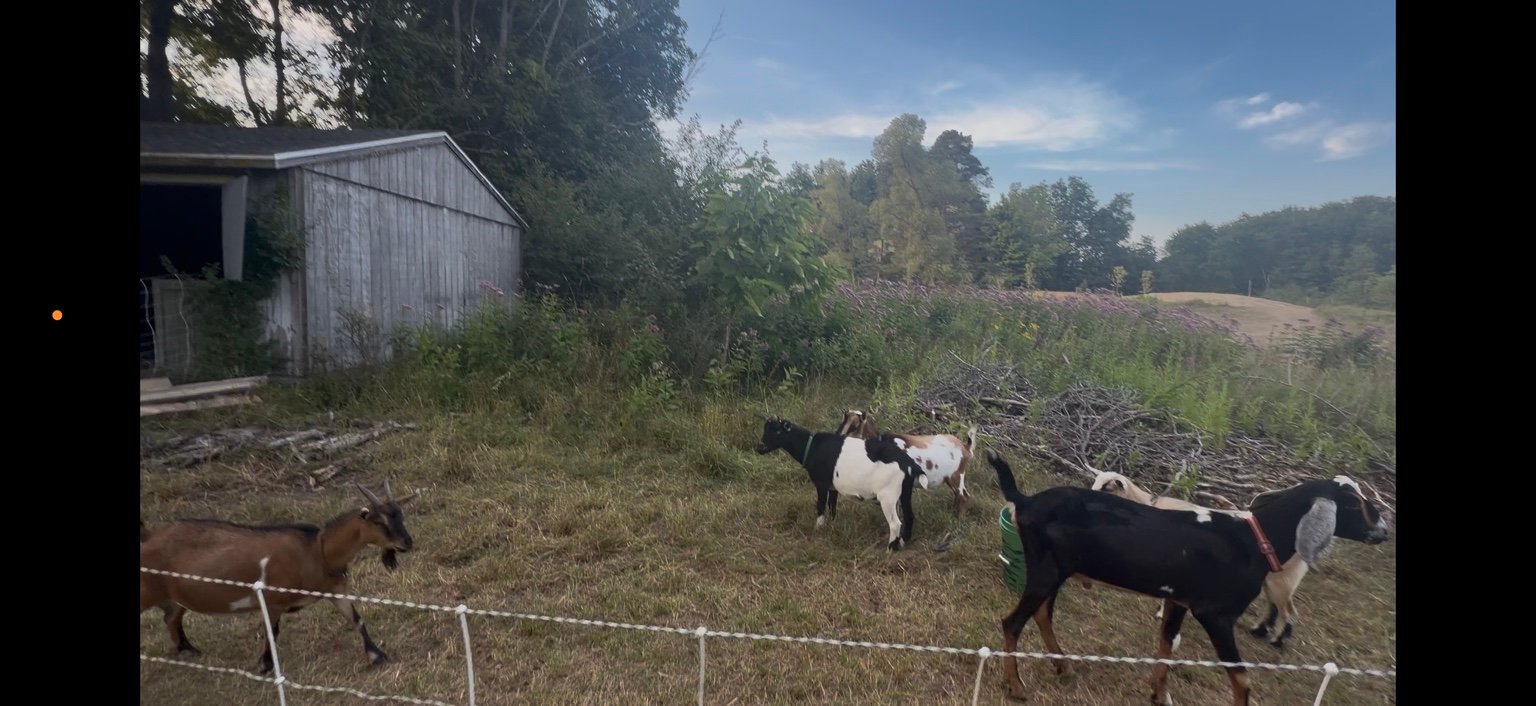
This was one of the biggest realities I underestimated. You are not simply getting paid while your goats eat. Setting up and moving fencing through woods, hills, brush, fallen branches, rocks, thorny plants, and uneven terrain can be hard physical work.
Fence-moving days can mean hauling equipment where a vehicle cannot reach, clearing dead branches, untangling netting, pounding posts, and checking every inch of the enclosure. A good pair of heavy-duty work gloves (paid link) has become one of my favorite pieces of equipment because hawthorn, raspberry, blackberry, and rose can make these jobs miserable without hand protection.
6. Leash Train Your Goats
I put collars on my goats and teach them to walk on leashes. Some are better at it than others, but leash training makes loading, unloading, and moving goats much easier—especially in populated areas where letting the herd simply follow you would not be appropriate.
7. Use a Written Contract for Every Job
Do not skip the contract. Your agreement should address payment terms, emergency contact information, who may interact with the animals, and rules about the electric fence. One lesson I learned on my very first goatscaping job was not to let customers reposition my fencing. A fence was moved improperly, a goat became caught, and a neighbor had to cut the goat free.
Your contract should fit your business, location, insurance, and actual services. I’m sharing what I’ve learned from operating my business, not giving legal advice, so have a qualified attorney help you determine what your agreement should include.
8. Don’t Undercharge
When you are new, jobs often take longer than you expect. Your price needs to account for much more than the hours the goats spend eating. There is fuel, travel, setup and teardown, fence moving, equipment, livestock expenses, animal care, and your own labor.
I’m not going to tell you exactly what to charge because every market and property is different. But a job that occupies a full day should not be priced like an hour-long side gig, and a project that ties you up for a week needs to pay like a week of work.
9. Treat It Like a Real Business
I operate through an LLC and carry insurance. Before taking customers, look into the business-registration, tax, insurance, livestock, transportation, and local requirements that apply where you live. Assess each property for hazards and predator risks before putting goats behind a fence.
10. Decide Whether Your Goats Will Stay Overnight
I currently bring my goats home every night rather than leaving them at job sites. It creates more driving, but it lets me check everyone closely and give them access to their regular hay at home. I also prefer it because of predator concerns.
Other businesses may use different systems, including livestock guardian animals and overnight setups. Build your system around the risks at your job sites and what you can safely manage.
11. Think Carefully Before Using Virtual Fencing Off-Site
I looked into wireless fencing collars because they sound ideal for hills, woods, and places where physical fencing is difficult. I personally do not use them for off-property goatscaping, although I’ve written more about how virtual fencing for goats works and where I think it can be useful. My goats would have to learn new boundaries at every new location, and I am more comfortable using physical electric netting for customer jobs.
12. Decide How You’ll Handle Payment
My normal policy is to collect payment up front. I accept multiple payment methods, and in some circumstances I will take 50% up front and the remainder when the work is finished. I adopted that policy after learning how difficult it can be to collect once the vegetation is already gone and the job is complete.
13. Marketing a Goatscaping Business Can Be Surprisingly Simple
Most of my marketing comes from Facebook, local Facebook groups, my Google Business presence, networking, referrals, and word of mouth. Once goats are visibly working in a neighborhood, nearby homeowners often become interested too—especially because vegetation problems frequently extend across neighboring properties.
I haven’t needed complicated door-to-door sales tactics to stay busy. For my business, local visibility and referrals have been extremely valuable.
14. You Don’t Have to Join a Goatscaping Network to Start
There are organizations and affiliate networks for goatscaping businesses that may provide training, support, and customer visibility. I looked into that route but ultimately decided to operate independently. If you consider an affiliate or franchise-style program, carefully review the current fees, training requirements, contractual restrictions, and what happens if you later leave before signing anything.
15. There Will Always Be Problems You Haven’t Solved Yet
I’m only in year two, and my system is still evolving. One thing I’m currently trying to improve is portable rain shelter. Light rain is one thing, but heavy rain can stop a workday and throw off the schedule. I’m also constantly thinking about ways to make transportation and fence moving more efficient.
That’s part of running a small business: you don’t need the perfect setup before you begin. You need a safe, workable setup, and then you improve it as you learn.
Basic Goatscaping Equipment Checklist
- Healthy, manageable goats
- Safe goat transportation
- Portable electric net fencing
- Fence energizer/charger
- Grounding rod and post driver
- Water buckets
- Goat collars and leashes
- Heavy-duty cowhide gloves
- Hand clippers or loppers
- Basic animal first-aid supplies
- Written customer contract
- Appropriate business insurance
Can You Start a Goatscaping Business Small?
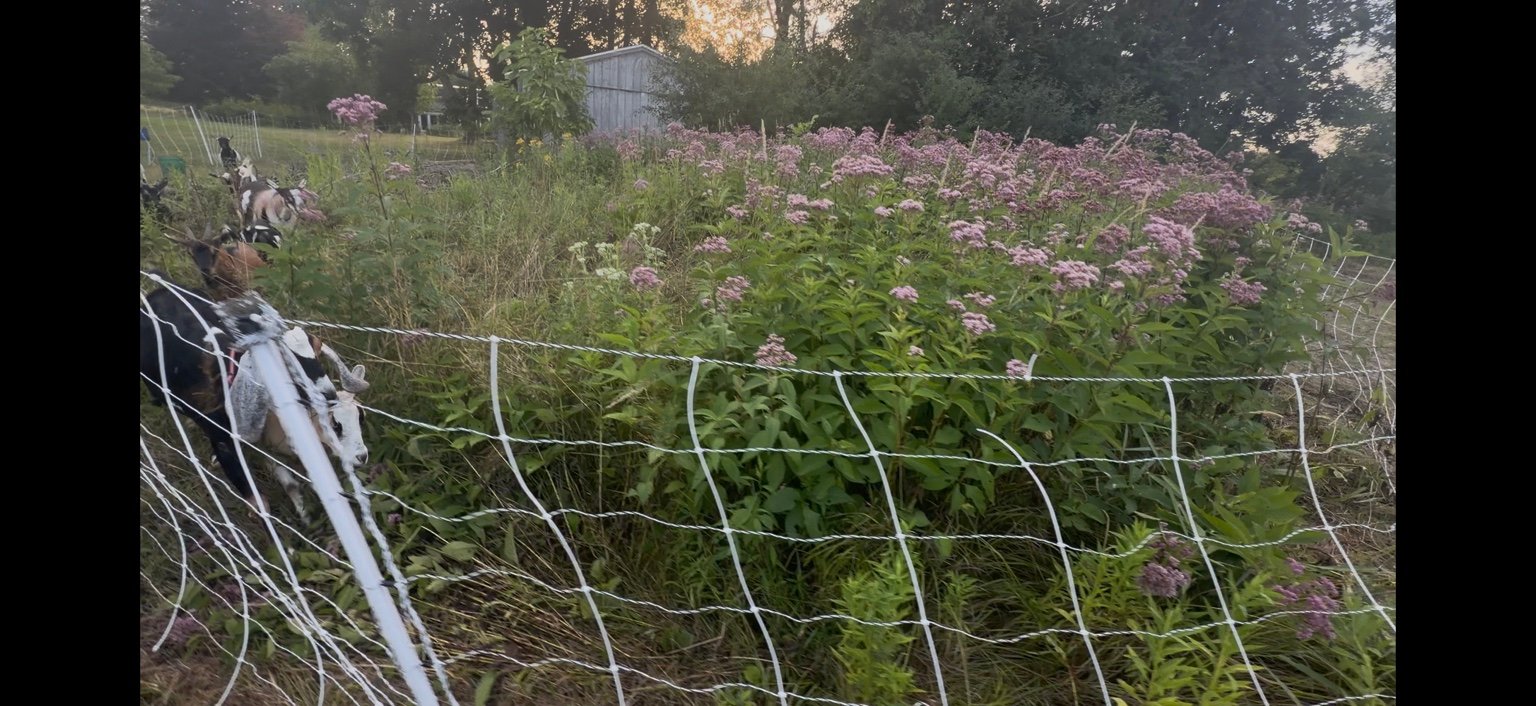
Absolutely. My operation is still small and I run it out of a van. You do not necessarily need a huge trailer, a hundred goats, or an enormous startup budget to test whether there is demand in your area. Start with the equipment and herd you can safely manage, learn what kinds of properties work for your setup, and expand when the business actually justifies it. If you’re exploring goats as an income stream more generally, I also put together a guide on ways to make money with your goats.
What I Wish I Knew Before Starting
The biggest thing I wish I had understood is that goatscaping is as much about logistics as it is about goats. The animals are the fun part. The business is fencing, transportation, customer management, safety, pricing, physical labor, and solving weird problems on properties you have never seen before.
But that is also what makes it interesting. There still isn’t a huge amount of information available from small independent goatscaping operators, so I’m documenting what I learn as I build mine. I expect I’ll have plenty to add after another few seasons.
Have a goatscaping question? Leave it in the comments. I’m always looking for ideas for future videos and posts about fencing, equipment, pricing, transportation, and what running this business actually looks like.


Post your Comment About This Product