
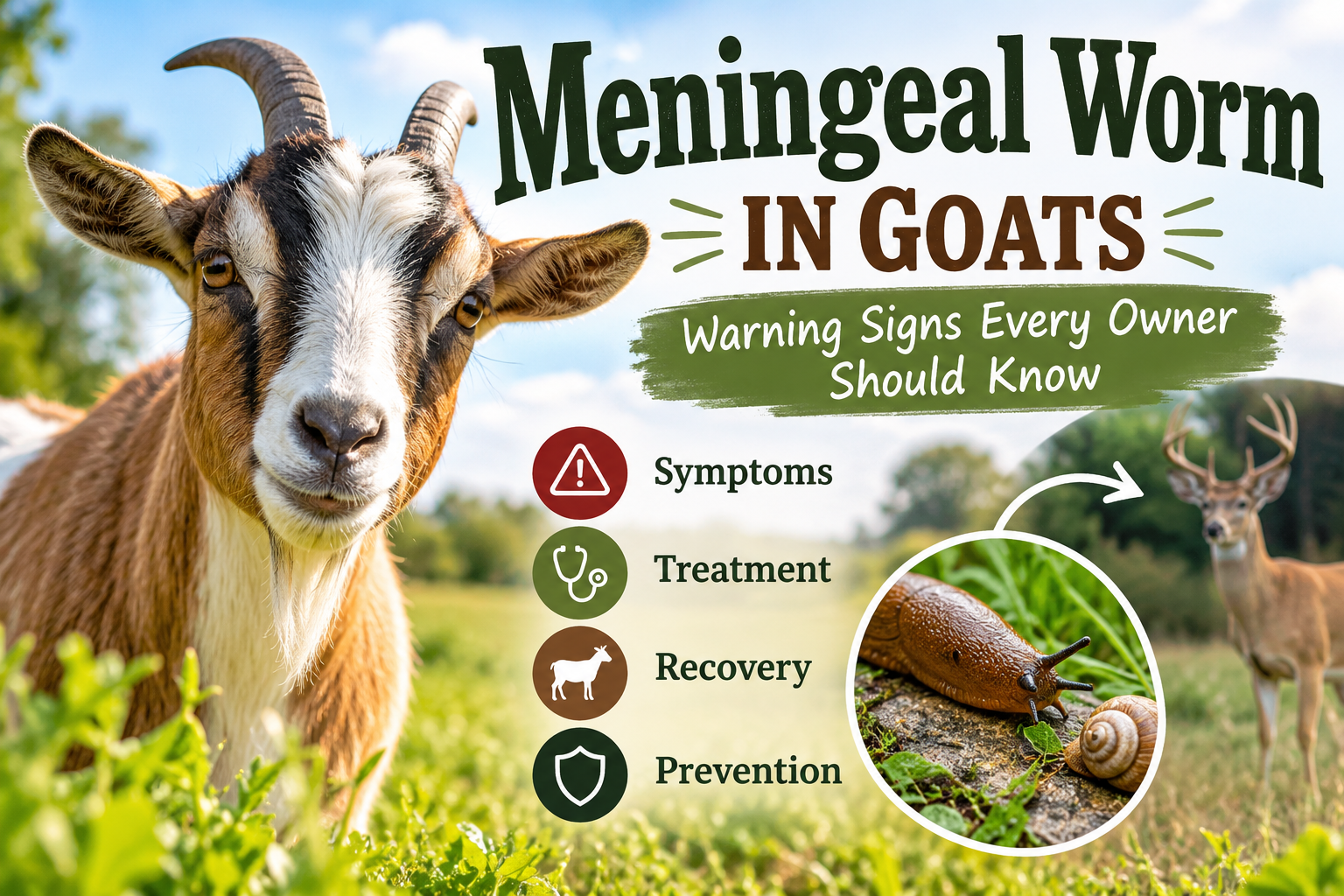
A goat that suddenly starts dragging a back leg, stumbling, or struggling to stand is frightening to see. One possible cause—especially in areas with white-tailed deer—is meningeal worm, also called deer worm or brainworm.
This parasite can damage the spinal cord and brain. The important thing to know is that neurological symptoms are an emergency, but a goat with suspected meningeal worm is not automatically beyond recovery.
Veterinary Disclaimer: This article is for educational and informational purposes only and is not intended to replace professional veterinary advice, diagnosis, or treatment. If your goat is showing signs of illness, weakness, or paralysis, contact a licensed veterinarian immediately.
What Is Meningeal Worm?
Meningeal worm (Parelaphostrongylus tenuis) is a parasite naturally carried by white-tailed deer. Deer usually show little or no illness. Goats, sheep, llamas, and alpacas are different: when larvae travel through their nervous systems, they can cause serious inflammation and injury.
Cornell’s Wildlife Health Lab explains the parasite’s life cycle and why other grazing animals are at risk.
How Do Goats Get Meningeal Worm?
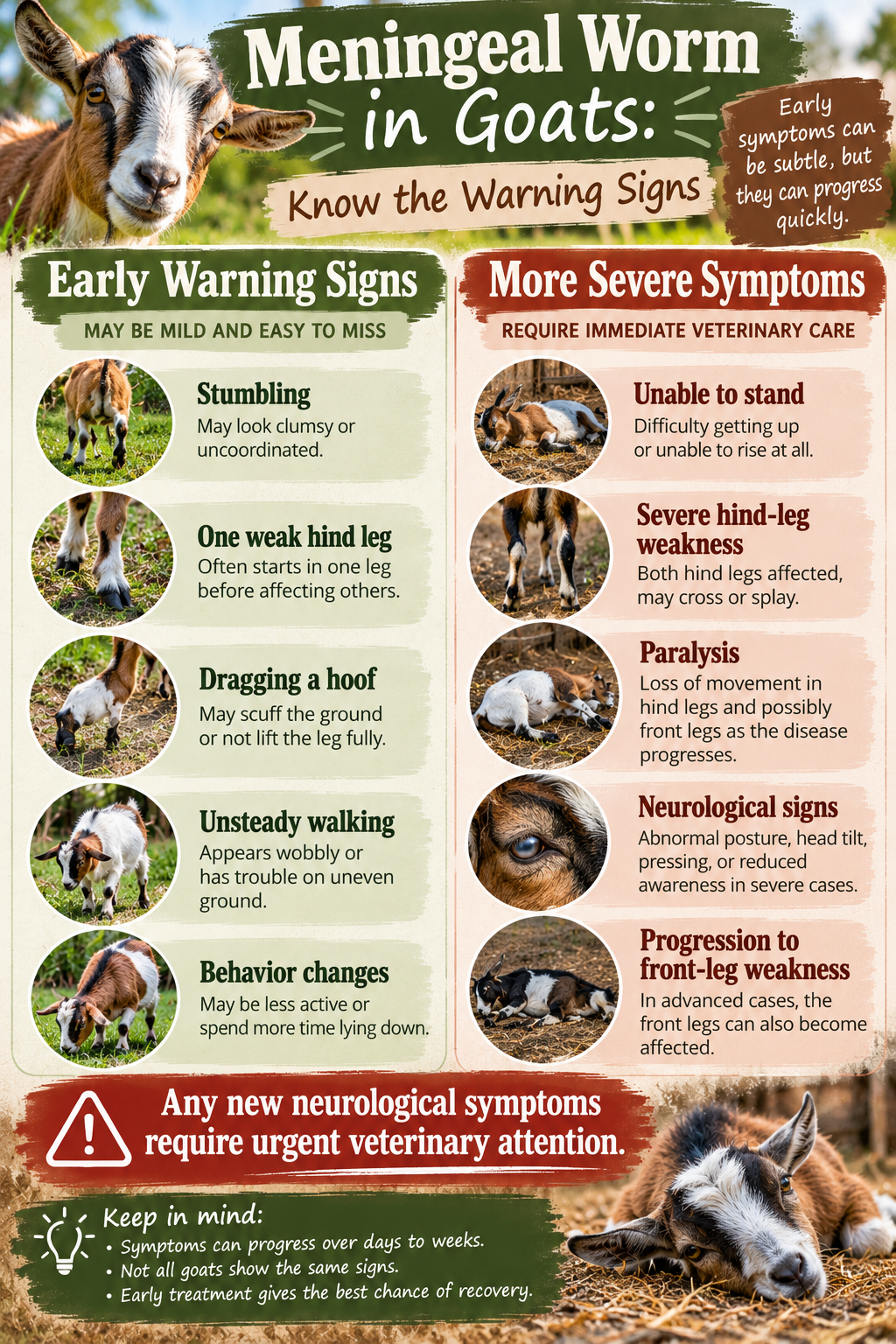
Goats do not usually catch meningeal worm directly from another goat. The cycle involves deer and tiny snails or slugs:
- An infected deer sheds parasite larvae in its droppings.
- Snails or slugs pick up the larvae.
- A goat accidentally swallows an infected snail or slug while browsing or grazing.
- The larvae can migrate into the goat’s nervous system and cause damage.
Wet, shaded, deer-visited areas can increase exposure. That matters on home pastures and when moving goats between properties for brush clearing. If you’re considering this kind of work, read our guide to starting a goatscaping business.
Symptoms of Meningeal Worm in Goats
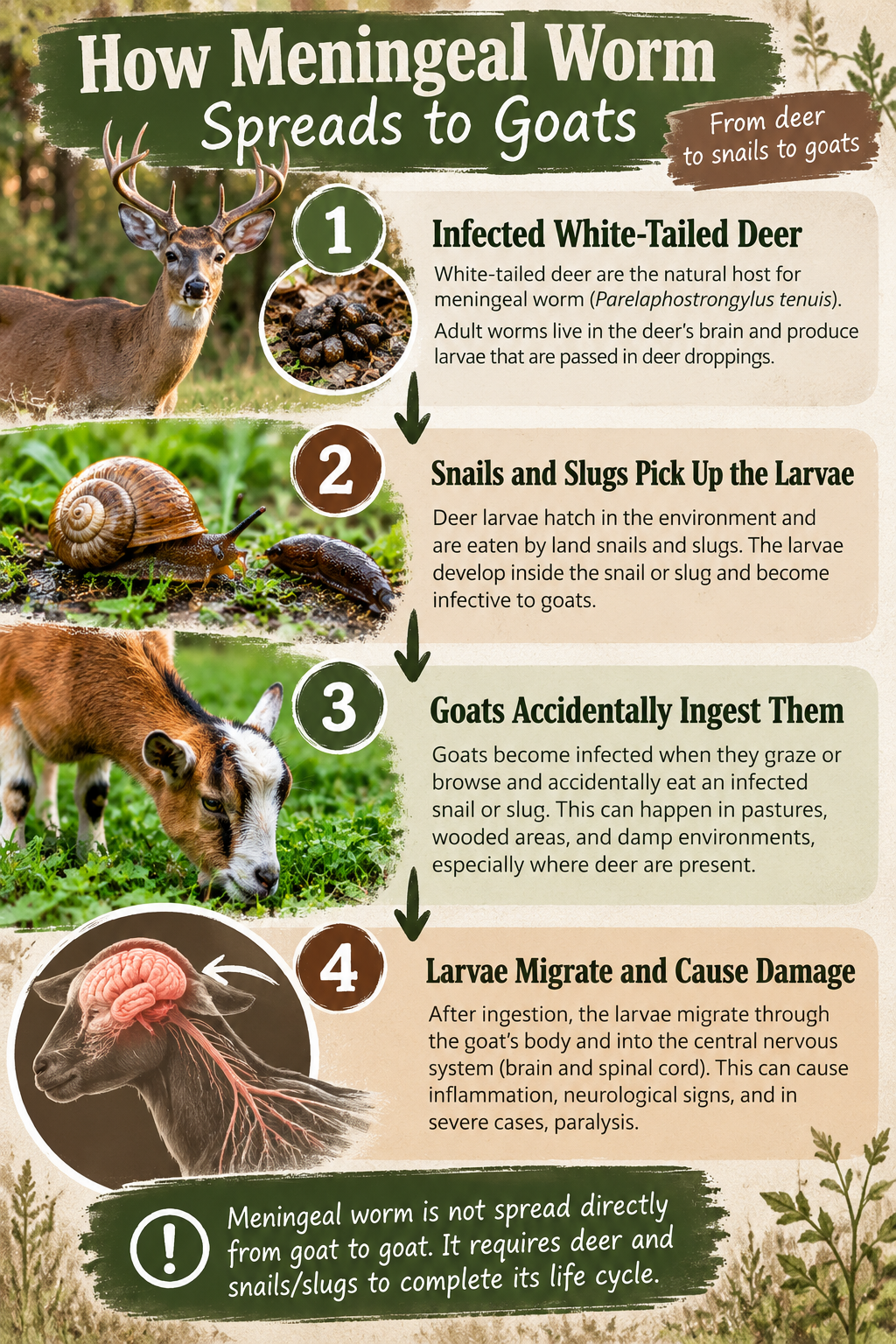
The first sign may look like a simple leg injury. Watch for:
- Stumbling, wobbling, or an unsteady walk
- Weakness in one or both back legs
- Dragging or crossing the hind legs
- Difficulty getting up or remaining standing
- Abnormal head position, circling, or other neurological changes
- Progression to severe weakness or paralysis
Some goats may still be alert and interested in food even while their movement deteriorates. Symptoms vary depending on where the parasite causes injury. The Merck Veterinary Manual describes these neurological signs.
Important: These signs do not prove meningeal worm. Trauma, listeriosis, polioencephalomalacia, spinal disease, and other conditions can look similar. Contact a veterinarian urgently rather than trying to diagnose from symptoms alone.
How Is It Diagnosed?
There isn’t a simple routine fecal test that confirms meningeal worm in a living goat. A veterinarian may consider the neurological exam, exposure to deer habitat, and sometimes cerebrospinal fluid testing. Often the diagnosis is presumptive—meaning the evidence fits, but certainty is limited.
A published study of six goats describes how veterinary teams evaluated suspected cases and ruled through the available evidence.
How Is Meningeal Worm Treated?
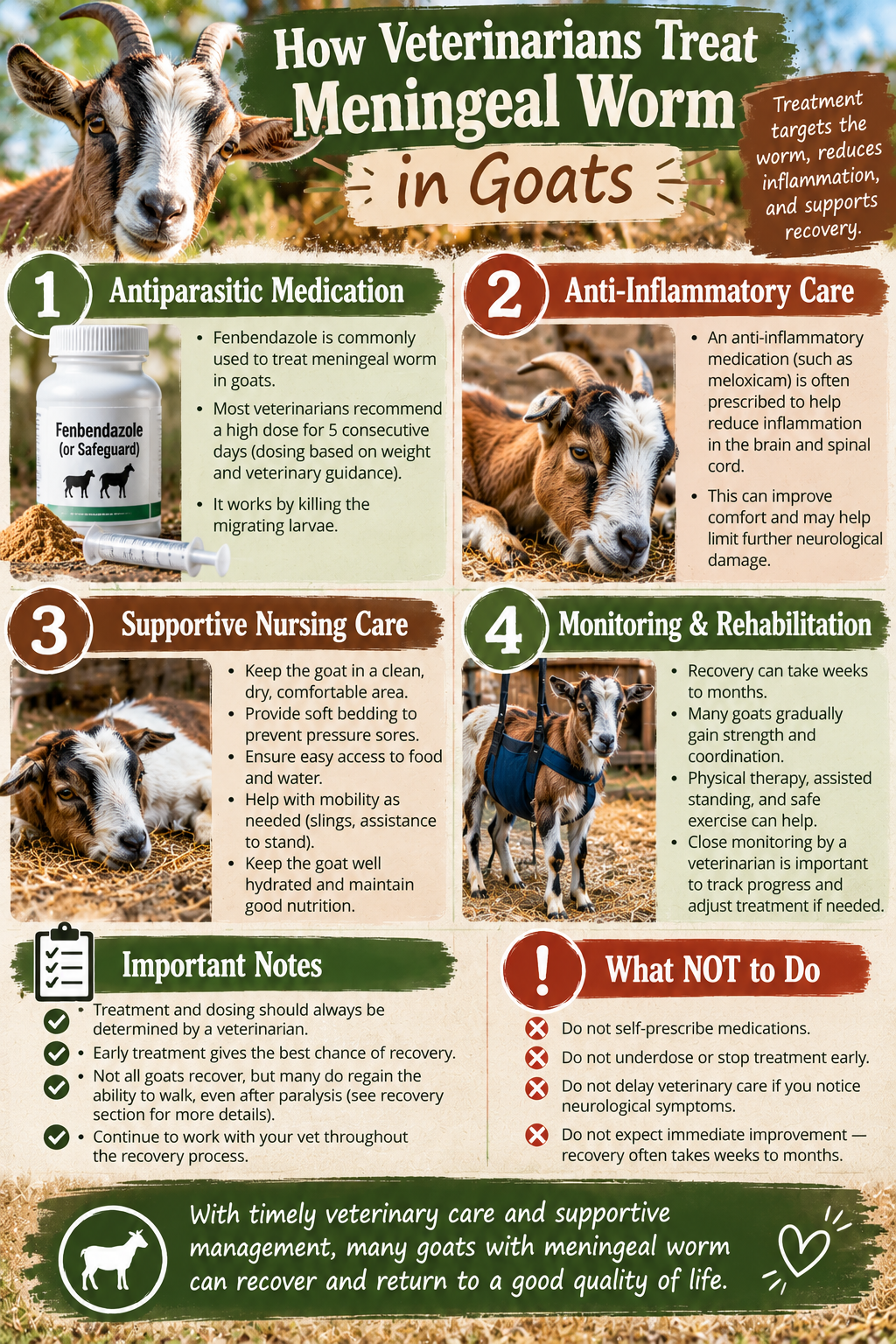
Time matters. Treatment is aimed at addressing the parasite, reducing inflammation, and helping the goat through the neurological injury. Veterinarians may use:
- Fenbendazole (Safe-Guard/Panacur): Often used in veterinarian-directed, multi-day protocols for suspected deer worm—not the same as a routine deworming schedule.
- Anti-inflammatory medication: To address inflammation and swelling associated with nervous-system injury.
- Supportive care: Safe bedding, hydration, nutrition, help changing position, and veterinarian-guided rehabilitation when appropriate.
Cornell’s Deer Worm Treatment Protocols discusses its research on treatment approaches, including the question of whether adding ivermectin helps. Treatment decisions, drug combinations, withdrawal times, and dosing must be made with a veterinarian; there is no one-size-fits-all home protocol.
Never assume a standard over-the-counter wormer dose is appropriate for a neurological case. Some medications are used extra-label in food-producing goats, which also makes veterinary guidance on meat and milk withdrawal essential.
Can a Goat Recover After Being Paralyzed?
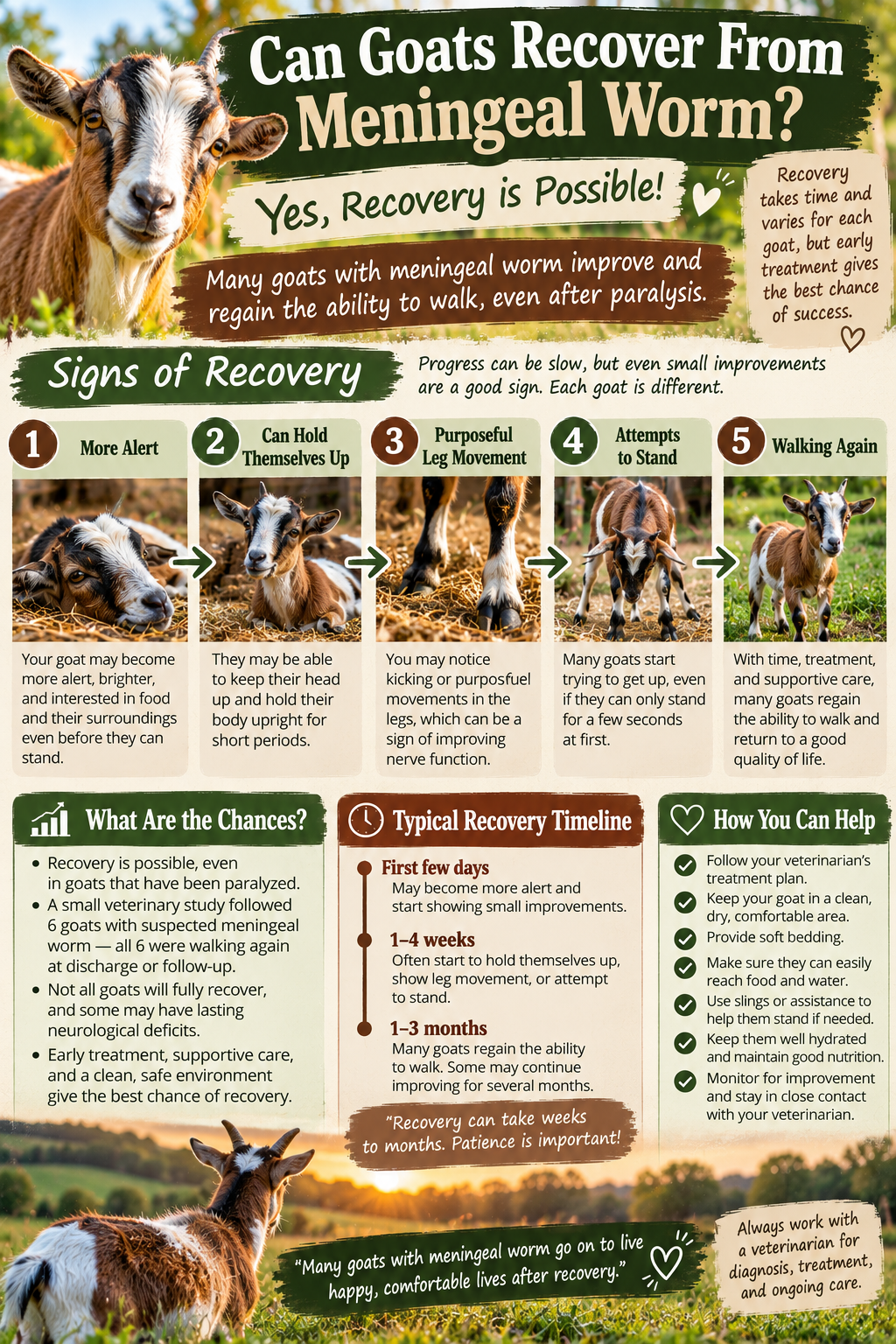
Yes, recovery is possible—but not guaranteed. Killing or controlling the parasite does not instantly repair injured nerves. Improvement may be gradual, and some goats have lasting deficits.
There is a reason to remain cautiously hopeful: in a veterinary teaching-hospital study, all six goats treated for presumptive meningeal worm were able to walk at discharge or follow-up, with minimal neurological deficits. That is encouraging, but six hospital cases are too few to predict an individual goat’s outcome.
A goat trying to push up, moving its legs, or holding itself upright better may be showing useful function. Those observations are worth sharing with the veterinarian, but they cannot by themselves tell you whether full recovery will happen.
Caring for a Goat That Cannot Stand
While your veterinarian manages the underlying condition, supportive care matters enormously. Keep the goat on dry, cushioned bedding in a safe area, make feed and water easy to reach, and ask the veterinarian how often to reposition the animal to reduce pressure injuries. A goat unable to sit upright, swallow normally, urinate, or stay hydrated needs urgent reassessment.
Do not force a weak goat to walk or pull it up by the legs. Ask about safe assisted standing or physical therapy instead. Keeping supplies ready for emergencies is one reason we put together our winter livestock emergency kit guide.
How to Reduce the Risk
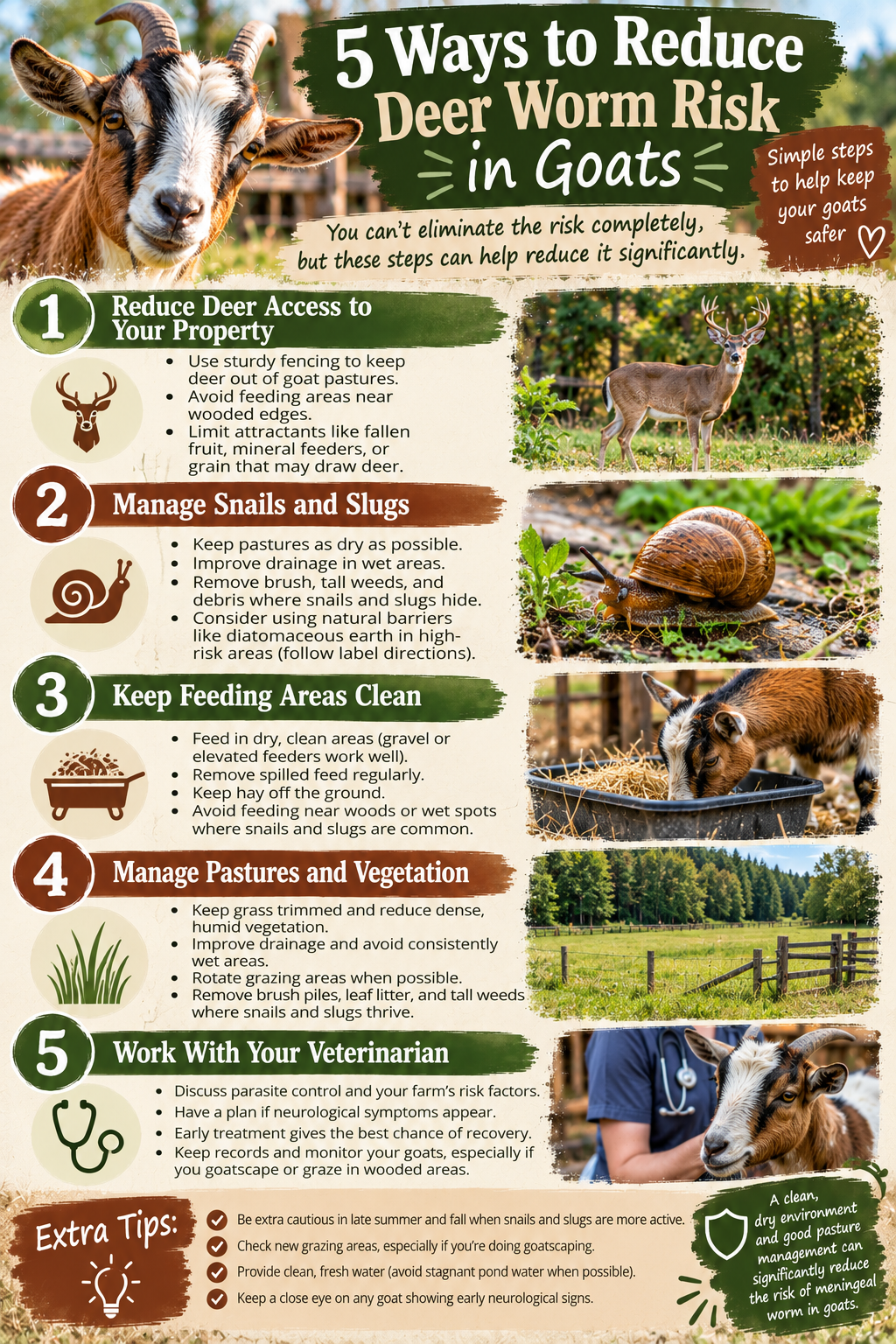
There is no foolproof way to eliminate meningeal worm exposure in deer country, but practical steps can help:
- Reduce deer access to goat grazing areas where practical.
- Improve drainage and avoid persistently wet grazing spots.
- Keep feeders and water areas clean and away from muddy, slug-friendly ground.
- Inspect unfamiliar browse areas before turning goats out, especially when transporting them for jobs.
- Discuss a locally appropriate parasite-prevention plan with your veterinarian rather than automatically deworming every goat every month.
Routine preventive deworming can contribute to drug resistance, and no preventive schedule guarantees protection. See Merck’s prevention guidance and our beginner goat care guide for broader herd management.
For more goat care reading, see our goat care guide for beginners, guide to pseudorabies in livestock, and winter livestock emergency kit checklist. These cover other aspects of goat care and preparedness, not treatments for meningeal worm.
Frequently Asked Questions
Can one goat give meningeal worm to another?
Direct goat-to-goat spread is not the normal transmission route. The parasite relies on deer and snail or slug hosts.
Does every goat in the pasture need treatment?
Not necessarily. Sharing a pasture means shared exposure, not proof that every animal is infected. Ask your veterinarian about the herd’s risk.
Can goats still eat when they have meningeal worm?
Yes. Some affected goats remain bright and continue eating despite serious leg weakness.
How long does recovery take?
There is no dependable timetable. Neurological improvement may take time, and the degree of permanent injury varies. Your veterinarian can reassess function and quality of life as recovery progresses.
The Bottom Line
Meningeal worm is one of those diseases every goat owner in deer country should know about. Early weakness or an odd gait deserves prompt attention. Fast veterinary care, inflammation control, nursing support, and realistic expectations offer the best chance to help an affected goat.
For other important livestock health concerns, see our articles on pseudorabies in goats and livestock and rabies risks for goat owners.
Veterinary Sources and Further Reading
- Cornell Wildlife Health Lab: Brainworm (P. tenuis)
- Cornell Small Ruminant Parasite Research: Deer Worm Treatment Protocols
- Merck Veterinary Manual: Nematodes Causing CNS Disease
- Veterinary case series: Clinical Presentation, Diagnostics, Treatment, and Outcome of Goats
This article is educational and does not replace veterinary diagnosis or treatment. A goat with new weakness, paralysis, or other neurological signs needs urgent veterinary attention.


Post your Comment About This Product