
If you’re trying to reach 4,000 eligible public watch hours, you’ve probably done the same math I have: How many more videos do I need? How often should I go live? How am I going to get those last few hundred hours?
I had January 31, 2027, stuck in my head as the finish line. Then I started looking more closely at the YouTube Partner Program application process, and I realized I was leaving out a pretty important step.
Reaching the requirements, submitting an application, and getting approved are three different things. YouTube says application reviews typically take about one month, and they can take longer.
That’s why I’m giving myself more time. But there’s an important distinction here: December is my planning target, not an official YouTube deadline. And an answer I received from YouTube’s AI chatbot about pending applications is not confirmed policy.
Key Takeaways
- Reaching the eligibility threshold does not automatically approve your channel for YouTube ad revenue sharing.
- YouTube application reviews typically take about one month, so my plan includes extra time.
- The chatbot’s pending-application interpretation remains unconfirmed, and December is not an official YouTube deadline.
- Use eligible hours in the Earn tab and account for older hours leaving the rolling window.
Table of Contents
- What’s Changing With YouTube Monetization in 2027?
- Why Your Eligible Watch Hours Can Fall Off
- Reaching 4,000 Hours Does Not Mean You’re Approved
- Why December Is My Target, Not an Official Deadline
- Could the Earlier 3,000-Hour YPP Tier Help?
- My Watch Hour Action Plan
- The Goal Is a Better Plan, Not More Panic
What’s Changing With YouTube Monetization in 2027?
The February 1, 2027, update described in YouTube’s official announcement raises the requirements for new applicants seeking full ad revenue sharing. For the public watch hour route, the change is:
- Before the update: 1,000 subscribers and 4,000 eligible public watch hours within a rolling 365-day period.
- Starting February 1, 2027: 1,000 subscribers and 8,000 qualified public watch hours within the last 365 days.
- The alternative Shorts route under the update: 1,000 subscribers and 20 million qualified Shorts views within the last 90 days.
I previously wrote about what the 2027 YouTube monetization changes mean for homesteading creators. For a small channel, another 4,000 hours is a big deal. You can be publishing every week, experimenting with livestreams, changing titles and thumbnails, and still see your eligible hours move up a little at a time.
The update says creators already in the Partner Program will not have their existing status affected. However, that broad statement does not answer every question about applications still under review or channels entering through the earlier access tier.
The January 31 date in the announcement concerns accepting updated terms. It should not automatically be treated as a guaranteed deadline for reaching 4,000 hours and securing full ad monetization. You can review the announcement and terms information on YouTube’s Partner Program terms page.
Why Your Eligible Watch Hours Can Fall Off
There’s another reason this goal can feel so frustrating: eligible watch hours do not keep adding up forever.
YouTube uses a rolling 365-day window. As you earn new hours, older hours move outside that window and stop contributing to your total.
Say you earn 20 eligible hours today. That sounds great. But if 15 hours from the corresponding period last year expire, your total only increases by five.
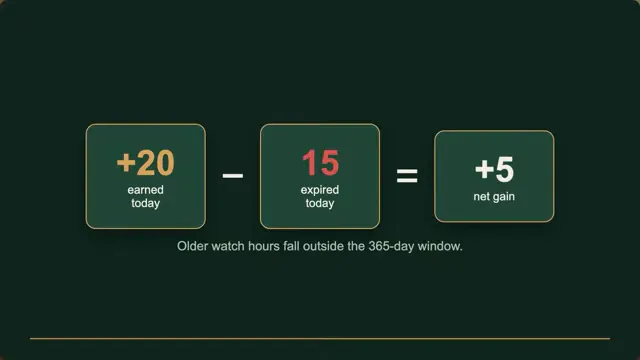
This matters especially if you’ve been building your channel for more than a year. The gap between your current total and 4,000 is only part of the calculation. You also need to account for hours that will expire before your target date.
I’ve been keeping track of both sides of that myself, and goodness, those older hours can make a difference.
Reaching 4,000 Hours Does Not Mean You’re Approved
It’s easy to focus so hard on the number that the application process becomes an afterthought. That’s exactly what I was doing.
Once you meet the applicable requirements, there are still application steps to complete. YouTube explains that after you accept the Partner Program terms and link your AdSense account, your channel enters the review queue.
The typical review timeline is about one month, not an immediate approval. Some channels may receive a decision sooner. Others may take longer. A typical timeline is not a promise that your application will be finished within exactly 30 days.
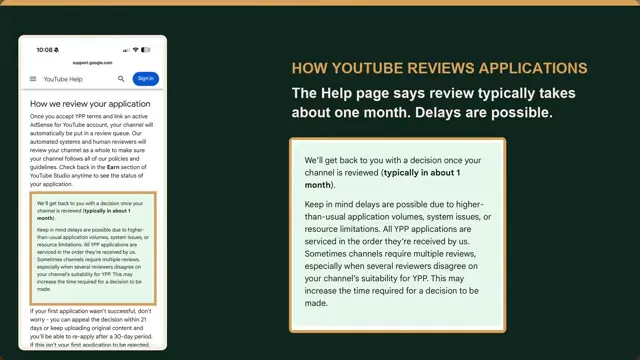
YouTube’s Partner Program overview and eligibility guidance is the place to check the application process rather than assuming that hitting the watch hour goal completes it.
What Happens if an Application Is Still Pending on February 1?
This is the question that made me rethink my schedule.
I asked YouTube’s AI chatbot whether reaching 4,000 hours and applying before February 1 would preserve the existing requirement if the channel was still awaiting approval.
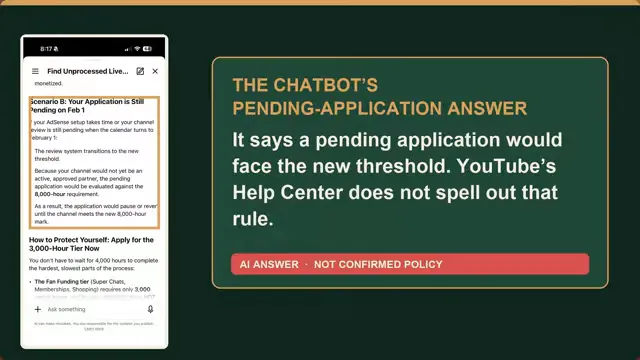
The chatbot told me that a channel would need to be accepted into the full ad revenue sharing tier before February 1 to retain the 4,000-hour requirement. It also said a pending application would be evaluated under the new 8,000-hour threshold.
I could not find that specific pending-application rule spelled out in the official Help Center. I cannot guarantee the chatbot’s interpretation is correct, and I don’t want anyone confusing an AI response with a confirmed YouTube policy.
Here’s the situation I’m trying to avoid: imagine you’re at 3,700 hours, work hard, reach 4,000 on January 29, and submit your application. February 1 arrives while your channel is still in the review queue.
If the chatbot’s interpretation were correct, the difference could be another 4,000 hours. That possibility is why I’m leaving a buffer, not proof that every pending application will be handled that way.
Why December Is My Target, Not an Official Deadline
If my goal is to be fully approved before February 1, I need to plan backward from approval, not just from eligibility.
Compare these possible dates for reaching the requirements and applying:
- December 20, 2026: Several weeks remain before February 1, allowing more room for review.
- January 20, 2027: Less than two weeks remain, which is shorter than the typical review timeline.
- January 31, 2027: There is essentially no review buffer before the change takes effect.
That makes December a more cautious personal target. It does not make December 20 a special cutoff, and it does not guarantee approval before February.
I also can’t promise that applications will take longer because other creators may be rushing to qualify. That’s a concern, not an established fact. The useful point is simpler: review times vary, and leaving extra time is something I can control.
Could the Earlier 3,000-Hour YPP Tier Help?
There’s an earlier access tier worth checking before you reach the full ad revenue requirements. The watch hour route discussed here requires:
- 500 subscribers.
- 3,000 eligible public watch hours.
- Three public uploads in the last 90 days.
This tier gets an eligible, approved channel into the YouTube Partner Program, but it does not unlock regular ad revenue. Check your channel’s Earn tab and YouTube’s expanded Partner Program guidance for the requirements and availability that apply to you.
I asked the chatbot about this route, too. Its explanation was that a channel approved at the earlier tier has already gone through the Partner Program review and connected AdSense. Reaching 1,000 subscribers and 4,000 hours later would therefore be an upgrade within the program rather than starting the initial membership process from scratch.
That could potentially save time. It is not a promise of an immediate upgrade, and the speed of that later step is not guaranteed.
The chatbot also told me that entering at the 3,000-hour tier would not, by itself, preserve the 4,000-hour full ad revenue threshold after the update. Again, that is chatbot guidance, not a grandfathering rule I independently confirmed in the Help Center.
If you already have 3,000 eligible hours and meet the other requirements, it’s worth checking whether you can complete the initial application now. Just don’t confuse early Partner Program membership with full ad monetization.
My Watch Hour Action Plan
I don’t want this to become another reason to feel overwhelmed or give up. The useful response is to build a plan around your actual numbers, the content that’s working, and the application steps you still need to complete.
1. Start With the Earn Tab
Open YouTube Studio and check Earn. Use the eligible public watch hours shown there, not the general watch time total in your regular analytics.
Those numbers are not interchangeable. If you’re planning around monetization eligibility, you need the number that counts toward that requirement.
2. Calculate the Gap and Account for Expiring Hours
Start with straightforward subtraction:
- If you have 3,200 eligible hours, you need another 800 to reach 4,000.
- If you have 2,500 eligible hours, you need another 1,500 to reach 4,000.
Then look at the time remaining before your chosen target and work out the daily pace you need. Include the older hours expected to fall outside the rolling window.
Your plan needs to cover the remaining gap plus the hours that expire along the way.
You can try asking YouTube Studio’s AI assistant how many hours may drop off before a particular date. Treat that as a planning aid and check it against the data available in Studio rather than relying on an AI answer alone.
3. Build on What Your Audience Already Wants
Don’t respond to the pressure by uploading a bunch of random videos. More uploads are not automatically a better watch hour strategy.
If you make farm or homesteading videos, it can also help to study what’s already popular in your niche. I looked at the biggest homesteading YouTube channels in 2026 for a sense of the broader landscape.
Look at your channel and ask:
- Which topics are bringing people to the channel?
- Which videos hold people’s attention longest?
- Are livestreams or regular uploaded videos performing better?
- What questions does your audience keep asking that deserve a longer explanation?
- Could a useful section of a livestream become a focused standalone video?
I’ve repurposed livestream material into shorter videos myself. I’ve also experimented with longer videos, different topics, and going live. The point is to use evidence from your own channel, not simply fill an upload schedule.
4. Prepare for the Application Before You Qualify
If you’re approaching either 3,000 or 4,000 hours, start learning the application process now.
- Read YouTube’s monetization policies.
- Make sure your channel is in good standing.
- Review the steps shown in your Earn tab.
- Understand the terms and AdSense connection process.
- Leave room in your schedule for review.
You don’t want to reach the number you’ve worked toward for months and only then start figuring out what happens next.
The Goal Is a Better Plan, Not More Panic
Most of my content is about homesteading, goats, and training my horses. I’m also a small creator working toward monetization, checking the eligible hours coming in and the older ones falling off. I’m right there with you.
I genuinely thought January 31 was the date I needed to focus on. Looking into the review process made me realize my timeline was missing a step.
The part I can confidently build around is this: eligibility is not approval, review takes time, and December is a personal buffer rather than an official deadline. The treatment of pending applications remains the part I could not confirm, so I’m not treating the chatbot’s answer as settled policy.
Know your eligible total. Account for expiring hours. Make more of the content your audience actually wants. And give the application process a place in your plan, not just the watch hour goal.


Post your Comment About This Product