
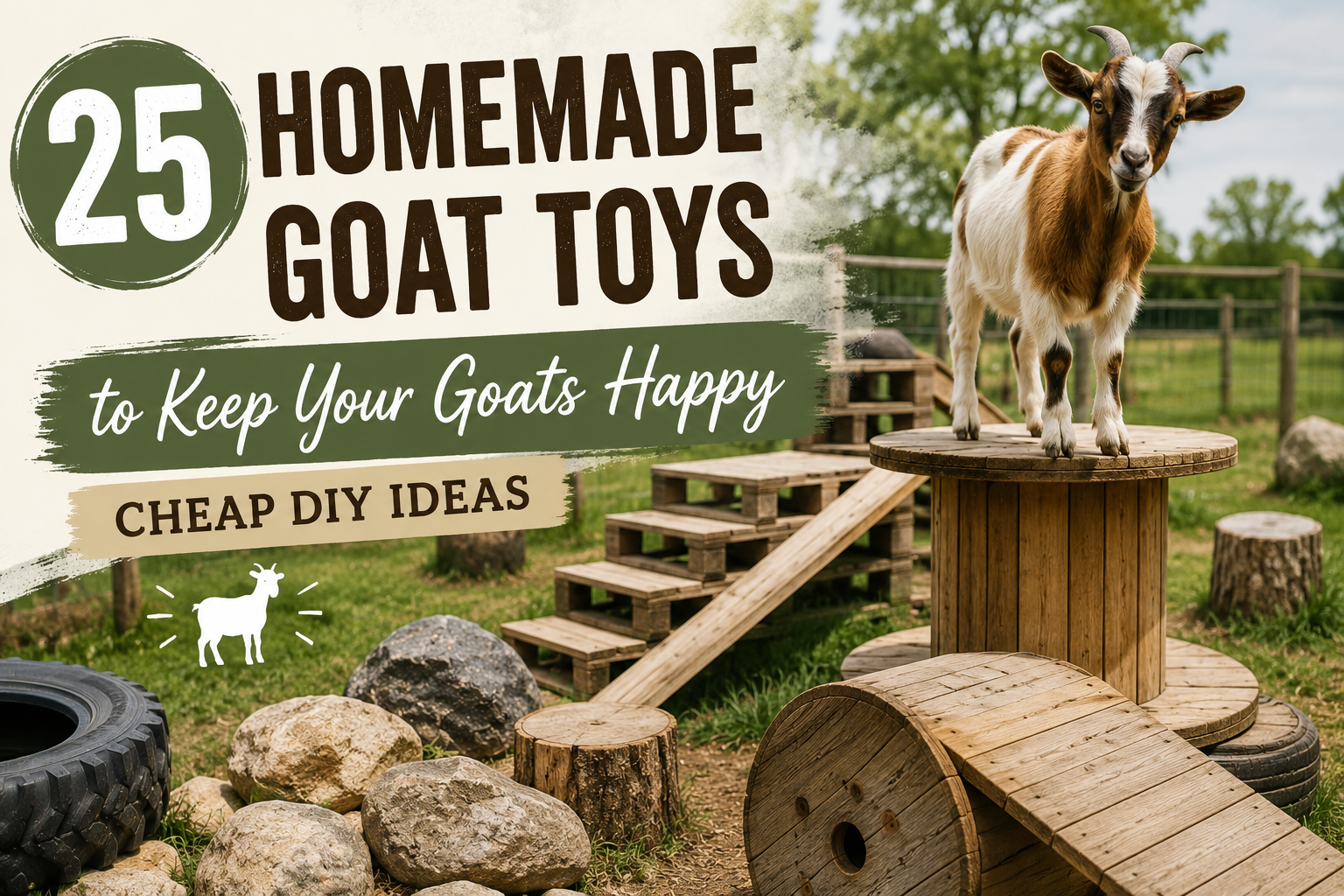
Goats can turn almost anything into a toy.
Leave a wheelbarrow in the pasture, and they will climb inside it. Set down a bucket, and someone will immediately put it on their head. Try to repair the fence, and suddenly every goat on the property wants to “help.”
Goats are naturally curious, playful animals that enjoy climbing, browsing, rubbing, exploring and investigating anything new. Without enough stimulation, they may redirect that energy toward your fences, gates, shelters, feeders and anything else you would prefer they leave alone.
Fortunately, you do not need to spend hundreds of dollars on expensive livestock toys. Some of the best homemade goat toys can be built from pallets, logs, barrels, tires, brushes and other materials you may already have around your farm.
These 25 cheap DIY goat toy ideas can help you create a more interesting environment for your herd while encouraging natural goat behaviors.
Meta description: Keep bored goats entertained with these 25 homemade goat toys. Discover cheap DIY climbing structures, browsing toys, scratching stations and goat enrichment ideas.
Why Do Goats Need Toys?
Goats do not necessarily need colorful toys from a farm supply store, but they do need opportunities to climb, explore, browse, scratch and interact with their surroundings.
In the wild, goats travel across rough terrain, browse from shrubs and trees and climb to reach food or find a comfortable resting place. Domestic goats still have many of those same instincts. Animal-welfare guidance recommends providing goats with items such as logs, stumps, benches, raised planks and other platforms that allow them to climb, rest and explore.
Providing enrichment may help:
- Reduce boredom
- Encourage exercise
- Give lower-ranking goats places to move away from herd mates
- Provide an appropriate place for scratching and rubbing
- Encourage natural browsing behavior
- Redirect climbing away from fences and feeders
- Make dry lots and winter pens more interesting
Toys are not a replacement for companionship. Goats are herd animals and should live with other compatible goats rather than being kept alone.
Important Safety Rules for Homemade Goat Toys
Before placing anything in the goat pasture, look at it as though you were a goat determined to break it, climb it, chew it or become stuck in it.
Because that is probably exactly what will happen.
Keep these safety rules in mind:
Remove sharp objects
Check carefully for:
- Protruding nails
- Loose screws
- Staples
- Splintered wood
- Broken plastic
- Exposed tire wire
- Sharp metal edges
Run your hands over every surface and inspect the toy regularly for damage.
Avoid loose ropes and hay nets
Loose rope, twine, straps, netting and dangling cords can wrap around a goat’s leg, neck or horns. Hay nets can also create an entanglement hazard and should not be used around goats.
Whenever you hang something, use a rigid mount or a very short, securely fastened chain that the goats cannot wrap around themselves.
Watch for head traps
Openings that seem harmless may trap a goat’s head or horns.
Be particularly careful with:
- Pallets
- Cable spools
- Feeders
- Barrels
- Tire openings
- Cattle panels
- Playground equipment
An opening should either be too small for a goat to enter or large enough for the goat to move through safely.
Anchor climbing structures
Goats may jump onto a structure together, push against it or ram it during play. Platforms, barrels, ramps and spools should not roll, collapse or tip over.
Use safe materials
Avoid wood or pallets that are:
- Rotting
- Covered in peeling paint
- Stained with chemicals
- Pressure-treated with unknown chemicals
- Marked as having carried hazardous materials
Clean food-grade barrels and untreated or heat-treated lumber are generally better choices.
Introduce height gradually
Start kids and goats that are not accustomed to climbing with low, wide platforms. Add taller structures only after they are comfortable using the lower ones.
DIY Climbing Toys for Goats
Climbing structures are often the most popular form of goat enrichment. They also tend to provide the best entertainment for the humans watching from outside the fence.
1. Pallet Climbing Platform
Wooden pallets can become a basic goat platform with a few reinforcements.
Place several sturdy pallets beside one another and cover the top with a solid sheet of untreated plywood or closely fitted boards. Fasten everything together with exterior screws and add strong supports underneath.
The solid top is important. A goat’s leg can easily slip between open pallet boards.
For a larger playground, stack the pallets in gradually increasing levels to create wide steps.
Estimated cost: Free to $30
Safety tip: Remove every exposed nail and avoid damaged, painted or chemically stained pallets.
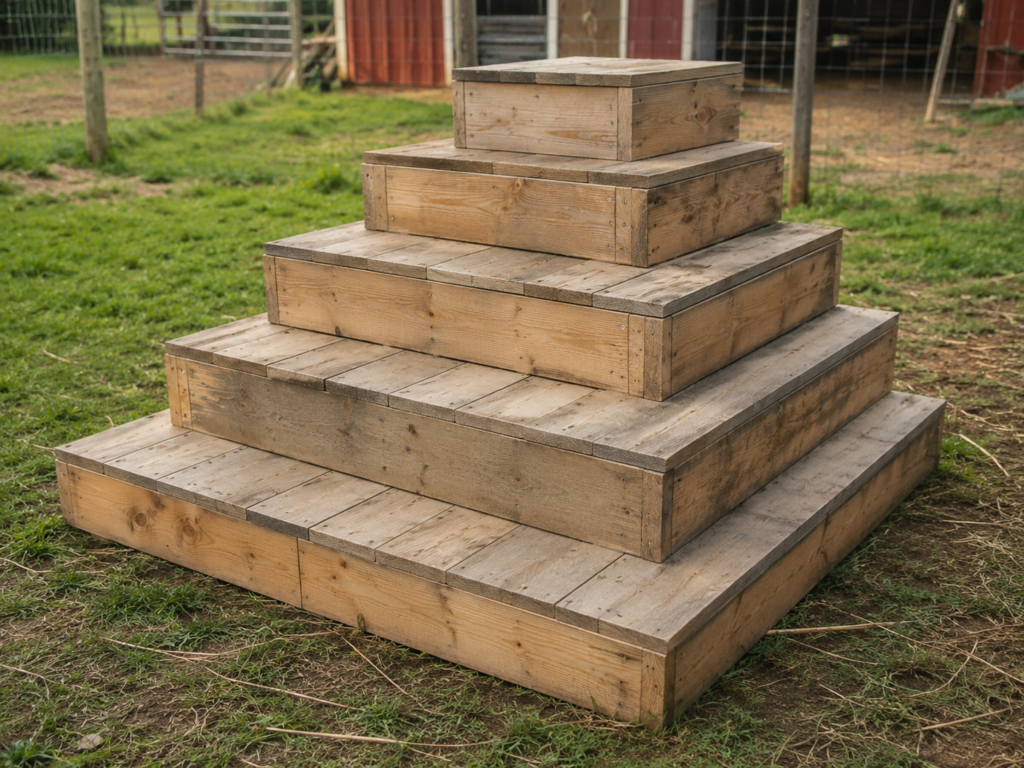
2. Scrap-Wood Step Pyramid
Build a series of large wooden boxes or platforms in different heights. Arrange them like stairs or stack them into a small pyramid.
Make each level wide enough for a goat to stand and turn around comfortably. Reinforce the inside of each box so that it will not collapse when several goats jump on it at once.
This is especially fun for young goats, which will often chase each other up and down the steps.
Estimated cost: Free if using leftover lumber
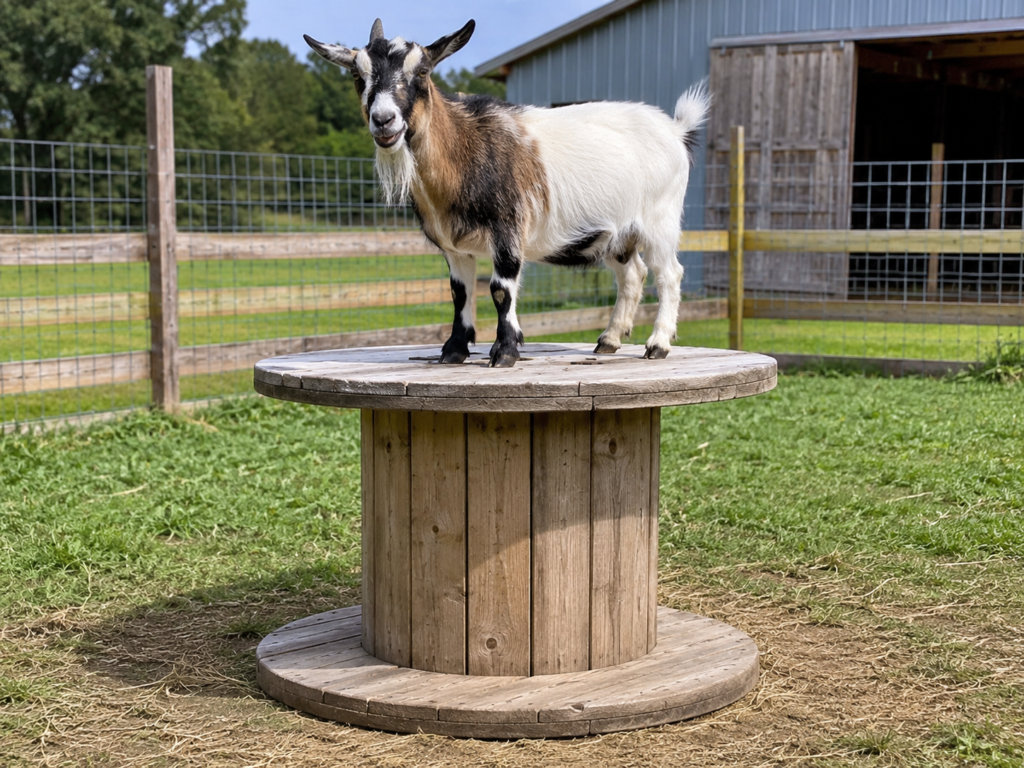
3. Wooden Cable Spool
Large wooden cable spools are popular additions to goat playgrounds because they provide both height and a flat resting surface.
Place the spool upright and secure it so that it cannot roll or tip. Inspect the wood for splinters, exposed bolts and chemical residue.
The center openings may need to be covered, especially if you have horned goats or small kids.
Estimated cost: Often free from utility, electrical or construction companies
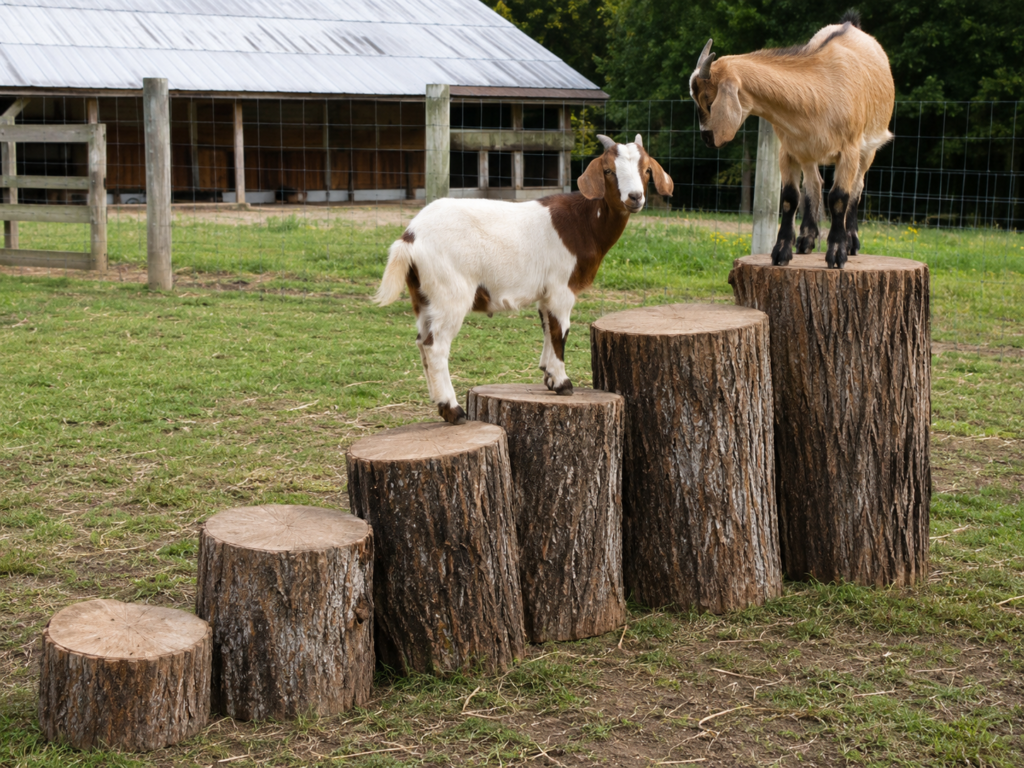
4. Tree-Stump Staircase
Arrange several large tree stumps in increasing heights to create a natural staircase.
Choose wide, solid stumps that sit flat on the ground. Partially burying the bottoms can help keep them stable.
Stumps provide climbing opportunities without making your pasture look like a playground built from scrap materials.
Estimated cost: Free
Safety tip: Do not use wood from a tree you cannot identify if your goats may chew the bark.
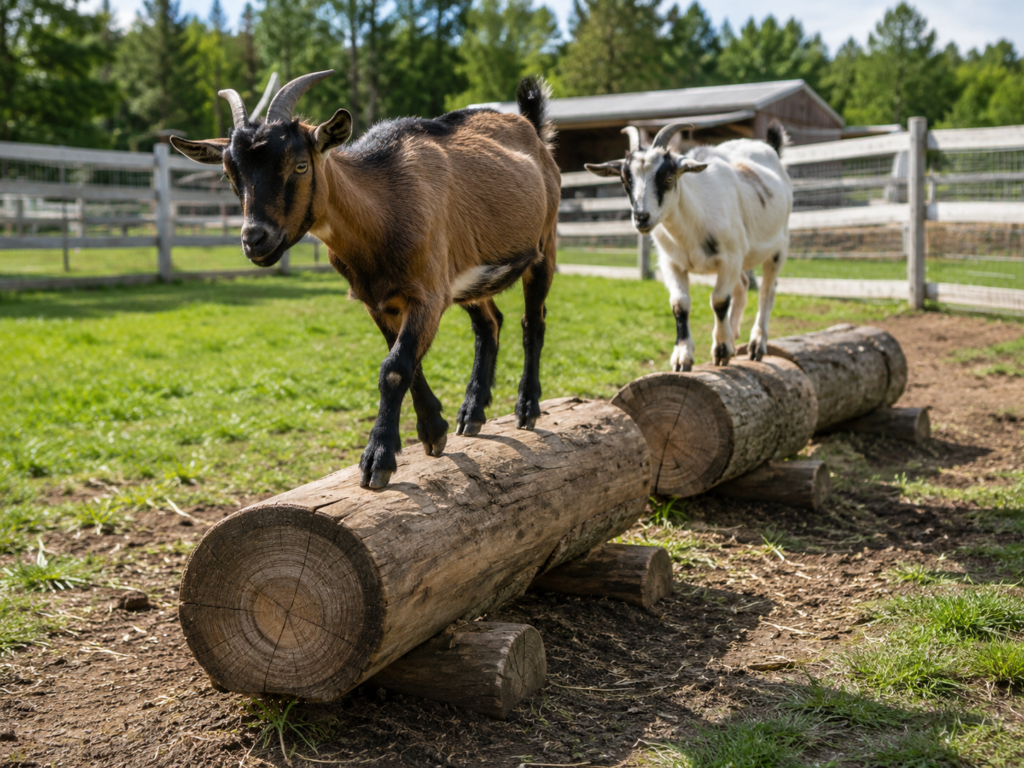
5. Log Balance Path
Place several thick logs in a row to create a low balance path.
The logs can be laid directly on the ground or raised slightly with sturdy wooden supports. Secure round logs so they cannot roll beneath the goats.
Avoid thin logs that may snap or become slippery. Wider logs are safer and more enjoyable for goats to walk across.
Estimated cost: Free
6. Low Ramp and Bridge
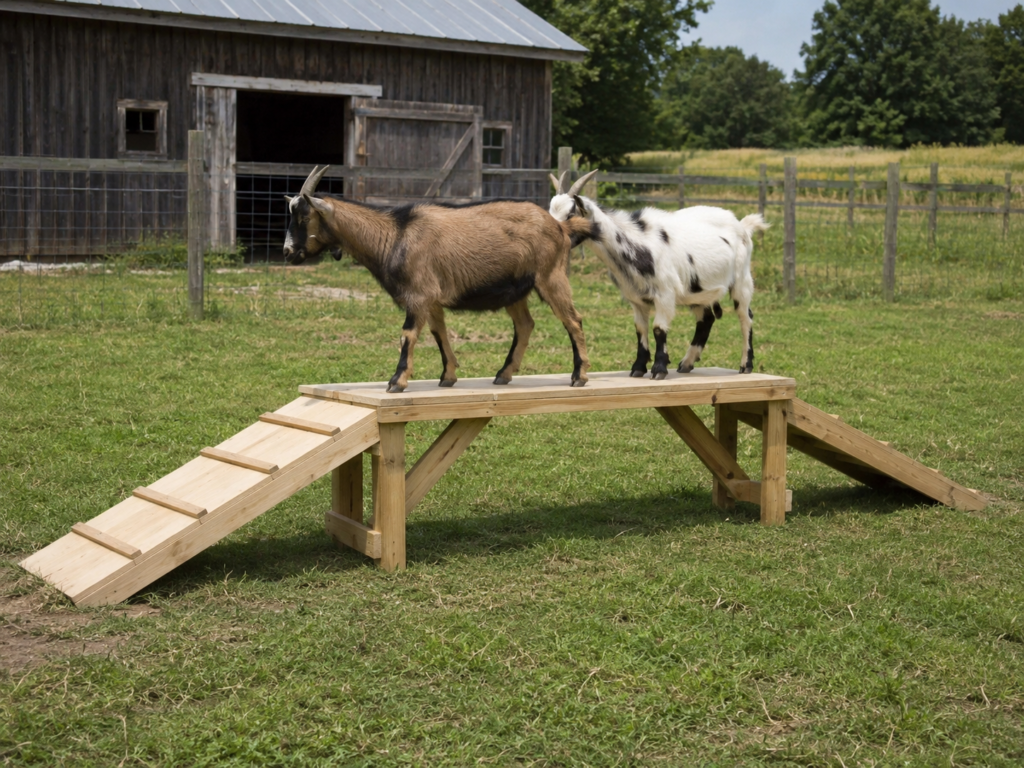
Build a small bridge with a ramp on each side.
Use a wide piece of strong lumber for the bridge and attach short wooden strips across the ramps to provide traction. Keep the first version relatively low to the ground.
A low bridge works well in a goat obstacle course and may be easier for older goats than a tall platform.
Estimated cost: $20 to $60
7. Repurposed Picnic Table
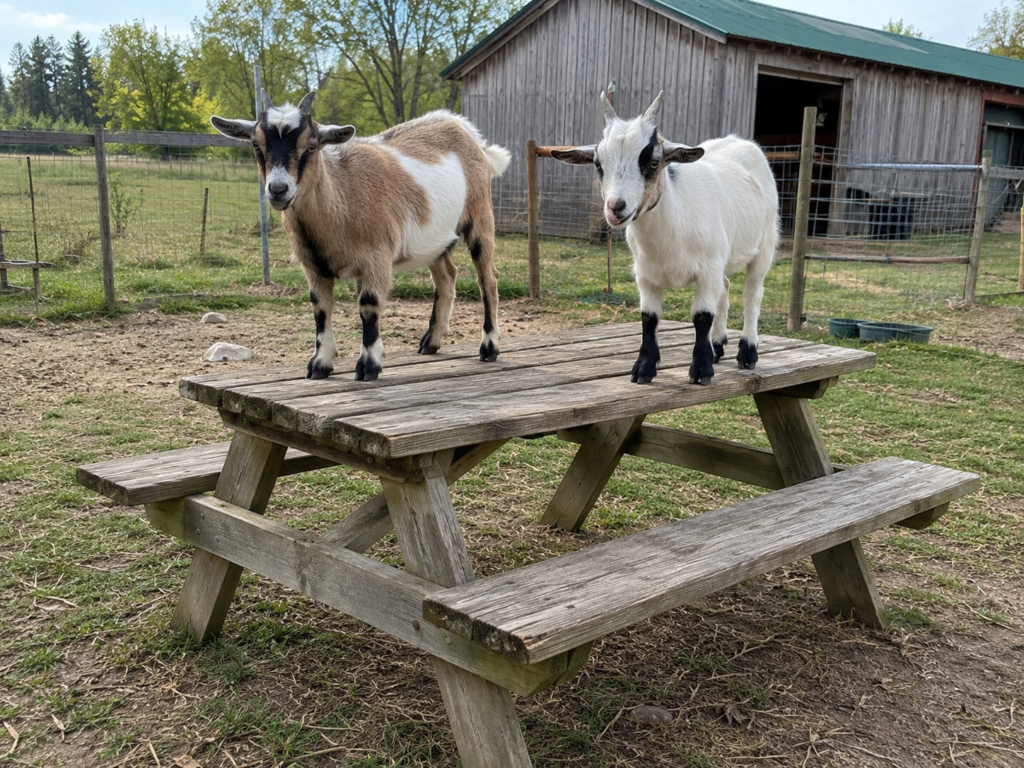
An old wooden picnic table can become an instant goat jungle gym.
Goats can climb onto the benches, stand on the tabletop and rest underneath it for shade. Reinforce any weak legs or boards before moving it into the pasture.
Avoid tables with peeling paint, sharp hardware or lightweight construction.
Estimated cost: Free to $50 secondhand
8. Secondhand Children’s Playset
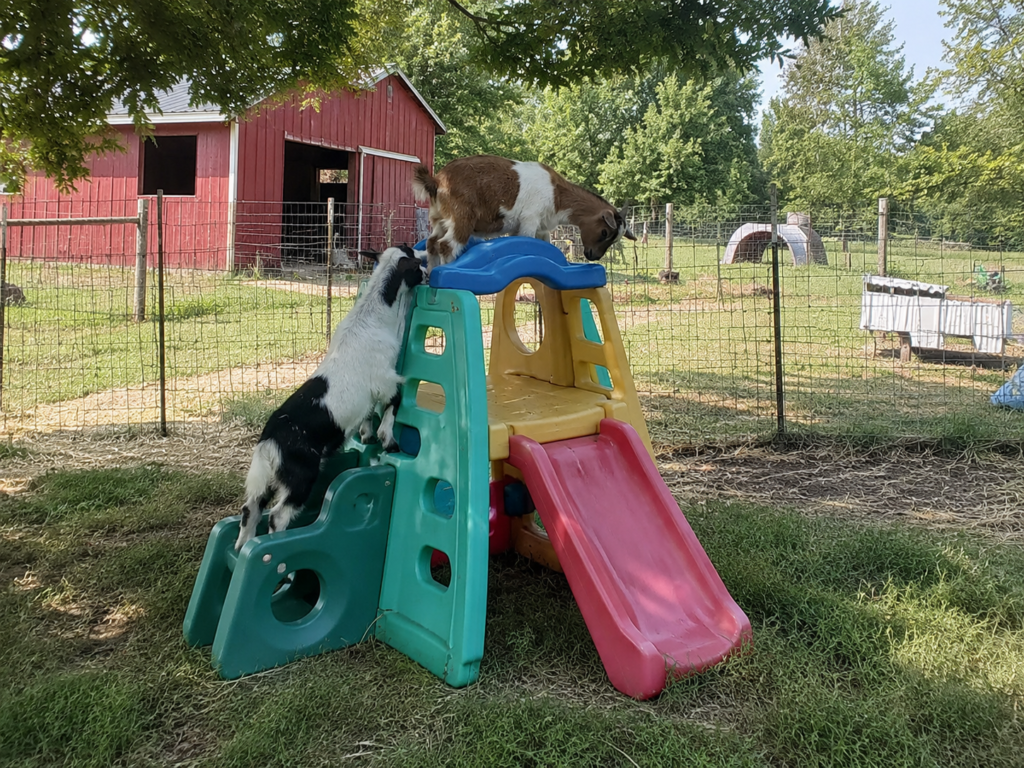
Small plastic or wooden children’s playsets are often available free or inexpensively after families outgrow them.
A sturdy toddler slide, playhouse or low climbing structure may provide several different surfaces for goats to explore.
Remove swings, ropes, nets and any small plastic accessories. Inspect the structure frequently because goats may chew plastic or damage cracked areas.
Estimated cost: Free to $100 secondhand
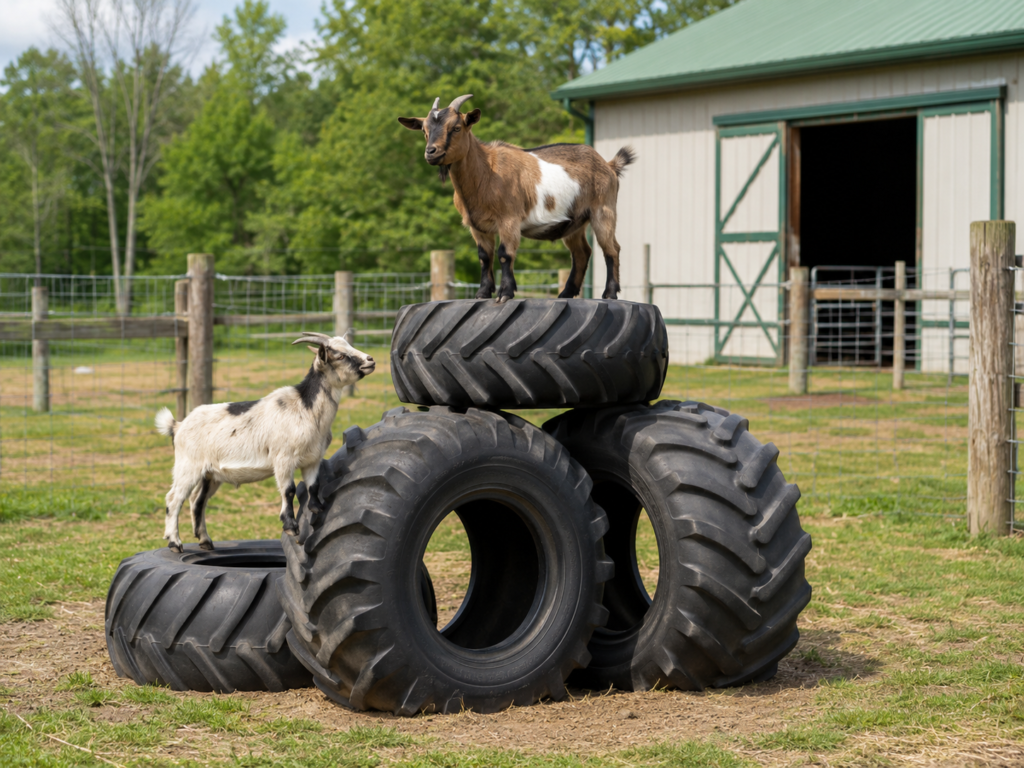
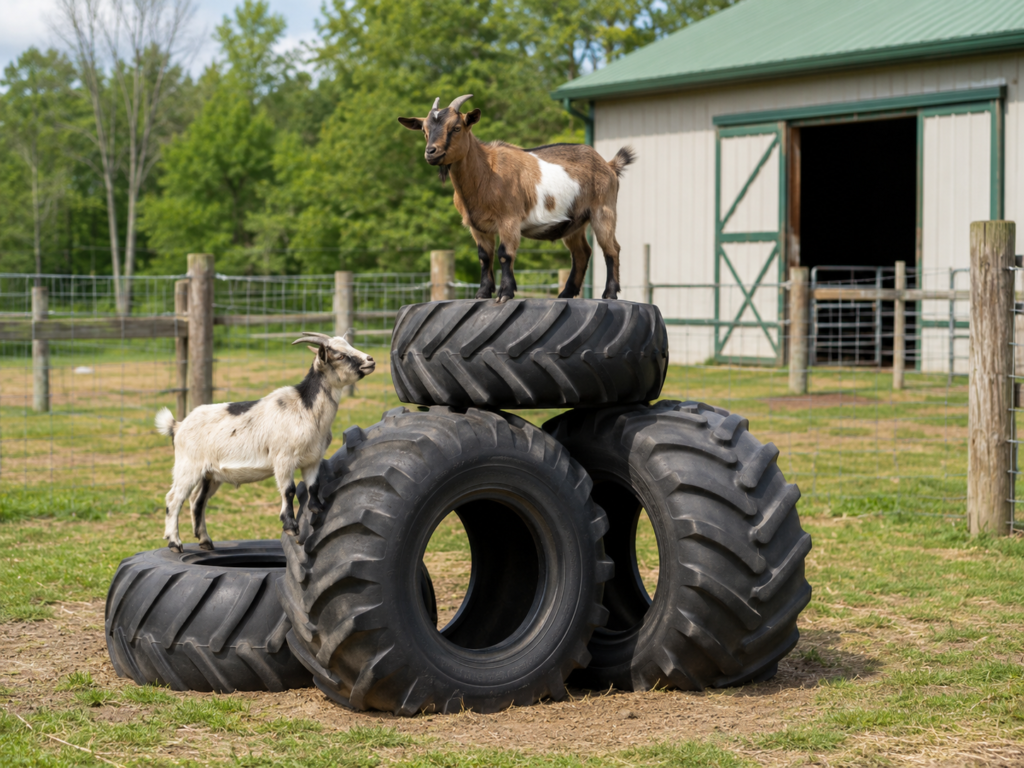
9. Tire Mountain
Large tractor tires can be laid flat, partially buried or stacked securely to create a tire mountain.
Use tires large enough that the goats cannot become wedged inside. Drill drainage holes or position them so rainwater cannot collect and become a mosquito breeding area.
Never use a tire with exposed steel belts or sharp wire.
Estimated cost: Usually free from farms or tire shops
10. Food-Grade Barrel Tunnel
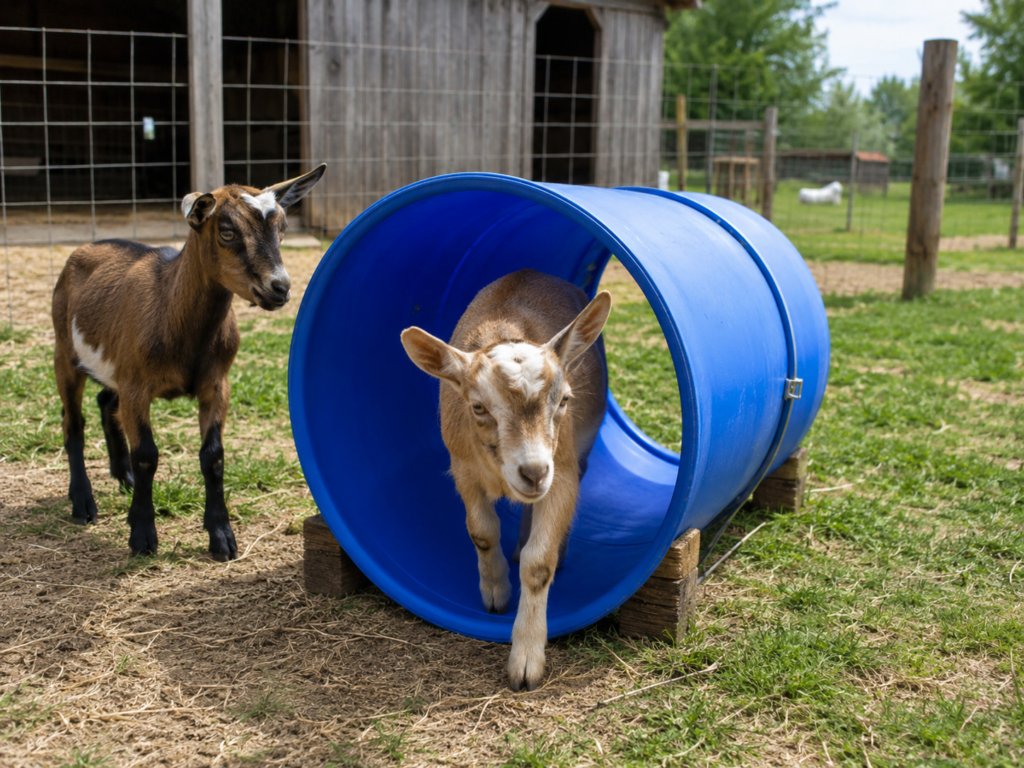
A clean plastic barrel can become a simple goat tunnel.
Remove both ends, smooth every cut edge and anchor the barrel so it cannot roll while a goat is inside. The opening must be large enough for your biggest goat to pass through without becoming stuck.
This toy is generally better suited to small breeds and young goats. A narrow tunnel may not be appropriate for large or heavily horned goats.
Estimated cost: $10 to $30
11. Anchored Barrel Climber
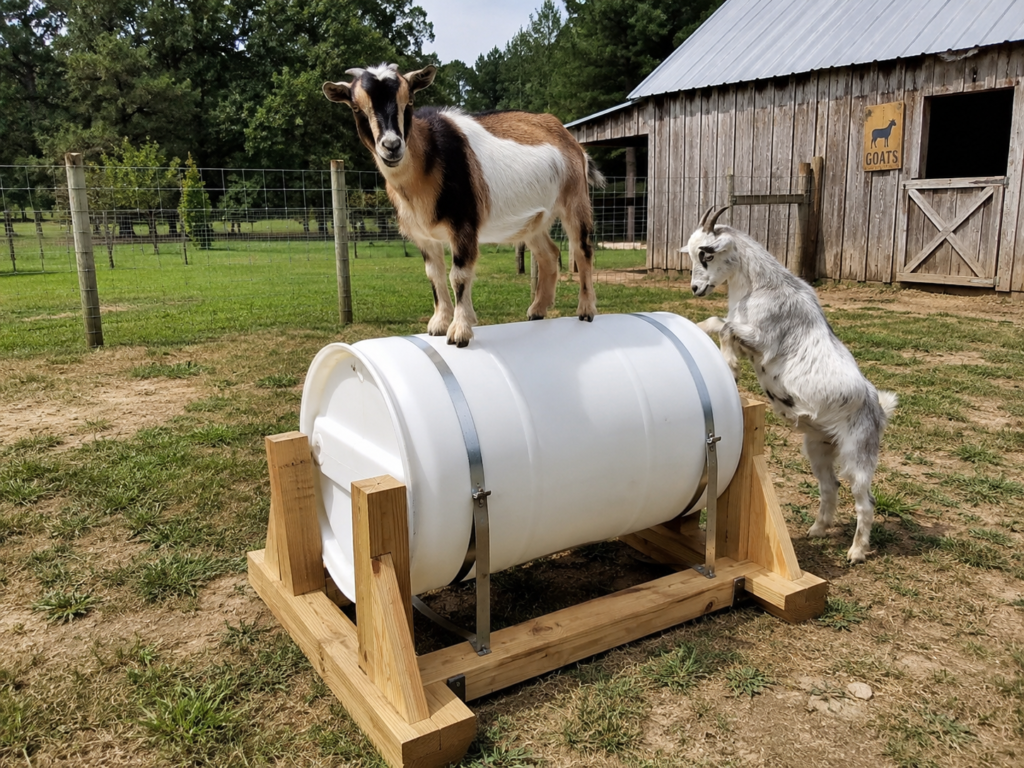
Instead of cutting the barrel, place a clean plastic barrel horizontally in a wooden cradle.
The cradle prevents it from rolling while allowing goats to climb and balance on the rounded surface. You can also place a solid wooden platform across two securely anchored barrels.
Check that the barrel is completely clean and previously held food-safe materials.
Estimated cost: $20 to $50
12. Goat Dirt Mountain
Sometimes the cheapest goat toy is simply a pile of dirt.
A firm mound gives goats another level to climb, play on and rest upon. Shape the sides with gentle slopes and compact the dirt so it does not collapse into deep holes.
Avoid placing the mound beside a fence. The extra height may give your goats the boost they need to jump over it.
Estimated cost: Free if you already have fill dirt
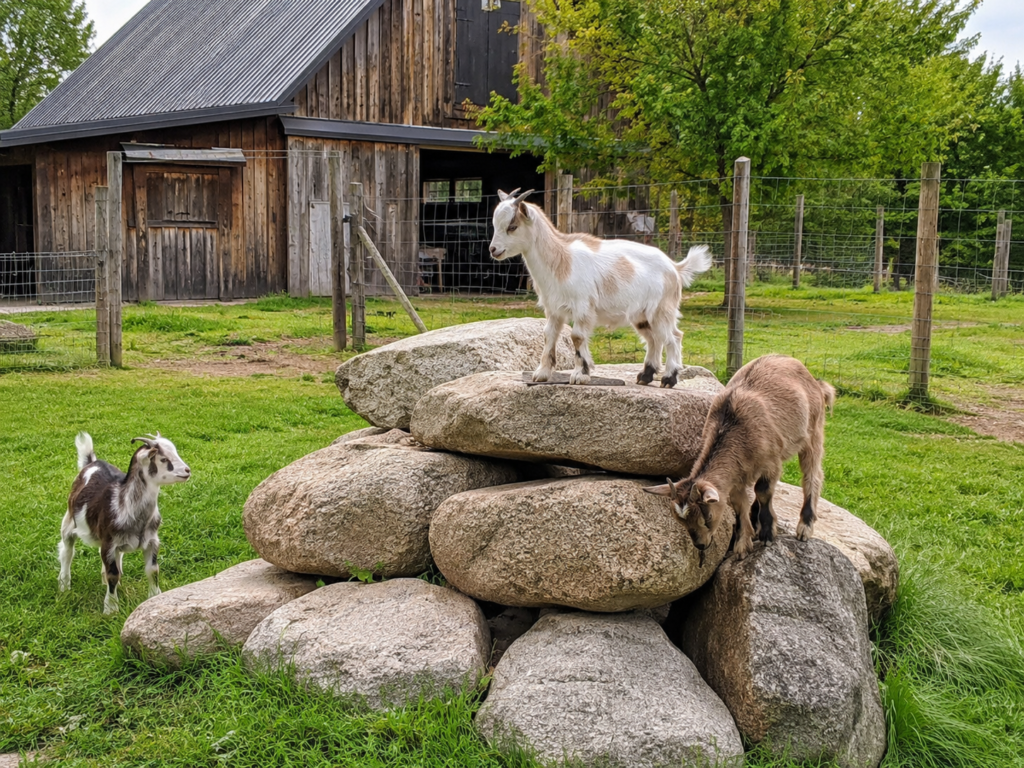
13. Stable Rock Scramble
Goats are naturally suited to rocky terrain. A carefully constructed rock area can provide climbing opportunities while helping create a more natural environment.
Use large, heavy rocks that cannot roll or shift. Fill dangerous gaps and keep the structure low enough that a fall is unlikely to cause a serious injury.
Do not simply dump a pile of loose stones into the pasture. Every rock should be stable before goats are allowed access.
Estimated cost: Free to $100, depending on available materials
Homemade Scratching and Sensory Toys
Goats love rubbing their heads, necks, sides and backs against fences, buildings and people. Giving them a designated scratching area may help save your gates and shelter walls.
14. Scratching-Brush Post
Secure a stiff livestock brush or durable scrub brush to a solid fence post.
Position it at shoulder height so goats can rub their necks and sides against it. Make sure all screws and brackets are covered or placed where the goats cannot contact them.
Brushes should be attached firmly enough that a determined goat cannot pull them off.
Estimated cost: $10 to $40 (or free- use an old shop brush!)
15. Old Push-Broom Scratcher
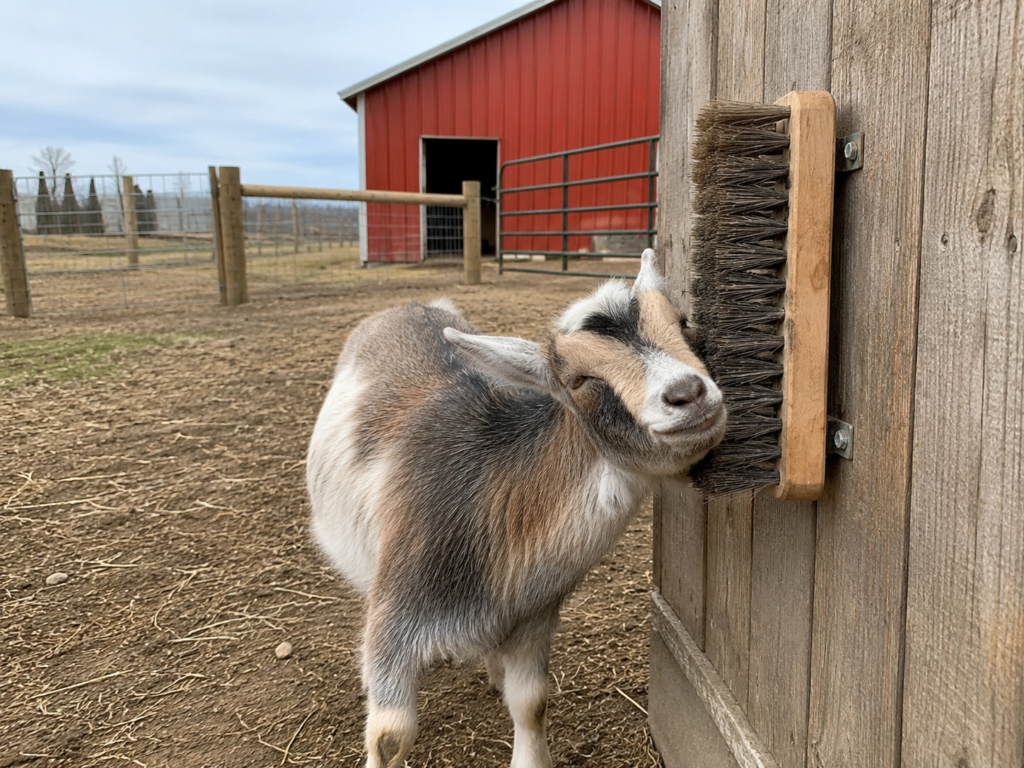
An old push broom can be repurposed into a scratching station.
Remove the handle and mount the broom head horizontally on a wall or sturdy wooden post. Choose firm bristles without sharp wire or loose pieces.
This is one of the easiest homemade goat toys and often becomes a herd favorite.
Estimated cost: Free to $15
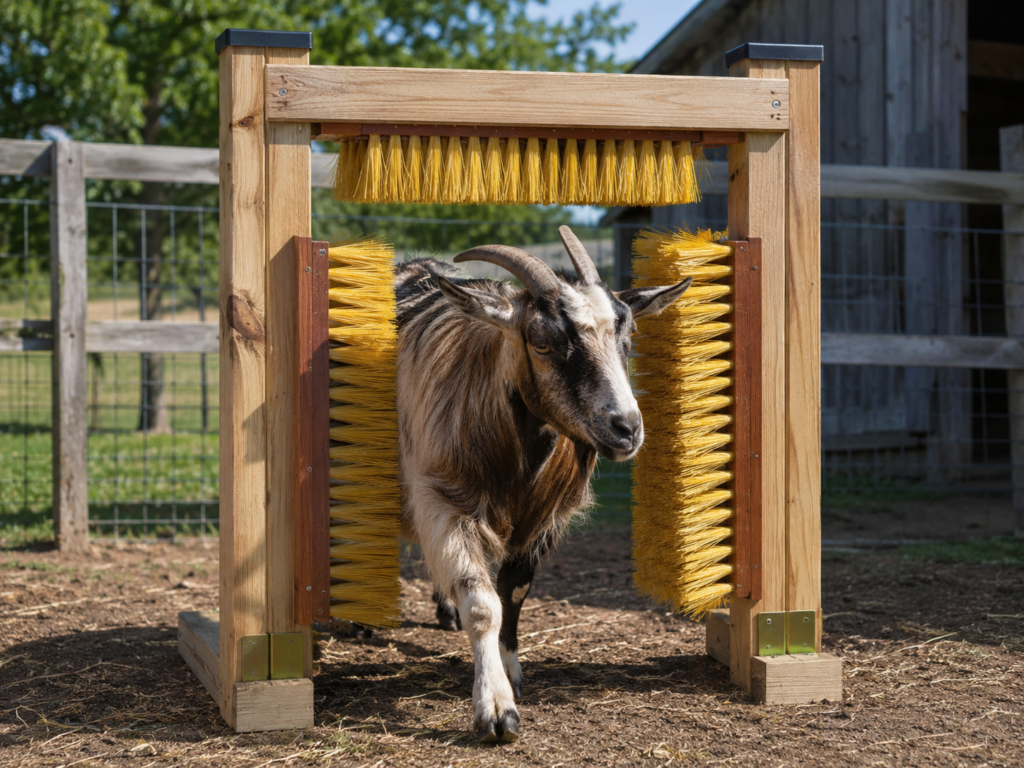
16. DIY Goat Car Wash
Create a walk-through scratching station using two securely mounted push-broom heads.
Attach one brush to each side of a narrow wooden frame so the bristles gently touch the goats as they walk through. An additional brush can be mounted overhead for goats to rub their backs.
Keep the walkway wide enough that goats cannot become trapped or cornered by a dominant herd mate.
Estimated cost: $20 to $50
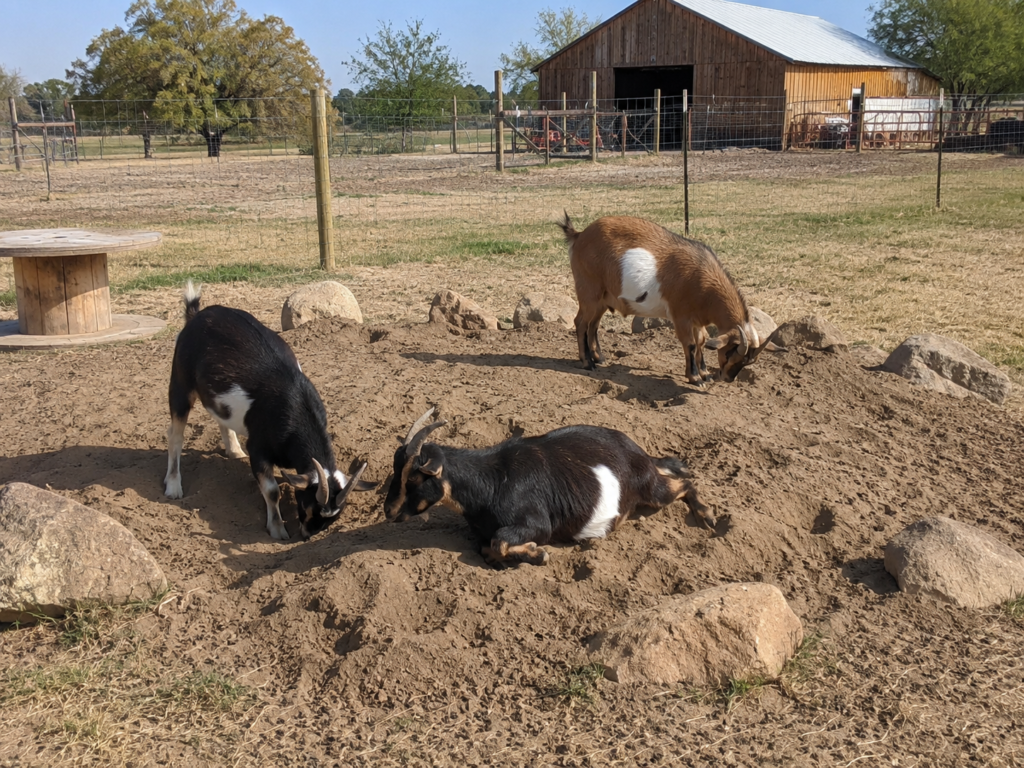
17. Dust-Bathing and Digging Area
Goats may paw at the ground, make shallow resting spots or roll in loose soil.
Create a dry area filled with clean soil or sand where they can dig and rest. Keep the area away from mud, manure runoff and standing water.
This may not look like a traditional toy, but it encourages exploration and natural behavior.
Estimated cost: Free to $30
DIY Browsing and Food Puzzle Ideas
Goats are browsers. They naturally prefer eating leaves, twigs and shrubs at different heights rather than eating everything directly from the ground.
Food-based enrichment should not add large amounts of grain, bread or sugary treats to your goats’ diets. Use safe browse, hay, chopped forage or a small portion of the goat’s normal pelleted ration.
18. Hanging Browse Bundle
Gather branches from goat-safe trees and secure them at different heights.
Use a rigid bracket, solid feeder or short piece of securely mounted chain instead of long rope or twine. Position the branches so goats can stretch and stand on their hind legs without becoming tangled.
Only use plants you can positively identify as safe. Many common ornamental trees and shrubs are poisonous to goats. When in doubt, do not feed it.
One thing that I personally like to do- when I am trimming trees, I will hang the branches right over the fence and let them nibble at them.
Estimated cost: Free
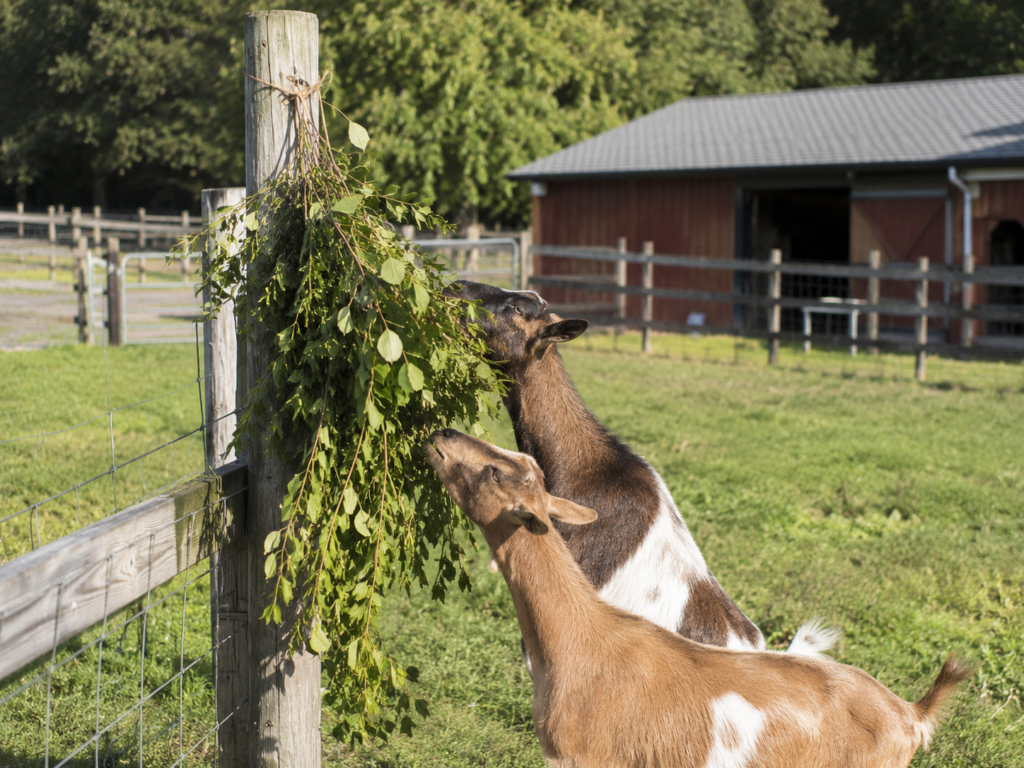
19. DIY Browse Wall
Attach safe branches along the outside of a sturdy fence so the leafy portions extend into the goat area.
Spread the branches across several locations so dominant goats cannot guard the entire supply. Placing browse at different heights encourages goats to stretch, reach and move from one area to another.
Remove stripped branches before they become sharp or fall into the pen.
Estimated cost: Free
20. Holey Bucket Puzzle
Use a clean bucket with a secure lid to make a simple rolling feeder.
Drill several small, smooth holes around the sides. Add a very small portion of hay pellets or the goats’ normal feed, close the lid securely and allow the goats to push the bucket to release the pieces.
The holes should be much too small for a hoof, horn or muzzle to enter.
Supervise the first few uses to make sure the goats do not chew the bucket or remove the lid.
Estimated cost: Free to $10
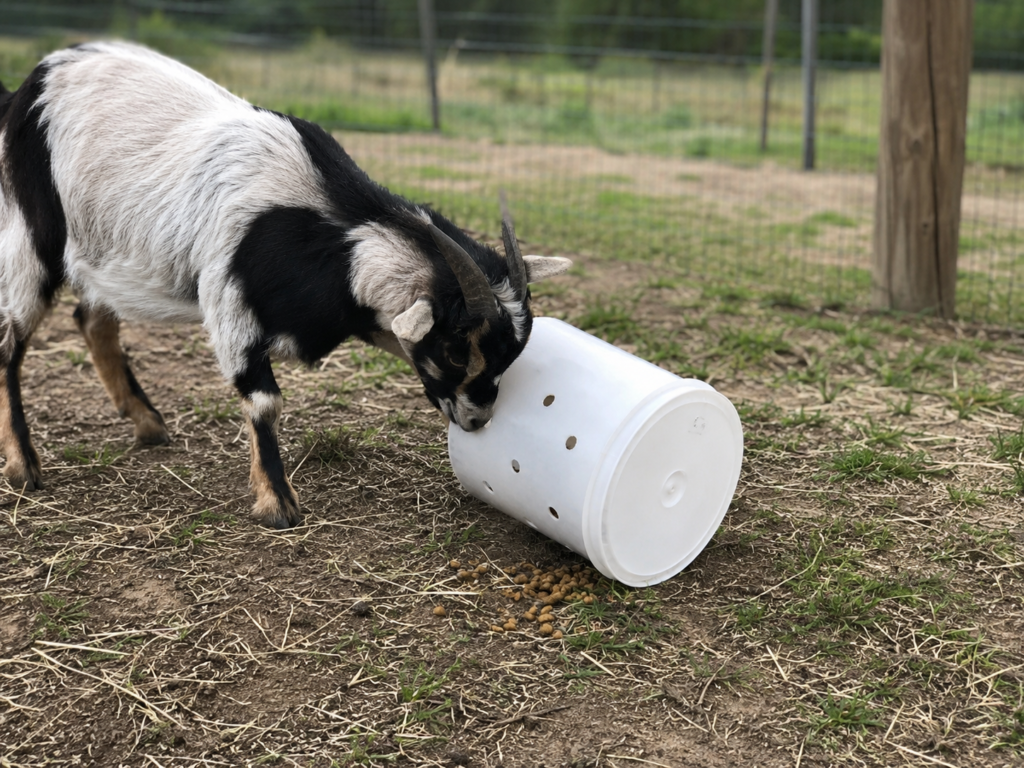
21. Rolling Treat Barrel
A larger version of the bucket puzzle can be made from a small food-grade barrel.
Drill a few small holes, add a portion of chopped forage or pelleted feed and secure the cap. Goats must roll and push the barrel to dispense the food gradually.
Do not fill the barrel with extra grain. Divide part of the herd’s normal ration among several toys so every goat has a chance to participate.
Estimated cost: $10 to $30
22. Hay Treasure Boxes
Place small amounts of hay inside clean cardboard boxes and allow the goats to investigate.
Remove all tape, staples, plastic labels and packing material first. Use shallow boxes that cannot trap a goat’s head.
This should be a supervised activity. Remove the cardboard if the goats begin eating large pieces rather than simply tearing and exploring it.
Estimated cost: Free
Simple Games to Play With Your Goats
Some of the best goat enrichment comes from short training and play sessions. These games provide mental stimulation while also making goats easier to handle.
23. Cup-Shuffle Game
Place a few pieces of your goat’s normal feed beneath one of two or three sturdy bowls.
Allow the goat to investigate and move the bowls to find the food. Start with the treat partly visible until the goat understands the game.
Use heavy, smooth bowls that cannot break or trap a muzzle. Supervise the entire activity and remove the bowls afterward.
Estimated cost: Free
24. DIY Goat Obstacle Course
Combine several inexpensive items into a changing obstacle course.
Your course might include:
- A low wooden bridge
- Stumps to step across
- Poles to walk over
- Barrels to walk around
- A short ramp
- A wide tunnel
- A target to touch
Lead goats through the course with a small amount of their normal feed. Once they understand it, change the arrangement to make it interesting again.
Keep jumps low and avoid making goats leap over hard, sharp or unstable objects.
Estimated cost: Free to $50
25. Target-Training Station
Teach your goats to touch a target with their nose.
A target can be made by securely attaching a brightly colored wooden circle or ball to the end of a short stick. Present the target near the goat’s nose. Reward the goat with a tiny piece of its normal feed when it investigates or touches the target.
Over time, you can use the target to:
- Lead goats onto a platform
- Guide them through an obstacle course
- Move them into a pen
- Encourage them to step onto a milk stand
- Practice calm handling
Keep sessions short and stop before the goat loses interest.
Estimated cost: Free to $10
How Often Should You Change Your Goats’ Toys?
You do not need to rebuild the goat playground every week.
Instead, keep several permanent structures—such as platforms, stumps and scratching brushes—and rotate smaller enrichment items.
For example:
- Move the obstacle-course pieces
- Hang browse in a different area
- Bring out the rolling feeder occasionally
- Add a new stump or log
- Temporarily remove a toy and bring it back later
- Move a brush to a different height
Even familiar objects may seem interesting again when they return after a short break.
What Should You Never Give a Goat as a Toy?
Avoid anything that could be swallowed, wrapped around a body part or broken into sharp pieces.
Do not use:
- Loose rope or baling twine
- Hay nets
- Plastic bags
- Glass
- Flimsy plastic bottles
- Toys containing foam
- Pool noodles
- Loose tarps
- Frayed fabric
- Items with batteries
- Painted or chemically treated scrap wood
- Tires with exposed wire
- Containers that could trap a goat’s head
- Branches from unidentified trees or shrubs
Remember that a toy that is safe for a small polled goat may not be safe for a large horned goat. Always consider the size, age, strength and horn status of your herd.
Frequently Asked Questions About Goat Toys
What do goats like to play with?
Many goats enjoy climbing platforms, jumping on stumps, walking across logs, pushing barrels, rubbing against brushes and searching for food. Young goats are often especially interested in ramps, steps and raised surfaces.
Do goats really need toys?
Goats need a stimulating environment, although that enrichment does not have to come from manufactured toys. Logs, platforms, browse, brushes, training activities and opportunities to explore can all help keep goats active and engaged.
What is the best homemade goat toy?
A sturdy climbing platform is one of the most useful homemade goat toys because several goats can use it at once. Pallet platforms, wooden spools, picnic tables and stump staircases are all inexpensive options.
Can goats play with balls?
Some goats enjoy pushing large, durable balls, but many goats will also bite or puncture them. Avoid foam-filled balls and thin inflatable toys. Any ball should be large enough that it cannot be swallowed and should only be used under supervision.
Are tires safe for goats?
Clean, heavy tires can be used if they are stable, properly drained and free from exposed wire. Avoid narrow openings that could trap a goat’s head, horns or legs.
What toys are best for baby goats?
Baby goats usually enjoy low platforms, wide ramps, small stumps and sturdy tunnels. Keep everything close to the ground and remove gaps where small legs could become trapped.
Will toys stop goats from escaping?
Enrichment may keep goats more occupied, but it will not replace secure fencing. Do not place platforms, dirt piles, spools or other climbing toys close enough to a fence that goats can use them to jump out.
Final Thoughts
You do not need a huge budget to make your goats’ pasture more interesting.
Start with one or two simple projects, such as a pallet platform, stump staircase or scratching-brush post. Watch how your goats use them before adding anything taller or more complicated.
The best homemade goat toys are sturdy, safe and designed around the behaviors goats already enjoy: climbing, browsing, balancing, rubbing, investigating and spending time with their herd.
Your goats probably will not care whether their new playground cost $500 or was built from an old picnic table and a few free tree stumps.
They will still climb on it like they own the place.
And, honestly, they probably do.


Post your Comment About This Product