
July is when the Western New York garden really begins to look alive.
Tomatoes are climbing out of their cages, zucchini plants seem to double in size overnight, flowers are blooming, and the first real harvests are beginning to come inside. It can feel like the planting season is over and all that is left to do is wait.
But July is actually one of the most important months in the garden.
There is still time to plant several vegetables, begin your fall garden, improve struggling plants, control pests, and prepare for a much longer harvest season. Whether you garden in Buffalo, East Aurora, Orchard Park, Hamburg, Niagara County, or another part of Western New York, here is what you should be doing in your garden this July.
What Can You Plant in July in Western New York?
Yes, you can still plant vegetables in July!
The key is choosing crops that mature quickly enough to produce before Western New York’s first fall frost. Exact frost timing varies by location, especially between areas close to Lake Erie and cooler inland or higher-elevation areas. Cornell recommends checking the days to maturity on the seed packet, counting backward from your expected frost date, and allowing additional time for germination.
Plant These as Early in July as Possible
During the first half of July, you can still plant:
- Bush beans
- Carrots
- Cucumbers
- Summer squash
- Zucchini
- Green onions
- Early sweet corn
- Head or romaine lettuce in a partly shaded location
- Fast-growing herbs such as basil, cilantro and dill
Bush beans are one of the best choices for an empty garden bed. They grow quickly, tolerate summer weather and can provide a late-summer harvest.
Cucumbers and zucchini may also have enough time to produce when planted during the first part of July. Choose varieties with shorter maturity times and plant them as soon as possible. Cornell’s New York planting guidance lists approximately July 15 as the final planting window for snap beans, carrots, cucumbers, summer squash and early sweet corn under conditions similar to central and western portions of the state.
July is also a great time to practice succession planting. When peas, early lettuce or another spring crop finishes, remove it and immediately replace it with beans, zucchini or another quick-growing crop. Cornell specifically recommends replacing finished early peas with heat-loving crops such as beans or zucchini.
Plant These During the Second Half of July
Late July is the beginning of fall-garden season in Western New York.
Consider planting:
- Beets
- Kale
- Swiss chard
- Collard greens
- Kohlrabi
- Mustard greens
- Chinese or daikon radishes
- Peas
- Leaf lettuce
- Broccoli transplants
- Cabbage transplants
- Cauliflower transplants
Cornell’s fall planting guidance suggests starting many cool-season vegetables between late July and mid-August. Beets, carrots, chard, kale, lettuce, peas, radishes and scallions can all be part of a fall garden, while broccoli, cabbage, cauliflower and kale can be added as transplants.
Seeds may germinate more slowly or unevenly in hot, dry soil. Water the planting area before sowing, plant according to the seed packet and keep the top layer of soil consistently damp until seedlings emerge.
A lightweight shade cloth or board placed above—not directly on—the soil can help prevent a newly planted row from drying out. Remove any covering as soon as seedlings begin emerging.
Is It Too Late to Plant Pumpkins?
It depends on the variety.
Most large carving pumpkins and long-season pumpkins are a gamble when planted in July in Western New York. They may grow vines and produce small fruit but run out of warm weather before the pumpkins fully mature.
A small, fast-maturing pumpkin variety may still have a chance when planted at the very beginning of July. Check the seed packet carefully and look for a variety with the shortest possible maturity time.
July is generally too late to start:
- Large carving pumpkins
- Long-season winter squash
- Watermelon
- Muskmelon
- Tomatoes from seed
- Peppers from seed
- Eggplant from seed
- Brussels sprouts from seed
Healthy tomato, pepper or eggplant transplants can still be placed in the garden in early July, but their total harvest may be smaller than that of plants established earlier in the season.
Start Planning Your Fall Garden Now
It might seem strange to think about fall while standing in the garden during July heat, but this is exactly when fall planting begins.
Look for areas that will become available after harvesting:
- Peas
- Garlic
- Early potatoes
- Spring lettuce
- Radishes
- Broccoli
- Bolting spinach
Once a crop is finished, remove the old plants, pull weeds and add a light layer of finished compost. The bed can then be replanted with a fall crop.
Do not wait until September to begin thinking about fall vegetables. Broccoli, cabbage, carrots, beets and kale need time to become established before temperatures drop. Faster crops such as leaf lettuce, spinach, arugula and small radishes can be planted later.
Succession planting every two or three weeks can prevent an entire crop from becoming ready at once and provide a steadier harvest.
Water Consistently
Western New York summers can switch quickly between heavy thunderstorms and stretches of hot, dry weather. A short downpour does not always provide enough water to reach plant roots.
Check the soil several inches below the surface before watering. The surface may look dry while the soil underneath is still moist.
When supplemental watering is needed, water slowly and deeply rather than giving the garden a quick daily sprinkle. Deep watering encourages roots to grow farther into the soil, where moisture remains available longer.
Tomatoes especially need consistent moisture. Cornell recommends supplying enough water to make up the difference when weekly rainfall is less than approximately one inch. Irregular watering can contribute to cracking and blossom-end rot.
Whenever possible:
- Water near the base of the plant.
- Water early in the morning.
- Avoid repeatedly soaking the leaves.
- Give containers and raised beds extra attention because they dry out faster.
- Use a rain gauge instead of guessing how much rain the garden received.
Mulch and Control Weeds
July weeds grow just as quickly as vegetables.
Pull weeds while they are still small and before they produce seeds. Large weeds compete with garden plants for water, sunlight and nutrients. They can also reduce airflow and create hiding places for pests.
After weeding, add mulch around established plants.
Good garden mulches include:
- Clean straw
- Shredded leaves
- Untreated grass clippings applied in thin layers
- Compost
- Natural wood mulch around perennial beds
Mulch helps hold moisture in the soil, reduces weed growth and protects the soil from temperature extremes. Cornell also recommends mulching tomatoes after the soil has warmed to help maintain moisture and suppress weeds.
Keep mulch a few inches away from the main stems of vegetables and the trunks of trees or shrubs. Piling damp mulch directly against a plant can encourage rot and pest problems.
Support Tomatoes and Other Tall Plants
Do not wait until a summer storm knocks your plants over.
Check tomato cages, stakes and ties throughout July. As tomatoes grow, gently guide branches back into their cages or attach them to stakes with soft plant ties.
Indeterminate tomatoes can be lightly pruned by removing some suckers, particularly those growing near the bottom of the plant. However, avoid stripping away too much foliage. Tomato leaves protect developing fruit from sunscald, and excessive pruning can reduce the plant’s total production.
You may also need to support:
- Peppers that are carrying heavy fruit
- Cucumbers growing on a trellis
- Pole beans
- Tall flowers
- Dahlias
- Sunflowers
Check ties regularly to make sure they are not cutting into expanding stems.
Feed Plants Carefully
By July, some plants have used much of the nutrition that was available when they were planted.
Heavy-producing vegetables such as tomatoes, peppers, cucumbers, squash and corn may benefit from a side-dressing of compost or an appropriate vegetable fertilizer.
Follow the directions on the fertilizer package. More fertilizer is not always better.
Too much nitrogen can produce enormous green tomato plants with very little fruit. Cornell cautions against excessive nitrogen on tomatoes because it can encourage foliage growth while reducing fruit production.
Apply fertilizer to moist soil and water afterward. Avoid placing concentrated fertilizer directly against plant stems.
Watch for July Garden Pests
July is when pest activity often becomes much more noticeable.
Inspect the garden every day or two, paying close attention to the undersides of leaves and the base of plant stems.
Watch for:
- Japanese beetles
- Tomato hornworms
- Squash bugs
- Squash vine borers
- Cucumber beetles
- Aphids
- Colorado potato beetles
- Cabbage worms
- Slugs
Hand-picking is often enough to control pests in a small home garden. Japanese beetles tend to be easier to collect when they are sluggish, particularly during the evening. Drop them into a container of soapy water rather than crushing them on the plant.
Tomato hornworms can remove an alarming amount of foliage in a short time. Follow damaged stems and droppings until you find the caterpillar.
Before removing a hornworm, check its back. A hornworm covered in small white cocoons has been parasitized by beneficial wasps. Leave it in place so the wasps can complete their life cycle and help control other hornworms.
Check for Disease
Warm temperatures, humidity and wet foliage can create ideal conditions for plant diseases.
Watch tomatoes and potatoes for:
- Brown or black spots
- Yellowing lower leaves
- Rapidly spreading lesions
- Darkened stems
- Collapsing foliage
Check cucumbers, squash and pumpkins for white, powdery patches on their leaves. Some powdery mildew later in the season is common, but severe early infections can weaken plants.
Remove badly affected leaves with clean pruners and throw diseased material away. Do not place heavily diseased plants in a cool compost pile.
Improve airflow by controlling weeds, keeping plants supported and avoiding unnecessary overhead watering.
Harvest Frequently
Picking vegetables regularly encourages many plants to continue producing.
Harvest:
- Zucchini while it is still manageable
- Cucumbers before they become oversized and seedy
- Bush and pole beans every few days
- Peas as pods fill
- Basil before it flowers heavily
- Lettuce before it becomes bitter
- Tomatoes as they ripen
- Peppers at either the green or mature-color stage
Check zucchini plants carefully. A zucchini that appears to be six inches long today may look like a baseball bat by the weekend.
July is also garlic-harvest season for many Western New York gardens. Garlic is generally nearing harvest when the lower third to half of its leaves have yellowed and begun dying back. Test one bulb before lifting the entire crop. The cloves should be developed and fill their wrappers.
Use a garden fork to loosen garlic rather than pulling hard on the stems. Cure harvested garlic in a dry, shaded location with good airflow.
Care for Flowers and Perennials
The vegetable garden is not the only area that needs attention in July.
Deadhead annuals and repeat-blooming perennials to encourage additional flowers. Remove damaged foliage and stake tall plants before summer storms flatten them.
Container flowers may need daily watering during hot weather. Hanging baskets can dry out especially quickly.
Avoid major transplanting or dividing projects during extreme heat unless a plant must be moved. Spring and fall are generally less stressful times for moving established perennials.
Leave some healthy flowers in place for bees, butterflies and other pollinators. Herbs such as dill, cilantro, oregano and thyme can provide valuable flowers when allowed to bloom.
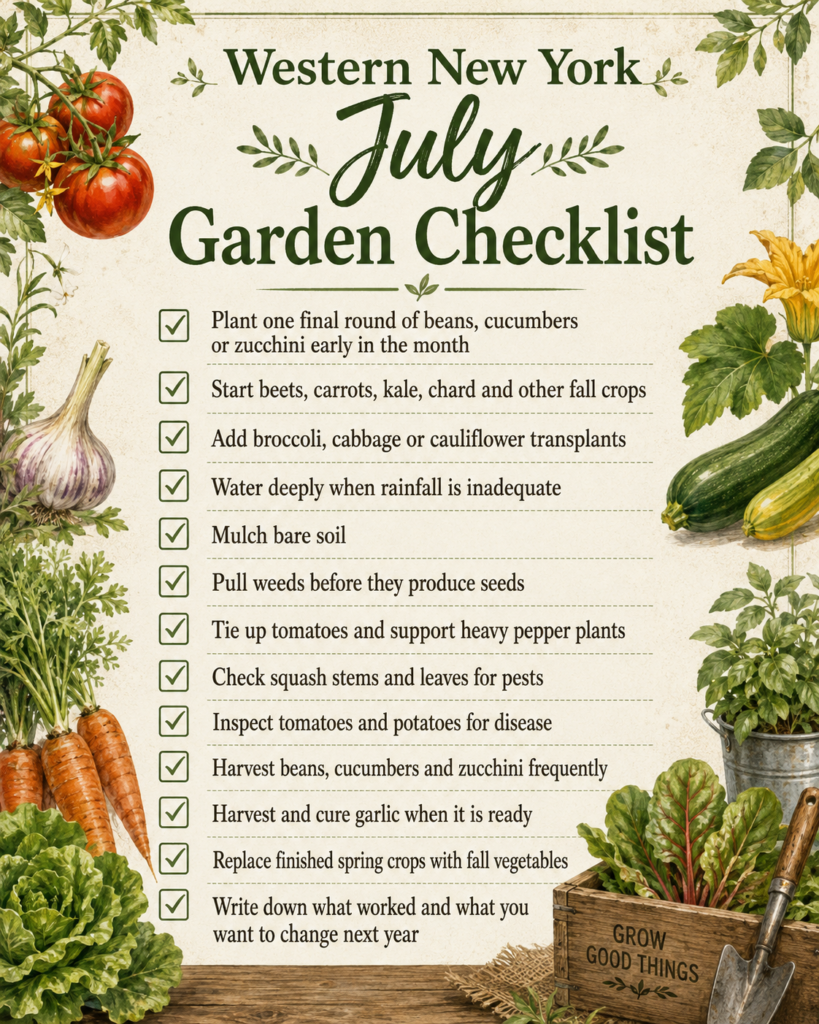
Western New York July Garden Checklist
Before July ends, try to complete the following:
- Plant one final round of beans, cucumbers or zucchini early in the month.
- Start beets, carrots, kale, chard and other fall crops.
- Add broccoli, cabbage or cauliflower transplants.
- Water deeply when rainfall is inadequate.
- Mulch bare soil.
- Pull weeds before they produce seeds.
- Tie up tomatoes and support heavy pepper plants.
- Check squash stems and leaves for pests.
- Inspect tomatoes and potatoes for disease.
- Harvest beans, cucumbers and zucchini frequently.
- Harvest and cure garlic when it is ready.
- Replace finished spring crops with fall vegetables.
- Write down what worked and what you want to change next year.
July Is Not the End of Planting Season
By July, it is easy to look at empty spaces or struggling plants and assume you missed your chance.
You did not.
There is still time to plant fast-growing summer vegetables, begin a productive fall garden and improve the crops that are already growing. A little work now—especially consistent watering, mulching, pest checks and succession planting—can keep a Western New York garden producing well into September and October.
The garden may be entering its busiest season, but some of the best harvests are still ahead.


Post your Comment About This Product