
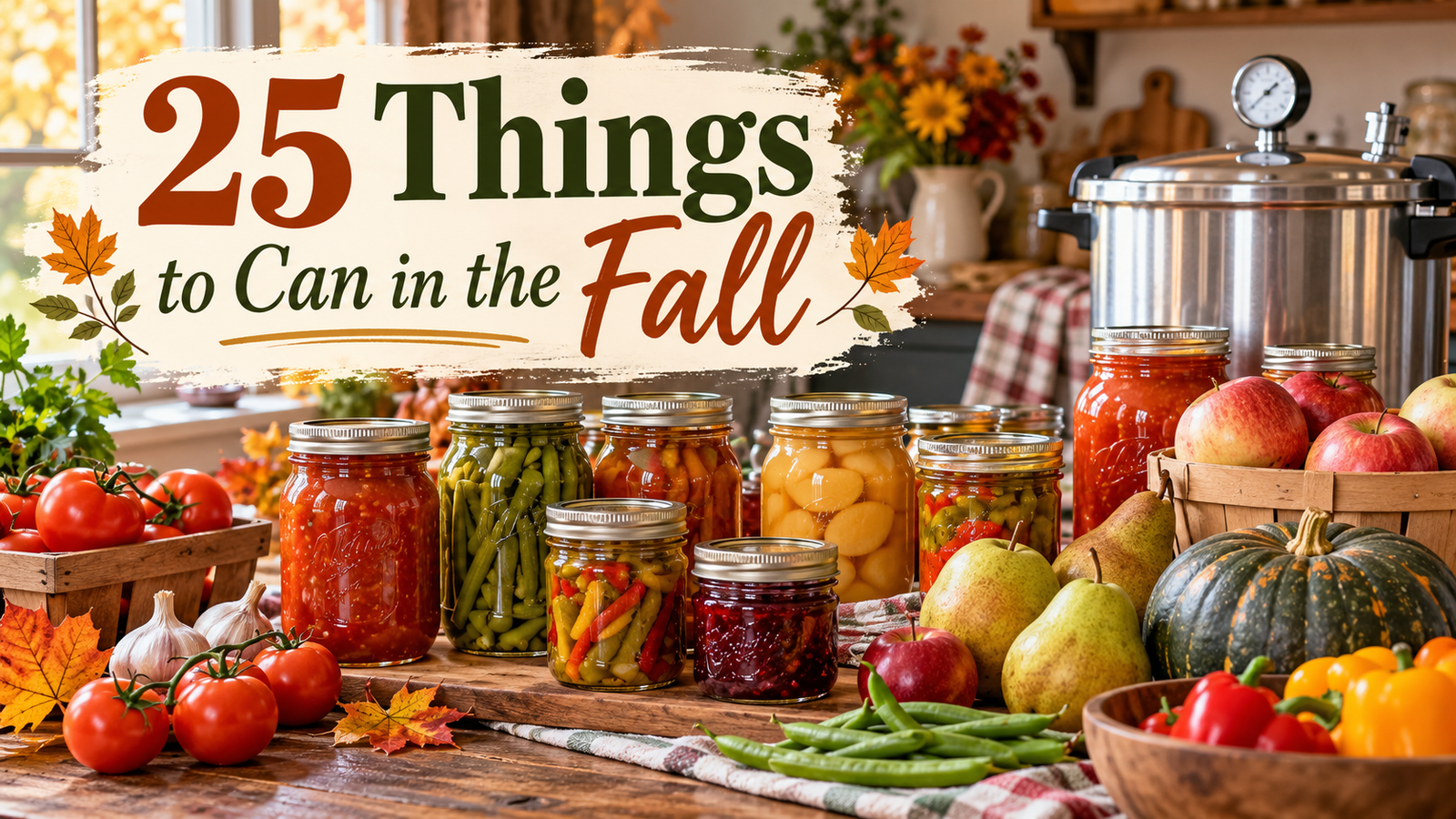
Fall is one of the busiest times of year for home canning. The garden is finishing up, orchards are full of apples and pears, cool-weather crops are coming in, and many homesteaders are also thinking about stocking the pantry with meat, soups, and other hearty foods before winter. If you are working through the rest of your seasonal chores too, my Fall Homestead Checklist: 25 Things to Do Before Winter can help you organize the bigger picture.
If you are wondering what is actually worth canning in the fall, this list gives you 25 ideas—from tomato juice and applesauce to green beans, potatoes, pickled peppers, and meat.
Important: Home canning is not a place to improvise processing methods. Some foods can be safely processed in a boiling-water canner when prepared according to a tested acidified or naturally high-acid recipe, while low-acid foods require pressure canning. Always use a current scientifically tested recipe from the USDA, National Center for Home Food Preservation, or a university cooperative extension program for the exact food you are preserving.
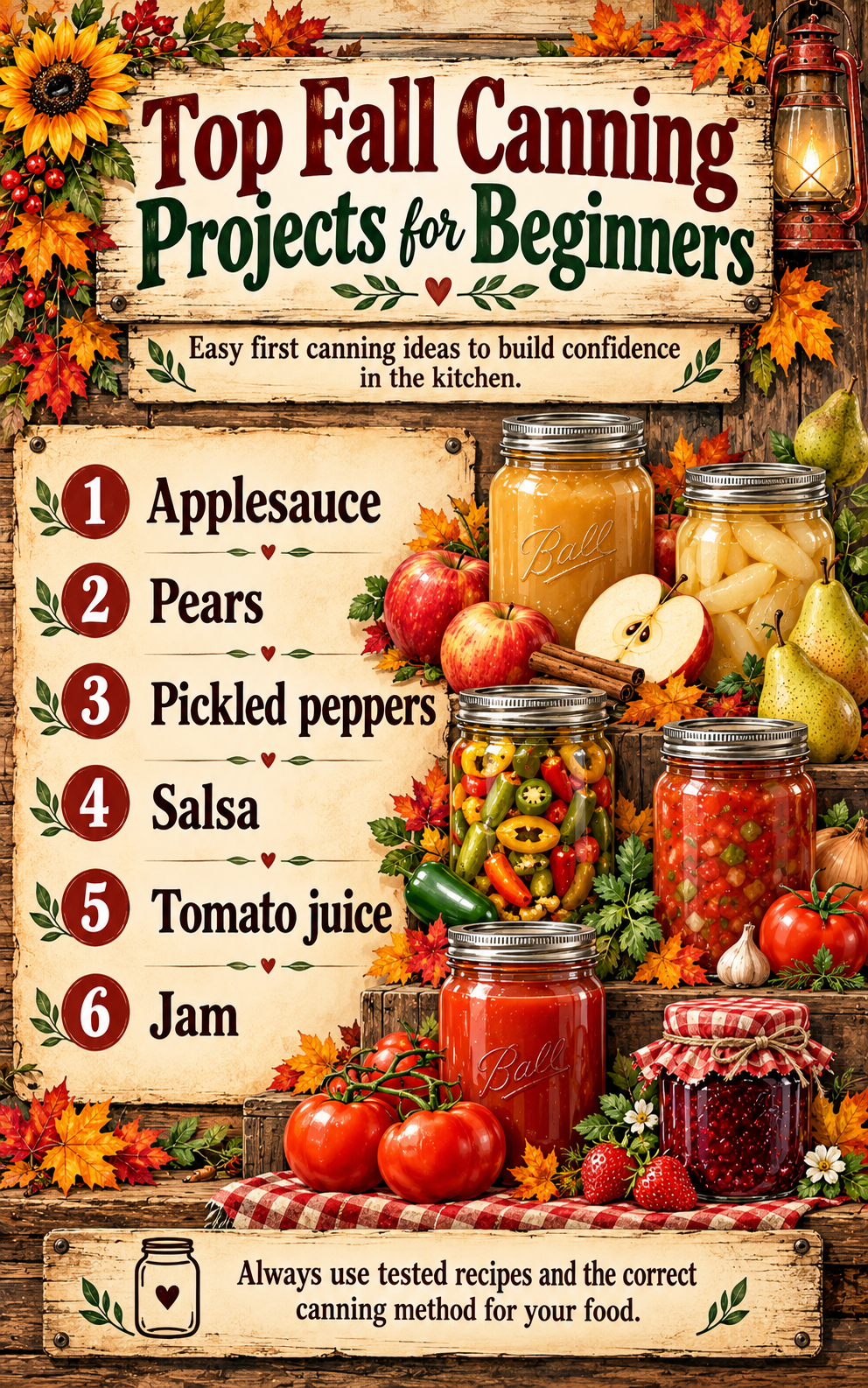
1. Tomato Juice
Tomato juice is one of my favorite ways to put up a big tomato harvest because it is useful all winter. Drink it, use it in soups, or cook with it. Follow a current tested tomato-juice recipe, including the required acidification, jar size, processing method, time, and altitude adjustment.
2. Whole or Halved Tomatoes
Whole or halved tomatoes give you a flexible pantry ingredient for winter cooking. Tested recipes specify preparation, acidification, packing liquid or method, and processing instructions.
3. Crushed Tomatoes
If you cook with tomatoes frequently, crushed tomatoes can be even more convenient than whole tomatoes. Use a tested recipe and follow its acidification and processing directions.
4. Tomato Sauce
Plain tomato sauce is a useful pantry staple for pasta, soups, casseroles, and other meals. If you add peppers, onions, mushrooms, meat, or other low-acid ingredients, you cannot simply use the processing instructions for plain tomato sauce. Use a tested recipe for the exact product.
5. Salsa
Fall often brings tomatoes, peppers, onions, and hot peppers into the kitchen at the same time. Salsa can be a great way to use them together, but shelf-stable canned salsa should be made from a tested recipe. Do not freely increase low-acid vegetables or decrease the required acid.
6. Green Tomato Pickles or Relish
When frost is coming and the plants are still covered in green tomatoes, tested green-tomato pickle and relish recipes can help save part of the harvest.
7. Pickled Jalapeños
If your hot pepper plants are still producing, pickled jalapeños are useful on tacos, nachos, sandwiches, burgers, eggs, and more. Use a tested pickled-pepper recipe with the specified vinegar acidity and ingredient proportions.
8. Pickled Sweet Peppers
Bell peppers and other sweet peppers can also be preserved in tested pickled-pepper recipes. This is a good option when the garden produces more fresh peppers than you can reasonably eat.
9. Pepper Relish
A tested pepper relish can turn the last peppers and onions of the season into a condiment for winter meals. Follow the recipe’s vegetable-to-acid proportions exactly.
10. Dilly Beans
Dilly beans are one of the tastiest ways to preserve green beans. They are pickled, which makes them a different canning product from plain green beans. Use a tested recipe and do not reduce the vinegar or increase the vegetables.
11. Plain Green Beans
Plain green beans are low-acid and require pressure canning using a tested process. A boiling-water bath is not a safe substitute. Follow the tested preparation method, jar size, pressure, processing time, and altitude instructions.
12. Applesauce
Applesauce is one of the classic fall canning projects. It is also a great way to use apples that are sound but not quite pretty enough for fresh eating.
13. Apple Butter
Apple butter concentrates the flavor of fall into a spread for toast, biscuits, pancakes, oatmeal, and baking. Use a current tested recipe if you want shelf-stable jars.
14. Apple Slices
Canned apple slices can make winter pies, crisps, cobblers, and desserts much faster. Use a tested recipe for preparing, packing, and processing the fruit.
15. Pears
Pear halves or slices are another classic fall pantry item. Choose an appropriate variety and ripeness and follow tested instructions for preparation, packing liquid, jar size, processing time, and altitude.
16. Pear Preserves or Jam
If you have very ripe pears, a tested pear preserve or jam recipe can be a good alternative to canning slices. Follow the recipe’s fruit, sugar, acid, and pectin requirements rather than changing proportions.
17. Fruit Jam
Fall fruits can become jams and preserves for winter. Use a tested recipe for the specific fruit and product, especially when you are relying on a particular balance of fruit, acid, sugar, and pectin.
18. Fruit Chutney
Apples, pears, and other fall ingredients work beautifully in chutneys. Tested chutney recipes can provide a sweet-and-savory pantry item for meats, sandwiches, and cheese boards.
19. Potatoes
Potatoes are low-acid and require pressure canning. Use a tested recipe that specifies how the potatoes should be peeled, cut, prepared, packed, and processed. Do not use ordinary water-bath processing for plain potatoes.
20. Carrots
Carrots are another useful pressure-canned pantry staple. Follow tested instructions for preparation, jar size, pressure, processing time, and altitude adjustment.
21. Beets
Plain beets are a low-acid vegetable and require pressure canning using tested instructions. Pickled beets are a different product and can be processed according to a tested acidified pickled-beet recipe. Do not interchange the two methods.
22. Pumpkin or Winter Squash Cubes
Yes, some pumpkin and winter squash can be pressure canned—but this is an area where following the tested method is especially important. Current tested guidance is for properly prepared cubes, not mashed or puréed pumpkin or winter squash. Do not home-can pumpkin purée, mashed pumpkin, or pumpkin butter unless a current tested recipe specifically supports the product.
23. Chicken
Pressure-canned chicken can be convenient for soups, casseroles, sandwiches, and quick meals. Meat is low-acid and requires pressure canning according to a tested meat-canning process.
24. Beef
Fall is a great time to think beyond the garden. Beef can be pressure canned in forms covered by tested recipes, giving you shelf-stable meat for quick winter meals. Follow the exact tested preparation, packing, headspace, pressure, processing time, and altitude instructions.
25. Tested Soups
Home-canned soup can be incredibly convenient, but you cannot safely can every homemade soup recipe. Thickened soups, dairy, pasta, rice, flour, and other ingredients can create problems in home canning. Use current tested soup-canning guidance and add ingredients such as dairy, pasta, rice, or thickeners after opening when appropriate.
What Foods Need a Pressure Canner?
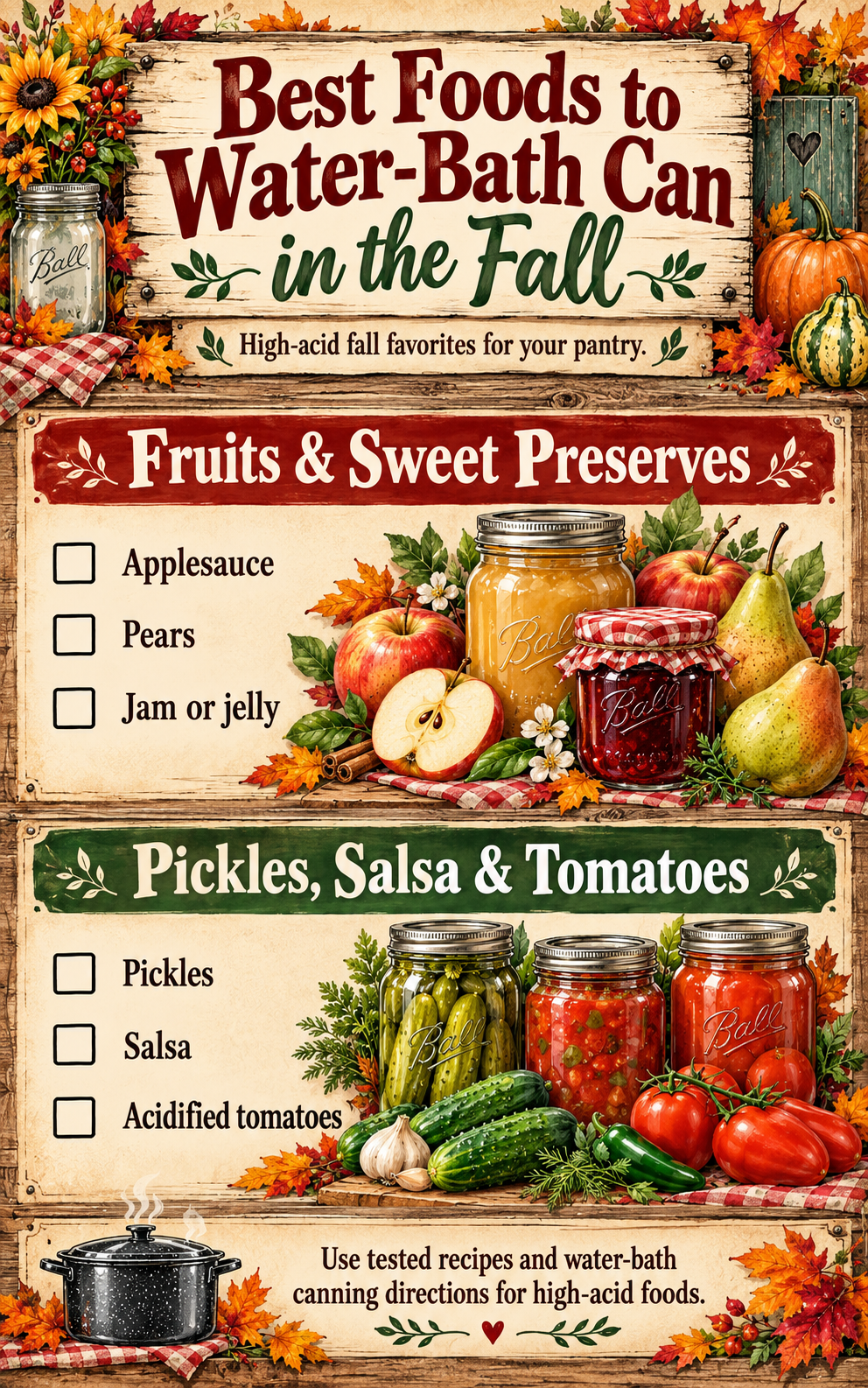
Low-acid foods such as plain vegetables, meats, poultry, and many mixtures require pressure canning because a boiling-water canner cannot reach the temperatures needed for safe processing of low-acid foods. Examples on this list include plain green beans, potatoes, carrots, plain beets, properly prepared pumpkin or winter squash cubes, chicken, and beef. For more ideas, see my guide to 25 Best Foods to Pressure Can.
What Can You Water-Bath Can?
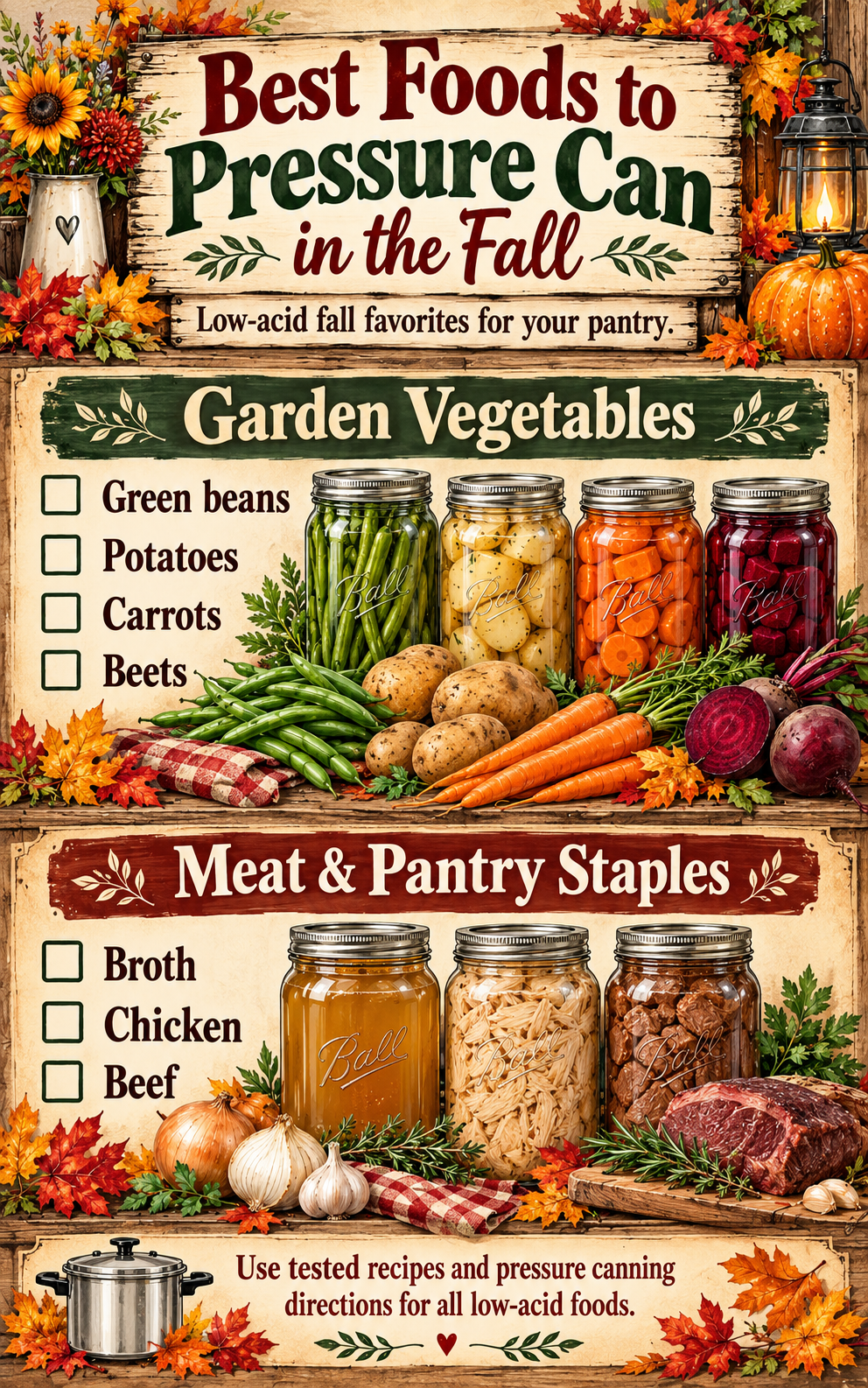
High-acid foods and properly acidified foods can be processed using a boiling-water canner when a tested recipe specifies that method. Examples may include certain fruits, jams, pickles, relishes, salsas, and properly acidified tomato products. The recipe—not a guess based on the ingredient—determines the safe method and processing time. If you are brand new to the process, my Canning for Beginners: A Complete Guide to Home Canning explains the basic equipment, methods, headspace, processing, and seal checks step by step.
Can You Change a Canning Recipe?
For shelf-stable home canning, avoid changes that alter acidity, density, jar size, ingredient ratios, or heat penetration unless the tested instructions specifically allow them. Adding extra peppers or onions, reducing vinegar or bottled lemon juice, puréeing something that was tested in chunks, adding flour, or using a larger jar can turn a tested process into an untested one.
What Should You Not Home Can?
Do not assume that anything sold canned commercially can be safely canned at home. Commercial processing equipment and validated processes are different from home canning. If you cannot find a current scientifically tested home-canning process for the exact type of food you want to make, refrigerate it, freeze it, dehydrate it when appropriate, or prepare it fresh instead.
Build a Fall Pantry One Batch at a Time
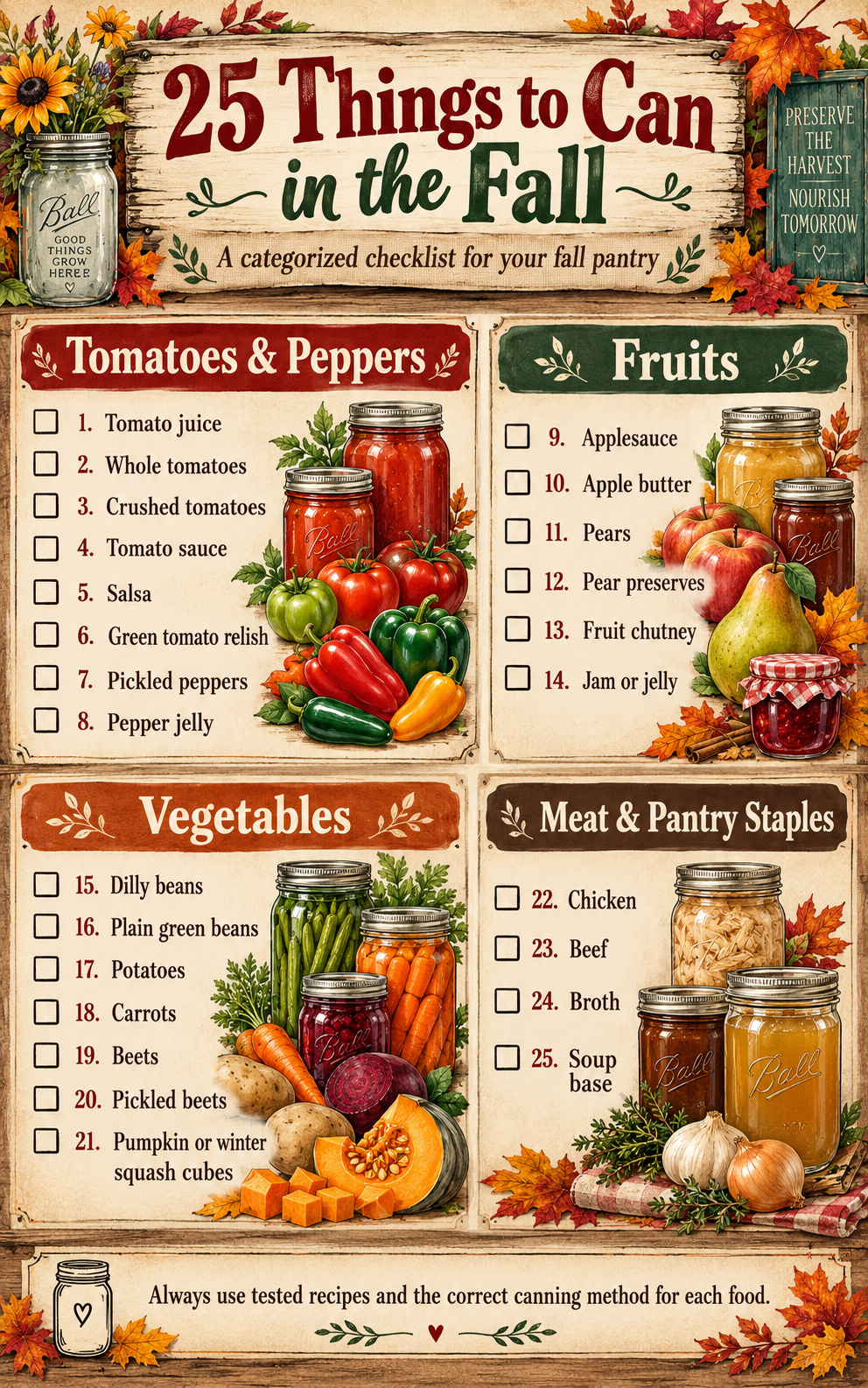
You do not have to can everything your garden produces. Focus on foods your household already eats and ingredients that will actually make winter cooking easier. A shelf full of tomato juice, applesauce, green beans, potatoes, pickles, and ready-to-use meat can be far more useful than dozens of specialty jars nobody reaches for.
If you are working through a fall harvest, check out our related guides: 25 Things to Do With Green Tomatoes Before the First Frost, 25 Things to Do With Too Many Tomatoes, 25 Things to Do With Too Many Jalapeños, 25 Things to Do With Too Many Sweet Peppers or Bell Peppers, 25 Ideas for Using Green Beans From Your Garden, 25 Things to Do With Too Many Apples, 25 Things to Do With Too Many Pears, 25 Things to Do With Too Many Pumpkins, and 25 Ideas for Using Cabbage From Your Garden.
Home-canning guidance can change as research and recommendations are updated. Before processing a batch, verify the recipe and instructions with a current USDA, National Center for Home Food Preservation, or university cooperative extension source. Adjust pressure or processing as directed for your altitude.


Post your Comment About This Product