
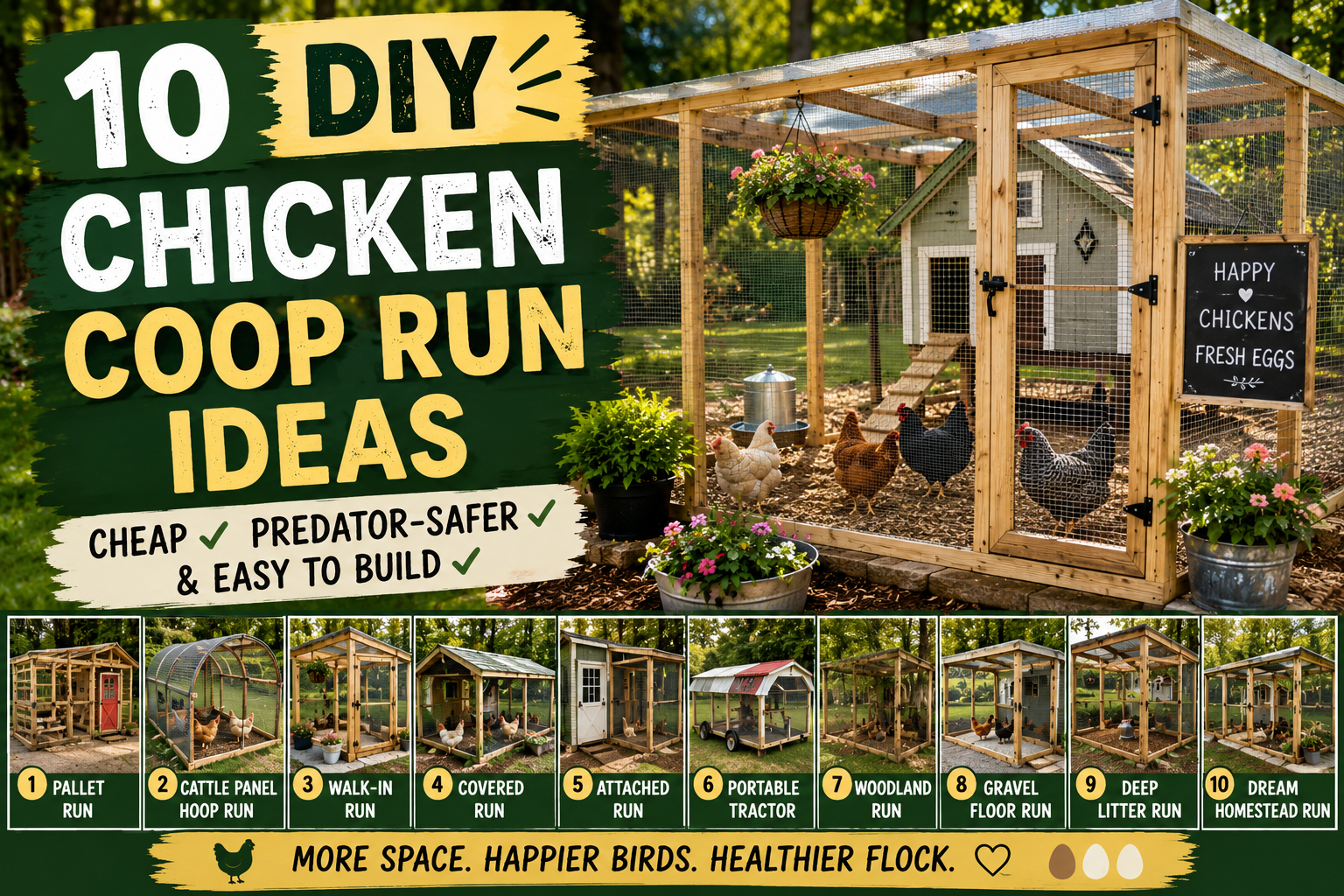
Introduction
A chicken coop keeps your flock safe at night, but the run is where your chickens spend a huge part of their day.
A good chicken run gives your birds room to scratch, dust bathe, explore, and stay busy without having full access to your entire yard. It can also make your daily chores easier, keep your coop cleaner, and help reduce problems like boredom, feather picking, and muddy high-traffic areas.
The best part? You do not need a fancy or expensive setup.
Whether you have a tiny backyard flock or a larger homestead setup, there are plenty of DIY chicken coop run ideas that can be built with pallets, cattle panels, reclaimed wood, hardware cloth, old fencing, and other budget-friendly materials.
Below are 35 chicken run ideas to help you build a setup that is affordable, practical, and safer for your flock.
Why Your Chicken Run Matters
A chicken run is more than just a fenced-in area.
It gives your flock a dedicated outdoor space where they can move around, forage, and enjoy fresh air while still staying contained. A well-designed chicken run can also help with flock health, coop cleanliness, and daily management.
A good chicken run can help:
- Give chickens more space to move
- Reduce boredom and stress
- Keep chickens out of gardens and flower beds
- Make egg collection and chores easier
- Protect birds from many common backyard hazards
- Create a cleaner, more organized chicken setup
The right chicken run design depends on your space, budget, climate, predator pressure, and flock size.
If you’re still setting up your flock area, you may also like these DIY chicken and duck nesting box ideas.
35 DIY Chicken Coop Run Ideas
1. Pallet Chicken Run
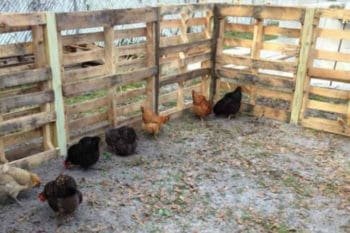
A pallet chicken run is one of the cheapest ways to create an enclosed space for your flock. You can use pallets as wall sections, wind blocks, or part of the run frame.
Pallets work especially well if you already have access to free or low-cost materials. Just make sure the pallets are sturdy, untreated, and safe to use around animals.
Best for: Budget chicken keepers
Good add-on: Hardware cloth over openings for extra security
See this pallet run DIY instructions from Attainable Sustainable
2. Cattle Panel Hoop Run
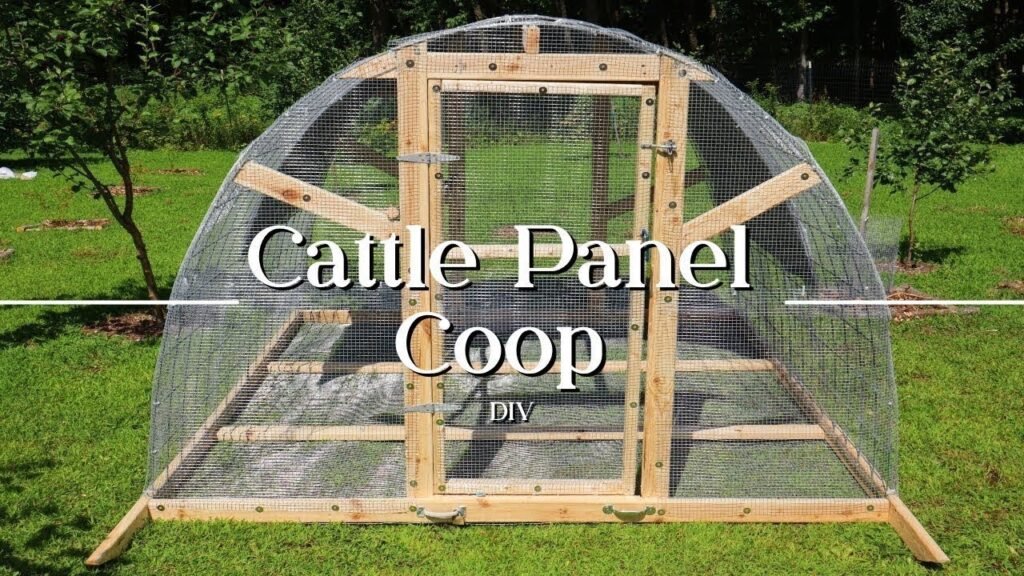
Cattle panels are strong, flexible, and perfect for creating a hoop-style chicken run. Bend the panels into an arch, secure them to a wood frame, and cover them with hardware cloth or welded wire.
This style creates a roomy run without needing a lot of complicated framing.
Best for: Larger flocks and walk-in runs
Why it works: The arch shape gives height without expensive lumber
See this DIY on The North Branch
3. Walk-In Chicken Run
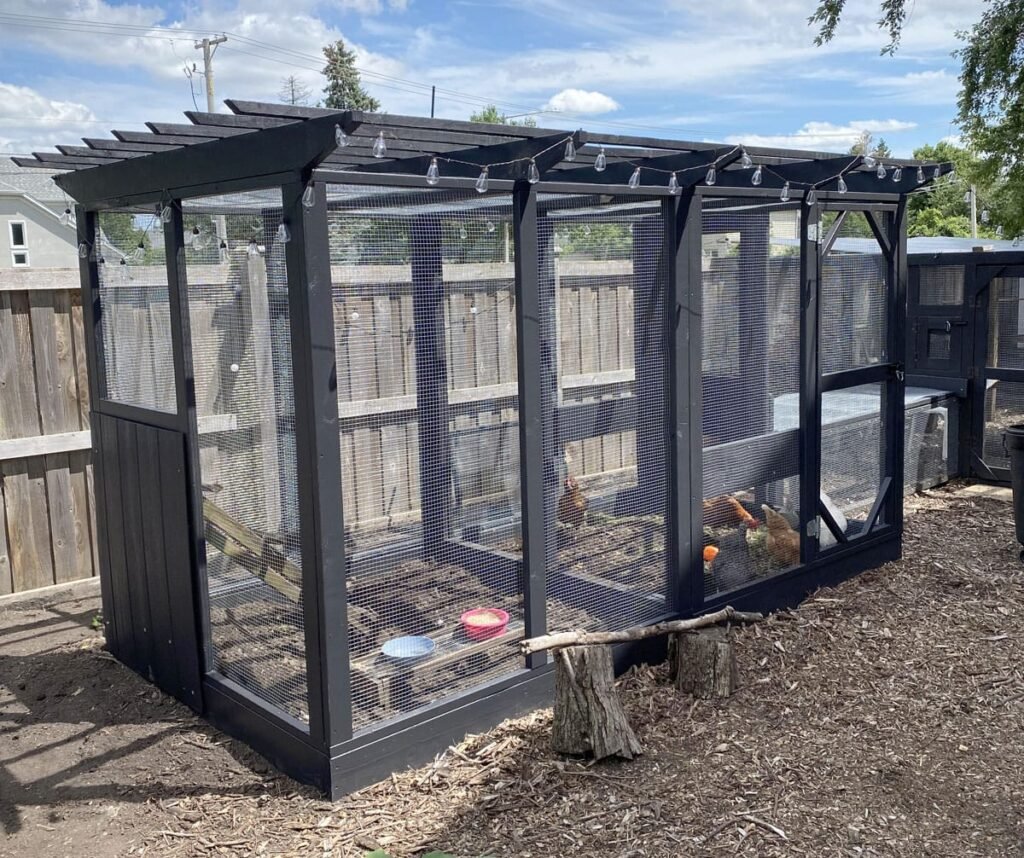
If you can build your chicken run tall enough to walk into, do it.
A walk-in run makes everything easier: feeding, cleaning, collecting waterers, checking birds, replacing bedding, and making repairs. Even if the build costs a little more upfront, it saves frustration long-term.
Best for: Everyday convenience
Tip: Make the door wide enough to carry feed bags, tools, and bedding through easily.
Get the plans for this (and many more walk in runs) from The Garden Coop.
4. Covered Chicken Run
A covered chicken run helps protect your flock from rain, snow, direct summer sun, and aerial predators.
You can use metal roofing, polycarbonate panels, greenhouse plastic, shade cloth, or even a tarp as a temporary option. A roof also helps keep the run from becoming a muddy mess.
Best for: Wet or snowy climates
Bonus: Keeps feed and bedding drier
Here’s a video showing how The Homesteading RD made theirs:
5. Hardware Cloth Chicken Run
Chicken wire is good at keeping chickens in, but it is not the strongest option for keeping predators out. For a safer run, many chicken keepers use ½-inch hardware cloth around the lower sections of the run.
Hardware cloth is more expensive, but it is much stronger than basic chicken wire.
Best for: Predator-prone areas
Tip: Use hardware cloth especially around doors, windows, vents, and the bottom few feet of the run.
6. Attached Coop Run
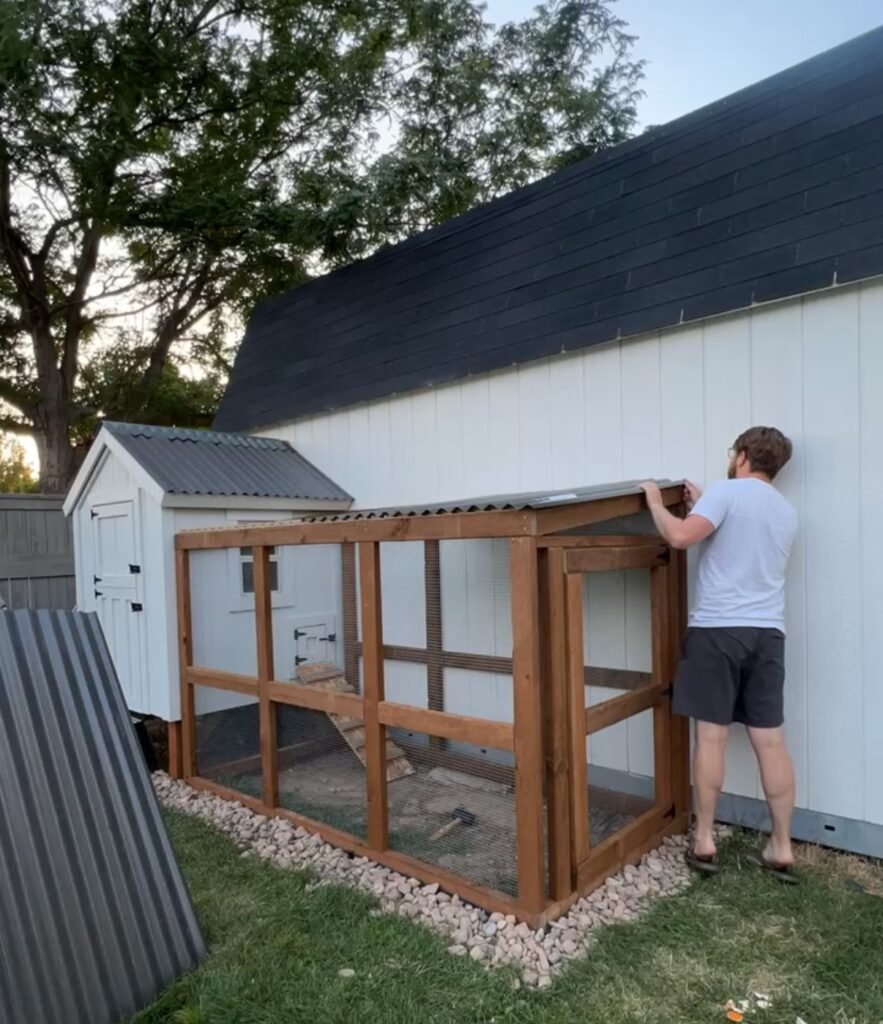
An attached run connects directly to your chicken coop, allowing birds to move in and out without you carrying them or opening multiple gates.
This is one of the most practical setups for backyard flocks. It keeps everything in one place and makes morning and evening routines easier.
Best for: Simple backyard setups
Good feature: Add an automatic coop door between the coop and run.
See the full DIY instructions at With Love, Mercedes.
7. Portable Chicken Tractor Run
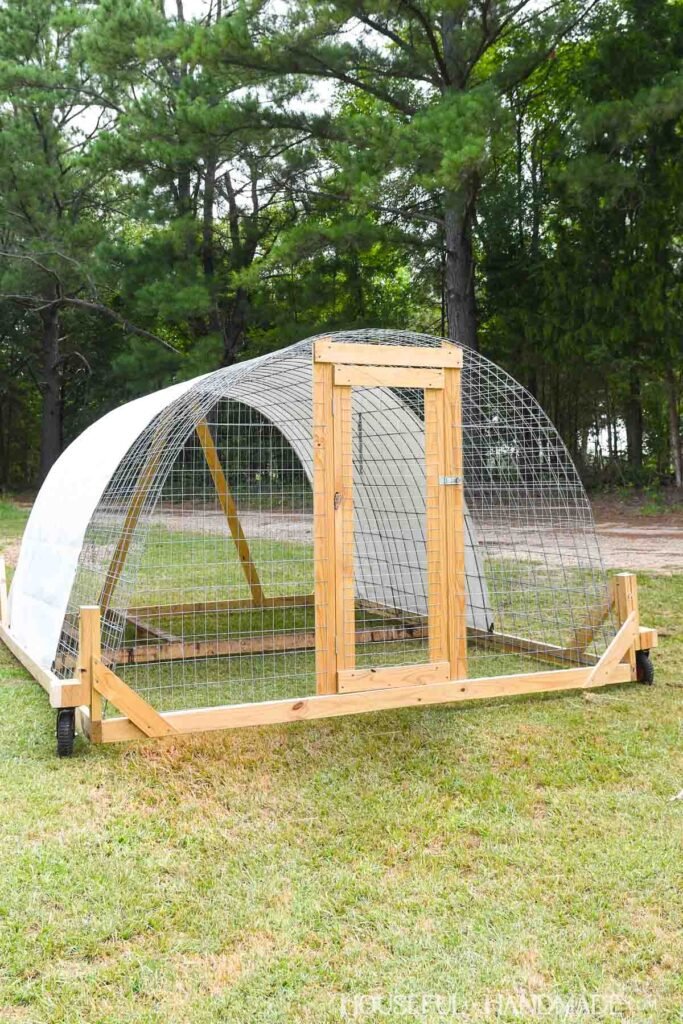
A chicken tractor is a movable coop-and-run combo. Instead of keeping chickens in one permanent run, you move the structure around the yard so birds get fresh grass and bugs.
This can be a great option for small flocks, meat birds, or seasonal setups.
Best for: Fresh grass rotation
Watch for: Make sure it is sturdy enough for your local predators and weather.
See the full DIY plans at Houseful Of Handmade.
If you’re comparing small livestock options, you may also like my post on whether you can really make money raising quail.
8. Corner Yard Chicken Run
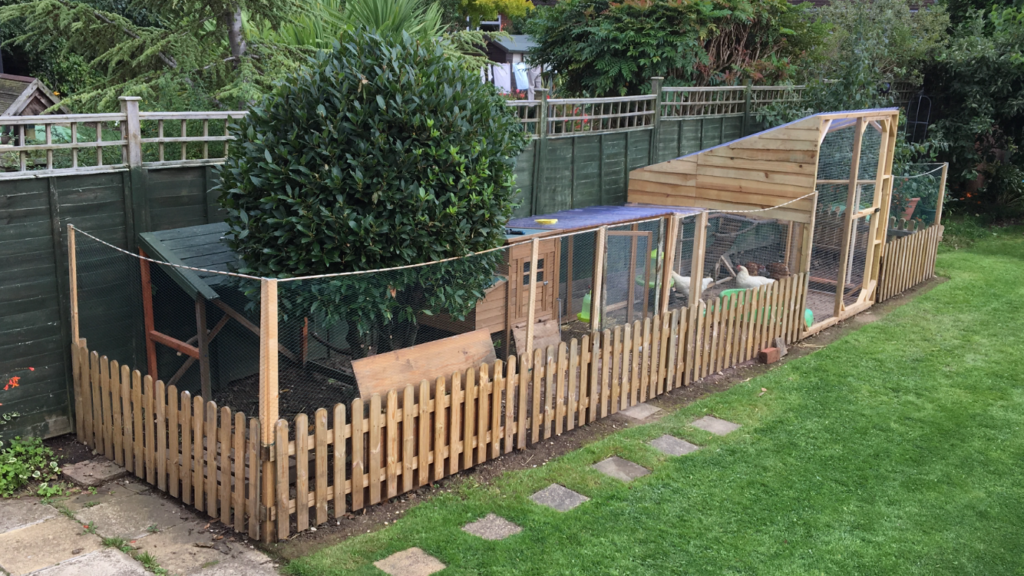
If your yard already has fencing, you may be able to build a chicken run into a corner and use the existing fence as part of the structure.
This can save money on materials and help the run blend naturally into your backyard layout.
Best for: Small yards
Tip: Do not rely on privacy fence alone for predator safety. Reinforce gaps and weak spots.
See the full DIY plans at wood-create.
Tips for Making a Chicken Run Predator-Safer
No setup can promise complete predator protection, but a well-built chicken run can make your flock much safer.
Here are some smart upgrades to consider:
Use Hardware Cloth Instead of Chicken Wire
Chicken wire is useful for keeping chickens contained, but it is not the strongest barrier against predators. Hardware cloth is much stronger and is often recommended for secure run areas.
Cover the Top
If hawks, owls, raccoons, or climbing predators are a concern, cover the top of the run with wire, netting, roofing, or cattle panels.
Add a Predator Apron
A hardware cloth apron around the outside of the run can help discourage digging predators.
Secure Doors and Latches
Simple latches may not stop raccoons. Use stronger latches, clips, or locks where needed.
Check for Gaps Often
Predators can take advantage of small openings. Walk around the run regularly and check for loose staples, holes, weak spots, and digging.
Keep Feed Secure
Loose feed attracts rodents and wildlife. Store feed in secure containers and avoid leaving spilled feed around the run.
FAQs About Chicken Runs
How big should a chicken run be?
A common recommendation is at least 10 square feet of outdoor run space per chicken, but more space is always better if you have it.
What is the cheapest way to build a chicken run?
The cheapest chicken runs often use reclaimed materials like pallets, old fencing, T-posts, cattle panels, scrap lumber, and repurposed dog kennels.
Is chicken wire good enough for a chicken run?
Chicken wire can help keep chickens in, but it is not the strongest option for keeping predators out. For a more secure setup, many chicken keepers use hardware cloth, especially around the lower sections and openings.
Should a chicken run be covered?
A covered run is helpful if you deal with hawks, heavy rain, snow, mud, or intense sun. Even a partial cover can make a big difference.
What is the best floor for a chicken run?
Popular chicken run floor options include dirt, sand, gravel, wood chips, and deep litter. The best choice depends on your climate, drainage, and maintenance style.
How do I keep my chicken run from getting muddy?
Improve drainage, add a roof or partial cover, use gravel in high-traffic areas, and add deep litter materials like wood chips or leaves.
Final Thoughts
A DIY chicken coop run does not need to be expensive or perfect to be useful.
The best chicken run is one that fits your flock, your property, your budget, and your daily routine. You can start with something simple, like a pallet run or attached fenced area, then upgrade over time with a roof, hardware cloth, a dust bath, shade, or rotational grazing sections.
Whether you are building a small backyard run or a dream homestead chicken setup, the goal is the same: give your chickens a safer, cleaner, more enriching space to enjoy every day.
If you’re building out a bigger homestead, you may also like my beginner guides to raising goats on a small homestead and goat fencing options.


Post your Comment About This Product