
Introduction
July can feel like that weird middle part of the gardening season.
The tomatoes are finally doing something. The zucchini is either thriving or plotting to take over your entire yard. The weeds are thriving no matter what. And if you missed planting something earlier in the season, it is very easy to think, “Well, I guess that’s it. I’ll try again next year.”
But in Zone 6, July is not the end of planting season.
It is actually the start of your second chance garden.
You can still plant quite a few vegetables in July, especially if you are thinking ahead to late summer and fall harvests. Some crops need to go in early July. Others do better when planted in mid-to-late July for cooler fall weather. And a few are better planted as transplants instead of seeds at this point in the season.
So if you still have empty garden space, failed spring crops, pulled garlic, harvested peas, or a bed that never got planted because life got busy, do not give up on it yet.
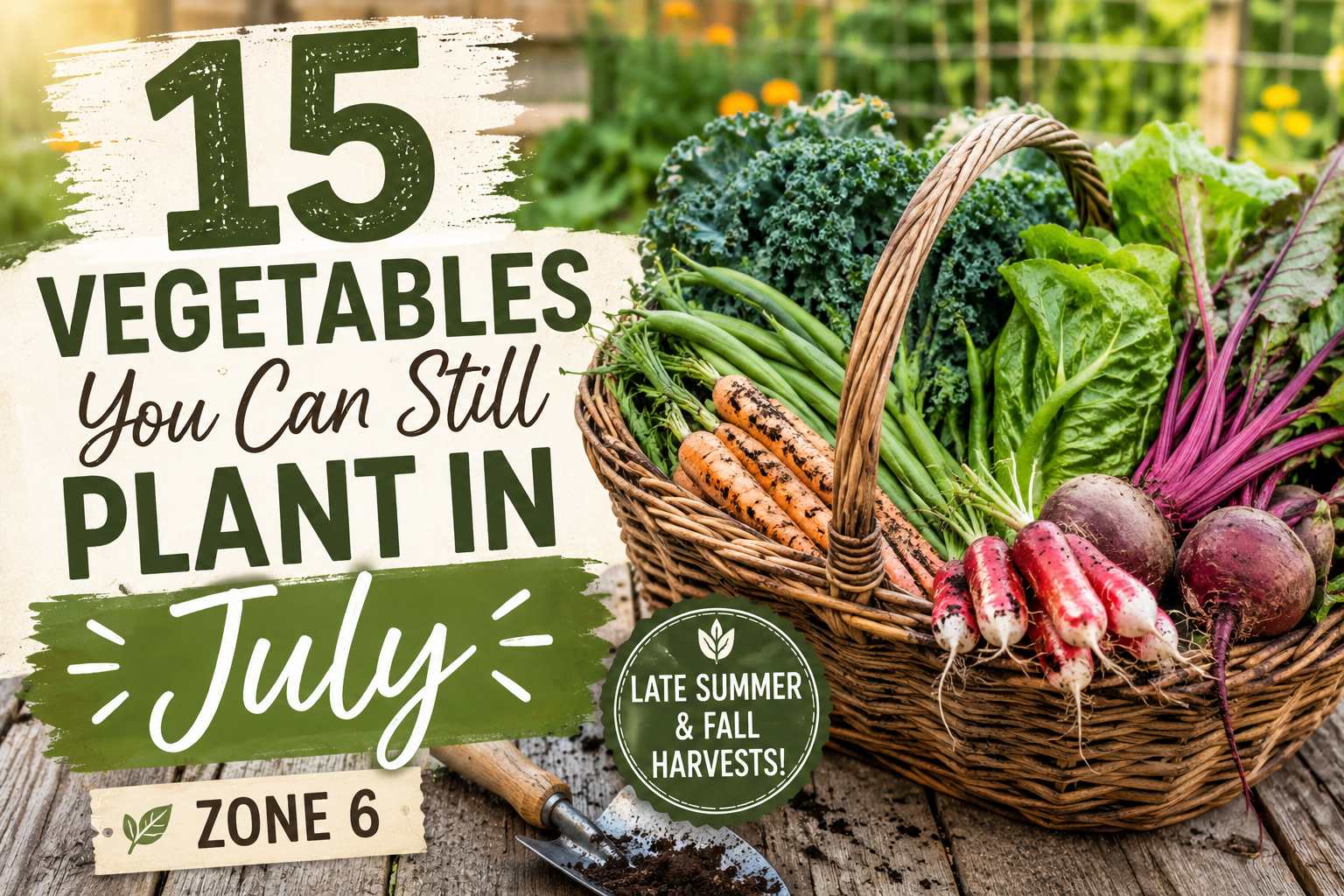
Here are 15 vegetables you can still plant in July in Zone 6.
July Gardening in Zone 6
Zone 6 usually has enough growing season left in July to plant fast-growing vegetables and cool-season crops for fall.
The trick is choosing the right crops.
July is not the time to plant long-season vegetables that need months of heat. But it is a great time to plant vegetables that mature quickly, tolerate cooler weather, or actually taste better after chilly nights.
In Zone 6, your average first fall frost is usually somewhere around early-to-mid October, though this varies by location. That means July plantings need to either mature before frost or be able to handle some cold.
This is why fall crops are so useful.
Many cool-season vegetables can handle light frost, and some become sweeter after cold weather. Carrots, kale, lettuce, spinach, turnips, and other fall crops can keep producing after your summer garden starts slowing down.
How to Know If You Still Have Time
Before planting anything in July, check three things:
1. Your Average First Frost Date
Look up your local first frost date, not just your general zone.
Zone 6 is helpful, but it is not perfect. A Zone 6 garden in western New York may not have the exact same fall weather as a Zone 6 garden in Pennsylvania, Ohio, Missouri, or Maryland.
2. Days to Maturity
Look at the seed packet.
If a crop says 45 days to maturity, that means it has a much better chance than something that needs 100 days. For July planting, shorter days to maturity are your friend.
3. Whether It Likes Heat or Cool Weather
Some crops germinate better in cooler soil. Spinach and lettuce, for example, may struggle in hot July soil unless you keep them moist and give them a little shade.
Others, like bush beans, can grow quickly in the heat if you plant early enough.
15 Vegetables You Can Still Plant in July in Zone 6
| Vegetable | Best July Timing | Seed or Transplant? | Approx. Days to Harvest | Notes |
|---|---|---|---|---|
| Bush Beans | Early July | Direct seed | 50–60 days | Best planted early so they have time before frost. |
| Carrots | Early to mid-July | Direct seed | 60–80 days | Keep seeds evenly moist until they sprout. |
| Beets | Mid-July | Direct seed | 50–60 days | You can harvest both roots and greens. |
| Turnips | Mid-to-late July | Direct seed | 35–60 days | Great quick crop for fall harvests. |
| Radishes | Late July | Direct seed | 25–35 days | Better later in July when the weather starts cooling. |
| Lettuce | Mid-to-late July | Direct seed or trays | 30–55 days | Give shade in hot weather for better germination. |
| Spinach | Late July to early August | Direct seed | 35–50 days | Can struggle in hot soil, so plant later if needed. |
| Kale | July | Direct seed or transplant | 50–70 days | Handles cool weather well and can taste better after frost. |
| Swiss Chard | July | Direct seed or transplant | 50–60 days | More heat-tolerant than many leafy greens. |
| Mustard Greens | Mid-to-late July | Direct seed | 30–45 days | Fast-growing with a stronger flavor. |
| Arugula | Late July | Direct seed | 30–40 days | Quick crop for salads and fall greens. |
| Kohlrabi | Early to mid-July | Direct seed or transplant | 45–60 days | Protect from cabbage worms if needed. |
| Broccoli | Mid-to-late July | Transplants best | 60–90 days | Best planted from healthy transplants in July. |
| Cabbage | Mid-to-late July | Transplants best | 60–90 days | Needs steady water and pest protection. |
| Cauliflower | Late July | Transplants best | 60–90 days | Fussier than broccoli and cabbage, but possible with transplants. |
1. Bush Beans
Bush beans are one of the best crops to plant in early July if you want another harvest before frost.
Look for quick-maturing varieties, ideally around 50 to 60 days. Bush beans grow fast, do not need a trellis, and can fill in empty spots where spring crops are finished.
Plant bush beans in full sun and keep them watered while they germinate. July soil can dry out quickly, so do not plant and forget about them.
Best timing: Early July
Plant by seed or transplant? Direct seed
Harvest window: Late summer into early fall
2. Carrots
Carrots are a great July crop for fall harvesting.
They take a little patience, but they are worth it. Fall carrots can be sweeter than summer carrots because cool weather helps improve their flavor.
The hardest part of planting carrots in July is germination. Carrot seeds are tiny, slow, and they need consistent moisture. Hot soil can dry out fast, so water lightly and often until they sprout.
A simple trick is to cover the seeded row with a board, cardboard, or burlap for a few days to help hold moisture. Just check daily and remove it as soon as seeds start germinating.
Best timing: Early to mid-July
Plant by seed or transplant? Direct seed
Harvest window: Fall
3. Beets
Beets are another good July planting for Zone 6.
You can grow them for both the roots and the greens, which makes them extra useful in a fall garden. If the roots do not size up perfectly before cold weather, you can still use the beet greens.
Soak beet seeds for a few hours before planting to help speed germination. Thin them once they sprout because each “seed” can actually produce more than one seedling.
Best timing: Mid-to-late July
Plant by seed or transplant? Direct seed
Harvest window: Late summer to fall
4. Turnips
Turnips are one of those crops people either love or forget about completely.
But they are perfect for a fall garden.
They grow quickly, they can handle cooler weather, and both the roots and greens are edible. If you plant them in July, you can harvest tender greens first and then let some of the roots size up for fall.
For best flavor, do not let turnips get huge and woody. Smaller turnips are usually sweeter and more tender.
Best timing: Mid-to-late July
Plant by seed or transplant? Direct seed
Harvest window: Fall
5. Radishes
Radishes are one of the fastest vegetables you can plant.
They can mature in around a month depending on the variety, which makes them great for filling gaps in the garden. However, July heat can make radishes spicy, tough, or quick to bolt.
For Zone 6, I would plant radishes later in July rather than during the hottest part of early July. They usually perform better as the season starts cooling down.
Best timing: Late July into August
Plant by seed or transplant? Direct seed
Harvest window: Late summer to fall
6. Lettuce
Lettuce can absolutely be planted for a fall crop, but July lettuce needs a little help.
Hot soil can make lettuce germination difficult, and hot weather can make lettuce bolt or taste bitter. For best results, plant lettuce in partial shade, use shade cloth, or start it in trays somewhere cooler before transplanting it outside.
Leaf lettuce is usually easier than head lettuce for late planting because you can start harvesting baby leaves earlier.
Best timing: Mid-to-late July
Plant by seed or transplant? Direct seed or start in trays
Harvest window: Fall
7. Spinach
Spinach is a great fall crop, but it does not love hot July soil.
That does not mean you cannot plant it. It just means you may have better success planting it in late July or even waiting until early August, depending on your weather.
If you do plant spinach in July, keep the soil moist and consider giving it afternoon shade. Spinach can germinate poorly in hot soil, so do not be surprised if it is fussier than radishes or turnips.
Best timing: Late July to early August
Plant by seed or transplant? Direct seed
Harvest window: Fall
8. Kale
Kale is one of the most dependable fall crops.
It can be planted in July for baby greens or mature leaves, and it usually handles cool weather beautifully. In fact, kale often tastes better after some cold nights.
You can direct seed kale or start it in trays and transplant it. If flea beetles or cabbage worms are a problem in your garden, row cover can help protect young plants.
Best timing: Early July through early August
Plant by seed or transplant? Direct seed or transplant
Harvest window: Fall and sometimes beyond with protection
9. Swiss Chard
Swiss chard is a great option if you want a leafy green that can handle both heat and cooler weather.
It is more heat-tolerant than spinach and lettuce, which makes it useful for July planting. You can harvest baby leaves or let the plants grow larger for fall.
Chard is also pretty enough to mix into an edible landscape or raised bed where you want something colorful and useful.
Best timing: July
Plant by seed or transplant? Direct seed or transplant
Harvest window: Late summer through fall
10. Mustard Greens
Mustard greens grow quickly and are a good choice for a fall garden.
They have a stronger flavor than lettuce or spinach, but they are great for gardeners who like spicy greens. The flavor usually mellows a bit as the weather cools down.
Plant mustard greens in mid-to-late July and harvest them young if you prefer a milder taste.
Best timing: Mid-to-late July
Plant by seed or transplant? Direct seed
Harvest window: Fall
11. Arugula
Arugula is another fast-growing green that works well for late summer and fall.
It can get spicy in heat, so July arugula usually does best when planted later in the month or given some shade. Baby arugula can be harvested quickly, which makes it a good option when you want something fast.
If you like salads, sandwiches, or peppery greens, arugula is an easy crop to tuck into empty garden space.
Best timing: Late July into August
Plant by seed or transplant? Direct seed
Harvest window: Late summer to fall
12. Kohlrabi
Kohlrabi is a cool-season crop that can work well for fall planting.
It is in the brassica family, like cabbage and broccoli, and it grows a round swollen stem that can be eaten raw or cooked. The leaves are also edible.
For July planting, choose a quicker-maturing variety and keep seedlings well-watered. Like other brassicas, kohlrabi may need protection from cabbage worms.
Best timing: Early to mid-July
Plant by seed or transplant? Direct seed or transplant
Harvest window: Fall
13. Broccoli
Broccoli can be planted in July in Zone 6, but this is one where transplants are usually the better choice.
Direct-seeding broccoli in July may not give you enough time unless you are starting very early and using the right variety. If you can find or start sturdy transplants, you have a better chance of getting a fall harvest.
Broccoli likes cooler weather, so a July transplant can settle in and mature as temperatures drop.
Best timing: Mid-to-late July
Plant by seed or transplant? Best as transplants
Harvest window: Fall
14. Cabbage
Cabbage is another brassica that can be planted in July for a fall crop.
Like broccoli, cabbage is best planted from transplants in July. Starting cabbage from seed directly in the garden may be too slow unless you are planting very early and choosing a fast-maturing variety.
Cabbage needs consistent water and decent fertility. It also needs protection from cabbage worms, so row cover can be helpful.
Best timing: Mid-to-late July
Plant by seed or transplant? Best as transplants
Harvest window: Fall
15. Cauliflower
Cauliflower is the pickiest crop on this list, but it can still be planted in July if you use transplants.
This is not the crop I would recommend for a totally brand-new gardener who wants an easy win. Cauliflower can be fussy about heat, stress, and inconsistent watering.
But if you already have transplants or you find healthy ones at a nursery, July can be a reasonable time to plant cauliflower for a fall harvest in Zone 6.
Keep it watered, mulch around the plants, and protect it from pests.
Best timing: Late July
Plant by seed or transplant? Best as transplants
Harvest window: Fall
Bonus: Cucumbers, If You Plant Early
I am not counting cucumbers as one of the main 15 because they are more of a gamble in Zone 6 July planting.
But if it is very early July and you choose a fast-maturing cucumber variety, you may still get a crop before frost. This works best if you have warm weather, healthy soil, and a shorter-season variety.
If it is late July, I would skip cucumbers and use that space for fall crops instead.
July Planting Tips for Zone 6
Planting in July is different from planting in spring.
The soil is warmer, the sun is stronger, and seedlings can dry out fast. If you want your July garden to actually work, give your seeds and transplants a little extra attention.
Keep Seeds Moist
This is the biggest one.
Many seeds fail in July because they dry out before they germinate. Water lightly and often until seeds sprout.
Use Shade When Needed
Lettuce, spinach, arugula, and other greens may appreciate shade during hot afternoons.
You can use shade cloth, plant near taller crops, or start seeds in trays somewhere cooler.
Choose Fast-Maturing Varieties
Do not just grab any packet of seeds.
Look for words like:
- Early
- Baby
- Quick
- Short season
- 45 days
- 50 days
- 55 days
The shorter the maturity time, the better your odds.
Watch for Pests
July seedlings can get attacked quickly by pests.
Brassicas like broccoli, cabbage, kale, cauliflower, kohlrabi, and mustard greens are especially attractive to cabbage worms and flea beetles.
Row cover can help protect young plants.
Add Compost
If you are planting where spring crops already grew, the soil may need a boost.
Add compost before planting to help your fall crops get a strong start.
Mulch After Seedlings Come Up
Mulch can help keep soil moist and cooler, but be careful not to bury tiny seedlings.
Once plants are up and growing, add a light layer of mulch around them.
What Not to Plant in July in Zone 6
Some crops are just not worth starting from seed in July in Zone 6.
I would usually skip:
- Pumpkins
- Winter squash
- Melons
- Sweet potatoes
- Tomatoes from seed
- Peppers from seed
- Eggplant from seed
- Long-season corn
- Dry beans
- Large onions from seed
Could you get lucky with some of these if you have transplants, row cover, a warm fall, or a very short-season variety? Maybe.
But for most home gardeners, July is better spent planting crops with a realistic chance of producing before cold weather.
Quick July Planting Guide for Zone 6
Here is the simple version:
Plant early July:
- Bush beans
- Carrots
- Swiss chard
- Kale
- Kohlrabi
- Cucumbers, only if using a fast variety
Plant mid-July:
- Beets
- Turnips
- Lettuce
- Mustard greens
- Broccoli transplants
- Cabbage transplants
Plant late July:
- Radishes
- Spinach
- Arugula
- Cauliflower transplants
- More lettuce
- More turnips
Conclusion
July is not too late to plant vegetables in Zone 6.
You just have to switch your mindset from spring garden to fall garden.
Instead of planting long-season summer crops, focus on vegetables that grow quickly, tolerate cool weather, or can be planted as transplants for a fall harvest.
Bush beans, carrots, beets, turnips, radishes, lettuce, spinach, kale, Swiss chard, mustard greens, arugula, kohlrabi, broccoli, cabbage, and cauliflower can all still have a place in your July garden if you time them correctly.
So if you have empty garden space, do not leave it bare.
Plant something.
Your fall self will thank you when you are still pulling food from the garden after the summer crops start slowing down.


Post your Comment About This Product