
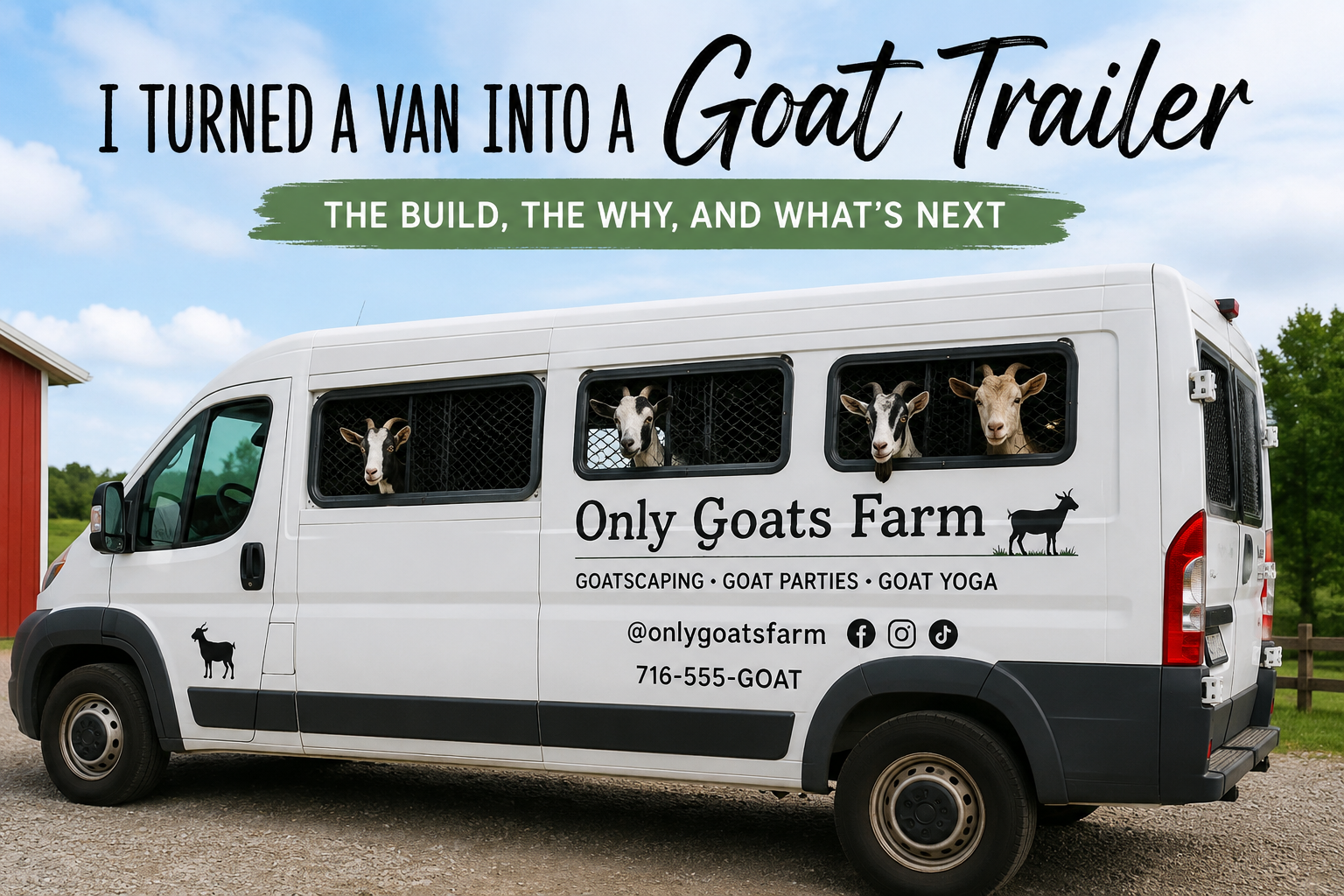
I run a goatscaping business, which means I need a practical way to get goats to jobs, goat parties, and events. For a while, I was hauling them in my 1994 Chevy Suburban. I would fold down the seats, cover everything with tarps, put up a barrier so nobody could jump over, and hope for the best.
It worked, technically. But it was a pain in the butt.
So I found myself an old Chevy Astro work van and decided it was going to become my very own goat trailer. Or, as I affectionately call it, my creeper van.
Key Takeaways
- A cargo van can become a practical goat hauler with a secure divider, clear floor space, and hay.
- Removing work-van equipment creates room for goats while preserving useful built-in safety barriers.
- Hay placed away from the doors makes goats much easier to load into the van.
- Floor damage, cleaning access, and branding all matter when converting a van for goatscaping work.
Why I Chose a Van Instead of a Traditional Livestock Trailer
A regular horse or livestock trailer would certainly do the job, but for what I’m using this setup for, a van actually makes a lot more sense.
One of the biggest reasons is simply maneuverability. I’ll be using the van to transport goats to goatscaping jobs, parties, events, and other locations around Western New York. Some of those jobs are in tighter residential areas or in the city, where pulling a livestock trailer can be difficult.
I wanted something I could drive almost anywhere I would normally take a car. I can pull into a driveway, navigate tighter streets, turn around more easily, and park in a regular parking space without having to worry about where I’m going to fit a truck and trailer.
It also means I don’t have to deal with hitching and unhitching a trailer every time I take the goats somewhere. I can load everyone up, get in, and go.
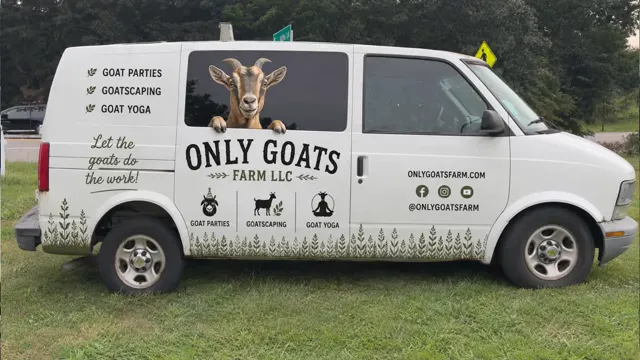
The fact that the van can double as a huge rolling billboard for Only Goats Farm is really just a bonus.
Once the outside is cleaned up and branded, I can put Only Goats Farm on the side, advertise goatscaping, goat parties, and goat yoga, and add my social media and contact information.
And, of course, I want to add goat decals to the windows so it looks like goats are peeking out of the van—because if I’m going to build a goat van, it might as well look like a goat van.
The Starting Point: A Former Work Van
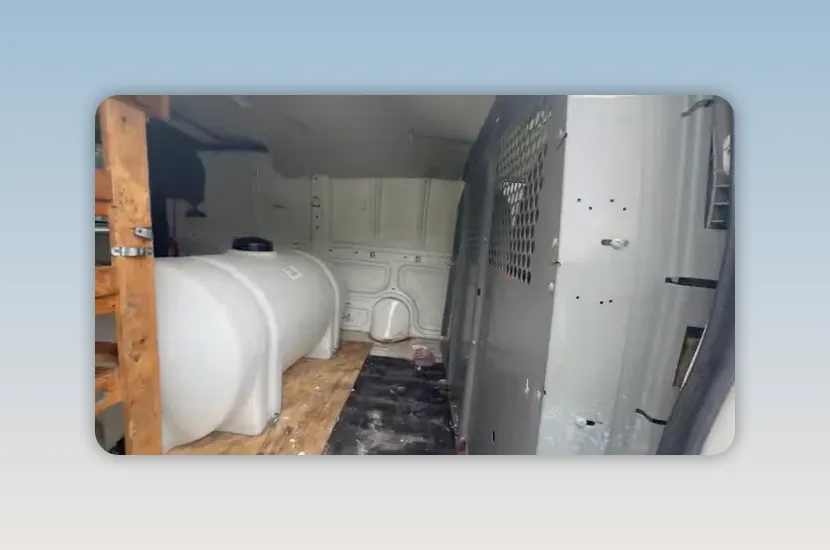
The van came with a pretty interesting interior setup. It had a heavy metal partition between the cab and cargo area, including perforated panels and window grates. That divider is honestly perfect for the goats because I do not have to build a separate gate to keep everyone out of the front seats.
It also came with things I definitely did not need for goat transportation:
- A large wooden shelving unit taking up cargo space.
- A 65-gallon water tank.
- Old plywood and flooring material.
- An extension cord setup in the back.
The plan was simple: remove what I do not need, keep the built-in barrier, add rubber stall mats, clean everything out, and create a secure little mobile goat space.
Repurposing the Interior for Goats
I decided to leave the shelving in place for now. It could actually be useful for storing work supplies, fencing equipment, tools, and other things I need when I’m out on jobs. I may eventually decide to remove some or all of it if I find that I would rather have the extra floor space for the goats, but I want to use the van for a while first and see what works best.
The water tank, however, came out. It took up quite a bit of space, and I knew that area would be much more useful as open cargo space. The tank itself is still in good condition, so I definitely didn’t want to get rid of it. I’m planning to repurpose it somewhere around the farm or for the animals, although I haven’t decided exactly what I’m going to use it for yet.
The important pieces that stayed were the built-in divider and the metal window grates. They give the cargo area structure and help keep the goat area separate from the front of the van without me having to build an entirely new setup from scratch.
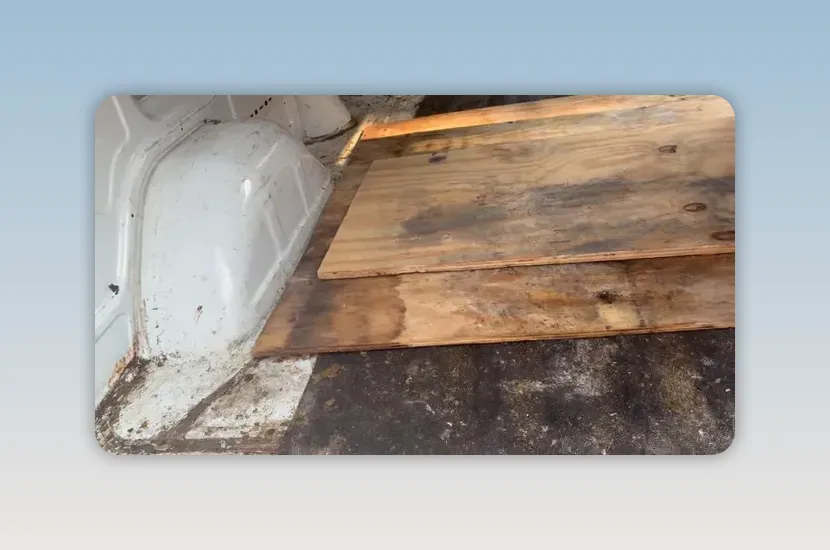
For the floor, I kept some plywood down temporarily while I worked through the conversion. I’m planning to add rubber or stall mats to make the space easier to clean and give the goats better footing.
The goal was never to make the inside of the van fancy. I just needed it to be practical, easy to clean, and comfortable and safe enough for short trips with the goats.
The Not-So-Fun Surprise Under the Flooring
Every cheap vehicle project has to have a surprise, right?
After pulling up old plywood and sheeting, removing the tank, and getting into the floor, I found holes in the van. My steal of a deal did not look quite as amazing at that moment.
For now, I left the plywood in place because it covered the problem areas, but the holes mean welding work is in the future. Considering this was a vehicle from Buffalo, New York, I was not exactly shocked to find rust-related issues.
The underside did not look terrible overall, which made me feel better. Still, I am treating the floor repair as a real part of the build, not something to ignore just because the goats can stand over it for now.
Adding Hay Made Loading So Much Easier
Once the inside was open enough to use, I wanted to make the van feel like a place the goats actually wanted to enter. The answer was hay.
I hung a hay bag toward the front of the cargo area, away from the sliding doors. That mattered because I needed a clear path to load and unload goats without everyone crowding right at the entrance.
The shelving was still in the van at this point, but the hay bag gave the goats something familiar to focus on. It also gave them something to eat while we were driving.
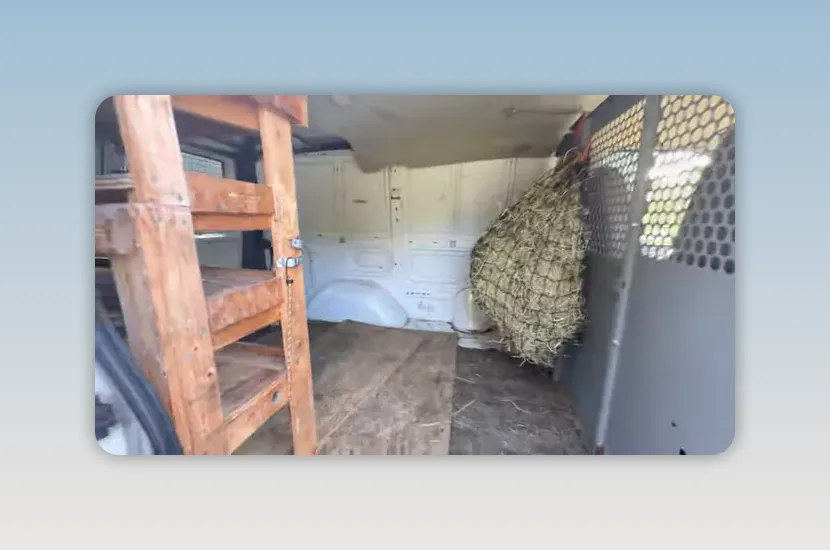
And it worked way better than I expected. Once the goats realized there was hay inside, loading became dramatically easier. The babies climbed right up on it, and the whole van suddenly made sense to them.
I learned a very important goat-hauling lesson: if I want goats to get in a vehicle willingly, make it the snack location.
Putting the Goat Trailer to Work on a Goatscaping Job
The first real test was taking the goats out to work. They had been clearing weeds around a property perimeter, and they did a surprisingly good chunk of work.
There were areas where the weeds had clearly been knocked down, especially along the edges. They had not finished the whole site, but that is the reality of goatscaping. Goats work through a space in the order they feel like working through it, and they are not always going to follow my imaginary landscaping plan.
When it was time to go home, I brought them over to the van and let the hay do most of the convincing.
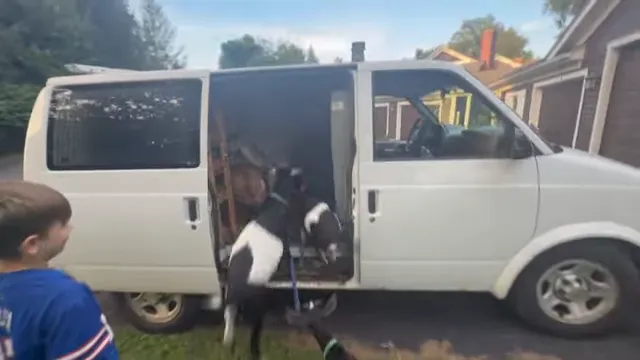
The goats climbed in, ate hay, and settled into the space. There was still work to do on the van, but it was already doing the job I needed it to do: transporting the goats to and from their work.
Cleaning Out a Van Full of Hay and Goats
Of course, once goats have been in a van with hay, there is hay everywhere.
I tried using a leaf blower to clean it out. It mostly worked, with one small issue: do not aim the leaf blower directly at the hay bale unless you want to make the situation much worse.
The best approach was to blow out the loose hay, dirt, and debris around the floor, doorway, and step area while avoiding the hay bag. The cargo space was actually not too messy after the ride, but I want cleaning to stay easy because this van is going to get used.
That is another reason I want durable floor mats in there. A goat trailer does not need to be spotless, but it should be something I can clean between jobs without turning it into an entire event.
This Is Still a Work in Progress
The Chevy Astro goat trailer is not finished. It still needs floor repair, more cleanup, rubber mats, shelf removal, and the fun exterior branding. But it has already gone from an old work van full of random equipment to a functional goat party bus.
That is the beauty of a weird DIY project like this. I did not need to wait until every detail was perfect to see whether it could work. I got the goats inside, gave them hay, took them to work, and learned what needs to happen next.
Eventually, this van will be a secure little goat hauler, an easier alternative to loading up my Suburban, and a rolling advertisement for Only Goats Farm. For now, it is my free-candy van with a hay bag, some floor repairs, and a very enthusiastic group of goats.
And Yes, There Is Always Another Farm Project
Because one project is never enough around here, I am also working on the quail hutch. I have been painting it and making two little doors for it, and it is turning out super cute.
There is paint everywhere, but that is farm life. The goat van may be the big project right now, but the quail hutch is definitely next on the finish-it list.


Post your Comment About This Product