
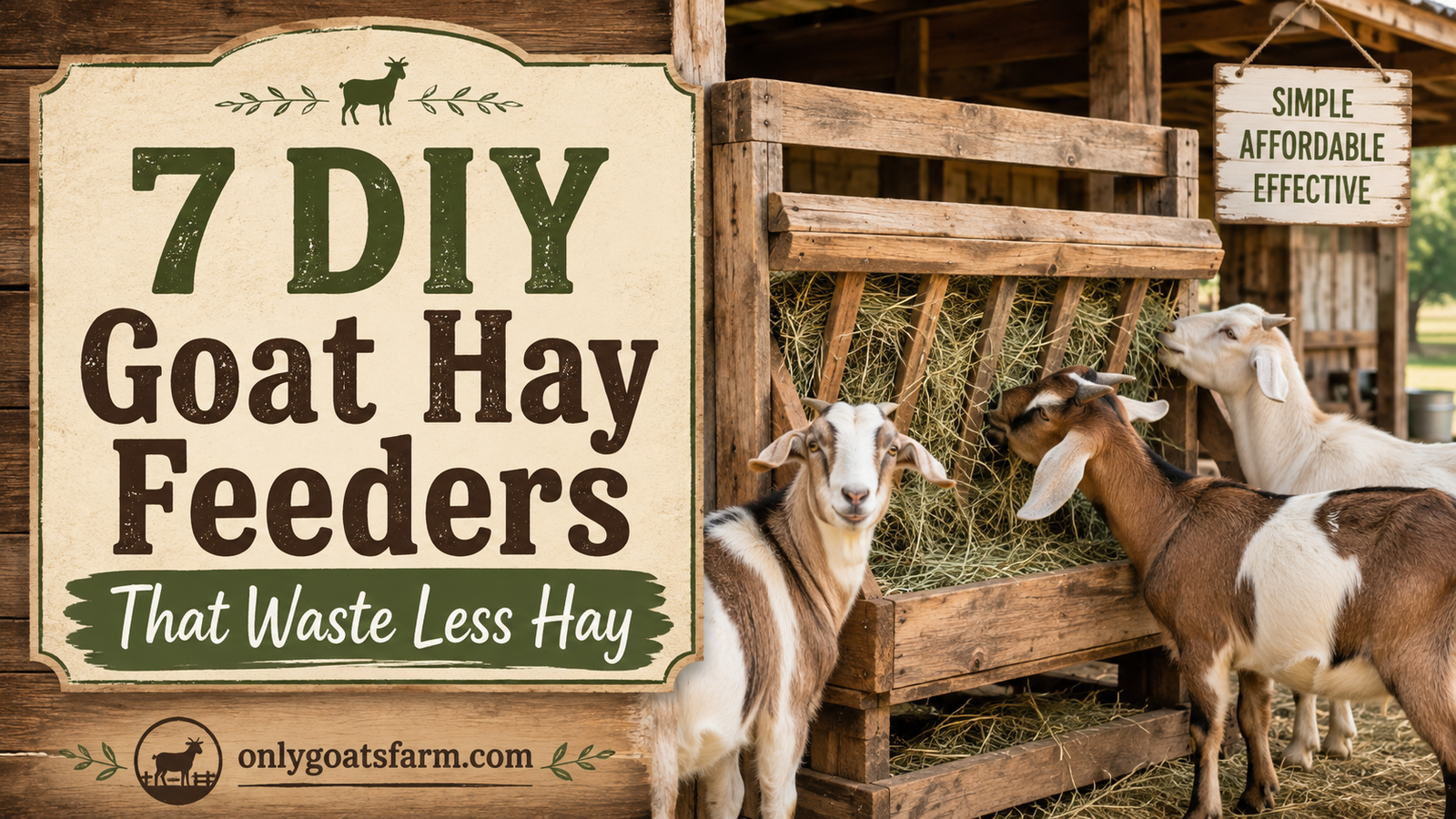
If you own goats, you already know the pain of filling a hay feeder only to come back a few hours later and find half of that expensive hay scattered across the ground.
Goats are incredibly talented at turning perfectly good hay into bedding.
And once they have stepped on it, slept on it, or worse, they usually have no interest in eating it again.
A good goat hay feeder doesn’t have to be expensive, though. In fact, some of the best feeders can be built from pallets, scrap lumber, leftover fencing, or materials you may already have around the farm.
Below are 7 DIY goat hay feeder ideas ranging from super-simple pallet projects to covered outdoor feeders designed to help keep hay clean and dry.
Why Goats Waste So Much Hay
Goats are browsers rather than animals that naturally stand around eating from a pile on the ground.
They like to pick through their food.
Unfortunately, that means they also have a habit of pulling out a mouthful of hay, deciding they don’t want half of it, and dropping the rest.
Multiply that by several goats and you can end up with a surprising amount of hay underneath the feeder.
The goal of a good feeder is to:
- Keep hay off the ground
- Allow goats to pull out small amounts at a time
- Keep goats from climbing into the hay
- Protect hay from rain and snow
- Make the feeder easy to refill
- Avoid places where a goat could become trapped
You don’t necessarily need a complicated feeder.
Sometimes the simplest design works best.
1. Simple Pallet Goat Hay Feeder
If you have extra pallets sitting around your farm, this is one of the easiest DIY goat projects you can build.
Pallets are especially useful because the slats already create a structure that can hold hay while allowing goats to pull pieces through.
What You’ll Need
- 2-3 sturdy pallets
- Exterior screws
- Drill
- Scrap 2×4 lumber
- Optional plywood or metal roofing
Basic Design
Stand one pallet upright to create the back of the feeder.
Attach another pallet at an angle in front of it so that the top is wider than the bottom. This creates a V-shaped hay rack.
Add scrap lumber along the sides to hold everything together.
Hay is loaded through the top and gradually falls toward the bottom as the goats eat.
You can also add a small roof over the feeder if it will be outside.
Why I Like This Design
It’s cheap.
It’s quick.
And if you already build things around your farm with pallets, you may be able to make the entire feeder from leftover materials.
Just make sure you’re using clean, untreated pallets that haven’t been exposed to chemicals or unknown substances.
Internal link opportunity: If you like building inexpensive projects from pallets, check out my DIY pallet goat shelter and DIY goat playground ideas too.
If you want to see my own pallet hay feeder, check out this video:
2. Fence-Mounted Goat Hay Feeder
Sometimes the best goat feeder is one that doesn’t take up any floor space at all.
A fence-mounted hay feeder works especially well in smaller goat pens, stalls, or shelters.
You can build one using:
- Scrap lumber
- Sturdy livestock fencing
- A section of an old hay rack
- Heavy-duty wire paneling
Mount the feeder securely to a solid fence or wall so goats can’t push underneath it or pull it loose.
One big advantage of this style is that goats can’t easily climb into it.
And anyone who owns goats knows that if there is physically any way for a goat to sit inside a feeder, eventually one will.
Best For
- Small goat pens
- Barn stalls
- Kidding areas
- Winter shelters
- Small herds
Mount the feeder high enough to keep the hay clean, but low enough that your smallest goats can comfortably reach it.
3. Scrap Lumber Goat Hay Box
This is another great option if you have leftover lumber from other farm projects.
Build a basic rectangular wooden box with an open top.
Instead of allowing goats to eat directly out of the box, create a feeding rack above or along one side so they can pull hay through while most of the hay remains contained.
A bottom tray can also catch loose pieces.
That’s important because some of the hay goats pull out isn’t actually bad hay.
It simply falls before they can eat it.
A catch tray gives them another chance to eat those smaller pieces instead of immediately trampling them.
Make It Even Better
Add a hinged top.
This makes refilling easier while helping prevent goats from climbing into the feeder.
Because again…
They absolutely will.
4. Cattle Panel Goat Hay Feeder
Have a leftover section of cattle panel?
You may already have most of what you need for another inexpensive hay feeder.
A panel can be bent or mounted to create a hay rack against a sturdy wall or fence.
Place the hay behind the panel and allow goats to pull hay through from the other side.
This style can hold quite a bit of hay, making it useful for larger groups.
One Important Warning
Pay close attention to the opening sizes.
A goat should never be able to easily push its head through an opening and then become trapped when trying to pull back out.
This is especially important if you have horned goats.
With horned goats, I prefer feeder designs that don’t require the goat to put its entire head through an opening.
If you’re unsure about a particular panel or feeder design, err on the side of smaller feeding access rather than creating a head-sized opening.
5. Corner Stall Hay Feeder
Barn corners are basically free real estate.
A corner hay feeder uses two existing walls, so you only need to build the front.
Install a wooden frame across the corner and attach your feeding material to it.
The result is a triangular hay storage area.
Drop hay into the top and let gravity keep moving it downward while the goats eat.
Why Corner Feeders Work Well
They:
- Save floor space
- Hold a surprising amount of hay
- Are inexpensive to build
- Work well in winter shelters
- Can be refilled quickly
For extra hay-saving power, add a solid tray underneath the feeder to catch anything that falls.
This is one of my favorite ways to turn an awkward barn corner into useful feeding space.
6. Covered Outdoor Goat Hay Feeder
If your goats spend most of their time outside, you might want to go one step further and build a small covered feeding station.
Wet hay becomes wasted hay very quickly.
A roof helps protect the feeder from:
- Rain
- Snow
- Falling leaves
- Mud splatter
You don’t need to build an entire shed.
Think of it more like a miniature three-sided shelter specifically for hay.
Use four posts or a sturdy wooden frame with a small sloped roof.
Then install your hay rack underneath.
If you already have scrap metal roofing left from a barn or goat shelter project, this is a great place to use it.
Placement Matters
Try to avoid placing your outdoor feeder in the muddiest part of the goat pen.
Constant hoof traffic around feeders can quickly turn a wet area into a mud pit.
Gravel, wood chips, or another appropriate footing around heavily used feeding areas may help keep the area cleaner depending on your setup.
7. Slow-Feed Goat Hay Feeder
If your goats pull huge mouthfuls of hay out of the feeder and immediately drop half of it, a slower feeding design may help.
Instead of giving goats access to a large open pile, create smaller feeding openings.
The idea is simple:
Smaller bites = less hay falling onto the ground.
You can accomplish this with a wooden feeder that has closely spaced vertical slats or another sturdy livestock-safe barrier.
The goats can still easily reach the hay, but they can’t grab enormous mouthfuls all at once.
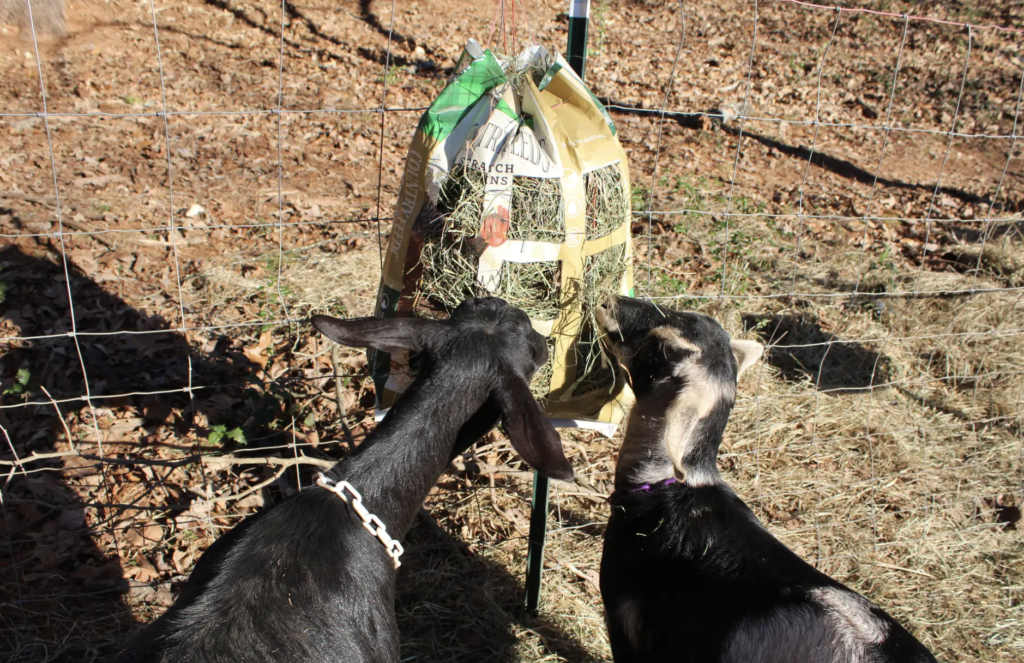
Add a Catch Tray
This is probably the easiest improvement you can make to almost any goat feeder.
Build a shallow wooden tray underneath the hay rack.
When leaves and smaller pieces fall, they land in the tray instead of the dirt.
Your goats may actually eat them later.
How to Reduce Goat Hay Waste Even More
The feeder itself is only part of the equation.
A few changes can make a surprising difference in how much hay your goats waste.
Don’t Overfill the Feeder
I know.
Nobody wants to refill hay twelve times per day.
But absolutely stuffing a feeder can sometimes make it easier for goats to pull enormous chunks out.
Experiment with filling your feeder enough to last comfortably without packing it excessively tight.
Keep Hay Dry
Hay stored outside without protection can quickly become wet, moldy, and unusable.
If the feeder is outdoors, adding even a simple roof can save a lot of hay.
Keep Goats Out of the Feeder
This one should be obvious.
And yet…
Somebody will find a way to climb inside.
Once goats are standing, sleeping, or using the bathroom in the hay, you’re probably throwing that hay away.
Design your feeder so goats can reach the hay without being able to physically enter the hay storage area.
Add a Catch Tray
If you’re building a feeder from scratch, this is one feature I would seriously consider adding.
Even a simple board underneath the feeding area can catch loose leaves and stems.
Goat Hay Feeder Safety Tips
Saving hay is great.
But safety always comes first.
Before using any homemade goat feeder, check it carefully for potential hazards.
Watch for Head Entrapment
Avoid openings that allow a goat to put its head through but could make it difficult to pull back out.
Horned goats require extra consideration because horns can become caught even when the goat’s head originally fit through the opening.
Remove Sharp Edges
Check for:
- Protruding screws
- Nails
- Broken wires
- Jagged metal
- Splintered boards
Run your hands over the feeder and inspect it from goat level.
If there’s a way for a goat to hurt itself on something, assume they’ll eventually find it.
Anchor the Feeder
Goats are strong.
A lightweight feeder that seems perfectly stable when empty may be pushed, climbed on, rubbed against, or tipped.
Secure freestanding feeders appropriately.
Check It Regularly
Wood cracks.
Screws loosen.
Fencing bends.
Make checking your feeder part of your normal barn routine.
Which DIY Goat Hay Feeder Is Best?
There isn’t one feeder that’s perfect for every farm.
For a small herd, I’d probably start with a simple pallet feeder or wall-mounted feeder.
For a larger herd, you may want a bigger cattle-panel style rack or outdoor feeding station.
For maximum hay savings, I’d focus on three things:
- Keep goats from climbing into the hay.
- Limit how much hay they can pull out at once.
- Catch loose hay before it hits the ground.
You can incorporate all three into almost any DIY feeder design.
And you definitely don’t need to spend hundreds of dollars to do it.
Sometimes a couple of pallets, some scrap lumber, and an afternoon in the barn are all you need.
DIY Goat Hay Feeder FAQ
How high should a goat hay feeder be?
The feeder should be high enough that goats aren’t constantly dragging hay onto the floor, but low enough that every goat in the herd can comfortably eat.
The right height will depend on whether you’re feeding full-size goats, miniature breeds, or kids.
Watch your smallest goat when determining your feeder height.
Can goats eat hay off the ground?
Goats may eat hay that has just fallen onto a clean surface, but they commonly refuse hay once it has been stepped on, soiled, or mixed into bedding.
Keeping hay elevated usually reduces waste.
Can you make a goat feeder from pallets?
Absolutely.
Pallets are one of the easiest materials to use for inexpensive goat farm projects.
Just use pallets that are clean, sturdy, and safe for livestock.
How do I stop my goats from wasting hay?
Start by using a feeder that limits how much hay they can pull out at once and prevents them from climbing into the hay.
Adding a tray underneath the feeder can catch smaller pieces before they’re trampled.
Do outdoor goat hay feeders need a roof?
A roof isn’t required, but it can be extremely helpful.
Keeping hay protected from rain and snow prevents good hay from becoming wet and unusable.
Build the Feeder That Works for Your Farm
You don’t need the fanciest goat equipment to have a functional setup.
Some of my favorite farm solutions are the ones built from materials we already have sitting around.
Start with one of these DIY goat hay feeder ideas, adapt it to your herd, and pay attention to how your goats actually use it.
Because goats have a way of testing every farm project you build.
If they can climb it, flip it, squeeze through it, or turn it into a bed…
they probably will.
Looking for more inexpensive goat projects?
Read next:
- DIY Goat Playground Ideas
- How to Build a 3-Sided Pallet Goat Shelter
- DIY Pallet A-Frame Goat Shelter


Post your Comment About This Product