
One of the reasons I recommend quail so often to new homesteaders is simple: you do not need thousands of dollars, acres of land, or a fancy barn to get started.
In fact, quail are one of the least expensive livestock projects you can add to a small homestead.
But there is also a HUGE difference between what you need to raise quail and what you can spend raising quail.
Ask someone with a large established quail operation what brooder they use, and they may show you a commercial setup that costs more than $1,000.
That does not mean you need a $1,000 brooder to hatch your first dozen quail.
I definitely didn’t start there.
I started quail much more simply, and over time I upgraded the equipment that made sense for me. That’s something I wish more beginners understood: you can upgrade as your flock grows.
So, how much does it actually cost to start raising quail?
How Much Does It Cost to Start Raising Quail?
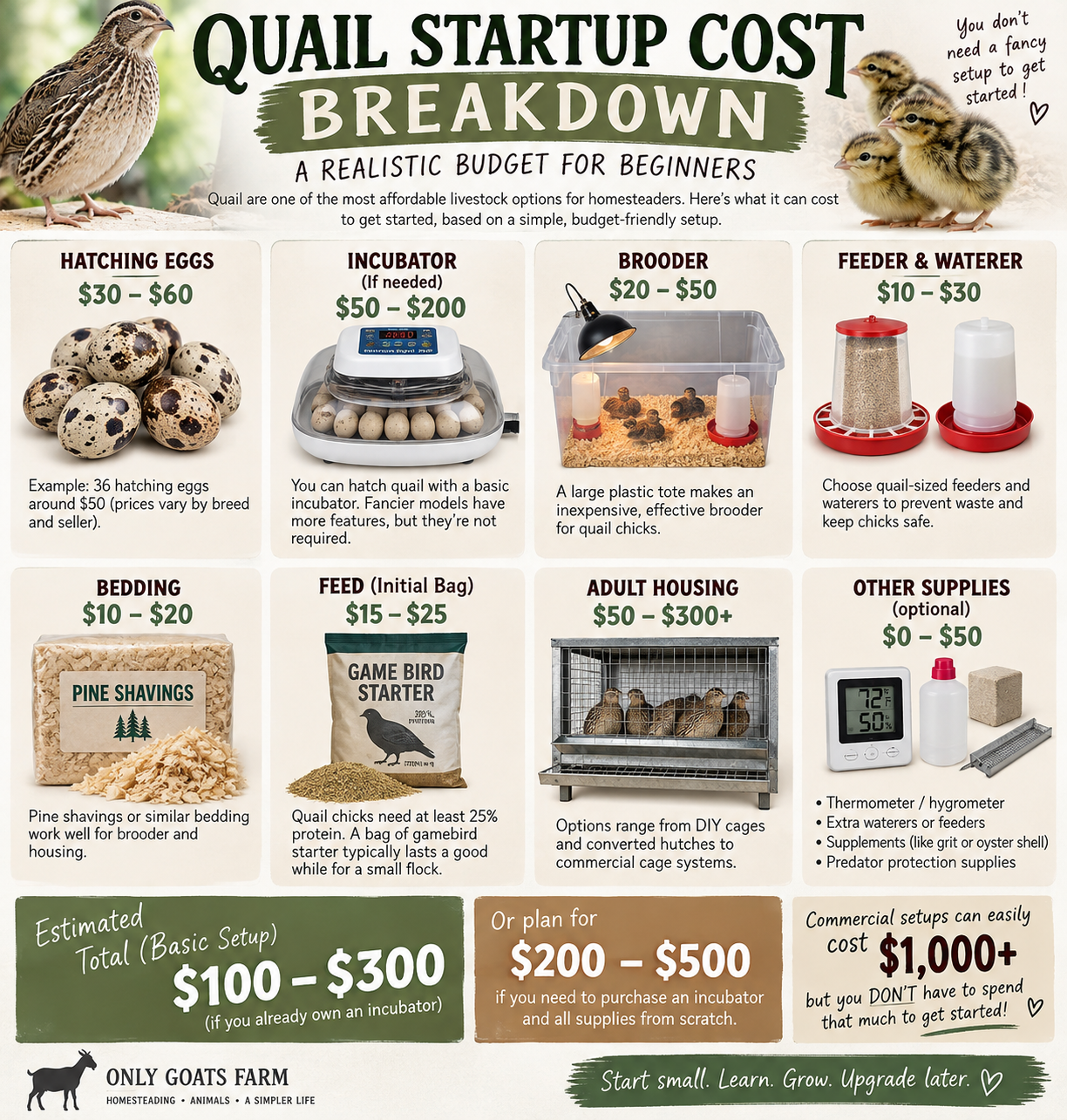
A very basic quail setup can potentially be started for around $100 or less if you already own an incubator.
If you need to buy an incubator, brooder supplies, housing and your first eggs or birds, a more realistic starting budget may be a few hundred dollars.
And if you jump straight into commercial brooders, large cage systems, automatic watering systems and other premium equipment?
You can easily spend $1,000 or more.
The important thing is that you don’t have to.
Your actual startup cost depends on:
- Whether you hatch eggs or purchase adult birds
- Whether you already own an incubator
- Whether you DIY your brooder
- Whether you build or purchase quail cages
- How many quail you start with
- Whether you’re raising quail for eggs, meat, breeding or all three
- How much equipment you already have around the homestead
Before spending anything, I’d also recommend reading my guide on whether quail are right for your homestead.
Quail are inexpensive compared with many other livestock species, but they’re still animals you’re committing to caring for.
The Cheapest Way to Start Raising Quail
If I were starting completely over and trying to spend as little as possible, I wouldn’t start with adult birds and a giant commercial setup.
I’d start small.
During a recent Homestead Hangout with Graham from Jud’s Quail, we talked about exactly this.
His example was buying 36 hatching eggs for around $50 and using an inexpensive brooder setup after they hatch.
That’s a much different financial commitment than going out and buying 20 adult birds, expensive cages and commercial equipment before you even know whether you enjoy raising quail.
Starting with hatching eggs also gives you the opportunity to experience the entire process.
You get to:
- Incubate the eggs
- Hatch the chicks
- Learn to brood quail
- Watch them grow
- Decide which birds you want to keep
- Build your breeding groups
- Eventually collect eggs from birds you hatched yourself
That is one of my favorite things about raising quail.
They grow ridiculously fast.
Cost #1: Hatching Eggs or Live Quail
The first thing you’ll need is obviously…quail.
You generally have three options:
Hatching Eggs
Hatching eggs are usually one of the least expensive ways to start a flock.
They’re also what I would personally choose if you’re comfortable using an incubator.
The downside is that not every egg will hatch.
Shipped eggs especially can have lower hatch rates because they’ve gone through handling, temperature changes and transportation.
That means you shouldn’t buy 12 eggs expecting to end up with exactly 12 adult quail.
But hatching eggs allow you to start with a larger genetic pool without paying adult-bird prices for every bird.
Quail Chicks
Buying chicks removes the uncertainty of whether your eggs will hatch, but you’ll still need a brooder and heat.
For someone nervous about incubation, chicks can be a nice middle ground.
Adult Quail
Adults are the fastest option if you want eggs immediately.
They’re also generally the most expensive way to build a flock.
And there’s another reason I like beginners starting small.
If you spend $200 purchasing adult birds and then discover that your housing isn’t predator-proof, your setup isn’t working or quail simply aren’t for you, that’s a much more expensive lesson than experimenting with a small flock.
Cost #2: An Incubator
If you purchase hatching eggs, you’ll need an incubator.
This is one area where you can spend quite a bit of money, but you certainly don’t have to start with the fanciest incubator available.
A basic incubator needs to reliably control temperature, and you’ll also need to monitor humidity.
Features that can make life easier include:
- Automatic egg turning
- Digital temperature controls
- Humidity displays
- External water filling
- Automatic hatch-day settings
- Phone or app monitoring
Those features are convenient.
They are not all required to hatch quail.
As you hatch more frequently, though, investing in a better incubator can absolutely be worth it.
I’ve used several incubators over the years, and if you’re comparing equipment, you may also want to read my Brinsea incubator app review.
The biggest mistake here is buying equipment for the flock you think you might have someday instead of buying equipment for the flock you’re actually starting today.
Cost #3: A Quail Brooder
This is where beginners can save a LOT of money.
Your first brooder does not have to be a commercial five-tier brooder system.
A simple brooder can be made using a large plastic tote with:
- Bedding
- A chick-safe feeder
- A chick-safe waterer
- A quail-safe heat plate or other appropriate heat source (affiliate link)
- Adequate ventilation
That’s basically how many people start.
Eventually, I upgraded to a Hatching Time brooder, and I absolutely love having a purpose-built system.
But that’s an upgrade, not a requirement for owning quail.
I’ve written a full Hatching Time Brooder review here if you’re at the point where you’re deciding whether the upgrade is worth it.
If you’re just testing out quail?
Use what makes sense for the number of birds you have.
You do not have to build a commercial quail operation on Day One.
Cost #4: Feeders and Waterers
Feeders and waterers are relatively inexpensive, but you’ll want equipment appropriate for tiny quail chicks.
Quail chicks are REALLY small.
That means a waterer designed for larger poultry can sometimes be dangerous for newly hatched quail.
You’ll also want to reduce feed waste as much as possible.
Quail have a remarkable ability to turn perfectly good feed into bedding if you give them the opportunity.
A feeder designed to limit scratching and throwing feed can save you money over time.
And while we’re talking about feed…
Cost #5: Quail Feed
Feed becomes one of your primary ongoing expenses once your initial equipment is purchased.
This is also an area where new quail owners get overwhelmed because everyone online seems to have a different answer about the “best” quail feed.
The more important thing is understanding the nutritional needs of the birds you’re raising.
A growing chick has different nutritional needs than an adult laying hen.
Availability also matters.
Someone in Oklahoma may have completely different feed-store options than I have here in Western New York.
That’s why I don’t think beginners should obsess over finding the exact bag of feed that someone on Facebook told them they have to buy.
Look at the nutritional analysis.
Look at what is available in your region.
And make sure it meets the needs of the birds you’re feeding.
Cost #6: Housing Your Adult Quail
Eventually your adorable little chicks turn into adult quail.
And they do it FAST.
So don’t wait until they’re nearly grown before figuring out where they’re going to live.
Quail can be housed in several different ways, including:
- Stackable breeder cages
- Outdoor hutches
- Converted rabbit hutches
- Aviaries
- Barn cage systems
- DIY quail cages
We’ve actually converted existing poultry space for quail here. If you want some ideas, take a look at my chicken coop to quail coop renovation and DIY cage setup.
This is another place where your startup cost can vary dramatically.
If you’re handy and already have hardware cloth and lumber lying around, you may spend very little.
If you’re purchasing an entire commercial cage system, you’re obviously going to spend significantly more.
Neither option automatically makes you a better quail keeper.
The goal is safe, sanitary housing that works for your climate, your birds and your management style.
Do You Need Expensive Equipment to Raise Quail?
No.
And I think this is one of the biggest traps new homesteaders fall into.
You start researching something online and suddenly everyone has:
- The perfect incubator
- The perfect brooder
- The perfect automatic watering system
- The perfect cage
- The perfect feed storage system
- The perfect barn
Before long you’ve created a $2,000 shopping cart for an animal you’ve never even raised.
Don’t do that to yourself.
Start with the necessities.
Then let your birds tell you where spending money would actually make your life easier.
Maybe you discover that you hate filling waterers twice a day.
Great.
Upgrade the watering system.
Maybe you hatch constantly and cleaning a plastic tote brooder every few days is driving you insane.
That’s when a commercial brooder starts looking fantastic.
That’s essentially what happened for me.
I didn’t need my current setup to start raising quail.
My current setup became valuable because I kept raising more quail.
There’s a big difference.
Quail Are One of the Fastest Livestock Investments on a Homestead
This is one reason I love them.
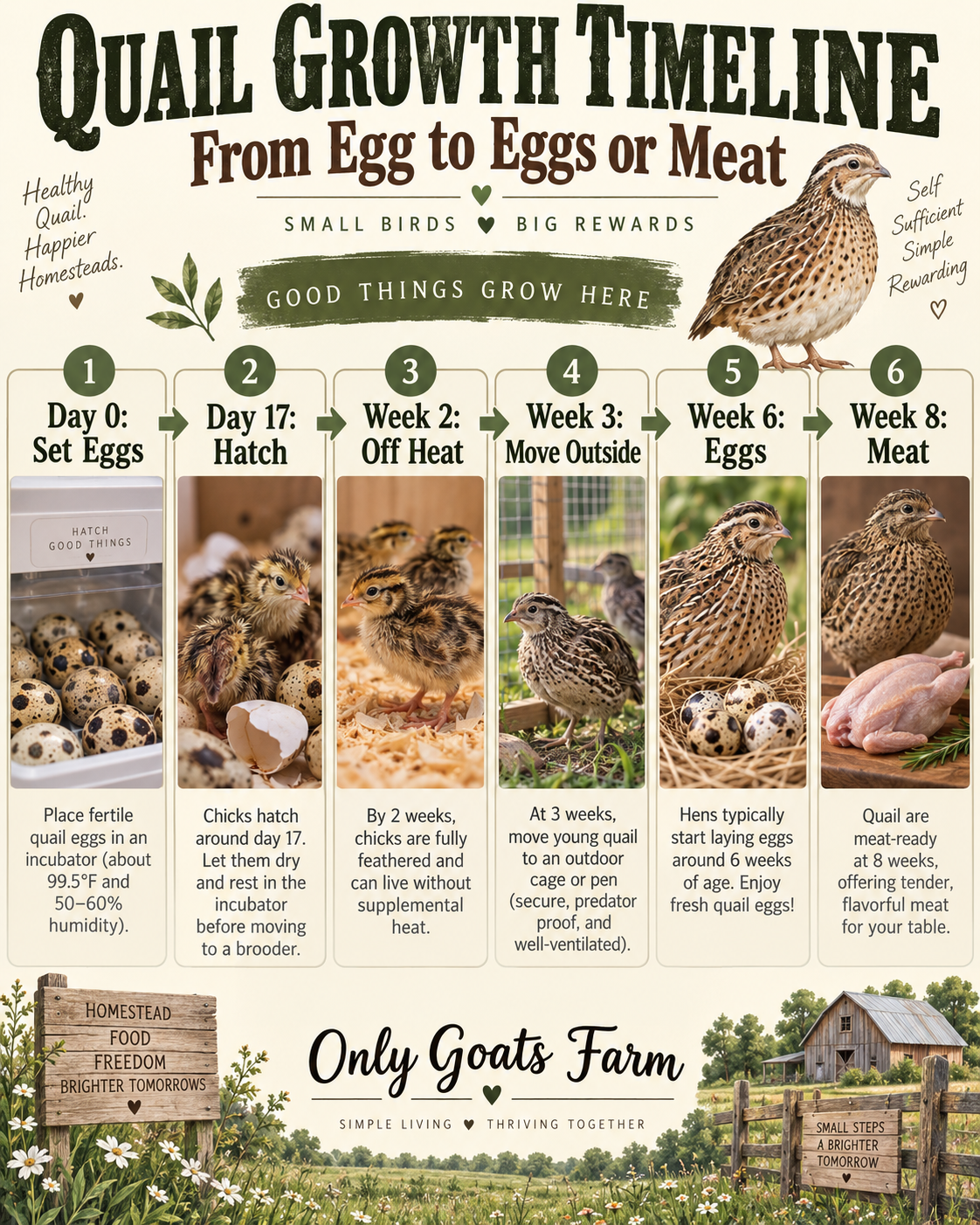
Coturnix quail develop incredibly quickly compared with many other homestead animals.
You aren’t feeding an animal for a year or two before getting anything back from it.
Quail can begin producing eggs within weeks rather than months.
If your goal is meat production, they also reach processing age extremely quickly.
That’s part of why I’ve come to prefer quail for certain purposes over chickens.
If you’re trying to decide between the two, read Why Quail Are Better Than Chickens for Homesteaders.
They aren’t necessarily “better” for every person or every purpose.
But if you’re limited on space, money or time, quail have some very compelling advantages.
What About Starting a Quail Business?
This is where I want to make an important distinction.
Starting to raise quail and starting a quail business are not the same thing.
If you want 10 or 20 birds to provide eggs for your family, you do not need the same infrastructure as someone planning to hatch hundreds of chicks and ship eggs around the country.
A quail business may eventually require:
- Larger incubators
- Multiple brooders
- Breeder cage systems
- Grow-out cages
- Egg storage
- Packaging
- Shipping supplies
- Record keeping
- Breeding stock
- Backup equipment
- Local or state permits depending on what you’re selling
If income is part of your long-term plan, I have an entire guide on how to make money with quail and the different income streams available.
But I would still recommend proving your system on a small scale first.
Learn to reliably hatch 30 birds before trying to hatch 300.
Learn to manage one breeding group before buying ten cages of breeders.
There is nothing wrong with growing slowly.
My Favorite Beginner Quail Budget Strategy
If I were helping someone start their first quail flock on a limited budget, this is how I’d approach it:
First, decide why you want quail.
Eggs?
Meat?
Breeding?
Pets?
A small business?
That determines everything else.
Second, start with a manageable number of birds.
You don’t need 100 quail to figure out whether you enjoy raising quail.
Third, spend money on safety before convenience.
Secure housing, appropriate heat, good nutrition and clean water matter.
The fancy automatic system can come later.
Fourth, reuse what you already own when it is safe to do so.
An existing rabbit hutch, poultry building, incubator or brooder equipment may dramatically reduce your startup costs.
Finally, upgrade the things that actually create problems.
Don’t buy equipment because another farm has it.
Buy it because it solves a problem you actually have.
Is Raising Quail Worth the Cost?
For us, absolutely.
Quail give you an incredible amount of production from a very small footprint.
They mature quickly.
They lay quickly.
They’re relatively inexpensive to feed compared with larger livestock.
Housing doesn’t require acres of pasture.
And you can start small enough that you aren’t risking thousands of dollars just to find out whether raising livestock is something you enjoy.
That’s one of the reasons I think quail are such a great entry point into homesteading.
You can start with a tote, a handful of supplies and some hatching eggs.
Then learn.
Build.
Upgrade.
And if you fall completely down the quail rabbit hole like many of us do, then you can start looking at the fancy equipment.
You don’t need the dream quail setup to start raising quail.
You just need a safe setup that works.
And that’s a much more affordable place to begin.


Post your Comment About This Product