
Introduction
One of the biggest mistakes people make when planning a garden is focusing only on what they can eat fresh during the summer.
But if your goal is to grow more of your own food, lower grocery bills, or build a more self-sufficient lifestyle, storage crops matter A LOT.
Some vegetables spoil within days.
Others can last for months when stored properly.
That’s why long-term food storage crops are such an important part of homesteading, survival gardening, and practical backyard food production.
A good storage crop can:
- Feed your family through winter—and if you want to keep producing fresh food too, these vegetables for a Zone 6 winter garden are a good place to start
- Reduce grocery trips
- Help build a food pantry
- Pair well with canning and preservation; see my 25 best foods to pressure can for low-acid vegetables and other practical pantry staples.
- Stretch your harvest far beyond summer
And the best part?
Many of the best storage vegetables are also some of the easiest and most productive crops to grow.
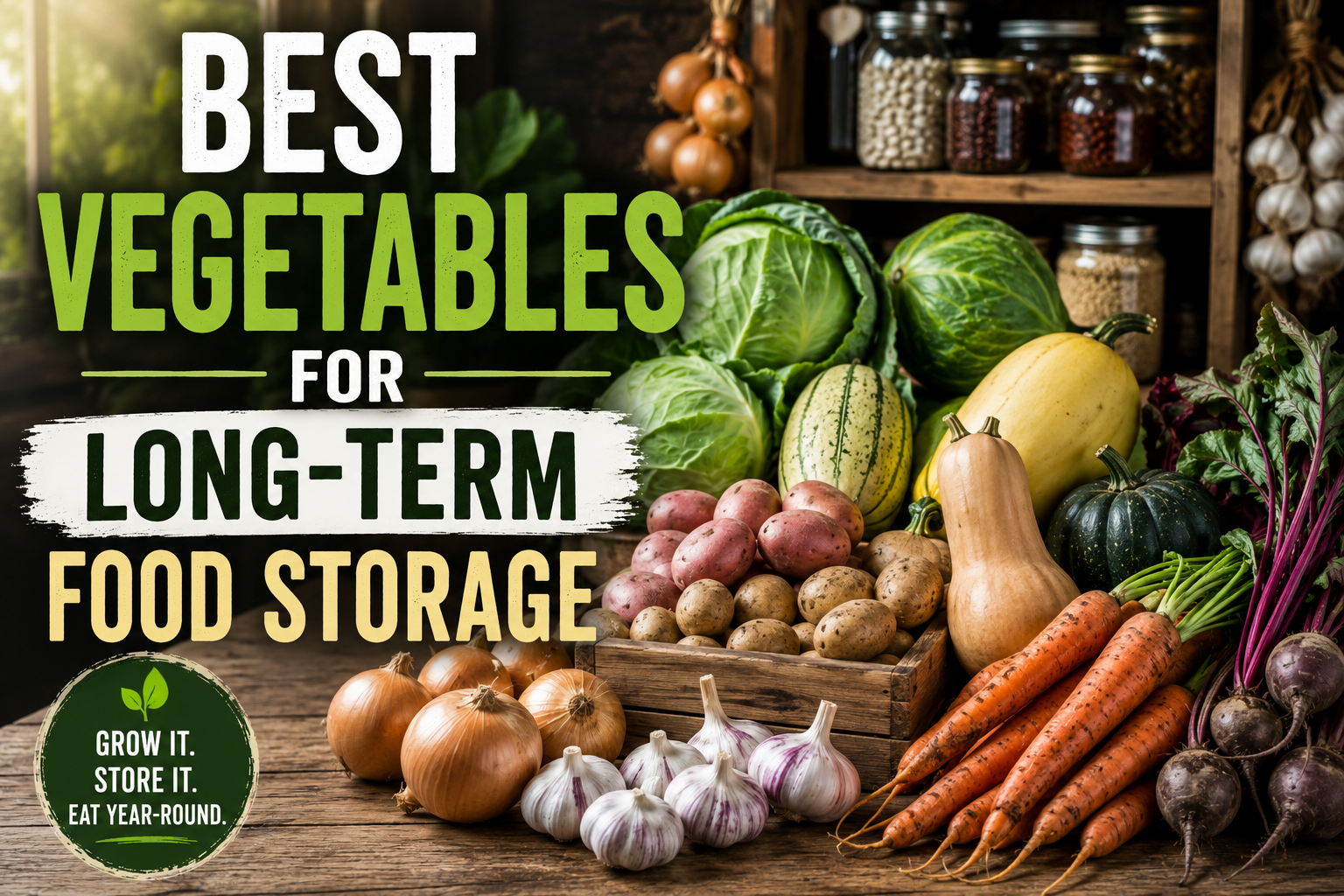
In this post, we’re going to cover the best vegetables for long-term food storage, how long they last, and why they deserve a place in almost every backyard garden.
What Makes a Good Storage Crop?
Not all vegetables are good candidates for long-term storage.
The best storage crops usually have a few things in common:
- They naturally keep longer after harvest
- They have protective skins, layers, shells, or dense roots
- They can handle storage without losing quality right away
- They work well with curing, drying, root cellaring, or pantry storage
- They can be used in everyday meals for weeks or months after harvest
The important thing to remember is that not all storage crops want the same conditions.
Some crops, like onions, garlic, dry beans, and dry corn, need dry storage.
Other crops, like carrots and cabbage, usually do better in cold, humid storage so they do not shrivel.
Sweet potatoes are another example. They are a great storage crop, but they do not like the same cold storage conditions as regular potatoes.
Some vegetables can last:
- Several weeks
- Several months
- Or even much longer when dried and stored properly
That’s a huge difference compared to crops that need to be eaten right away after harvest.
The Best Vegetables for Long-Term Food Storage
| Vegetable | Storage Potential | Best Storage Method | Why It’s Valuable |
|---|---|---|---|
| Potatoes | Several months | Cool, dark, humid storage after curing | Calorie dense staple crop |
| Onions | Several months | Cool, dry, well-ventilated storage after curing | Pantry essential |
| Garlic | Around 6 months or longer depending on variety | Cool, dry, well-ventilated storage after curing | Flavor and pantry value |
| Winter Squash | 1-6 months depending on variety | Cool, dry storage after curing | Heavy producing storage crop |
| Carrots | Around 4-5 months in ideal conditions | Cold, humid storage or damp sand | Nutrient dense and cold hardy |
| Cabbage | Around 2-4 months depending on variety and storage | Cold, humid storage or refrigeration | Great fresh or fermented |
| Sweet Potatoes | Several months | Warm curing, then moderately warm storage | Calorie dense crop |
| Dry Beans | 1+ years in pantry storage; much longer in long-term packaging | Fully dried, airtight storage | Protein source |
| Corn (Dry/Flour Corn) | Long term when dried properly | Fully dried, airtight dry storage | Staple survival crop |
Potatoes
Potatoes are probably one of the most important storage crops you can grow.
They are:
- Calorie dense
- Extremely productive
- Filling
- Versatile in cooking
- Easy to store
When cured and stored properly in a cool, dark place with good humidity, potatoes can last for months. Regular potatoes prefer much cooler storage than sweet potatoes, so it helps to store them separately.
That’s one reason they have been such an important staple crop throughout history.
Onions & Garlic
Onions and garlic are some of the easiest ways to build a practical food pantry from your garden.
Once cured properly, they can store for months while adding huge flavor to meals all winter long.
They also take up relatively little garden space compared to how useful they are.
Braiding garlic or hanging onions in storage is one of those classic homestead skills that really pays off over time.
Winter Squash
Winter squash is one of the most underrated storage crops.
Some varieties can last for many months without refrigeration, but storage life depends a lot on the type of squash. Acorn squash is usually a shorter storage squash, while Hubbard, buttercup, kabocha, and some pumpkins tend to last longer.
They are:
- Productive
- Filling
- Easy to store
- Great for soups, baking, and roasting
Good storage varieties include:
- Butternut squash
- Hubbard squash
- Buttercup squash
- Kabocha squash
Acorn squash is still useful, but it usually does not store as long as some of the thicker-skinned winter squash varieties.
Carrots
Carrots are another fantastic long-term storage crop.
In the right conditions, they can last for months.
Many gardeners store carrots in:
- Root cellars
- Damp sand
- Cool basements
They are also one of the best crops for colder climates because they handle cool growing conditions well and can be stored after harvest when given the right humidity.
Dry Beans
Dry beans are one of the best survival-style storage crops because they last a long time when properly dried and stored.
They also provide:
- Protein
- Shelf stability
- Versatility
- Easy pantry storage
For regular pantry storage, dry beans can usually last a year or more. For true long-term food storage, they can last much longer when stored in airtight containers, Mylar bags, or #10 cans with oxygen removed.
A small bean patch can produce a surprising amount of food.
Best Beginner Storage Crops
If you’re new to growing storage crops, do not feel like you need to grow everything at once.
Some storage vegetables are much easier for beginners than others.
A few of the best beginner-friendly storage crops include:
- Potatoes
- Garlic
- Onions
- Winter squash
These crops are popular for a reason.
They are:
- Productive
- Practical
- Fairly beginner friendly
- Useful in everyday cooking
- Easy to store for long periods of time
Potatoes are one of the easiest ways to grow a large amount of food in a relatively small space.
Garlic and onions are pantry staples that can store for months when cured properly.
Winter squash is productive, beginner friendly, and some varieties can last well into winter.
That’s also why these crops fit so well into a survival garden — they are practical, productive foods that can keep feeding your family long after the fresh summer harvests are gone.
Starting with just a few reliable storage crops is usually the best approach.
You can always expand your garden and preservation skills over time.
How to Make Storage Crops Last Longer
Growing storage crops is only part of the equation.
Proper storage matters too.
Some of the biggest things that impact storage life include:
- Temperature
- Humidity
- Air circulation
- Proper curing
- Avoiding damaged vegetables
A cool, dark, dry space is ideal for many dry storage crops like onions, garlic, dry beans, and dry corn.
For root crops like carrots and cabbage, cold and humid storage is usually better.
For sweet potatoes and winter squash, storage should generally be warmer than a traditional root cellar.
Learning basic preservation skills can also dramatically extend how long your harvest lasts.
Why Storage Crops Matter So Much
One of the biggest mindset shifts in gardening is realizing that gardening is not just about summer harvests.
Storage crops help extend your garden far beyond the growing season.
Instead of producing food for just a few weeks, your garden starts supporting your household for months.
That’s a huge part of:
- Homesteading
- Survival gardening
- Self-sufficiency
- Lowering grocery bills
- Building food security
Final Thoughts
If you want to grow a more practical and productive garden, storage crops are one of the best places to start.
Even adding a few long-term storage vegetables each season can make a huge difference over time.
A shelf full of onions.
Bins of potatoes.
Winter squash in storage.
Garlic hanging to dry.
Those things add up quickly.
And little by little, your garden starts becoming more than just a summer hobby.
It becomes a real food-producing system.
Read more: The ultimate survival garden


Post your Comment About This Product