
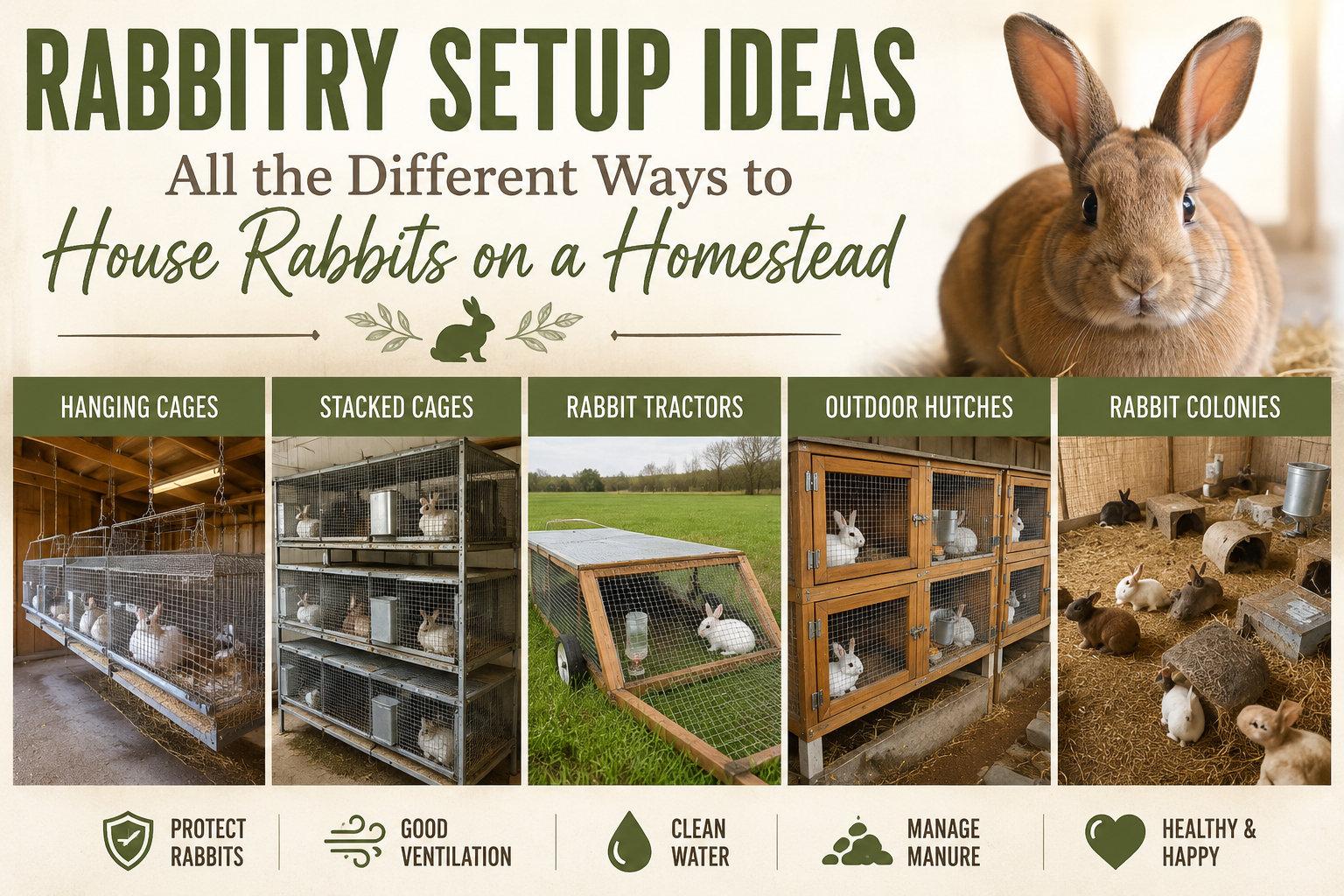
When I first started arranging rabbit cages in my barn, I quickly realized there is no single “correct” way to set up a rabbitry. I spent an entire day I think going over YouTube videos and blogs trying to find the right setup for ME.
Some people hang individual wire cages from the ceiling. Others build wooden cage racks, stack cages with manure trays, raise rabbits in outdoor tractors, or keep several rabbits together in a colony. There are also plenty of hybrid setups that combine several of these methods.
The best rabbitry setup depends on the space you have, the number of rabbits you plan to keep, your climate, how often you want to clean, and whether you are raising rabbits for meat, breeding stock, pets, or manure.
In this guide, we will look at the most common rabbitry setup ideas, including the advantages and disadvantages of each one.
This post may contain affiliate links, which I may earn a small commission from purchases at no additional cost to you. Thank you for supporting my blog!
What Does a Rabbitry Need?
No matter which housing method you choose, every rabbitry needs to provide the same basic things:
- Protection from rain, snow, wind, and direct sun
- Plenty of ventilation
- Protection from predators
- Clean drinking water
- A dry resting area
- Enough room for each rabbit
- A safe way to manage manure and urine
- Easy access for feeding and daily health checks
Rabbits generally tolerate cold weather better than extreme heat. A rabbitry does not necessarily need to be heated during the winter, but rabbits must stay dry and be protected from drafts.
Summer ventilation and shade are especially important. A closed barn, shed, garage, or greenhouse can become dangerously hot if it does not have enough airflow.
The right setup should also make your daily chores manageable. A beautiful rabbitry will not stay beautiful for long if cleaning it takes several hours every week.
1. Hanging Rabbit Cages
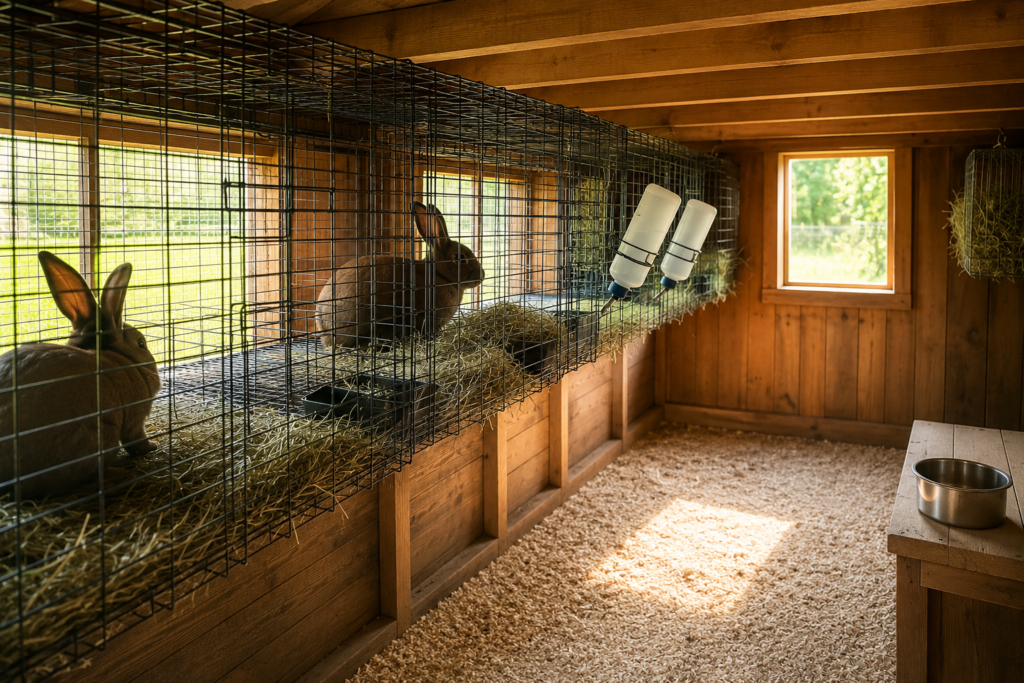
Hanging cages are one of the most common setups used in meat rabbit and breeding rabbitries.
Wire cages are suspended from ceiling joists, beams, or a sturdy support frame. Chains, heavy wire, or a combination of both may be used to support the cages.
The biggest advantage of hanging cages is that there are no legs or shelves underneath them. Rabbit manure and urine fall directly below the cages, making the area easier to rake, shovel, or compost.
Hanging cages can also make excellent use of an existing barn or shed.
This is my setup. I have rabbits hanging from the ceiling with simple ceiling hooks- I drilled a pilot hole and stuck a ceiling hook in each corner of each cage, and then hung the cages from them. I chose not to use wire.
In this same area of my barn, I also house my quail grow outs and my barn cats (where their food is, at least). If you want to see the whole area, you can watch this YouTube video, where I do a walk-through.
Advantages of Hanging Cages
- No cage legs taking up floor space
- Easy access underneath the cages
- Manure falls away from the rabbits
- Good airflow around each cage
- Easier to clean than some stacked systems
- Can be installed along sloped barn ceilings
- Individual rabbits can be monitored closely
Disadvantages of Hanging Cages
- The ceiling structure must be strong
- Cages must be properly supported
- Hanging hardware adds to the setup cost
- Cages may sway if they are not secured
- Installation can be more difficult than using floor racks
- Manure still needs to be collected or removed from below
When hanging cages, the weight should be supported at multiple points. A cage that sags in the middle can become uncomfortable for the rabbit and may eventually weaken.
Avoid hanging heavy cages from thin boards, weak rafters, or hardware that is not designed to carry the load.
2. Stacked Rabbit Cages
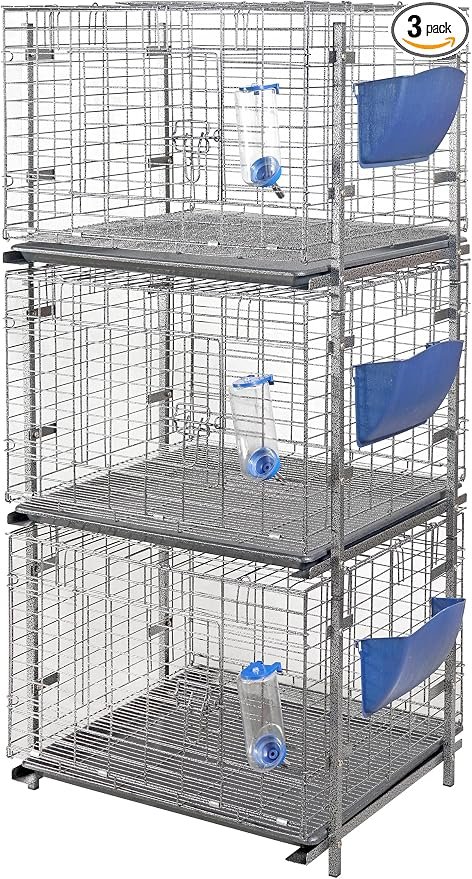
Stacked cages allow you to keep more rabbits in a smaller footprint. Two or sometimes three rows of cages are arranged vertically.
Because rabbit manure cannot fall through the upper cages onto the rabbits below, stacked systems need manure trays, sloped dropping boards, or another waste-control system between each level.
Advantages of Stacked Cages
- Saves floor space
- Works well in smaller barns and sheds
- Keeps rabbits individually housed
- Can create an organized, professional-looking rabbitry
- Makes it easier to expand the herd vertically
Disadvantages of Stacked Cages
- Manure trays require frequent cleaning
- Urine can build up and create odors
- Lower cages may receive less airflow
- Reaching upper cages can be difficult
- Trays and support frames add cost
- Poorly designed systems can be messy
Stacked cages work best when the waste system is planned before the cages are installed.
Removable plastic or metal trays are one option. Another option is to install angled dropping boards that direct manure and urine toward the back of the system.
However, dropping boards still need to be scraped and cleaned regularly. Otherwise, moisture, flies, ammonia, and odor can quickly become a problem.
3. Rabbit Cages on Wooden or Metal Racks
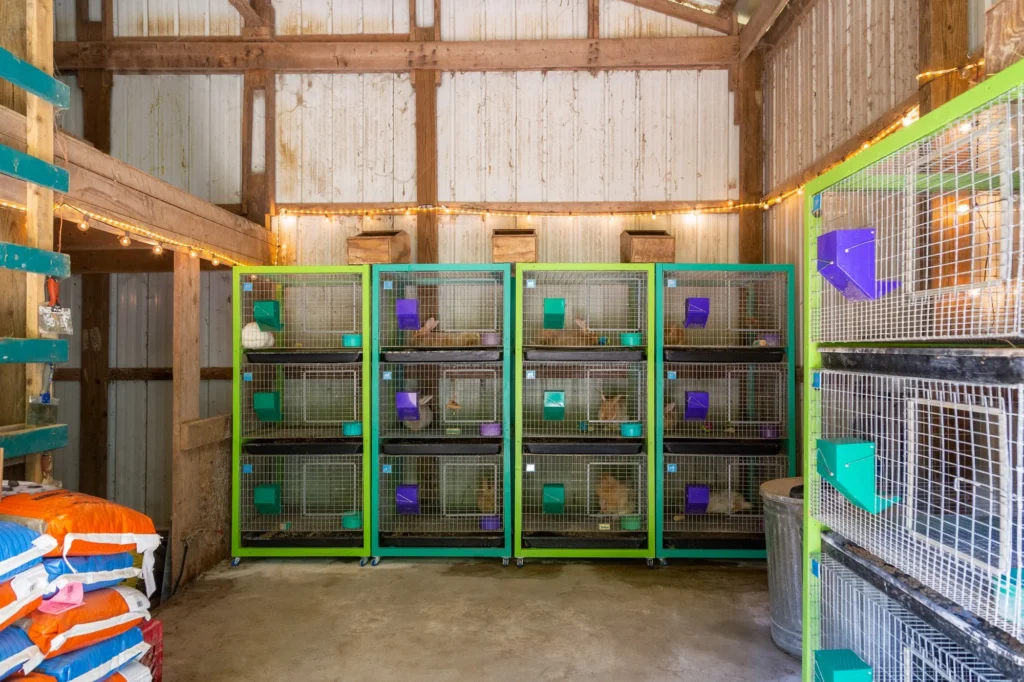
Instead of hanging cages, you can place them on a freestanding rack.
The rack may be built from lumber, metal tubing, shelving components, concrete blocks, or other sturdy materials. The cages can sit directly on the rack or be attached to it.
This can be a good option when you do not want to drill into barn rafters or are unsure whether the ceiling can support hanging cages.
You can check out this tutorial from Teal Stone Homestead.
Advantages of Cage Racks
- No need to attach cages to the ceiling
- Easier to move or rearrange
- Can be built to fit your available space
- Works inside barns, garages, sheds, and covered areas
- Provides individual housing
- Can be designed for one or multiple levels
Disadvantages of Cage Racks
- Legs and supports take up floor space
- Wooden racks may absorb urine
- Manure can collect around the base
- Multi-level racks still need trays or dropping boards
- Untreated wood may eventually rot
Metal racks generally last longer and are easier to sanitize, but lumber is often more affordable and easier for a homesteader to work with.
When using wood, keep it away from areas where urine regularly collects. Painting or sealing the wood can make cleaning easier, although rabbits should not be able to chew painted surfaces.
4. Outdoor Rabbit Hutches
Traditional rabbit hutches are usually wooden structures with wire fronts or floors and a sheltered compartment.
They may be built as individual hutches or long rows of connected compartments.
Outdoor hutches can work well for a small rabbit operation, especially when no barn or shed is available.
You can get this hutch from Amazon.
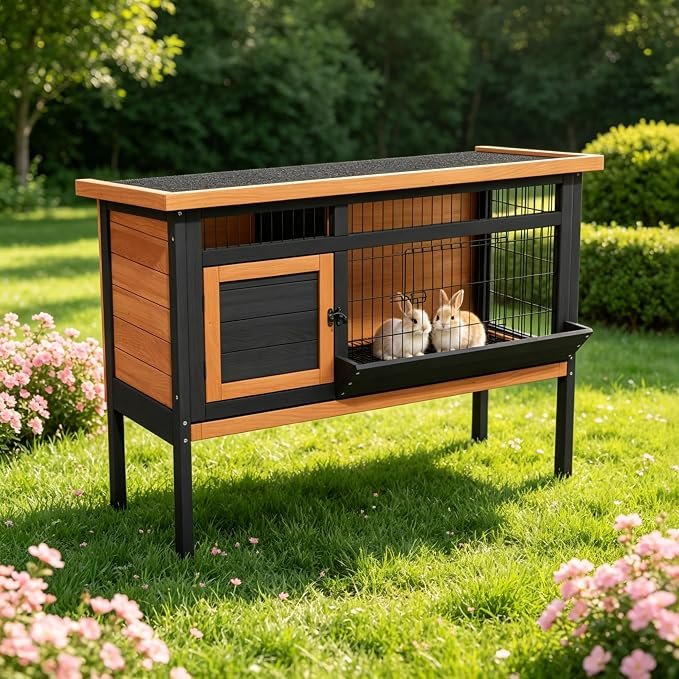
Advantages of Outdoor Hutches
- Does not require an existing building
- Provides both shelter and ventilation
- Can be positioned in a shaded area
- Easy to start with only one or two rabbits
- Each rabbit can have an individual compartment
Disadvantages of Outdoor Hutches
- Exposed to changing weather
- Wood may rot or become difficult to sanitize
- Predators may attempt to reach the rabbits
- Water bottles may freeze in winter
- Hutches can become hot in direct sunlight
- Cleaning underneath may be difficult
Outdoor hutches should be placed in a shaded, well-drained area. They should never sit in a low spot where rainwater collects.
The roof should extend beyond the sides to help keep rain and snow out. Hardware cloth or strong cage wire is generally safer than lightweight chicken wire for predator protection.
5. Rabbit Tractors
A rabbit tractor is a movable pen that allows rabbits to eat fresh grass while remaining contained.
Rabbit tractors are often built from wood, wire, metal panels, or lightweight frames. Some include wheels or handles so they can be moved to a fresh section of grass.
This setup is sometimes used for grow-out rabbits rather than permanent breeding stock.
This tractor is an easy DIY from Homestead Rabbits.
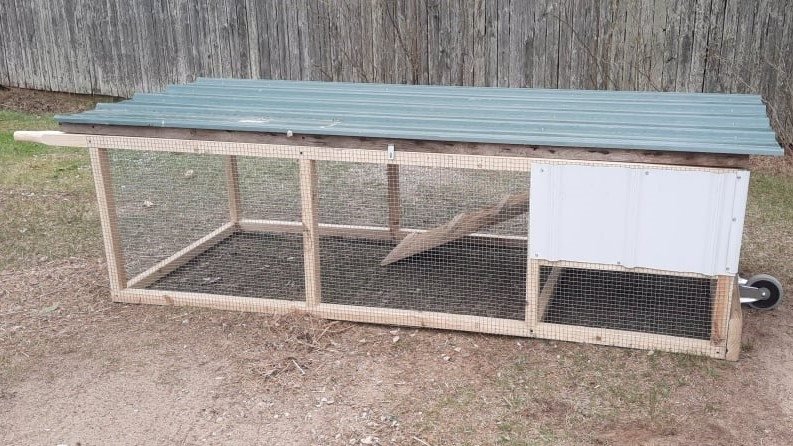
Advantages of Rabbit Tractors
- Rabbits can access fresh grass
- Reduces the amount of cut forage that must be carried
- Manure is deposited directly onto the ground
- Can reduce feed waste when managed carefully
- Gives growing rabbits more room to move
Disadvantages of Rabbit Tractors
- Rabbits can dig out
- Predators may dig or reach underneath
- Grass may become wet or muddy
- Rabbits are exposed to parasites and contaminated soil
- Tractors must be moved frequently
- Weather protection can be difficult
- Not ideal for every climate or property
A tractor should include a secure roof, shade, and a dry enclosed area. The bottom edge must also prevent rabbits from digging out and predators from digging in.
Rabbit tractors should not be placed over grass that has been sprayed with herbicides, pesticides, or other chemicals.
They also require close monitoring during hot, stormy, or extremely cold weather.
6. Rabbit Colonies
In a colony setup, several rabbits live together in a larger shared space instead of being housed in individual cages.
Colonies may be located inside barns, sheds, garages, greenhouses, outdoor pens, or converted stalls.
Some colony setups use a solid floor covered with bedding. Others allow rabbits to live directly on the ground and dig natural burrows.
Little Avalon Farm has a great blog post on rabbit colonies!
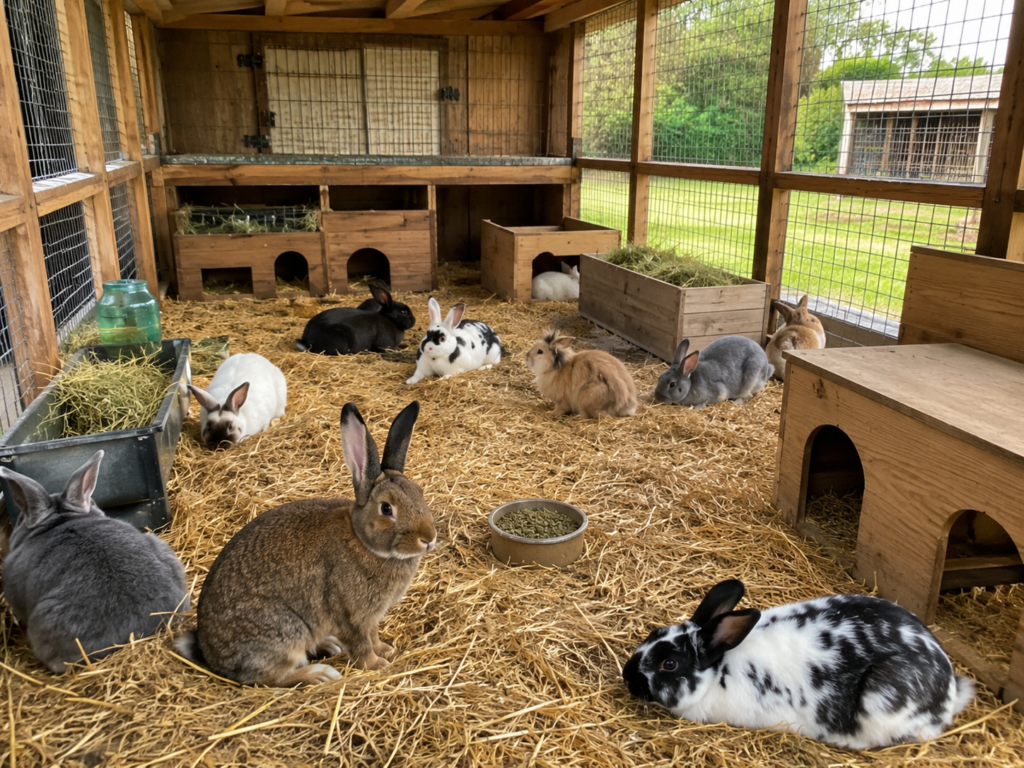
Advantages of Rabbit Colonies
- Rabbits have more room to move
- Allows social interaction
- Can reduce the number of individual cages needed
- May use an existing stall, shed, or pen
- Can create a more natural-looking environment
- Bedding and manure can sometimes be composted together
Disadvantages of Rabbit Colonies
- Rabbits may fight
- Breeding can become difficult to control
- Kits may be injured or lost
- Disease and parasites can spread more easily
- Individual feed intake is harder to monitor
- Digging rabbits may escape
- Determining parentage can be difficult
- Sick or injured rabbits may be harder to notice
Colony housing often looks simple, but it still requires careful management.
Does can become territorial, especially around nest boxes. Bucks may fight with other bucks, and continuous access to does can result in frequent, unplanned litters.
A colony needs multiple feeding stations, water sources, shelters, hiding areas, and nest locations so one rabbit cannot guard everything.
New rabbits should not simply be placed into an established colony without supervision.
7. Rabbit Colonies with Individual Breeding Cages
A hybrid system combines the space of a colony with the control of individual cages.
Breeding bucks and pregnant does may be kept in their own cages. Grow-out rabbits can then be moved into a colony or large group pen after weaning.
This is one of the more practical ways to use colony housing while still controlling breeding dates and monitoring each doe.
I may eventually lean towards this in the future, and do colonies for grow outs.
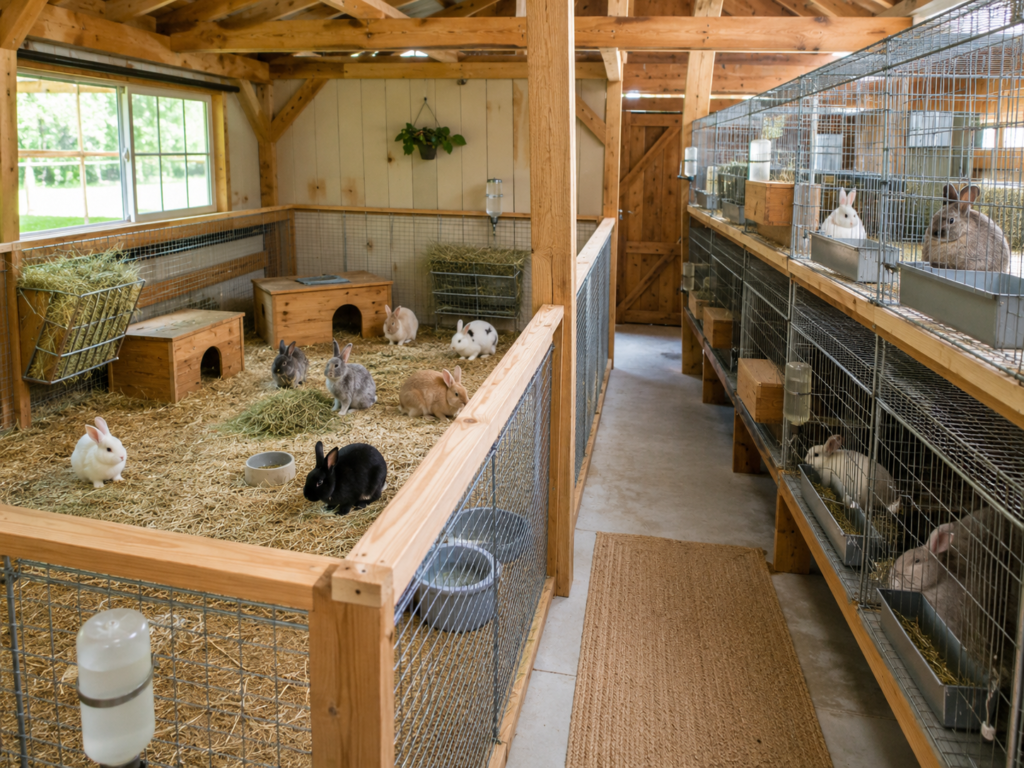
Advantages of a Hybrid Rabbitry
- Better control over breeding
- Easier to monitor pregnant and nursing does
- Grow-outs receive more group space
- Bucks can be kept safely separated
- Fewer permanent cages may be needed
- Combines individual care with group housing
Disadvantages of a Hybrid Rabbitry
- Requires both cages and colony space
- Rabbits must be moved between areas
- Group introductions need supervision
- The colony still requires parasite and sanitation management
A hybrid setup can be especially useful for a small homestead rabbitry. Each doe can kindle in a private cage, while weaned rabbits grow together in a larger pen.
8. Greenhouse and Cold-House Rabbitries
An unused greenhouse or cold house may look like the perfect place for rabbits because it blocks wind and allows in natural light.
However, greenhouses require extra caution.
Even during cool weather, a greenhouse can heat up quickly when the sun is shining. Ventilation must be excellent, and rabbits should never be kept in a tightly closed greenhouse without temperature monitoring.
Honestly- there are better choices in my opinion than a greenhouse.
Advantages of a Greenhouse Rabbitry
- Blocks wind and precipitation
- Provides natural light
- May already be available on the property
- Can protect rabbits during cold weather
- Manure may be useful for nearby growing areas after composting
Disadvantages of a Greenhouse Rabbitry
- Can overheat very quickly
- Humidity may build up
- Ventilation can be difficult
- Direct sunlight may reach the cages
- Greenhouse materials may not stop predators
A cold house with plenty of ventilation may work better than a greenhouse designed to hold heat.
In warm weather, shade cloth, open vents, fans, and cross-ventilation may be necessary. Always check the temperature at cage level rather than assuming the space feels comfortable near the door.
9. Indoor or Garage Rabbitries
Rabbits can also be housed in a garage, basement, enclosed porch, utility building, or another indoor space.
This arrangement provides excellent weather protection, but sanitation and ventilation become especially important.
Advantages of Indoor Rabbit Housing
- Protection from rain, wind, and predators
- Easier winter water management
- Convenient access for feeding and health checks
- More control over lighting and temperature
- Useful for small breeding programs
Disadvantages of Indoor Rabbit Housing
- Urine odors and ammonia can build up
- Manure must be removed frequently
- Flies may become a problem
- Ventilation may be limited
- Dust and fur can collect indoors
- Heat may build up in garages during summer
An indoor rabbitry should smell like bedding, hay, and animals—not strong urine.
A noticeable ammonia smell is a warning that waste is building up or ventilation is inadequate.
10. Ground Pens and Converted Structures
Some rabbit keepers convert existing structures into rabbitries.
Possible options include:
- Horse or livestock stalls (actually, my rabbitry is a converted stall!)
- Chicken coops
- Old sheds
- Dog kennels
- Pool frames
- Hoop houses
- Covered runs
- Small barns
- Three-sided shelters
Using an existing structure can save money, but it still needs to be evaluated for safety.
Check the flooring, roof, ventilation, drainage, predator protection, and any openings where a rabbit could escape.
A dog kennel, for example, may contain a rabbit during the day, but the gaps may be large enough for kits to escape or predators to reach through.
Converted structures often work best when lined with smaller wire and divided into secure sections.
Choosing the Best Rabbitry Setup
The best rabbitry setup is the one that fits your daily routine.
Before choosing a system, ask yourself:
- How many rabbits will I eventually keep?
- Will I be breeding rabbits?
- Do I need individual pedigree records?
- Do I have a strong barn ceiling?
- How will I remove manure?
- Can I reach every rabbit easily?
- How will I prevent frozen water?
- How will I keep the area cool in summer?
- What predators are common in my area?
- How much time can I realistically spend cleaning?
For a small breeding program, individual hanging cages or cages on racks may provide the most control.
For a large number of grow-out rabbits, a secure colony or tractor may provide additional space.
For many homesteads, a hybrid system is the most practical solution: individual cages for breeding rabbits and larger group housing for weaned grow-outs.
Rabbitry Setup Comparison Chart
| Rabbitry Setup | Space Efficiency | Cleaning Difficulty | Breeding Control | Predator Protection |
|---|---|---|---|---|
| Hanging cages | High | Low to moderate | Excellent | Good inside a secure building |
| Stacked cages | Very high | Moderate to high | Excellent | Good inside a secure building |
| Cage racks | Moderate | Moderate | Excellent | Depends on the building |
| Outdoor hutches | Moderate | Moderate | Excellent | Moderate to good |
| Rabbit tractors | Moderate | Low if moved often | Limited | Requires careful construction |
| Full colony | Low to moderate | Moderate | Limited | Depends on the enclosure |
| Hybrid colony system | Moderate | Moderate | Good | Depends on the enclosure |
| Greenhouse rabbitry | Moderate | Moderate | Excellent with cages | Heat is a major concern |
| Garage or indoor rabbitry | High | Moderate | Excellent | Very good |
Frequently Asked Questions
Is it better to hang or stack rabbit cages?
Hanging cages are usually easier to clean underneath because manure falls directly to the ground. Stacked cages use less floor space but require trays or dropping boards between levels.
Can rabbits live together in a colony?
Some rabbits can live successfully in a well-managed colony, but fighting, uncontrolled breeding, injuries, parasites, and lost kits are possible. Bucks generally need to be separated, and pregnant does may do better in private areas.
Can rabbits live outside all year?
Rabbits can live outside in many climates when they are protected from rain, wind, predators, direct sun, and extreme heat. Water management and weather protection become especially important during winter and summer.
Can rabbit cages be kept in a barn?
Yes. A barn can provide excellent protection, but the rabbit area still needs ventilation, adequate light, predator protection, and a manageable manure system.
Do rabbit cages need manure trays?
Single-level hanging cages may not need trays if manure can fall into a designated collection area. Stacked cages usually need trays or angled dropping boards to protect the rabbits below.
Can I use chicken wire for a rabbitry?
Chicken wire is not usually the best choice for cage floors or primary predator protection. It can bend, rust, and allow predators to reach through. Strong welded wire or hardware cloth is generally more secure.
Final Thoughts
There are many ways to set up a rabbitry, and almost every system involves a tradeoff.
Hanging cages are easy to clean but require strong supports. Stacked cages save space but create more tray-cleaning work. Colonies provide room to move but make breeding and health monitoring more difficult. Tractors offer fresh forage but require careful predator and escape protection.
Before building your rabbitry, start with manure management, summer ventilation, winter water, and daily access. Those four things will affect your experience more than how attractive the finished setup looks.
You can also combine different systems as your rabbitry grows. Breeding rabbits may stay in individual cages while grow-outs move into a larger group pen. Outdoor hutches can be used during mild weather, while a barn provides additional winter protection.
The best rabbitry is not necessarily the most expensive or elaborate one. It is the setup that keeps your rabbits safe, makes daily chores manageable, and can grow with your homestead.
What type of rabbitry setup do you use? Share your setup, what works well, and what you would change in the comments.
Check out my setup here:


Post your Comment About This Product