
If you saw the word pseudorabies pop up in livestock news recently and immediately thought:
Wait… there’s another kind of rabies?
You are definitely not alone.
The name makes pseudorabies sound like some variation of the rabies virus.
It isn’t.
Pseudorabies is an entirely different viral disease, primarily associated with pigs. But here’s the part that caught my attention as a goat owner:
Goats can get it too.
So can sheep, cattle, dogs, cats and several species of wildlife.
And unlike pigs—which can sometimes survive infection—pseudorabies infection in animals like goats and sheep is usually fatal.
This disease also popped back into U.S. livestock news in 2026 after the USDA confirmed pseudorabies in swine connected to facilities in Iowa and Texas.
So let’s talk about what pseudorabies actually is, how goats and other livestock can become infected, what the symptoms look like, and how worried the average livestock owner actually needs to be.
Why Is Pseudorabies in the News Again?
Pseudorabies isn’t a brand-new livestock disease.
In fact, the United States spent decades trying to eliminate it from commercial pigs.
Commercial U.S. swine herds had been considered free of pseudorabies since 2004.
Then, on April 30, 2026, the USDA Animal and Plant Health Inspection Service confirmed pseudorabies antibodies in pigs at a small commercial swine facility in Iowa.
Traceback linked the affected boars to an outdoor swine facility in Texas, where animals also tested positive.
According to the USDA, this was the first known case involving commercial U.S. swine since 2004.
You can read the original USDA announcement here:
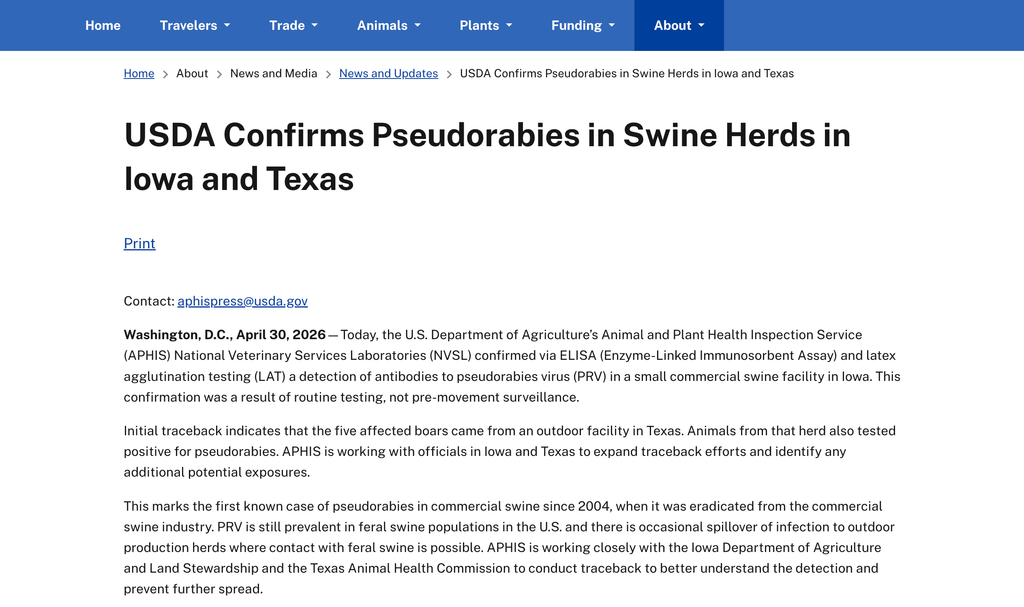
USDA April 2026 pseudorabies announcement
There is some good news.
After testing surrounding herds, depopulating affected premises and completing cleaning, disinfection and surveillance, USDA announced in June that the United States had again achieved freedom from pseudorabies in commercial swine.
USDA June 2026 pseudorabies response update
But that doesn’t mean the virus has disappeared from the United States.
And this is where things get especially interesting for small farms and homesteads.
What Is Pseudorabies?
Pseudorabies is a contagious viral disease caused by pseudorabies virus, also called PRV.
You may also see it called:
- Aujeszky’s disease
- Mad itch
- Suid herpesvirus 1
- Varicellovirus suidalpha1
Despite the word “rabies” in its name, pseudorabies is not caused by the rabies virus.
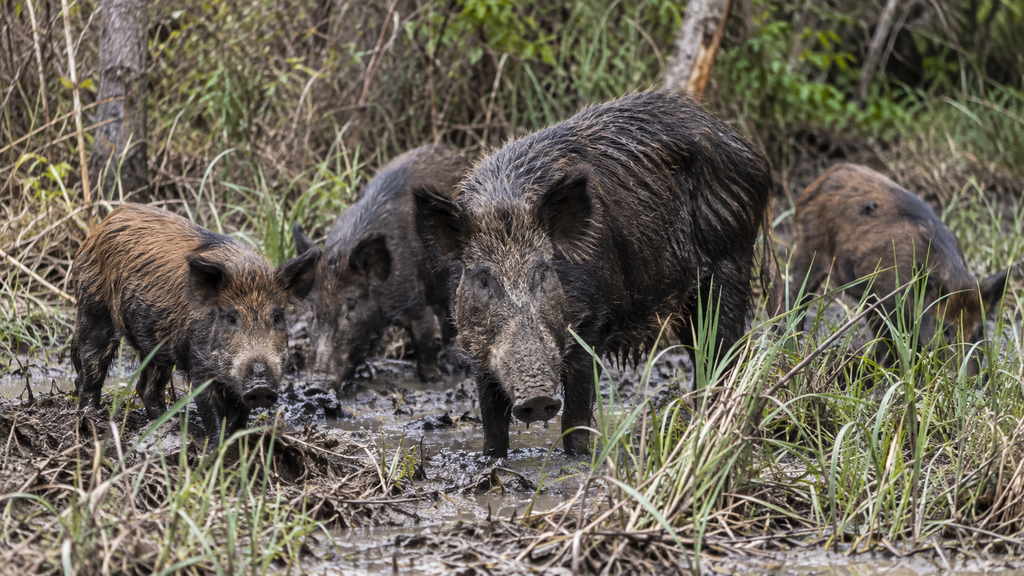
Pigs—including domestic pigs and wild pigs—are the natural host of pseudorabies virus.
But pigs aren’t the only animals capable of becoming infected.
According to the USDA, pseudorabies can infect mammals including:
- Goats
- Sheep
- Cattle
- Dogs
- Cats
- Rats
- Rabbits
- Foxes
- Mink
- Other wildlife
The USDA considers humans resistant to pseudorabies virus strains and said the 2026 U.S. detection did not pose a risk to consumers or the commercial pork supply.
For a detailed veterinary overview, see:
MSD Veterinary Manual pseudorabies overview
So Pseudorabies Is NOT Rabies?
Correct.
This distinction is really important.
Rabies and pseudorabies are completely different diseases.
Actual rabies is caused by a lyssavirus and is a serious zoonotic disease that can infect humans.
Pseudorabies is caused by a herpesvirus primarily maintained in swine.
They can both produce neurological symptoms in animals—which is part of the reason pseudorabies ended up with such a confusing name—but they are not interchangeable diagnoses.
I’ve written separately about actual rabies in goats, including the 2026 petting-zoo rabies cases involving baby goats.
So if somebody tells you that a goat has “pseudorabies,” they aren’t saying it has a different strain of regular rabies.
They’re talking about a completely different virus.
Why Are Pigs So Important?
Pigs are the natural host and reservoir for pseudorabies virus.
That matters because pigs can maintain the virus.
Other animals—including goats, sheep and cattle—are considered incidental hosts.
And this creates one of the strangest things about pseudorabies.
An infected pig may survive.
An infected goat often won’t.
USDA says pseudorabies infections in non-swine species are usually fatal. It also says these incidental hosts generally do not transmit the virus onward to other animals.
In other words, a goat that becomes infected is essentially a dead-end host.
That’s very different from having pseudorabies circulating through a herd of goats the way some goat-specific infectious diseases can.
Where Is Pseudorabies Found in the United States?
This is probably the most important part of the story.
Even though U.S. commercial swine are once again considered free of pseudorabies, the virus remains in feral swine populations.
USDA specifically warns that feral swine remain a potential source of pseudorabies infection.
That means pseudorabies hasn’t really disappeared from the country.
Instead, we’ve done an extremely good job keeping it out of commercial domestic pigs.
The risk becomes greater when domestic pigs are raised outdoors or otherwise have opportunities to come into contact with feral swine.
USDA notes that sporadic infections can occur in outdoor swine herds, particularly when contact with feral pigs is possible.
You can follow USDA’s current pseudorabies information here.
How Does Pseudorabies Spread?
Infected pigs are the primary concern.
Pseudorabies virus can spread through direct contact with an infected pig shedding virus.
USDA veterinary guidance describes several possible transmission routes, including:
- Direct nose-to-nose contact
- Aerosolized virus
- Contaminated water
- Reproductive transmission between pigs
- Contaminated equipment, clothing, boots or other objects
Pigs can also become infected through contact with feral swine.
That doesn’t mean every goat living near a pig is suddenly at risk.
Remember, pseudorabies is currently uncommon in domestic U.S. pigs.
But it does mean livestock owners who keep pigs along with goats, sheep, cattle, farm dogs or cats should understand why swine biosecurity matters to more than just the pigs.
Can Goats Get Pseudorabies?
Yes.
Goats can become infected with pseudorabies virus.
So can sheep and cattle.
But goats aren’t the normal host.
They are accidental or incidental hosts.
According to USDA, neurological signs in incidental hosts can include:
- Severe itching
- Muscle tremors
- Seizures
- Other neurological abnormalities
- Death
And unfortunately, infection in non-swine species is usually fatal.
That severe itching is also where the old name “mad itch” comes from.
Obviously, this does not mean every violently itchy goat has pseudorabies.
Goats scratch for approximately 9,000 reasons.
Lice, mites, shedding, dry skin and irritation are vastly more ordinary explanations.
If you’ve got an itchy goat, start with our guide to common causes of itching in goats.
It’s the combination of sudden severe itching, neurological symptoms, rapid deterioration and a plausible exposure history that would make an unusual disease like pseudorabies more concerning.
What Does Pseudorabies Look Like in Goats?
Pseudorabies can affect the nervous system in incidental hosts.
Possible signs include:
- Extreme itching or scratching
- Trembling
- Muscle tremors
- Seizures
- Abnormal behavior
- Lack of coordination
- Weakness
- Neurological abnormalities
- Rapid deterioration
- Death
But there’s a big problem with trying to diagnose pseudorabies based on symptoms alone:
Those symptoms aren’t specific to pseudorabies.
Neurological symptoms in a goat can have numerous potential causes.
So please don’t look at a goat stumbling around and immediately decide it has pseudorabies because you read this article.
A sick goat needs an actual diagnosis.
If you’re trying to decide whether something is simply “off” with one of your goats, read How to Tell If Your Goat Is Sick: 10 Signs You Should Never Ignore.
Can Goats Spread Pseudorabies to Each Other?
This is one of the pieces of information I found most reassuring.
According to USDA, infected cattle, sheep, goats, cats, dogs and other incidental hosts do not transmit pseudorabies virus to other animals.
They are considered dead-end hosts.
So pseudorabies is not generally something we expect to see moving from goat to goat through a herd.
The bigger epidemiological concern is infected swine.
That distinction matters enormously when you’re trying to understand the actual risk.
Can Farm Dogs and Cats Get Pseudorabies?
Yes.
And this is another reason pig owners need to know about this disease even if they’re not particularly worried about their pigs getting sick.
Dogs and cats can become incidental hosts.
They can develop severe neurological disease and infection is typically fatal.
Carnivores can also become infected after eating contaminated raw pork or tissues from infected pigs or wild boar.
So if you hunt wild pigs—or live somewhere where feral pigs are common—feeding raw wild-pig meat or organs to farm dogs isn’t something I would mess around with.
What About Horses and Chickens?
USDA guidance considers horses and birds resistant to pseudorabies virus, along with humans.
So this is primarily something I would want on the radar of people keeping:
pigs + goats, sheep, cattle, dogs or cats.
Especially if those pigs have outdoor access.
Is Pseudorabies Fatal?
For goats and other incidental hosts, unfortunately, it usually is.
USDA describes pseudorabies infections in non-swine species as usually fatal.
The MSD Veterinary Manual similarly describes pseudorabies as an acute, frequently fatal disease and says there is no specific treatment for infected pigs or incidental hosts.
That’s one reason prevention and biosecurity matter so much.
There isn’t a goat treatment protocol where you catch it early and simply give medication.
Is There a Pseudorabies Vaccine?
Vaccines against pseudorabies do exist for swine.
But there’s an important catch.
Because the United States maintains a pseudorabies-free commercial swine population, USDA says use of these vaccines is restricted. They are generally used only with prior approval from USDA APHIS and state animal-health officials during confirmed outbreaks or specific emergency situations.
Pseudorabies vaccination is not a routine goat vaccine.
Do not see “there’s a vaccine” and go looking for a swine pseudorabies vaccine to give your goats.
This disease is managed through surveillance, testing, disease-control programs and biosecurity.
Is There Treatment for Pseudorabies?
There is no specific treatment that cures pseudorabies.
Veterinary care may address secondary complications in pigs, but once an incidental host like a goat develops pseudorabies, the prognosis is extremely poor.
That is also why you don’t want to spend several days attempting random home treatments on an animal developing severe unexplained neurological symptoms.
Get a veterinarian involved.
What Should Goat and Livestock Owners Actually Do?
Okay.
After reading all of this, should every goat owner run outside and start panic-building a fortress around the barn?
No.
For most goat owners who don’t own pigs and have no contact with feral pigs or potentially infected swine, pseudorabies is not something I would rank among the everyday problems you’re likely to encounter.
Parasites, respiratory disease, coccidiosis, bloat, hoof problems and nutritional issues are far more likely to show up in an average goat herd.
But there are still some sensible biosecurity lessons here.
1. Be Careful About Bringing Pigs Onto Your Property
Know where new pigs came from.
If you’re purchasing breeding animals, outdoor-raised pigs or pigs from areas where feral swine are present, ask questions about herd health and testing.
USDA maintains a Validated-Qualified herd program through which participating swine herds undergo routine testing for pseudorabies and swine brucellosis. Learn more about USDA’s Validated-Qualified herd program.
2. Prevent Contact Between Domestic and Feral Pigs
This is probably the most important prevention step for farms raising pigs in areas with feral swine.
USDA recommends barriers and other methods of preventing outdoor domestic pigs from contacting feral swine. If you’re working on your own setup, our guide to pig fencing options covers practical choices for a homestead pig area.
3. Practice Basic Farm Biosecurity
Disease prevention doesn’t need to be elaborate to be useful.
Think about things like:
- Quarantining new animals
- Cleaning contaminated equipment
- Avoiding shared equipment between farms when possible
- Cleaning boots after visiting other livestock facilities
- Keeping wildlife out of feed
- Providing clean water
- Separating sick animals
- Paying attention to sudden neurological illness
USDA also has biosecurity guidance specifically for sheep and goat producers.
4. Don’t Ignore Severe Neurological Symptoms
One goat staggering around does not automatically equal pseudorabies.
But sudden neurological disease deserves attention.
Especially if you have pigs on the property.
Even more so if those pigs could have encountered feral swine.
Your veterinarian can help determine appropriate diagnostic testing and whether animal-health officials need to become involved.
Is Pseudorabies a Reportable Disease?
Yes.
Pseudorabies is a nationally listed reportable animal disease.
If it’s suspected, veterinarians and animal-health professionals work with state and federal animal-health officials.
For those of us in New York, pseudorabies—listed as Aujeszky’s Disease (Pseudorabies)—is on the state’s list of diseases requiring immediate notification when suspected or confirmed.
You can see the New York State Department of Agriculture and Markets reportable disease list here.
If you’re outside New York, check with your own state veterinarian or department of agriculture because reporting procedures can vary.
Should Goat Owners Be Worried About Pseudorabies?
I think there’s a big difference between being worried about a disease and knowing a disease exists.
Most goat owners probably don’t need to lose sleep over pseudorabies.
The United States has done a remarkably good job controlling the disease in commercial pigs.
The 2026 Iowa case was contained, surveillance found no further affected commercial sites in the area, and USDA subsequently restored the country’s pseudorabies-free commercial swine status.
But pseudorabies still exists in American feral swine.
And because goats, sheep, cattle, dogs and cats can become fatally infected after spillover from swine, livestock owners—particularly those who raise pigs—should know what it is.
That’s really the takeaway here.
Don’t panic about pseudorabies.
But don’t confuse it with rabies.
Know where the actual risk comes from.
Keep feral pigs away from domestic pigs.
Practice reasonable biosecurity.
And if you ever have an animal develop sudden, severe, unexplained neurological symptoms, especially following possible swine exposure, call your veterinarian instead of trying to diagnose it from the internet.
Because sometimes knowing about the weird diseases isn’t about expecting them to happen.
It’s about recognizing when something doesn’t fit the normal farm problems and knowing when it’s time to make the phone call.
This article is for educational purposes and is not a substitute for veterinary diagnosis or treatment. If you suspect pseudorabies or another reportable livestock disease, contact your veterinarian and appropriate state animal-health officials.


Post your Comment About This Product