
Horses can spend a lot of time standing around, especially during bad weather, stall rest, winter, or times when pasture is limited. Safe enrichment can encourage natural behaviors such as foraging, exploring, sniffing, and problem-solving while adding variety to a horse’s day.
Affiliate disclosure: As an Amazon Associate I earn from qualifying purchases. This post contains affiliate links, which means I may earn a commission at no additional cost to you if you make a purchase through one of my links. I only recommend products I use, have experience with, or believe may be useful for horse owners.
But horse toys need to be chosen carefully. Horses are large, strong animals, and something that looks harmless can become a hazard if it has small parts, sharp edges, breakable pieces, long loops, or openings that could trap a hoof or jaw. The ideas below are meant to be used with appropriate supervision and should be adjusted for your individual horse and setup.
Horse Toy Safety Comes First
Before giving your horse any enrichment item, inspect it closely. Avoid anything with sharp edges, exposed hardware, splinters, loose strings, small detachable pieces, or holes large enough for a hoof to enter but too small for it to come back out easily. Avoid long ropes, handles, straps, or loops that could wrap around a leg, neck, or jaw.
Use horse-safe materials that are sturdy enough for equine use. Hang items only with secure hardware and in a way that does not create an entanglement hazard. If you are unsure whether an item can withstand your horse biting, pawing, stepping on, or throwing it, skip it. Introduce new items while you are present, and remove anything that becomes damaged.
Edible enrichment should also fit your horse’s individual diet. Horses with metabolic disease, dental problems, choking risk, dietary restrictions, or other health concerns may need different options. When in doubt, ask your veterinarian or equine nutrition professional before adding treats or changing feeding practices.
1. A Purpose-Made Horse Ball
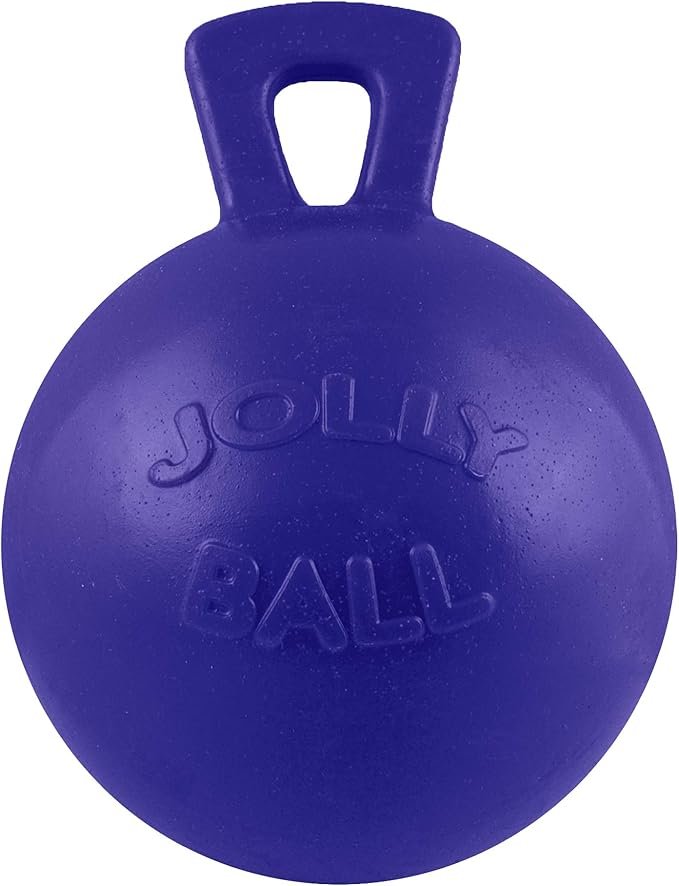
A large ball manufactured specifically for horses is one of the simplest enrichment options. Some horses push them with their noses, chase them, kick them, or carry them. Choose an equine-rated product without small removable pieces and inspect it regularly for damage.
I like the Horseman’s Pride Jolly ball. Some horses don’t really care for it, but others LOVE it.
2. A Horse-Safe Treat Ball
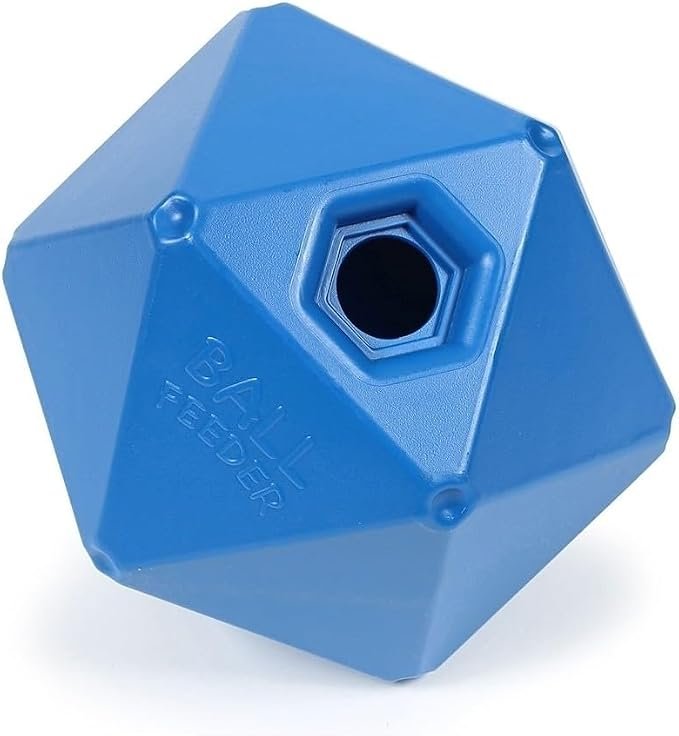
Treat-dispensing balls made specifically for horses can turn a small portion of the horse’s normal ration into a problem-solving activity. Use an appropriate feed or treat and count it as part of the horse’s daily diet rather than adding unlimited extra calories.
This is the ball feeder I have. I purchased it in November 2025, and it’s still holding up like it’s brand new—and I’ve used it with multiple horses! This is especially nice to have in the stall during bad weather when they need some enrichment. Every single horse I’ve used it with has loved it!
3. Slow-Feed Hay Enrichment
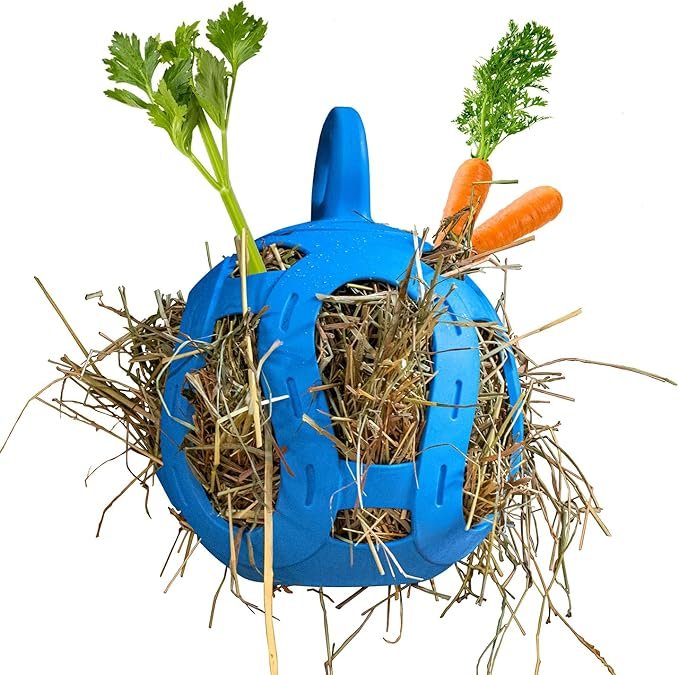
For many horses, the best enrichment is simply making forage last longer. A properly designed slow feeder can encourage more natural foraging time. Choose a product intended for horses, use an appropriate opening size for your horse, and install it according to the manufacturer’s directions so hooves cannot become trapped.
Another thing you can use is a Jolly Hay Feeder. These are fun for the horses to play with- and another great idea for bad weather entertainment. I add them in addition to the hay feeder, and sometimes throw a surprise in them (it’s like a horse-sized Kinder Egg!)
4. Multiple Forage Stations
If your turnout area allows it, divide the horse’s normal hay ration among several safe feeding locations. Walking between stations adds movement and gives the horse something to investigate. Keep feeding areas well separated when multiple horses are present to reduce competition.
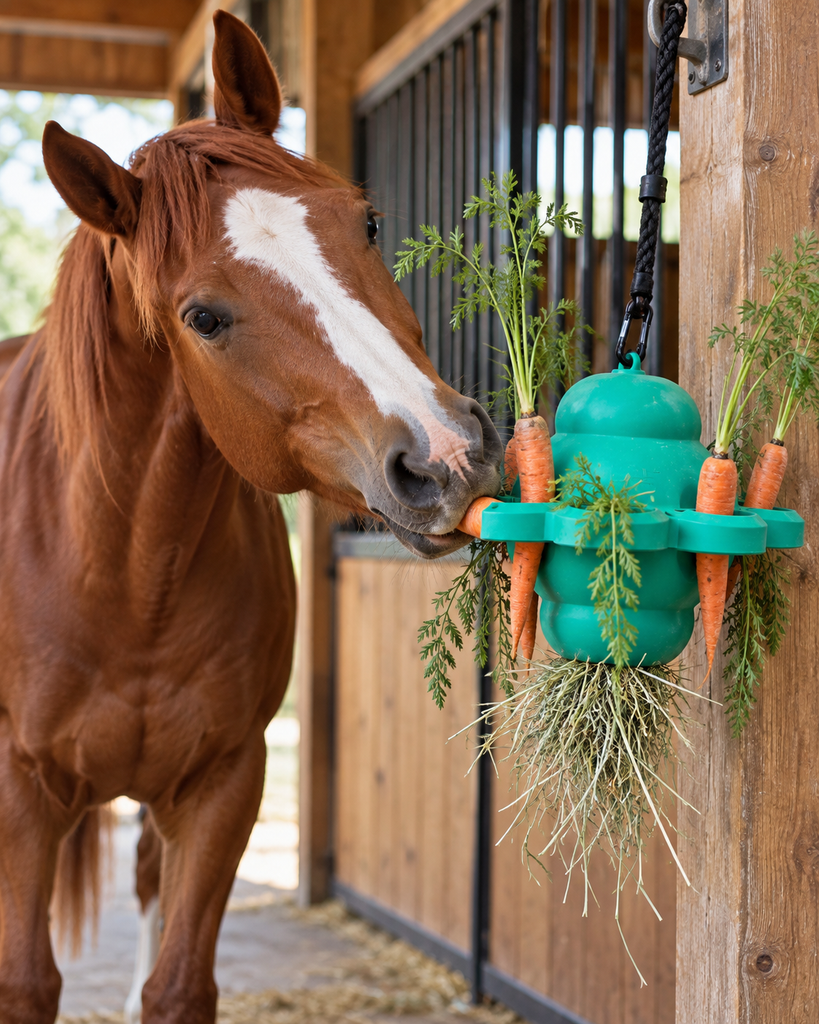
5. A Commercial Hanging Horse Toy
Purpose-made hanging equine toys can be useful for horses that enjoy nudging or grabbing objects. Follow the manufacturer’s mounting instructions and position the toy so the horse cannot become caught in the hanger or hardware.
This is the Clover Treat Ball, and you can add all sorts of fun treats for your horse to enjoy!
6. A Horse-Safe Lick Toy
Some commercial equine lick products are designed to rotate or move as the horse uses them. They can provide occasional enrichment, but sugar and calorie content varies widely. Choose a product appropriate for your horse and use it in moderation.
The Jolly Stall Snack shown is in green apple. I have found that some of my horses love it, but others don’t. I prefer to use the regular salt lick refill that Jolly offers.

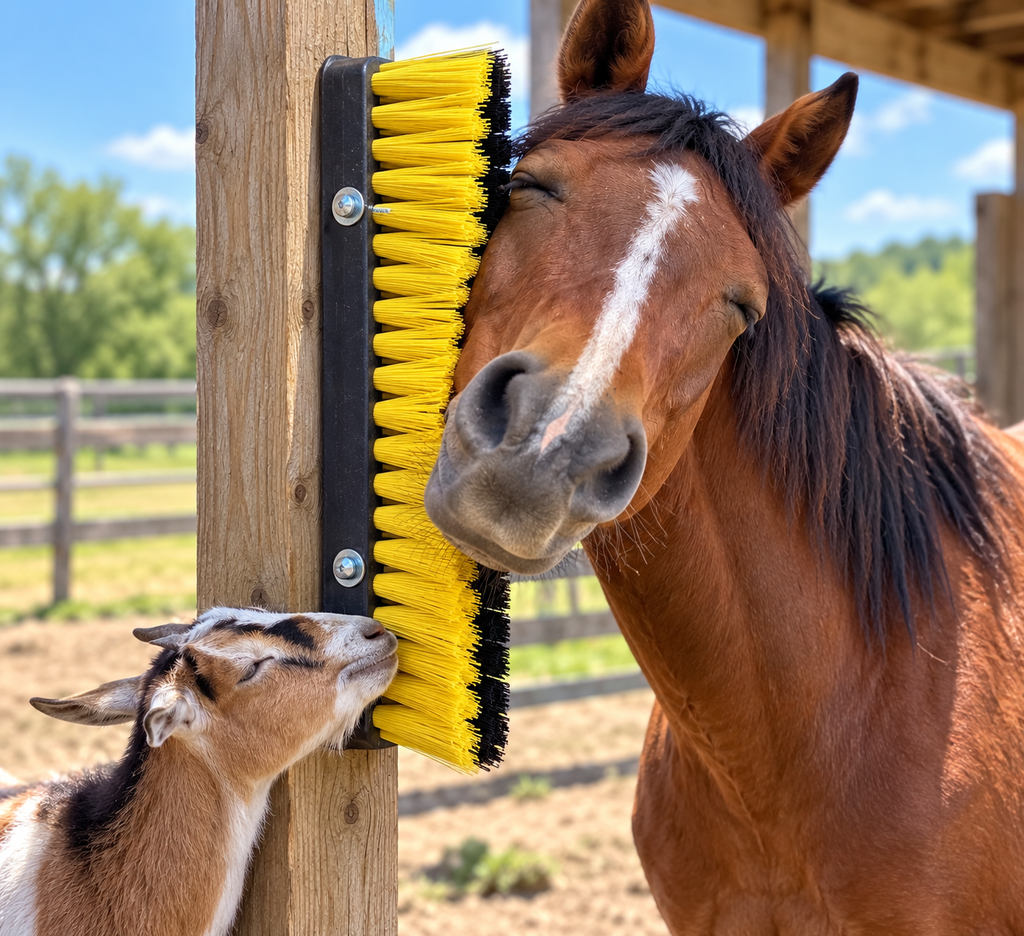
7. A Grooming or Scratching Brush
A securely mounted equine scratching brush gives horses an appropriate place to rub and scratch. I use a regular old push broom and mount it so that nothing can hurt them/ cut them/ scratch them. (My goats love this, too, and so did my cow when I had him!)
8. Traffic Cones Made for Animal Enrichment
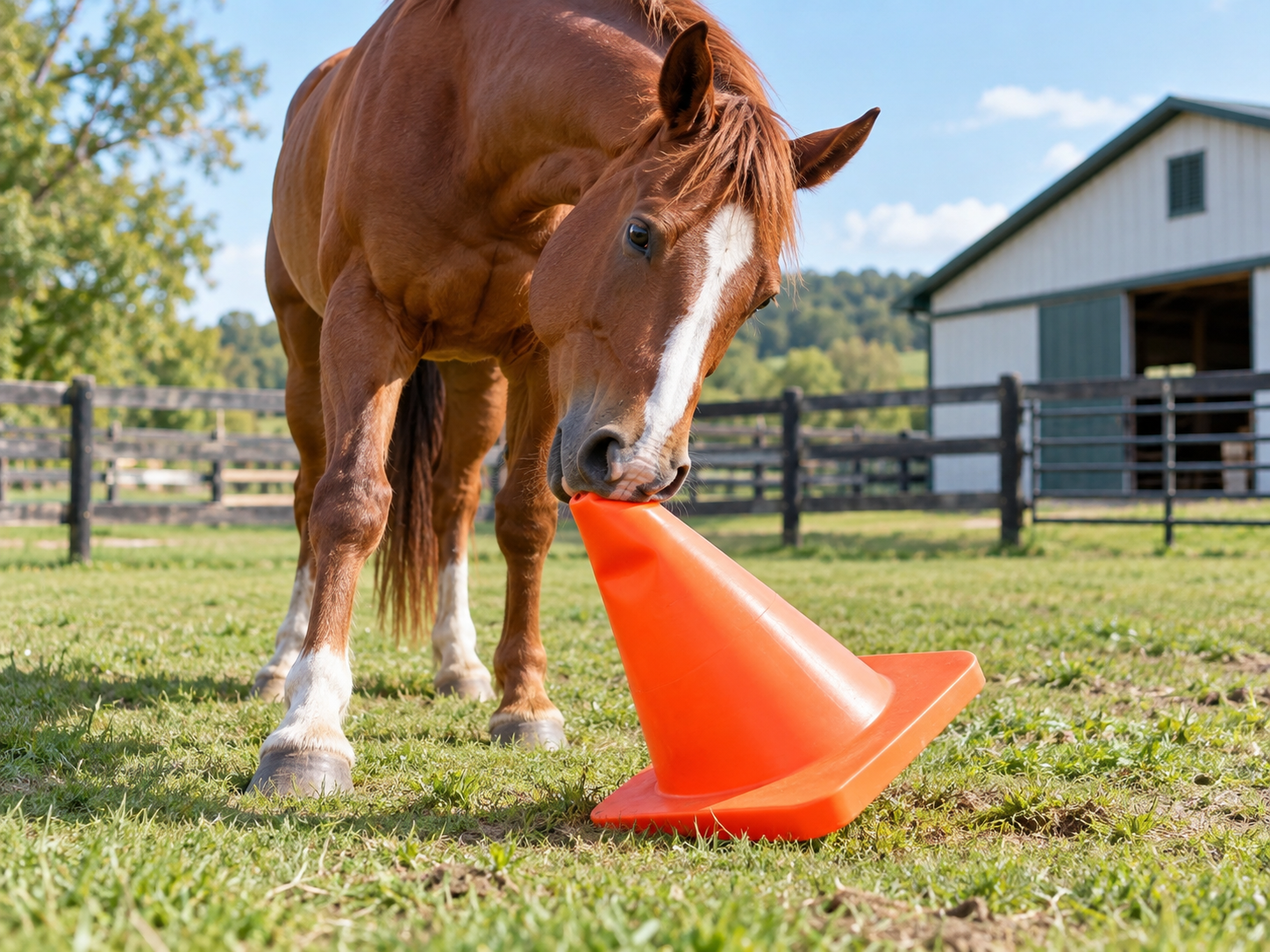
Some horses love picking up and moving sturdy cones. If you try this, use a flexible, heavy-duty cone with no cracks, sharp edges, detachable pieces, or openings that could trap a hoof or jaw. Supervise the first few sessions because not every cone or every horse is suitable for this activity.
9. Ground Poles
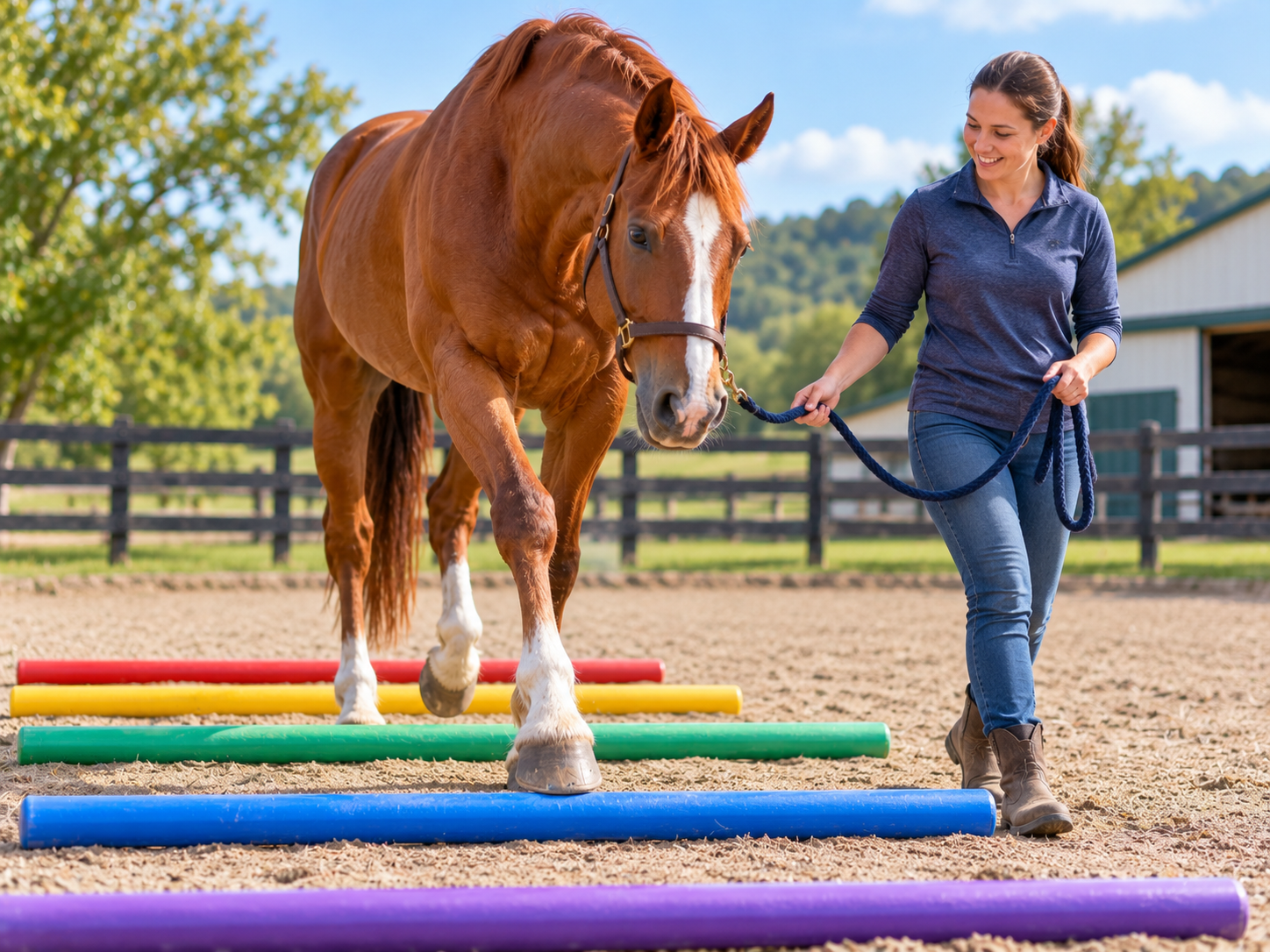
Ground poles can create a simple walking puzzle during supervised groundwork. Arrange horse-safe poles with appropriate spacing and lead your horse through the pattern rather than leaving an unfamiliar obstacle setup unattended in a turnout area.
10. A Pole Maze
Build on the ground-pole idea by creating wide turns, an L shape, or a simple maze. This is mental enrichment as much as physical exercise and can be changed frequently to keep it interesting.
11. A Supervised Obstacle Course
Use familiar, horse-safe training obstacles to create a simple course during a supervised session. Keep footing safe, allow plenty of room, and avoid loose tarps, cords, narrow gaps, unstable objects, or anything the horse could become tangled in.
12. Target Training
Teaching a horse to touch a target with its nose can be excellent mental enrichment. Use a clearly visible, horse-safe target that you hold during the session rather than leaving improvised equipment unattended.
13. Simple Positive-Reinforcement Games
Short training sessions can be enrichment too. You can teach behaviors such as touching a target, backing from a light cue, standing on a designated spot, or lowering the head. Keep sessions short and use rewards that are appropriate for your horse’s diet.
14. Find-the-Forage
Place portions of the horse’s normal forage in several safe, visible locations around an appropriate turnout area. This encourages walking and exploration without requiring sugary treats. Make sure each location is free of toxic plants, debris, mud hazards, and conflict with other horses.
15. Browse From Horse-Safe Plants
Some horses enjoy browsing suitable branches or plant material. Plant safety varies by species and region, and many common trees and ornamentals are toxic to horses. Only offer plant material that you have positively identified as safe for horses, has not been treated with chemicals, and is appropriate for your individual horse.
16. A Hay-Based Foraging Activity
Instead of inventing complicated DIY feeders, use an equine-designed slow feeder or several small forage stations to make the horse work a little longer for its normal hay. This provides enrichment while avoiding improvised containers that could trap a hoof or break under a horse’s weight.
17. Change the Location of Safe Toys
Novelty matters. A familiar horse ball or equine toy may become interesting again when moved to a different safe location. Rotating a few durable toys can provide variety without constantly buying new ones.
18. Supervised Exploration Walks
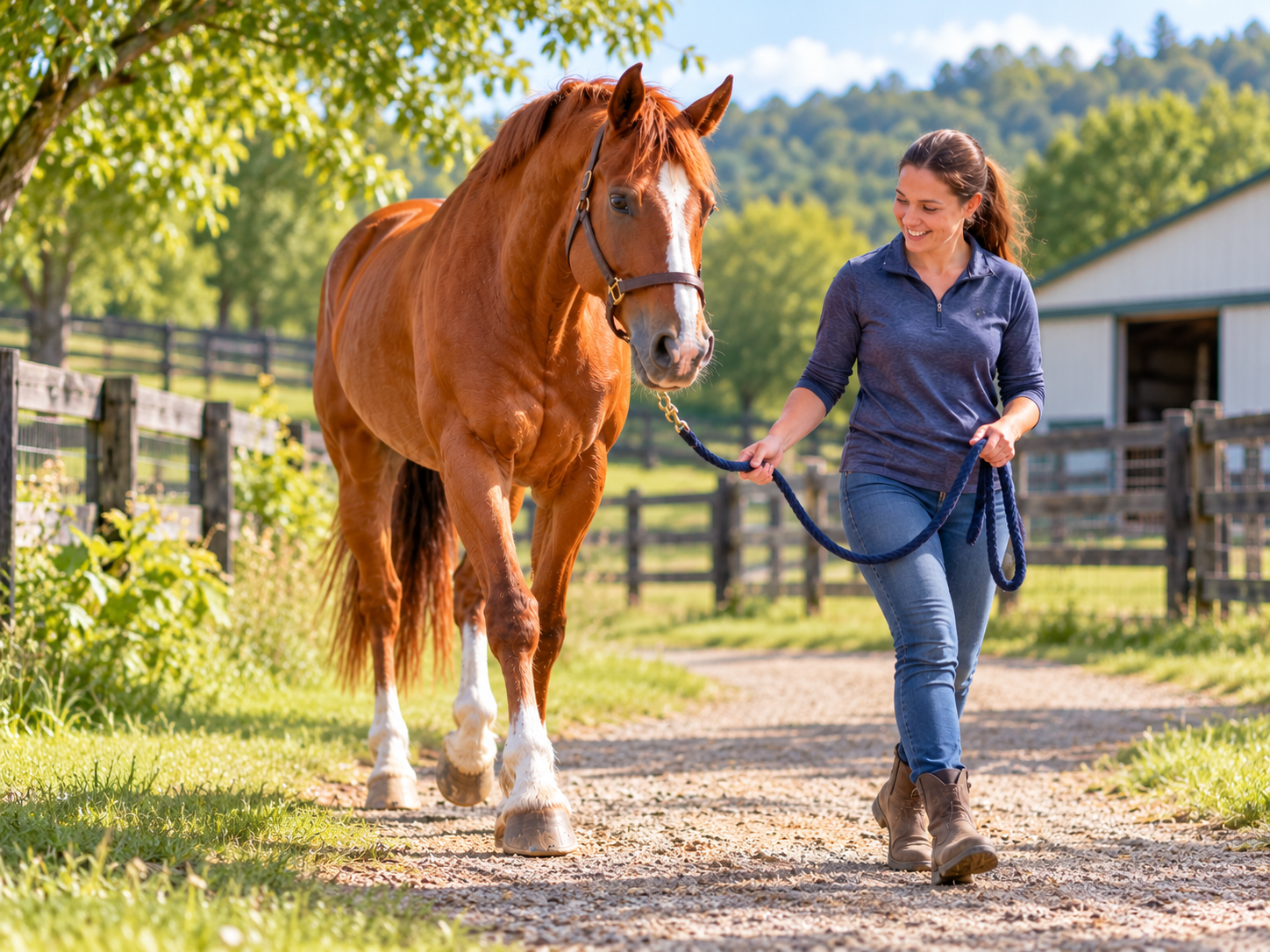
Enrichment does not have to be an object. Hand-walking through a safe area lets a horse see, smell, and investigate new surroundings. Use appropriate handling equipment and choose footing and terrain suitable for the horse.
19. Grooming Sessions
For horses that enjoy grooming, a relaxed grooming session can provide social and sensory enrichment. Pay attention to the horse’s body language and avoid areas where the horse shows discomfort.
20. Safe Social Time
Horses are social animals. When compatible horses can be safely housed or turned out together, appropriate social contact can be valuable enrichment. Introductions and herd management should be handled carefully to reduce the risk of injury.
21. A View of Other Horses
If direct turnout with another horse is not appropriate, visual contact with compatible horses may still add interest to the day. Stall and paddock design should remain secure and should not allow horses to become caught while reaching through barriers.
22. Rotate Turnout Areas When Practical
A change of scenery can be enriching. When fencing, footing, forage, and herd arrangements make it safe, rotating between suitable turnout areas gives a horse new smells and surroundings to explore.
23. Equine-Safe Sensory Enrichment
Introducing a new but safe object during a supervised training session can encourage curiosity. Let the horse approach at its own pace. Never tie an unfamiliar object to the horse or force the horse into contact with something frightening.
24. Short Groundwork Challenges
Practice a few simple skills such as walking over a pole, backing between widely spaced markers, yielding the hindquarters, or standing quietly at a target. Mental work can be surprisingly engaging even when strenuous exercise is not the goal. If you like structured groundwork, you may also enjoy my honest review of the 30-Day Horse Help Challenge.
25. Build an Enrichment Rotation
You do not need 25 toys in the pasture at once. Pick a few safe activities your horse enjoys and rotate them. For example, use a horse ball one day, a supervised pole exercise another day, and multiple forage stations another. Rotation keeps familiar activities from becoming boring and makes it easier to inspect equipment between uses.
What Should You Avoid Using as a DIY Horse Toy?
DIY does not automatically mean safe. Avoid objects with long loose ropes or cords, exposed nails or screws, sharp metal, splintering wood, brittle plastic, small detachable parts, unstable structures, or openings that could catch a hoof, leg, or jaw. Do not assume a household or dog toy is strong enough for a horse simply because it looks sturdy.
Also be cautious with improvised hanging feeders, nets, buckets, barrels, tires, and containers. Their safety depends heavily on their construction, openings, mounting, placement, and the individual horse. A purpose-made equine product is often the better choice when entanglement or hoof trapping is possible.
Horse Enrichment Does Not Have to Be Expensive
Some of the best enrichment costs very little. Changing forage locations, taking a supervised exploration walk, doing five minutes of target training, grooming, or rearranging familiar horse-safe equipment can add variety without buying a pile of toys.
The goal is not to keep a horse entertained every second. It is to provide safe opportunities for movement, foraging, exploration, social interaction, and problem-solving while respecting the horse’s individual needs. If you are newer to horse ownership, you may also like What Nobody Tells You Before You Get Your First Horse.
If you are looking specifically for cold-weather ideas, read our Winter Stall Enrichment Ideas for Horses. And if you keep goats too, check out our 25 Homemade Goat Toys to Keep Your Goats Happy.
Safety note: Every horse, facility, and feeding program is different. Supervise new enrichment activities, inspect equipment frequently, and remove damaged items. Consult your veterinarian or another qualified equine professional when an activity may affect a horse’s diet, medical condition, rehabilitation plan, or individual safety.


Post your Comment About This Product