
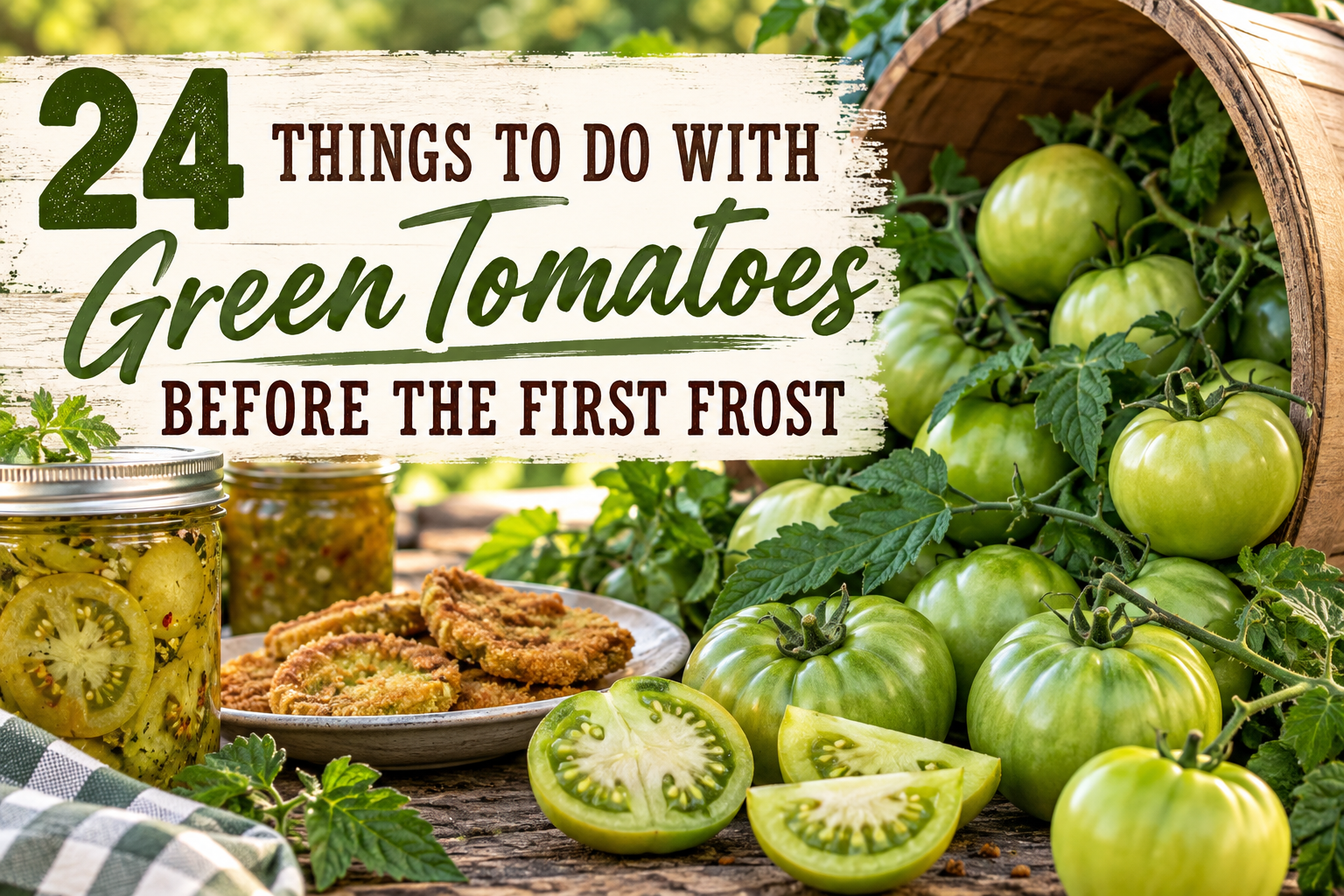
If the first frost is getting close and your tomato plants are still covered in green fruit, do not assume the harvest is lost. Green tomatoes can be ripened indoors, cooked into completely different recipes, pickled, preserved using tested recipes, or used in meals that are worth making even when you have plenty of ripe tomatoes. If you are getting the rest of the homestead ready for cold weather too, my Fall Homestead Checklist: 25 Things to Do Before Winter is a good companion guide.
Whether you intentionally picked them green or brought in the entire remaining crop before a cold night, here are 24 practical things to do with green tomatoes.
1. Ripen Green Tomatoes Indoors
If your tomatoes are mature enough, many can continue ripening after they are picked. Choose sound, undamaged fruit and bring it indoors before a damaging frost. Keep tomatoes at an appropriate indoor temperature and check them regularly, removing any that begin to rot.
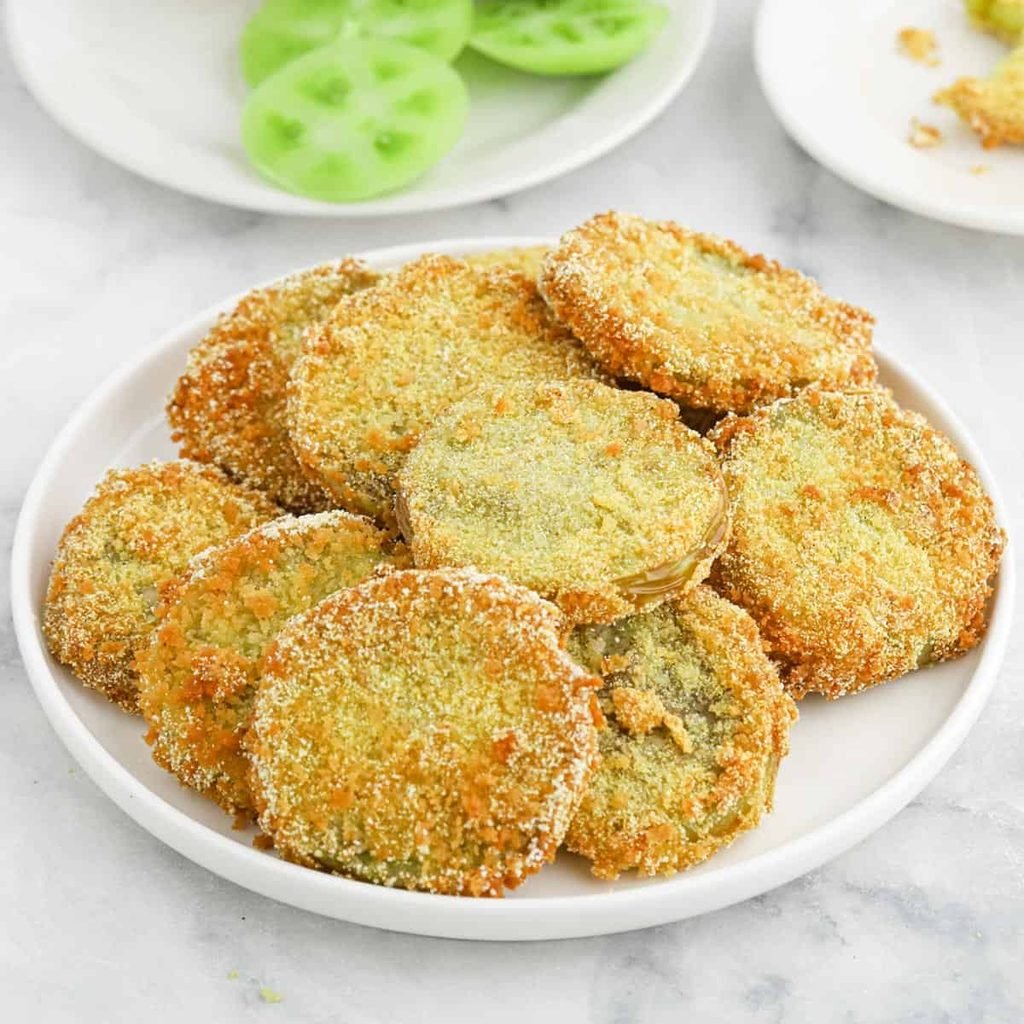
2. Make Fried Green Tomatoes
This is the classic green-tomato recipe for a reason. Slice firm green tomatoes, bread them using your favorite recipe, and fry or bake them until the coating is crisp and the tomato is tender.
Check out this recipe from Grandbaby Cakes for Fried Green Tomatoes.
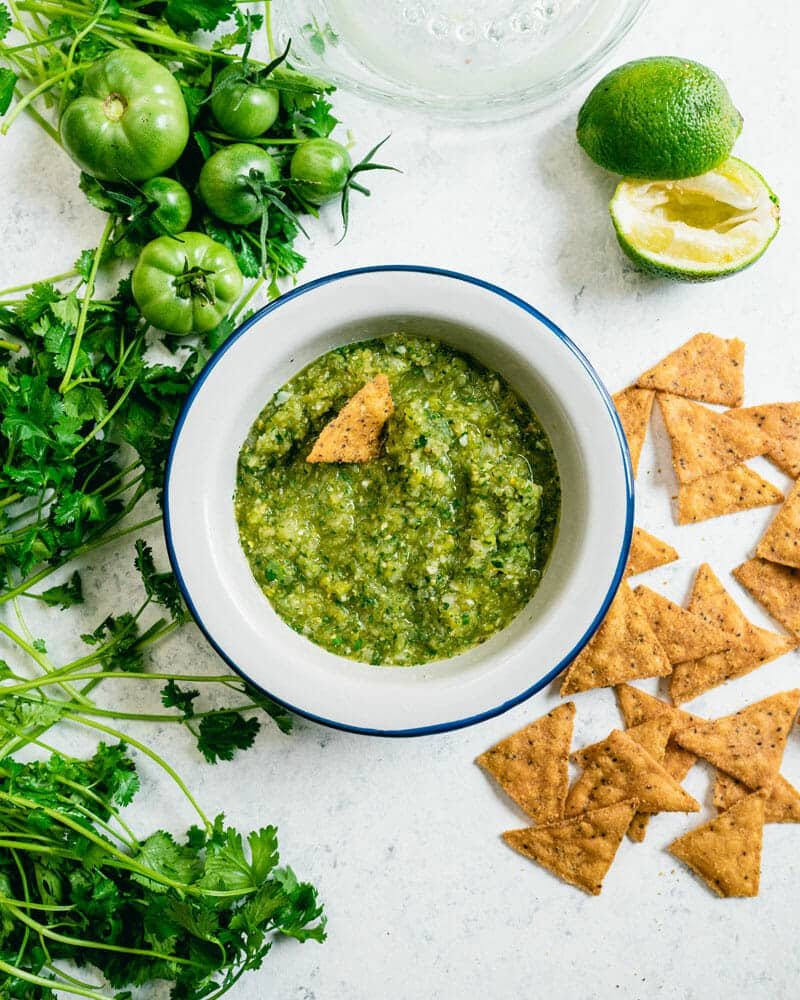
3. Make Green Tomato Salsa
Green tomatoes bring a tart flavor to salsa. Fresh versions should be refrigerated and eaten according to the recipe’s storage guidance. If you want shelf-stable canned green tomato salsa, use a current tested home-canning recipe rather than adapting a fresh salsa recipe.
Check out this recipe from A Couple Cooks:
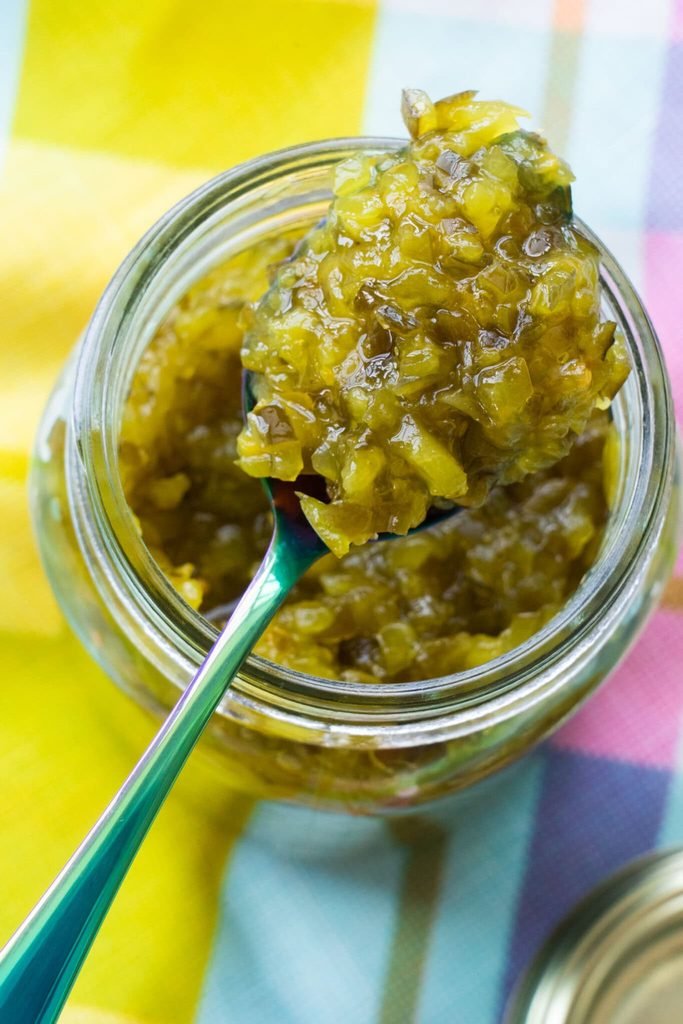
4. Make Green Tomato Relish
Green tomato relish is a great way to use a larger batch and works on burgers, sandwiches, sausages, and other meals. For shelf-stable jars, use a tested canning recipe with the specified vinegar strength, ingredient proportions, jar size, processing time, and altitude adjustment.
Check out this recipe from Brooklyn Farm Girl.
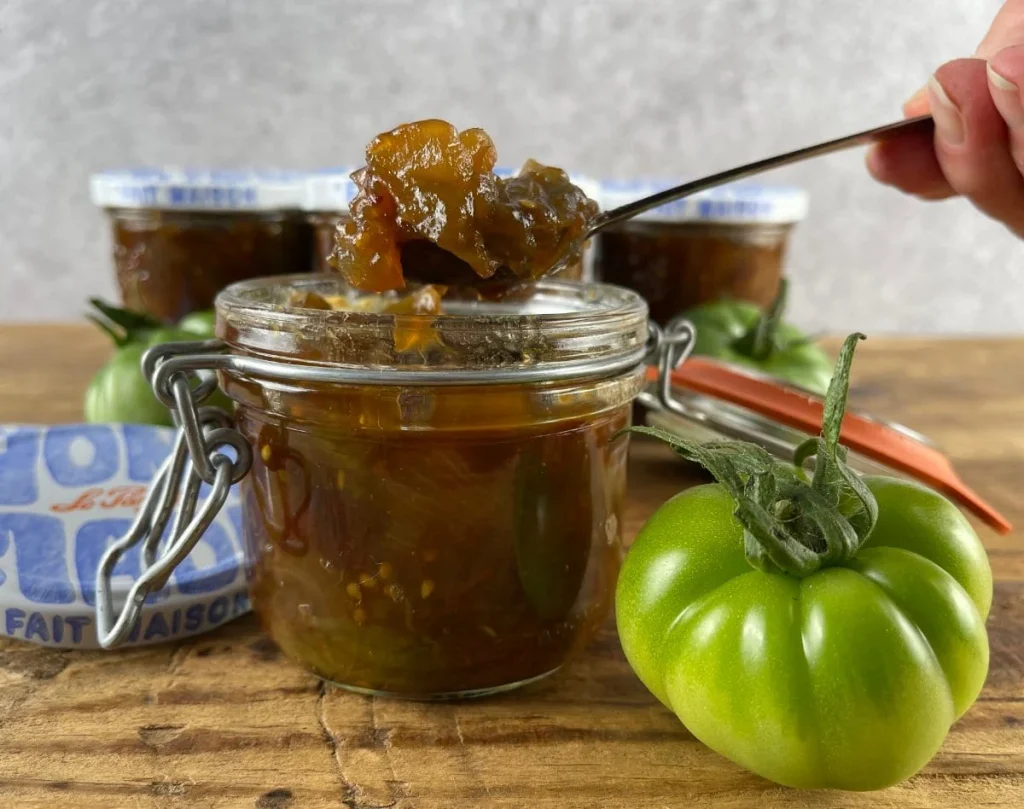
5. Make Green Tomato Chutney
The tartness of green tomatoes works beautifully in sweet-and-savory chutneys. Serve chutney with meats, sandwiches, cheese, or other dishes. Use a tested recipe if you plan to home-can it.
Check out this recipe from Tales from the Kitchen Shed:
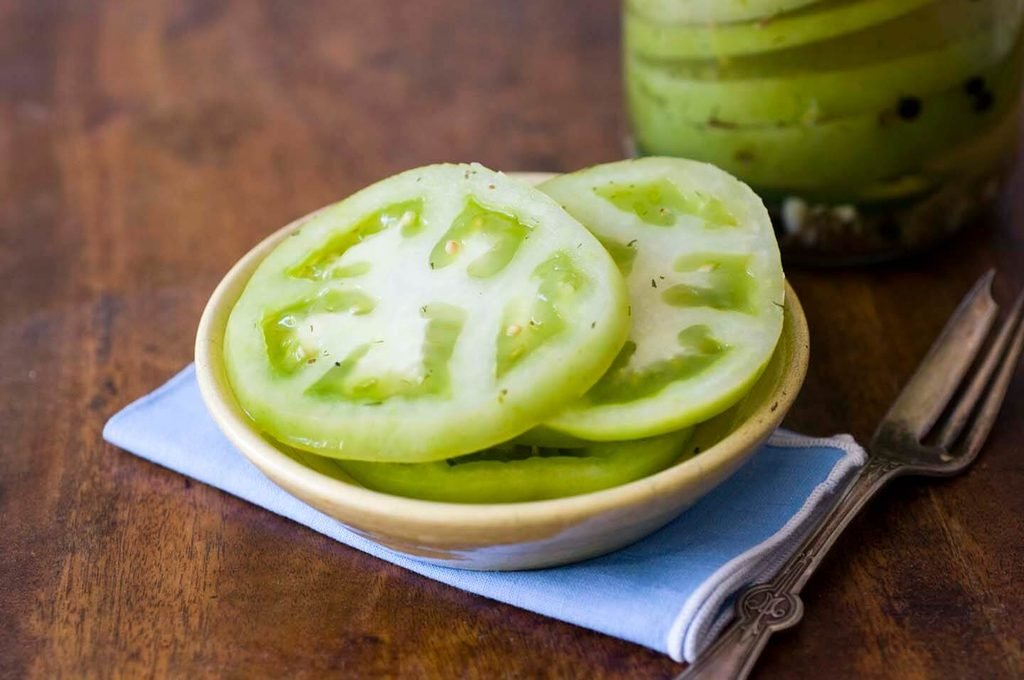
6. Pickle Green Tomatoes
Firm green tomatoes hold up well to pickling. Make refrigerator pickles for short-term refrigerated storage or use a tested home-canning recipe if you want shelf-stable jars.
Check out this recipe from Homesick Texan:
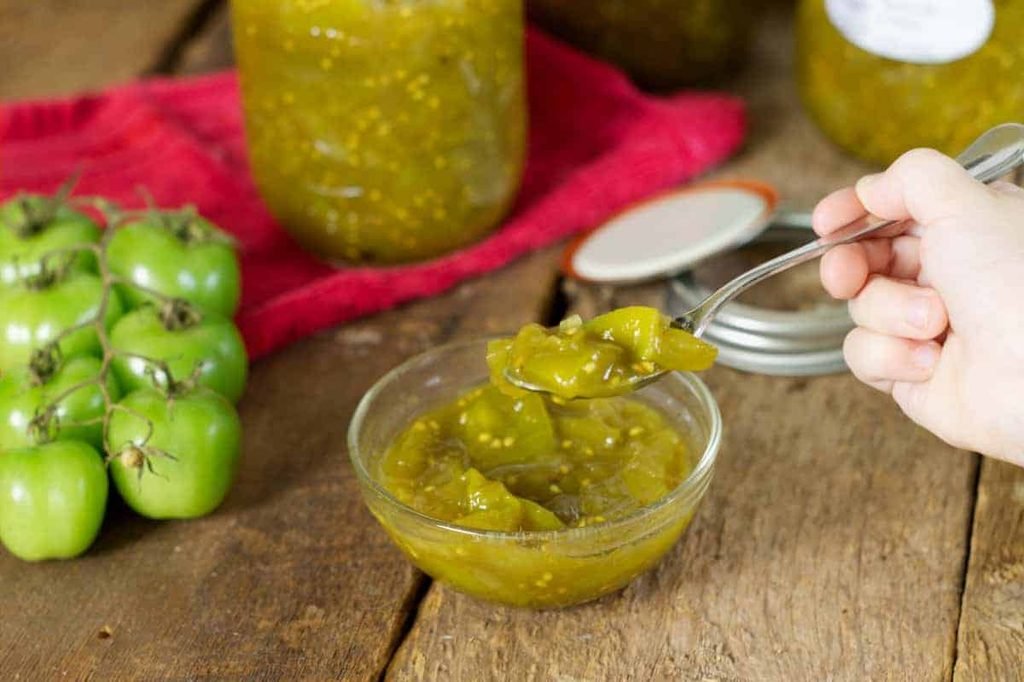
7. Make Green Tomato Chow Chow
Green tomatoes are a common ingredient in chow chow and similar relishes. This is especially useful when peppers, onions, and cabbage are also coming out of the garden. For canning, follow a current tested recipe rather than changing vegetable or acid proportions.
Check out this recipe from Earth Food and Fire:
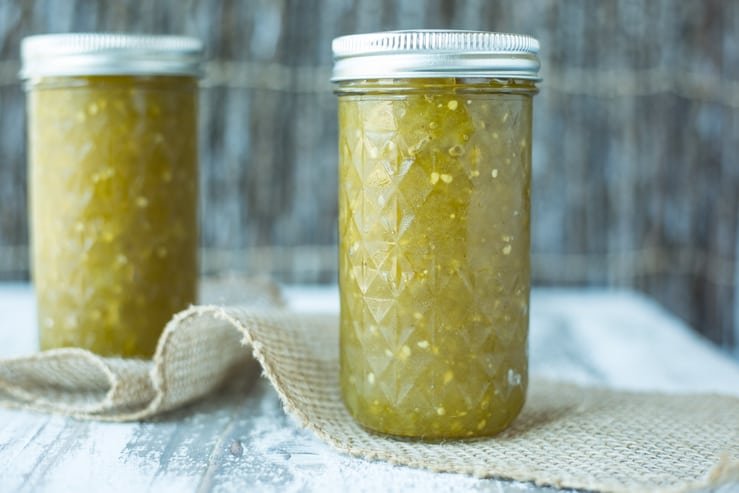
8. Make Green Tomato Jam
Yes, green tomatoes can be used in sweet preserves. A properly developed recipe can turn their tart flavor into an unusual spread. If the jam will be shelf-stable, use a tested home-canning recipe.
Check out this recipe from Urban Cowgirl Life:
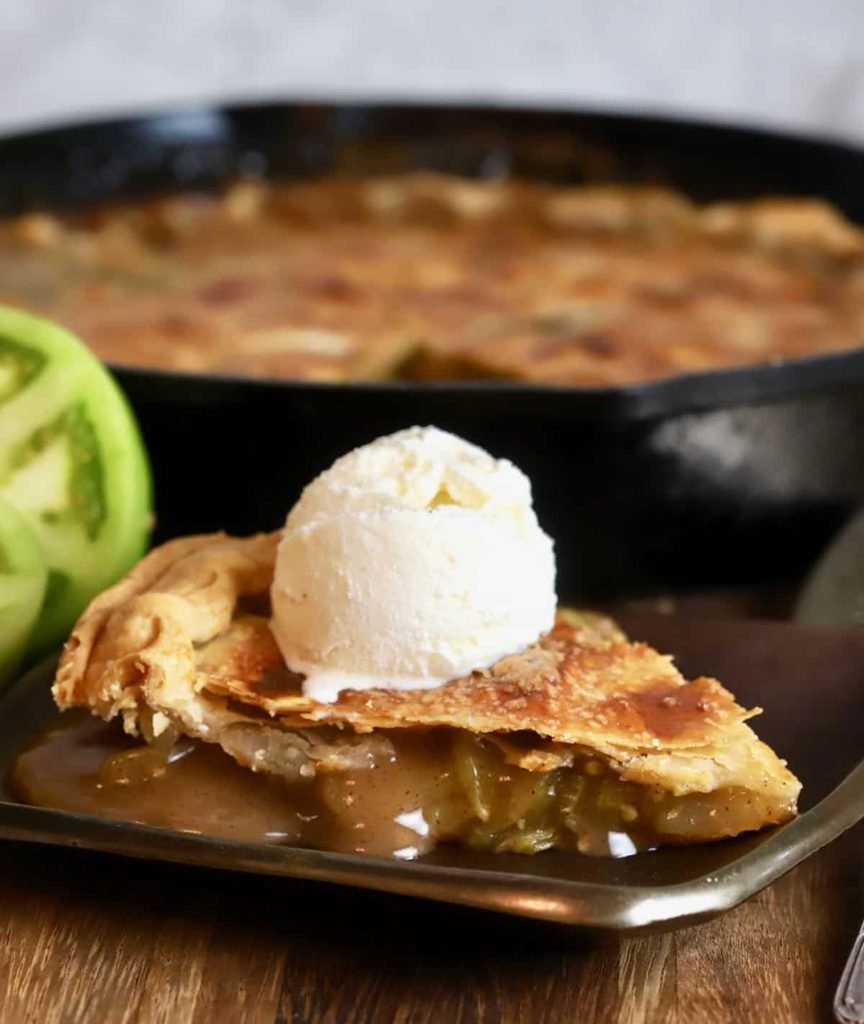
9. Make Green Tomato Pie
Green tomatoes can be used in sweet pies where their tart flavor works somewhat like other firm, tart fruits. Cinnamon and other warm spices make this a fun fall dessert.
Check out this recipe from Grits and Pinecones:
10. Make Green Tomato Bread
Chopped or shredded green tomatoes can be incorporated into quick breads using a recipe designed for them. This is a good option when you have already fried all the green tomatoes you can eat.
Check out this recipe from Allrecipes:

11. Make Green Tomato Muffins
Use a green-tomato muffin recipe for a freezer-friendly breakfast or snack. Baking is especially useful for fruit that is sound but not destined to ripen beautifully on the counter.
Check out this recipe from The Southern Lady Cooks.

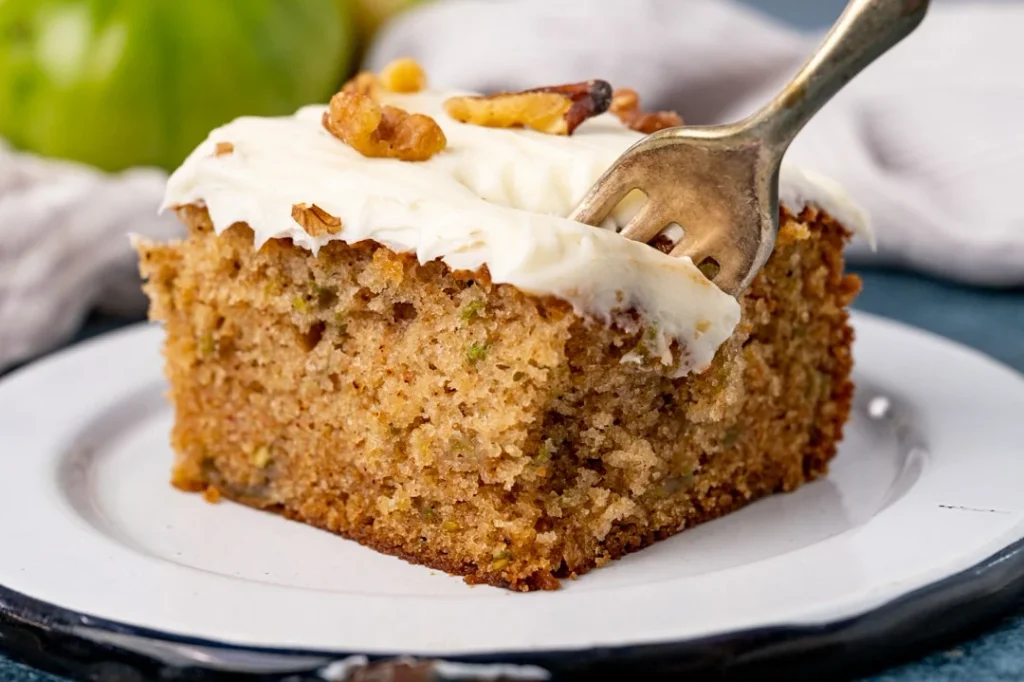
12. Make Green Tomato Cake
Green tomatoes can add moisture to spice cakes and other baked desserts. It sounds unusual, but it is another way to turn the end-of-season harvest into something completely different.
Try this recipe from Taste of Lizzy T:
13. Add Green Tomatoes to Chili
Chopped green tomatoes can add tartness to a pot of chili. Use them as an ingredient in a recipe intended for immediate eating or freezing. For home-canned chili, follow a tested canning recipe rather than adding extra vegetables to an existing formula.
14. Add Them to Soup
Use chopped green tomatoes in vegetable or other savory soups where a tart tomato flavor makes sense. Combine them with peppers, onions, beans, or other end-of-season garden produce.
15. Make a Green Tomato Curry
Green tomatoes work well in savory curry recipes because their acidity and firm texture balance rich spices and other ingredients.
16. Roast Green Tomatoes
Roasting green tomatoes softens them and concentrates their flavor. Serve them as a side dish or use them in other cooked recipes.
17. Make a Green Tomato Pasta Sauce
Cook green tomatoes with garlic, herbs, onions, or other ingredients to create a tart savory sauce. This is a good use for a bowl of tomatoes that you do not expect to ripen well.
18. Add Green Tomatoes to Tacos
Chopped fresh, roasted, or pickled green tomatoes can add acidity and crunch to tacos. Keep fresh preparations refrigerated as appropriate.
19. Make Green Tomato Bruschetta
Dice green tomatoes and combine them with complementary ingredients for a tart variation on bruschetta. Serve fresh and refrigerate leftovers promptly.
Check out this recipe from Great British Chef

20. Make a Green Tomato Hot Sauce
Green tomatoes can be combined with hot peppers in fresh or fermented hot sauces. Storage requirements depend on the recipe. Use reliable fermentation guidance for fermented sauces and a tested canning recipe if you want a shelf-stable canned product.
21. Freeze Green Tomatoes for Future Cooking
Green tomatoes can be frozen for later cooked dishes. Freezing changes their texture, so they are generally better suited to recipes where they will be cooked rather than eaten as fresh slices. Follow current food-freezing guidance for preparation and packaging.
22. Freeze Slices for Fried Green Tomatoes
If frost arrives before you are ready for another batch of fried green tomatoes, prepare and freeze slices according to reliable freezing guidance. The texture will not be identical to fresh, but freezing can extend your opportunity to use the harvest.
23. Sort Tomatoes by Ripeness
Not every green tomato needs the same plan. Separate mature-looking fruit that may ripen indoors from very immature fruit you intend to cook or preserve. Use damaged-but-sound fruit promptly and discard tomatoes showing rot, mold, or other spoilage. For more ideas on what crops are worth keeping for pantry storage, see my guide to the best vegetables for long-term food storage.
24. Share Your End-of-Season Harvest
If you still have baskets left, share sound green tomatoes with friends, family, neighbors, or anyone who loves fried green tomatoes and pickles. End-of-season produce is much more useful in someone’s kitchen than frozen on the vine.
Will Green Tomatoes Ripen After You Pick Them?
Many mature green tomatoes can continue ripening after harvest. Their ability to ripen depends partly on their maturity when picked and the conditions in which they are kept. Tomatoes that have reached physiological maturity are much more likely to ripen successfully than tiny, very immature fruit.
Should You Put Green Tomatoes on a Sunny Windowsill?
They do not need intense sunlight to ripen. Appropriate temperature and the fruit’s maturity are more important. Keep picked tomatoes somewhere you can inspect them regularly rather than forgetting them in a box until one spoiled tomato affects the others.
Can You Ripen Green Tomatoes in a Paper Bag?
A paper bag can help concentrate ethylene around a small number of mature tomatoes. Check the fruit frequently for ripening and spoilage. Adding a ripe ethylene-producing fruit is sometimes used to encourage the process, but do not pack tomatoes so tightly that damaged fruit goes unnoticed.
What Should You Do With Green Tomatoes Before a Frost?
If a damaging frost is expected, harvest usable tomatoes beforehand rather than relying on frost-damaged fruit for food. Sort the harvest once it is inside: keep good candidates for ripening, choose firm fruit for green-tomato recipes, and discard fruit that is damaged or spoiled.
Can You Can Green Tomatoes?
There are tested home-canning recipes for certain green-tomato products such as pickles, relishes, salsas, and other preparations. If you are newer to preserving food this way, start with my Canning for Beginners: A Complete Guide to Home Canning. For a broader pantry-planning guide, I also have 25 Best Foods to Pressure Can for foods that require that method when using tested recipes. The fact that tomatoes are green does not mean any homemade recipe is automatically safe for water-bath canning. For shelf-stable preservation, use a current scientifically tested recipe and follow its ingredients, acidification requirements, jar size, processing method, time, and altitude adjustment.
Don’t Waste the Last Tomatoes of the Season
Green tomatoes are not simply unfinished red tomatoes. If preserving more of what you grow is one of your goals, you may also like The Ultimate Survival Garden: What to Grow to Feed Your Family. Fried green tomatoes, pickles, relish, chutney, salsa, and even baked goods give them a place of their own in the kitchen. And for the tomatoes mature enough to ripen indoors, bringing them in before frost can extend your fresh tomato season well beyond the garden.
If you are working through the rest of your fall harvest too, you may also like 25 Things to Do With Too Many Pears. Check out our harvest-series guides to 25 Things to Do With Too Many Tomatoes, 25 Things to Do With Too Many Jalapeños, What to Do With Banana Peppers: 15 Easy Recipes, 25 Things to Do With Too Many Sweet Peppers or Bell Peppers, 25 Ideas for Using Green Beans From Your Garden, 25 Ideas for Using Cabbage From Your Garden, 25 Things to Do With Too Many Pumpkins, 25 Things to Do With Too Much Zucchini, and 25 Things to Do With Too Much Summer Squash.
Food-preservation recommendations can change as testing and guidance are updated. For shelf-stable canning, freezing, fermentation, pickling, and other preservation methods, use current instructions from the USDA, National Center for Home Food Preservation, or a university cooperative extension program.


Post your Comment About This Product