
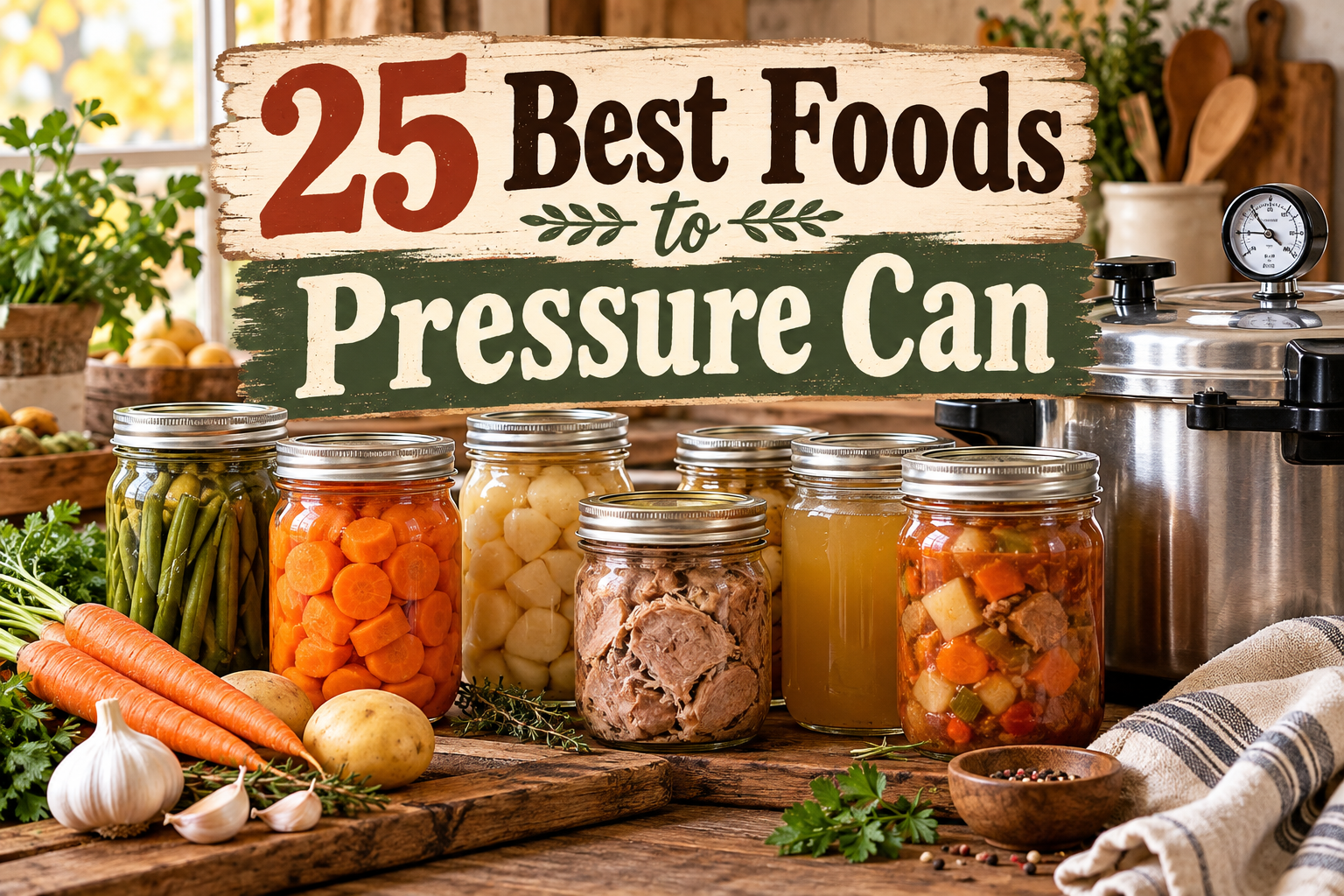
Once you are comfortable with home canning, a pressure canner opens up an entirely different part of the pantry. Instead of being limited to sufficiently acidic fruits, pickles, jams, and acidified products, tested pressure-canning recipes allow you to safely preserve many low-acid vegetables, meats, poultry, and other foods.
Pressure canning is not simply a faster version of water-bath canning. It reaches temperatures above ordinary boiling-water temperatures under pressure, which is necessary for safely processing low-acid foods when a tested home-canning process is available.
Here are 25 useful foods and food products to consider pressure canning.
Important: This article is an idea list, not a processing chart. Always use a current scientifically tested recipe from the USDA, National Center for Home Food Preservation, or a university cooperative extension program for the exact food you are preserving. Follow its preparation, packing method, headspace, jar size, pressure, processing time, canner instructions, and altitude adjustment.
Authoritative safety resources: Start with the National Center for Home Food Preservation’s pressure-canner guidance, its Ensuring Safe Canned Foods guidance, and the USDA Complete Guide to Home Canning.
Pressure Canning at a Glance
If you’re wondering what kinds of foods are best for pressure canning, this quick chart gives you an easy overview before you dive into the full list.
| Food Type | Good for Pressure Canning? | Why People Can It |
|---|---|---|
| Green beans | Yes — with a tested process | Easy side dish and a practical way to preserve a garden surplus |
| Carrots | Yes — with a tested process | Handy for soups, stews, and quick meals |
| Potatoes | Yes — with a tested process | Convenient pantry staple for meal prep |
| Corn | Yes — with a tested process | A useful way to preserve a summer harvest |
| Peas | Yes — with a tested process | Ready-to-use vegetable for meals |
| Chicken | Yes — with a tested process | Useful for soups, casseroles, sandwiches, and quick protein |
| Beef | Yes — with a tested process | Useful for stews, sandwiches, tacos, and easy dinners |
| Pork | Yes — with a tested process | Convenient shelf-stable protein for hearty meals |
| Broth or stock | Yes — with a tested process | A practical pantry staple for cooking |
| Soups and stews | Only with a tested recipe | Convenient shelf-stable meal starters or meals |
The Pressure Canner I Use and Recommend
As an Amazon Associate I earn from qualifying purchases.
I use this pressure canner and recommend it because it does more than one job in my kitchen. I can use it for pressure canning low-acid foods, it doubles as a water-bath canner when appropriate, and the extra-large pot is also useful when I need to cook down a huge batch of produce—like a counter full of tomatoes—before preserving it.
If you are buying your first pressure canner, I like having one large piece of equipment that can handle several different preserving jobs instead of storing multiple oversized pots.
1. Green Beans
Plain green beans are one of the classic pressure-canning foods. They are low-acid, so plain beans require a tested pressure-canning process. They are incredibly convenient for quick winter side dishes.
2. Carrots
Pressure-canned carrots can go straight into soups, stews, pot pies, and side dishes. Follow tested instructions for preparation, packing, jar size, pressure, processing time, and altitude.
3. Potatoes
Potatoes are another useful pantry staple. Tested pressure-canning instructions specify how potatoes should be peeled, cut, prepared, packed, and processed. Do not can mashed potatoes or simply put your usual cooked potato recipe into jars.
4. Corn
Corn is a low-acid vegetable and requires pressure canning when using a tested home-canning process. Because corn is dense and starchy, follow the preparation and processing directions carefully.
5. Peas
Fresh garden peas can be pressure canned using tested instructions. Use the type and maturity of peas specified by the recipe rather than assuming all pea products process the same way.
6. Plain Beets
Plain beets require pressure canning. This is different from pickled beets, which are acidified and can be processed according to a tested pickling recipe. Never use pickled-beet processing instructions for plain beets.
7. Pumpkin Cubes
Current tested guidance allows certain properly prepared pumpkin cubes to be pressure canned. The important word is cubes. Do not home-can mashed or puréed pumpkin using the processing time for cubes.
8. Winter Squash Cubes
Some winter squash can also be pressure canned in cubes according to tested guidance. Density matters, which is why puréeing or mashing the squash before canning is not an acceptable substitution for a tested cubed-squash process.
9. Asparagus
Asparagus is a low-acid vegetable and can be pressure canned when you follow tested instructions. Pickled asparagus is a separate acidified product and follows different processing guidance.
10. Okra
Plain okra can be pressure canned using tested instructions. Pickled okra is a different product, so always match your processing method to the exact recipe you are making.
11. Chicken
Pressure-canned chicken is incredibly useful for soups, casseroles, sandwiches, tacos, and quick meals. Meat and poultry require pressure canning when using tested home-canning processes.
12. Turkey
Turkey can be another practical pressure-canning project, especially when you have extra cooked or fresh meat that fits a tested canning process. Use current poultry-canning guidance for preparation and processing.
13. Beef
Pressure-canned beef can become the base for quick winter meals. Tested recipes include specific preparation and packing options, so follow the instructions for the form of beef you are canning.
14. Pork
Pork can be pressure canned using tested meat-canning guidance. As with other meats, do not substitute a boiling-water process or invent a shorter processing time.
15. Venison
For hunting families, venison can be a useful pressure-canned pantry food. Follow tested game-meat guidance and appropriate handling practices from harvest through processing.
16. Ground Meat
Tested processes exist for certain ground or chopped meats. Preparation matters, including any browning or packing steps specified by the recipe, so do not treat ground meat exactly like chunks of meat.
17. Meat Stock or Broth
Homemade meat stock can be extremely useful to have on the shelf for soups, gravy, rice, and other meals. Use tested pressure-canning guidance for the specific type of stock and follow instructions for removing excess fat and preparing the product.
18. Chicken Stock
Chicken stock deserves its own place on the list because it is one of the most versatile pantry ingredients. Pressure can it only according to a current tested stock recipe.
19. Vegetable Soup
Home-canned vegetable soup can be convenient, but this does not mean any homemade soup recipe can go into the pressure canner. Use tested soup-canning guidance and only ingredients and preparation methods allowed by that guidance.
20. Meat and Vegetable Soup
Tested soup guidance can also cover certain mixtures containing meat and vegetables. Follow the recipe’s requirements for solids, liquid, preparation, jar filling, and processing.
21. Dried Beans
Beans such as navy, pinto, kidney, or other dried beans can be pressure canned when prepared according to tested instructions. Dried beans must be properly rehydrated and prepared as directed before processing; do not simply fill jars with dry beans and guess at the amount of water.
22. Lima Beans
Fresh lima beans can be pressure canned using tested guidance. Follow the instructions for bean maturity, preparation, packing, and processing.
23. Mixed Vegetables
Tested mixed-vegetable recipes can be a convenient way to preserve several garden crops together. Do not create your own arbitrary vegetable mixture and assume the processing time for one ingredient covers everything in the jar.
24. Tomato-Vegetable Mixtures That Require Pressure Canning
Adding substantial amounts of low-acid vegetables to tomatoes changes the product. Use a tested recipe for the exact tomato-and-vegetable mixture you want to preserve. Do not take the processing instructions for plain acidified tomatoes and simply add extra peppers, onions, celery, or other vegetables.
25. Tested Meal-in-a-Jar Style Recipes
Some tested recipes produce soup or meal components that make dinner much faster later. The key word is tested. Internet recipes labeled “meals in a jar” are not automatically validated for home canning. If you cannot find a scientifically tested process for that exact product, freeze it instead.
What Foods Need a Pressure Canner?
Low-acid foods require the higher processing temperatures achieved in a pressure canner when they are home canned. This includes most plain vegetables, meat, poultry, seafood, and mixtures containing substantial low-acid ingredients.
A boiling-water canner cannot substitute for a pressure canner simply by processing jars longer.
Why Does Pressure Canning Matter?
Low-acid foods sealed in jars can provide conditions in which Clostridium botulinum can grow and produce a dangerous toxin if the food is improperly processed. Tested pressure-canning processes are designed to achieve the necessary temperature and processing conditions for the specific food, jar size, and preparation method.
Is a Pressure Cooker the Same as a Pressure Canner?
No. Do not assume a small pressure cooker or electric multi-cooker can be used for pressure-canning recipes. Tested home-canning processes depend on equipment meeting specific canner requirements and operating conditions. Use equipment appropriate for the tested process you are following.
Raw Pack vs. Hot Pack: What’s the Difference?
Some tested pressure-canning recipes offer raw-pack and/or hot-pack methods. Raw pack generally means prepared uncooked food is packed into jars before processing, while hot pack involves heating the food before filling jars. You cannot assume both options are allowed for every food. Follow whichever packing methods the tested recipe specifically provides.
Does Altitude Matter for Pressure Canning?
Yes. Altitude affects the pressure required for safe pressure canning. Determine your elevation and make the pressure adjustment specified by the tested recipe and the type of gauge on your canner.
Dial Gauge vs. Weighted Gauge
The pressure you use can depend on whether your canner has a dial gauge or weighted gauge and on your altitude. Follow the tested recipe and your canner manufacturer’s operating instructions. Dial gauges should be checked for accuracy according to current manufacturer or extension recommendations.
What Should You NOT Pressure Can at Home?
Pressure canning does not make every recipe safe for shelf-stable storage. Avoid canning products for which you cannot find a tested home-canning process. Ingredients and preparations such as dairy products, flour-thickened foods, pasta, rice, puréed pumpkin or winter squash, and other dense or untested mixtures should not simply be added to jars because you own a pressure canner.
Can You Pressure Can Your Own Soup Recipe?
Do not assume your favorite stovetop soup can be pressure canned exactly as written. Home-canned soup must follow current tested guidance concerning allowable ingredients, preparation, liquid-to-solid proportions, jar filling, and processing. Ingredients such as dairy, pasta, rice, flour, or other thickeners are generally added after opening when appropriate rather than before canning.
Which Pressure-Canned Foods Are Most Useful?
The best choices are foods your household already eats. Green beans, carrots, potatoes, broth, chicken, beef, beans, and tested soups can all shorten meal preparation because the food is already shelf-stable and ready to incorporate into dinner.
Pressure-Canned Foods That Make Quick Meals Easier
One of the biggest reasons I like preserving basic ingredients is that a jar on the pantry shelf can take a lot of the work out of dinner. Instead of thinking only about what you can preserve, think about what that jar can become when you are tired, busy, or trying to feed everyone quickly.
| Pressure-Canned Food | Easy Meal Ideas After Opening |
|---|---|
| Chicken or turkey | Tacos, chicken salad, casseroles, pot pie filling, soup, enchiladas, or sandwiches |
| Beef or venison | Beef and gravy, stew, tacos, shredded-beef sandwiches, hash, or a quick pot pie |
| Pork | BBQ sandwiches, tacos, rice bowls, soups, or skillet meals |
| Green beans | Fast side dish, soups, casseroles, or a vegetable addition to a one-pot meal |
| Carrots | Soups, stews, pot pies, glazed carrots, or quick side dishes |
| Potatoes | Soups, stews, breakfast hash, skillet dinners, or quick side dishes |
| Dried beans | Chili, soups, burritos, taco bowls, bean salad, or seasoned beans |
| Broth or stock | Soup, gravy, rice, noodles, sauces, or braised dishes |
| Tested soups | Heat and serve, or add finishing ingredients such as cooked noodles, rice, dairy, or thickeners after opening when appropriate |
Important: These are serving ideas for food after a safely processed jar is opened. They are not formulas for what can be placed in a jar before canning. Tested home-canned soup guidance excludes milk, cream, flour, rice, noodles, and other pasta from the jar; those can be added later when appropriate.
Best Foods to Pressure Can to Free Up Freezer Space
Pressure canning can also be useful when freezer space is valuable. Meat, poultry, broth, and certain vegetables can take up a surprising amount of room when frozen. Moving foods that have an approved pressure-canning process to the pantry can leave freezer space for foods that do not can well, foods you prefer frozen, or bulk purchases and home-raised meat.
If freezer space is your main goal, look first at beef, chicken, turkey, pork, venison, broth or stock, dried beans, green beans, carrots, and tested soups. A freezer full of meat can become especially difficult to manage during harvest or butchering season, so shelf-stable jars can give you another preservation option.
There is another practical advantage: a power outage does not threaten properly canned, shelf-stable jars the way it can threaten a freezer full of food. That does not mean everything should be canned—quality and texture matter too—but it is one reason to have more than one preservation method available.
Pressure-Canning Reference Chart
Use this chart as a starting point for choosing a project—not as a stand-alone processing recipe. Processing times, jar sizes, preparation methods, and pressures vary by food. Altitude also matters. Always open the current tested recipe for the exact food before you start.
| Food | Pack Method in Tested Guidance | Common Jar Sizes | What to Check Before Canning |
|---|---|---|---|
| Green beans | Hot or raw pack | Pints or quarts | Processing time, headspace, pressure, and altitude adjustment |
| Carrots | Hot or raw pack | Pints or quarts | Preparation, processing time, pressure, and altitude |
| Potatoes | Follow the tested preparation and pack method | Pints or quarts | Peeling/cutting directions, processing time, pressure, and altitude |
| Whole-kernel corn | Hot or raw pack | Pints or quarts | Corn has relatively long processing times; verify the current tested table |
| Chicken or rabbit | Hot or raw pack options are available | Pints or quarts | Bone-in vs. boneless directions, processing time, pressure, and altitude |
| Beef, pork, lamb or venison chunks | Hot or raw pack options are available | Pints or quarts | Preparation, pack method, processing time, pressure, and altitude |
| Ground or chopped meat | Prepared according to the tested method | Pints or quarts | Use the ground-meat process rather than substituting chunk-meat instructions |
| Meat or poultry stock | Hot pack | Pints or quarts | Fat removal, headspace, processing time, pressure, and altitude |
| Dried beans or peas | Hot pack after required hydration/cooking | Pints or quarts | Follow tested hydration and preparation; do not fill jars with dry beans and guess at water |
| Fresh lima beans | Hot or raw pack | Pints or quarts | Bean size affects headspace; verify current instructions |
| Vegetable or meat-and-vegetable soup | Hot pack | Pints or quarts | Use allowable ingredients and the required solids-to-liquid ratio; no dairy, flour, rice, noodles, or pasta before canning |
Altitude reminder: With pressure canning, the tested processing time generally stays the same while the required pressure increases with elevation according to gauge type. Dial-gauge and weighted-gauge canners use different pressure adjustments. Check your altitude and the current tested recipe rather than relying on one pressure number for every location.
For exact tested instructions, use the National Center for Home Food Preservation canning guides or another current USDA/university extension source.
Build Your Pantry Around Foods You Actually Eat
It can be tempting to pressure can everything once you learn how, but pantry space and your time are valuable. Start with a few foods your household uses constantly and expand from there.
For more home-canning help, read our Water Bath Canning vs. Pressure Canning: What’s the Difference?, 25 Best Foods to Water-Bath Can, and 25 Things to Can in the Fall. Our fall harvest series also has ideas for green beans, tomatoes, green tomatoes, peppers, apples, pears, pumpkins, cabbage, zucchini, and summer squash.
This article provides ideas, not complete processing instructions. Home-canning recommendations can change as research is updated. Before processing any food, use a current scientifically tested recipe from the USDA, National Center for Home Food Preservation, or a university cooperative extension program and follow all preparation, packing, headspace, jar-size, pressure, processing-time, equipment, and altitude instructions.


Post your Comment About This Product