
Introduction
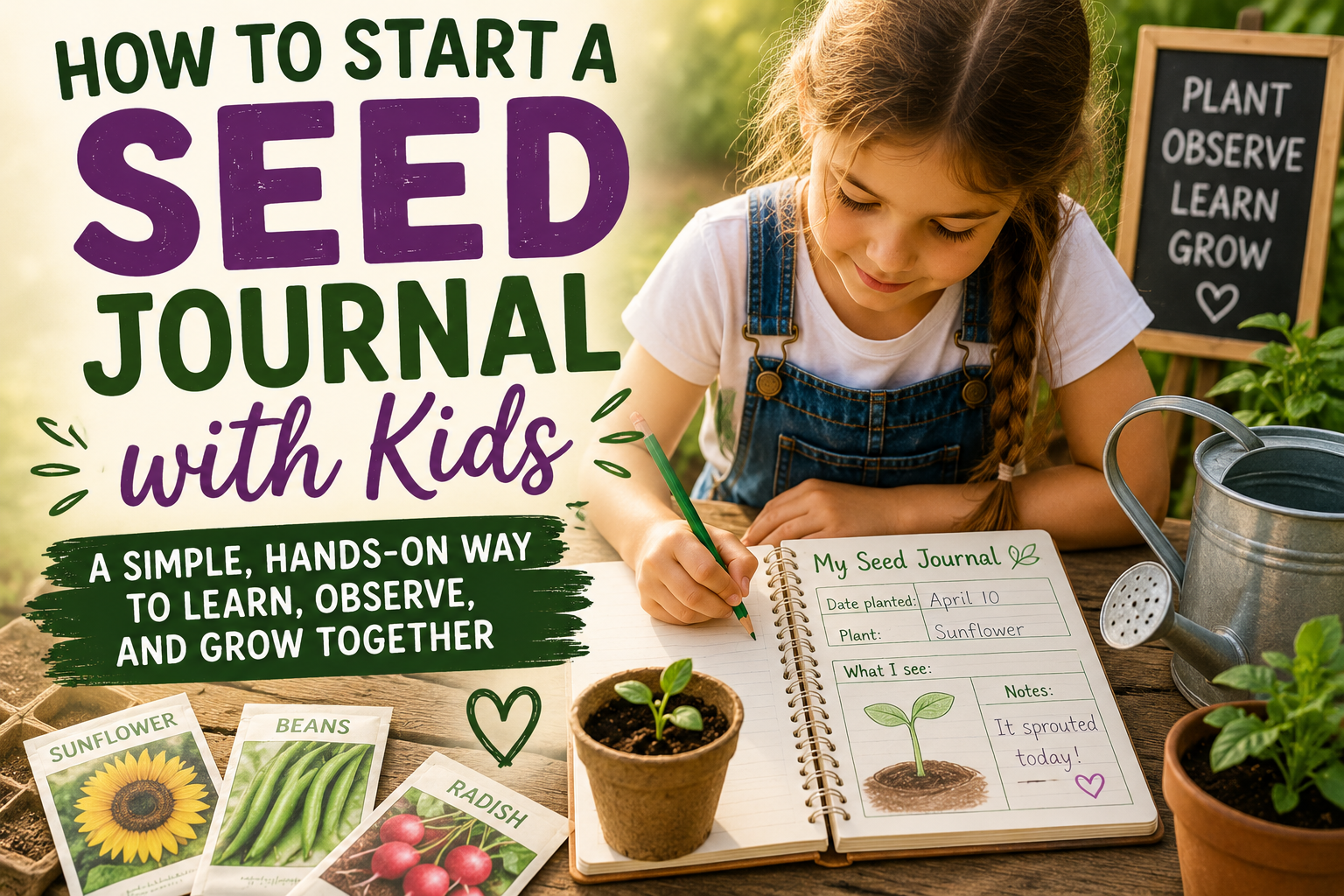
Starting a seed journal with kids is one of the easiest ways to turn gardening into a real hands-on learning activity.
You do not need a fancy homeschool setup, an expensive curriculum, or a perfectly organized garden. You just need a few seeds, a notebook, and a child who is curious enough to ask, “Did it grow yet?”
As a homesteading mom of six, I have learned that some of the best learning happens in the middle of real life. While I do not currently homeschool, I have homeschooled in the past, and I still use our time at home to help my kids learn practical skills.
A seed journal is perfect for that.
Kids get to plant something, watch it change, record what they see, and learn that growth takes time. They can draw pictures, measure sprouts, compare plants, track watering, and notice things they may have missed otherwise.
It is part science lesson, part nature journal, part garden record, and part life skill.
And honestly, it is also just fun.
If you are looking for a simple garden activity for kids, a homeschool science project, or a meaningful way to help your kids connect with nature, starting a seed journal is a great place to begin.
Common Core Standards by Grade Level for a Seed Journal
| Grade | Common Core Skills | How the Seed Journal Activity Fits |
|---|---|---|
| Kindergarten | ELA: W.K.2, W.K.7, W.K.8 Math: K.CC.B.5, K.MD.A.1, K.MD.A.2, K.MD.B.3 | Kids can draw and dictate seed observations, name what they planted, answer simple questions from experience, count seeds or leaves, describe plant size, compare sprouts, and sort seeds by size, shape, or color. |
| 1st Grade | ELA: W.1.2, W.1.7, W.1.8 Math: 1.MD.A.1, 1.MD.A.2, 1.MD.C.4 | Kids can write simple facts about their plant, participate in a shared seed-growing project, answer questions from observation, compare plant heights, measure sprouts with nonstandard units, and organize seed or plant data into simple categories. |
| 2nd Grade | ELA: W.2.2, W.2.7, W.2.8 Math: 2.MD.A.1, 2.MD.D.9, 2.MD.D.10 | Kids can write a short explanation about how their seed grew, record science observations, gather information from seed packets or books, measure plant growth with a ruler, record repeated measurements, and make a bar graph or picture graph. |
| 3rd Grade | ELA: W.3.2, W.3.7, W.3.8, W.3.10 Math: 3.MD.B.3, 3.MD.B.4 | Kids can write a more detailed plant growth report, use plant vocabulary, conduct a short research project, take notes from observations, write routinely over time, create scaled graphs, and make line plots from plant measurements. |
| 4th Grade | ELA: W.4.2, W.4.7, W.4.8, W.4.9, W.4.10 Math: 4.MD.A.1, 4.MD.A.2, 4.MD.B.4 | Kids can write an organized explanatory report with headings, facts, definitions, and domain-specific vocabulary; research seed germination; take notes from print or digital sources; and use plant measurements to create line plots with fractions of an inch. |
| 5th Grade | ELA: W.5.2, W.5.7, W.5.8, W.5.9, W.5.10 Math: 5.MD.A.1, 5.MD.B.2 | Kids can write a polished seed-to-plant report, compare multiple plants, summarize research, use sources, include graphs or illustrations, convert measurements, and make line plots using fractional plant-growth data. |
What Is a Seed Journal?
A seed journal is a notebook where kids track seeds from planting to sprouting and growing.
They can write down what they planted, when they planted it, how often they watered it, when it sprouted, how tall it grew, and what changes they noticed along the way.
For younger kids, a seed journal can be mostly drawings and simple checkboxes.
For older kids, it can include measurements, dates, weather notes, predictions, comparisons, and more detailed observations.
The best part is that a seed journal can be as simple or as detailed as you want it to be.
You can use it for:
- A spring garden project
- A homeschool science lesson
- A nature study activity
- A rainy day kitchen table project
- A summer garden record
- A homestead learning activity
- A simple way to teach responsibility
It works whether you have a big garden, a few raised beds, a container garden, or just a sunny windowsill.
Why Seed Journals Are Great for Kids
A seed journal teaches kids so much more than just how plants grow.
It helps them slow down and observe.
That is a skill kids really need. When they plant a seed, they cannot make it sprout instantly. They have to wait, check, care for it, and notice small changes.
That teaches patience.
They also learn responsibility because seeds need consistent care. If they forget to water them, the plants may struggle. If they overwater them, they may notice problems too.
That teaches cause and effect.
A seed journal also helps kids practice writing, drawing, measuring, counting, comparing, predicting, and asking questions.
Without feeling like a worksheet, they are actually practicing science, math, language arts, and practical life skills.
Supplies You Need to Start a Seed Journal
You do not need much to get started.
Here are some simple supplies you can use:
- A notebook, binder, or stapled paper packet
- Pencil or crayons
- Seed packets
- Small pots, trays, cups, or garden space
- Soil
- Water
- Ruler
- Plant markers
- Optional stickers, colored pencils, or tape
If you want to keep it very simple, use a regular spiral notebook and let your child decorate the cover.
They can write something like:
My Seed Journal
Garden Growing Book
Seed to Plant Journal
My Homestead Garden Notes
You can make it cute, but you do not have to make it complicated.
The goal is not perfection. The goal is observation.
Best Seeds for a Kids’ Seed Journal
Some seeds are easier for kids because they sprout quickly and are simple to observe.
Good seed choices include:
- Beans
- Peas
- Sunflowers
- Radishes
- Lettuce
- Basil
- Zinnias
- Marigolds
- Pumpkins
- Cucumbers
Beans are especially fun because they are large enough for little hands to handle, and kids can clearly see the changes as they sprout.
Sunflowers are another favorite because they grow quickly and feel exciting for kids.
Radishes are great if you want something fast. They sprout quickly and can be harvested sooner than many other garden plants.
You can also let each child choose one seed packet. This gives them ownership over the project and makes them more excited to check on their plant.
Step 1: Let Kids Choose Their Seeds
Start by giving your kids a few seed options.
You can lay out seed packets on the table and talk about what each plant becomes. Show them the pictures, read the names, and ask what they would like to grow.
Younger kids may choose based on the picture.
Older kids may want to think about what your family eats, what grows well in your area, or what would be useful in the garden.
Have them write or draw their seed choice on the first page of their journal.
They can include:
- The name of the plant
- The date they chose the seeds
- A drawing of what they think the plant will look like
- A prediction about how long it will take to sprout
This first page becomes the beginning of their garden story.
Step 2: Look Closely at the Seeds
Before planting, let your kids observe the seeds.
Have them look at the size, shape, color, texture, and pattern.
Ask questions like:
- Are the seeds big or small?
- Are they round, flat, long, or bumpy?
- What color are they?
- Do all the seeds look the same?
- Which seed do you think will sprout first?
- Which plant do you think will grow the tallest?
Then have them draw the seeds in their journal.
For older kids, you can have them compare two or three different types of seeds. They can make a simple chart showing the differences.
This turns a basic planting activity into a real observation lesson.
Step 3: Plant the Seeds
Now it is time to plant.
You can plant seeds in small pots, seed trays, recycled containers, or directly in the garden.
Have your kids help fill the containers with soil, make a small hole, place the seed inside, cover it gently, and water it.
This is also a good time to talk about what seeds need to grow.
Most seeds need:
- Soil
- Water
- Sunlight
- Warmth
- Time
After planting, have your child record the planting date in their seed journal.
They can write:
I planted my sunflower seed today.
Date planted: April 10
I think it will sprout in one week.
You can also have them draw a picture of the pot or garden bed.
Step 4: Make a Seed Journal Tracking Page
A tracking page helps kids remember to check their seeds regularly.
You can keep this very simple.
Here is an example:
Plant name:
Date planted:
Where I planted it:
How often I watered it:
Date it sprouted:
First leaves appeared:
How tall it is now:
What I noticed:
For younger kids, you can use checkboxes instead.
Example:
Today I:
- Watered my seed
- Checked for sprouts
- Drew what I saw
- Measured my plant
- Noticed something new
This makes the journal feel doable instead of overwhelming.
Step 5: Check the Seeds Every Day
Kids love checking their seeds.
Sometimes they will check ten times a day, especially at first.
Encourage them to observe carefully, even when nothing obvious is happening yet.
They can record things like:
- The soil looks dry
- The soil feels damp
- Nothing has sprouted yet
- I see a tiny green stem
- The seedling is leaning toward the window
- The leaves are getting bigger
- One plant is taller than the other
This helps kids understand that science is not just about big discoveries. It is also about noticing small changes over time.
Step 6: Measure Plant Growth
Once the seed sprouts, your kids can start measuring it.
Use a ruler to measure the height of the seedling every few days or once a week.
They can write down the measurement in their journal.
Example:
Week 1: No sprout yet
Week 2: 1 inch tall
Week 3: 3 inches tall
Week 4: 5 inches tall
Older kids can turn this into a simple graph.
This is a great way to sneak in math without making it feel separate from real life.
Step 7: Draw the Plant Each Week
A seed journal does not have to be full of writing.
Drawing is one of the best ways for kids to record what they see.
Have your kids draw the plant once a week.
They can include:
- The seed before planting
- The first sprout
- The first leaves
- A taller seedling
- Roots, if visible
- The plant after transplanting
- Flowers or fruit later in the season
Even if the drawings are simple, they help kids notice details.
They may notice that the first leaves look different from the later leaves. They may notice that one plant is darker green than another. They may notice that a plant grows toward the light.
Those observations matter.
Step 8: Add Weather and Watering Notes
If you want to connect the seed journal to weather tracking, add a small weather section.
Kids can record whether the day was sunny, cloudy, rainy, cold, or warm.
They can also record when they watered the plant.
This helps them understand how weather and plant care affect growth.
For example, they may notice that seedlings dry out faster on warm sunny days. They may notice that outdoor plants grow more after rain.
This turns the seed journal into a bigger garden science project.
Step 9: Compare Different Plants
If your kids plant more than one type of seed, have them compare the plants.
They can compare:
- Which seed sprouted first
- Which plant grew fastest
- Which seedling was tallest
- Which plant had the biggest leaves
- Which plant needed the most water
- Which plant looked strongest
This is especially fun with siblings because each child can grow a different plant and compare results.
You can also plant the same seed in different conditions.
For example:
- One pot in a sunny window
- One pot in partial shade
- One pot with regular watering
- One pot with less water
This helps kids learn about variables in a simple, age-appropriate way.
Step 10: Transplant and Keep Observing
Once seedlings are strong enough, you may transplant them into the garden, raised bed, or larger container.
Have your kids record the transplant date in their seed journal.
They can write where the plant was moved and draw a picture of its new home.
After transplanting, keep the journal going.
Kids can continue to observe the plant as it grows bigger, flowers, or produces food.
If the plant does not survive, that is still a lesson.
Gardening teaches kids that not everything works perfectly the first time. Sometimes seeds fail, plants wilt, bugs eat leaves, or weather causes problems.
That is not a failure. That is part of learning.
Seed Journal Ideas for Younger Kids
For younger kids, keep the seed journal simple and visual.
They can:
- Draw the seed
- Draw the sprout
- Color a sunshine or rain cloud
- Put a sticker on watering days
- Trace the word “seed”
- Circle whether the plant is big or small
- Count the leaves
- Draw what they think will happen next
You can write their observations for them if they are not writing yet.
Ask them what they see and write their words exactly.
That gives them ownership and helps them feel like real little scientists.
Seed Journal Ideas for Older Kids
Older kids can go deeper with the activity.
They can:
- Research germination times
- Measure plant growth
- Create a growth graph
- Compare seed varieties
- Track weather patterns
- Learn plant parts
- Research companion planting
- Calculate days to harvest
- Write a short plant report
- Record problems and solutions
They can also learn vocabulary words like germination, seedling, sprout, root, stem, leaves, transplant, compost, and harvest.
This can easily become a full homeschool science unit.
Questions Kids Can Answer in Their Seed Journal
If your kids get stuck, give them simple prompts.
Here are some seed journal questions:
What did you plant?
What does the seed look like?
How deep did you plant it?
When do you think it will sprout?
What do you notice today?
Did anything change since yesterday?
How tall is your plant?
How many leaves does it have?
What does your plant need today?
What surprised you?
What would you do differently next time?
These questions help kids think more deeply without making the activity feel too formal.
What Kids Learn From a Seed Journal
A seed journal may seem simple, but it teaches a lot.
Kids can learn:
Science: plant life cycles, germination, roots, stems, leaves, sunlight, water, soil, weather
Math: measuring, counting, comparing, graphing, dates, time
Writing: observations, labels, predictions, descriptions
Art: drawing seeds, sprouts, leaves, flowers, and garden layouts
Life Skills: responsibility, patience, consistency, problem-solving
Homestead Skills: gardening, food growing, record keeping, observation
This is why I love activities like this.
They do not feel forced. They fit naturally into everyday homestead life.
Simple Seed Journal Page Ideas
If you want to make your seed journal a little more organized, here are some page ideas:
Seed packet page: Tape or draw the seed packet.
Seed observation page: Draw the seed before planting.
Planting day page: Record the date and location.
Watering tracker: Check off watering days.
Sprout watch page: Write when the first sprout appears.
Weekly drawing page: Draw the plant each week.
Measurement page: Record plant height.
Weather notes page: Track sun, rain, and temperature.
Problem page: Write down bugs, wilting, or slow growth.
Harvest page: Record what the plant produced.
You do not need all of these pages. Pick the ones that fit your kids and your season of life.
Tips for Making Seed Journaling Easier
The key is to keep it simple.
Do not make the journal so complicated that nobody wants to use it.
Here are a few tips:
- Keep the journal near the plants.
- Use short entries.
- Let kids draw instead of writing everything.
- Do not worry about perfect spelling.
- Check plants at the same time each day.
- Let kids take ownership of their plant.
- Celebrate tiny changes.
- Keep going even if a seed fails.
If you have multiple kids, each child can have their own seed journal, or you can make one family garden journal together.
A family journal can work really well if you have younger kids or a busy household.
Final Thoughts
Starting a seed journal with kids is a simple activity, but it can lead to so much learning.
Your kids get to plant something with their own hands, watch it grow, and record the process from seed to sprout to plant.
They learn science, math, writing, art, responsibility, and patience without sitting through a formal lesson.
And for homestead kids, that kind of learning just makes sense.
The garden is already full of lessons. A seed journal simply helps kids slow down enough to notice them.
So grab a notebook, pick a few seeds, and let your kids start observing.
They may think they are just planting beans or sunflowers.
But really, they are learning how to care for something, pay attention, ask questions, and see the value in small daily growth.
Want more ideas? Check out this post, where I outline 50 different homeschooling ideas you can do on the homestead!


Post your Comment About This Product