
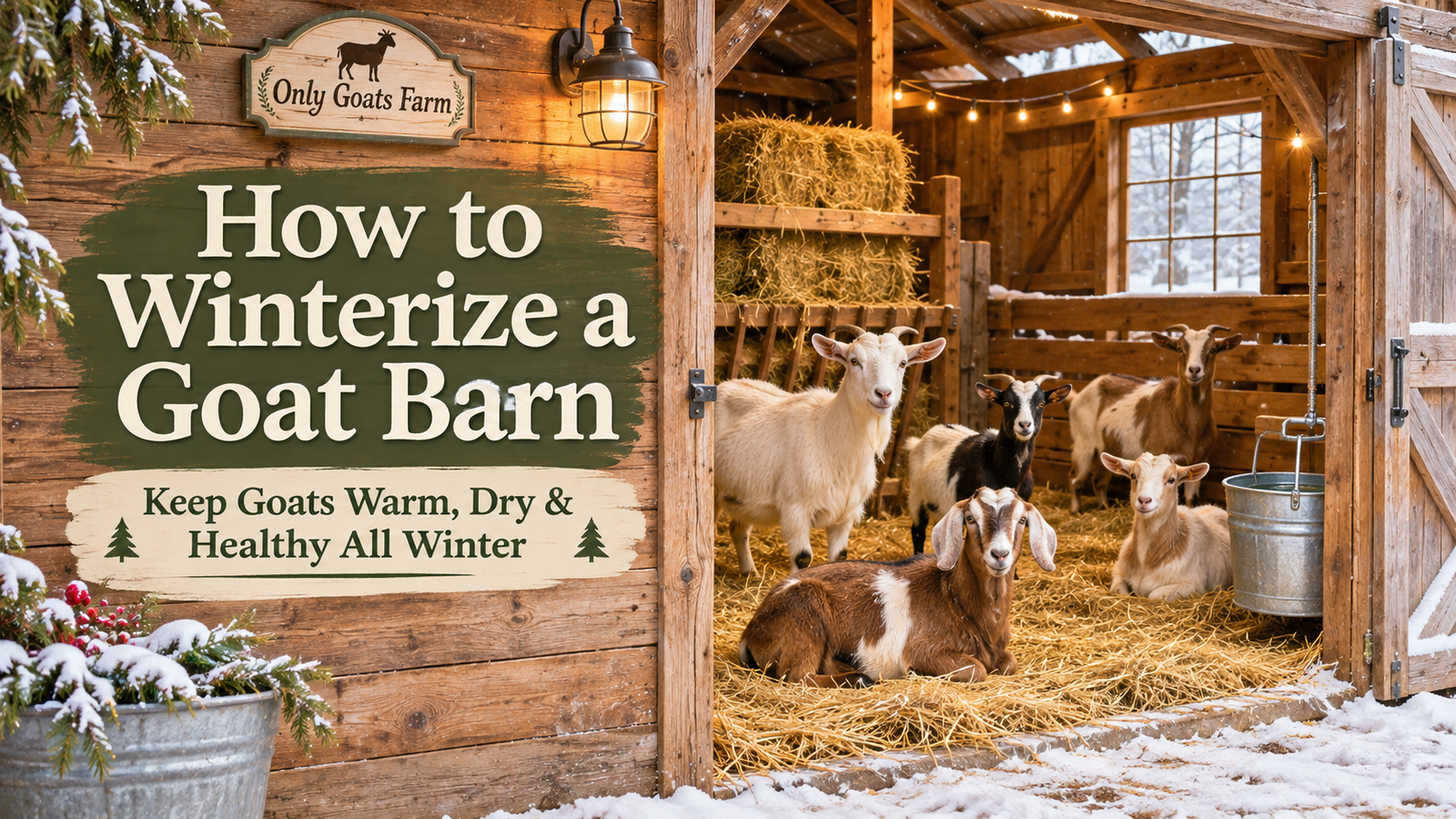
Winterizing a goat barn is one of the most important fall chores for anyone raising goats, especially if you live somewhere with freezing temperatures, heavy snowfall, and long winters.
Here in Western New York, winter can be unpredictable. One day it’s muddy and raining, and the next we’re dealing with freezing temperatures, snow, and icy water buckets. Preparing the goat barn before that weather arrives makes winter chores easier and helps keep the herd healthy.
The good news? Goats don’t necessarily need a heated barn to stay comfortable during winter. Healthy, acclimated adult goats with thick winter coats often handle cold quite well when they have dry bedding, good nutrition, fresh water, and protection from wind and precipitation.
Here are 12 steps to prepare your goat barn before winter arrives.
1. Clean Out the Goat Barn Before Winter
Start with a thorough cleaning. Manure, damp bedding, and wasted hay can build up through the warmer months, making a wet, uncomfortable environment when temperatures drop.
- Remove heavily soiled bedding and manure.
- Scrape down muddy areas and clean corners where moisture collects.
- Inspect flooring for damage and rot.
- Check that water drains away from the barn.
- Let damp areas dry before replacing bedding.
If you use a managed deep-bedding pack, evaluate it now and remove saturated material. Old bedding and manure can be composted appropriately for use in the garden later.
2. Seal Drafts Without Eliminating Ventilation
One of the biggest mistakes in winter goat housing is sealing every crack and opening. Although strong wind blowing straight onto resting goats is a problem, ventilation is important even in cold weather.
A tightly sealed barn can trap humidity, ammonia, dust, and stale air. Repair broken siding, patch large holes at goat level, and use secured windbreaks where needed, but keep the barn’s intended ventilation openings working.
A draft-free barn is not the same as an airtight barn. The goal is to protect goats from direct winter winds while letting moist, stale air escape.
3. Add Plenty of Clean, Dry Bedding
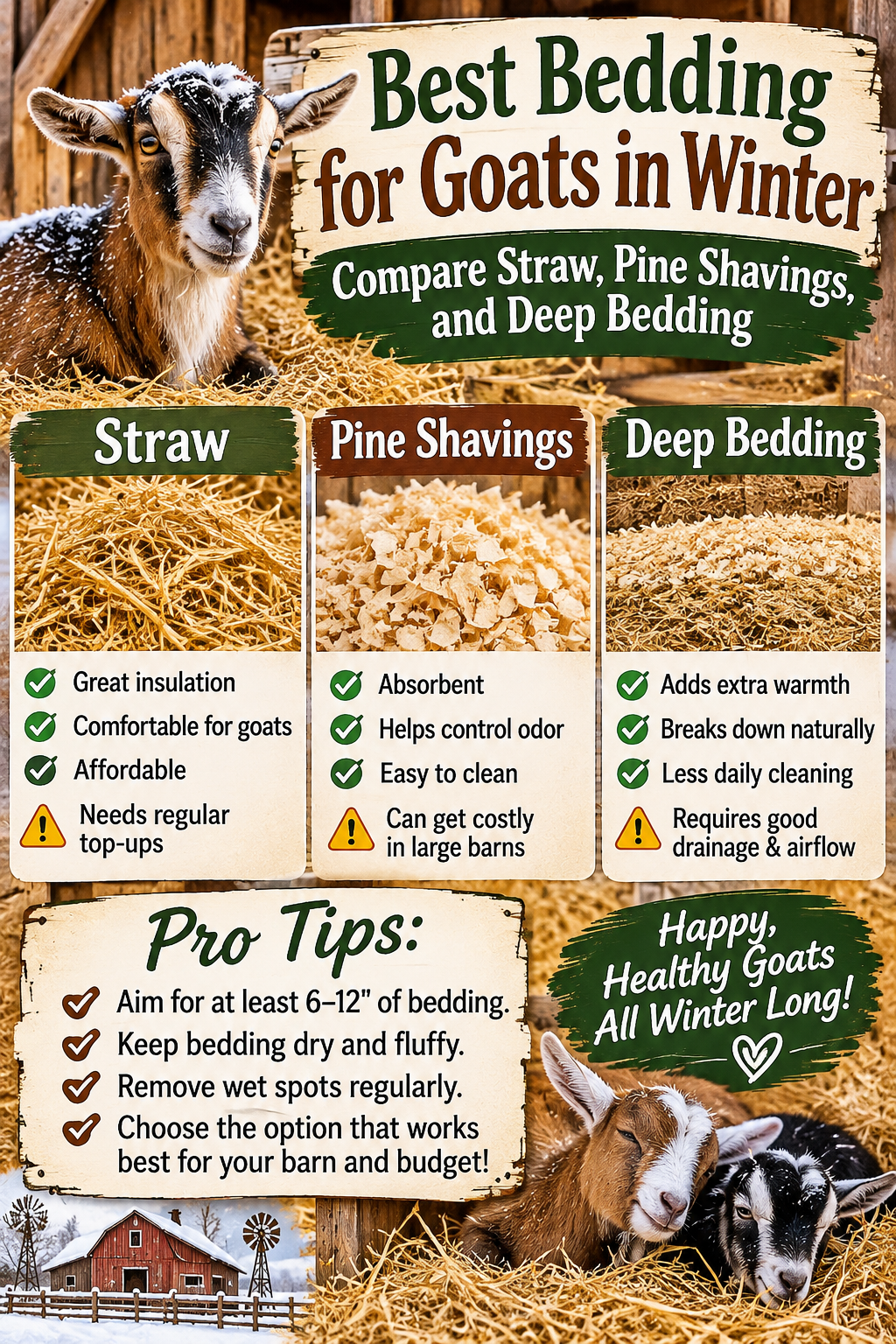
Dry bedding provides insulation from cold ground and a comfortable place to rest. Straw is a popular winter bedding choice because goats can nest into it. Pine shavings and chopped straw can also work, provided they stay dry and are maintained.
Should you use deep litter in a goat barn?
Some homesteaders add fresh dry bedding over a managed pack throughout winter. Properly managed bedding packs can provide insulation, but decomposition should not be relied on as a heating system. If the surface is wet, ammonia is noticeable, or material is saturated, remove it and fix the moisture problem instead of simply adding another layer.
4. Inspect the Roof for Leaks and Snow Damage
A leaking roof defeats the purpose of fresh bedding. Before snow arrives, check for missing roofing panels, loose fasteners, worn flashing, water stains, and sagging sections. Make repairs before winter weather makes them difficult.
Heavy snow can put substantial weight on older sheds and improvised shelters. If you notice structural damage, have the building inspected rather than climbing onto an unsafe roof. Keeping the bedding dry starts with keeping water out.
5. Make a Plan to Keep Goat Water From Freezing
Frozen water is one of the biggest winter homesteading challenges. Goats need regular access to clean, drinkable water, not just an ice-covered bucket.
A livestock-rated heated bucket can help when you have properly installed electricity. Insulated containers can slow freezing, but they still need monitoring. Without electricity, plan frequent water checks and replacements.
On our homestead, one practical method we’ve used is bringing buckets inside to fill them with warm water from the bathtub. We’ve also saved empty milk jugs, filled them with warm water, and carried them out to pour into waterers several times a day. It’s not fancy, but it works as a hands-on routine when you’re managing freezing conditions.
For more strategies, read How to Keep Livestock Water From Freezing Without Electricity.
6. Check Doors, Gates, and Fencing Before Snow Arrives
If you’re repairing goat fencing, compare options in our Ultimate Guide to Fencing Options for Goats.
Winter is a terrible time to find a broken latch or a barn door that won’t close. Inspect hinges, screws, sliding door tracks, fence posts, gates, and closures. Repair escape spots now, especially where snow accumulation could change the effective height of fences.
If you use electric netting, check the charger, connections, and grounding according to the manufacturer’s instructions. Ice, vegetation, and weather can affect fence operation.
7. Make Sure Every Goat Has Enough Space
If you’re evaluating shelter layouts, see our guides to building a three-sided pallet goat shelter and building an A-frame goat shelter.
Goats may huddle together for warmth, but overcrowding increases wet bedding, air-quality problems, and competition at feeders. Every goat needs enough room to lie down comfortably and access food without being constantly displaced.
As a general planning reference, Cornell goat housing guidance discusses approximately 25 square feet per goat when goats are continuously housed inside during winter. Actual space requirements depend on goat size, age, horn status, herd dynamics, and access to an outdoor yard. Ten goats at that planning figure would need around 250 square feet.
8. Prepare Hay Feeders and Winter Feed Storage
For more on planning hay supply and nutrition, read our Winter Goat Feeding Guide.
When pasture growth slows, goats depend more on stored forage. Check hay inventory, repair feeders, and keep bales dry and off damp ground. Make sure timid goats can reach feed and everyone has access to appropriate goat minerals.
Cold weather can increase energy needs, particularly for thin, pregnant, lactating, or vulnerable animals. But do not automatically add large amounts of grain: feed according to forage quality, body condition, and individual needs. Always keep stored grain securely goat-proofed, because accidental grain overload can be life-threatening.
9. Prepare a Safe Winter Kidding Area
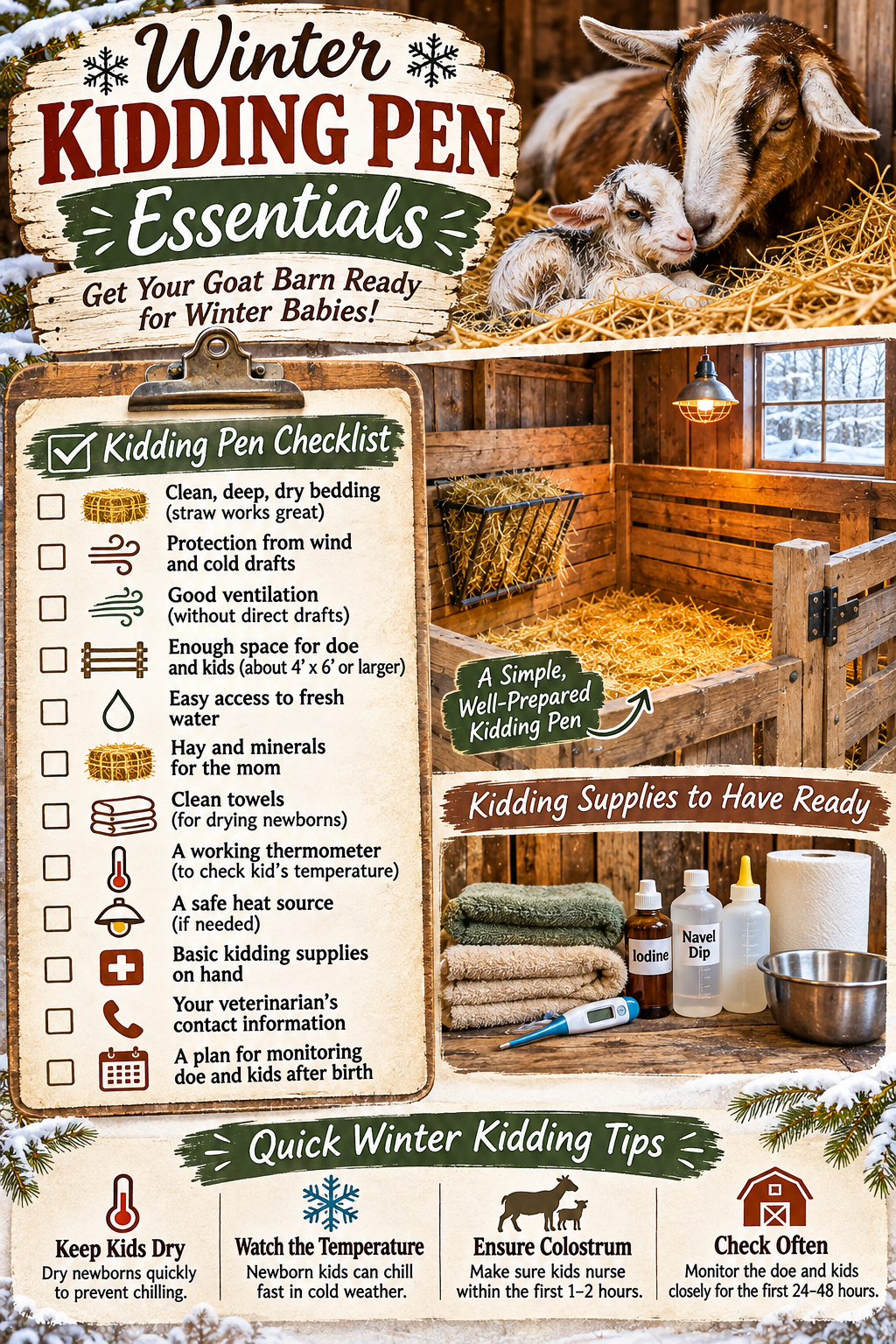
If you’re expecting kids in January, February, or early spring, set up your kidding space ahead of time. Newborns are much more vulnerable to chilling than healthy adult goats.
A winter kidding pen should have clean deep bedding, protection from drafts, working ventilation, adequate room for the doe and kids, a supply of clean towels, and a plan for immediate care if a kid is weak or chilled. Have a thermometer and your veterinarian’s contact information ready.
Do baby goats need heat lamps?
Not every kidding pen needs a heat lamp. Heat lamps can cause serious fires in barns filled with straw, hay, dust, and animals. Prioritize shelter, timely drying, and colostrum. If supplemental warmth is needed, use an appropriate livestock-safe warming setup following its instructions. A weak, cold, or non-nursing newborn needs prompt attention and may require veterinary care.
10. Improve Drainage Around the Goat Barn
Winter mud often begins with poor drainage. Rain, melting snow, and freeze-thaw cycles make entrances slippery and track moisture into bedding. Redirect gutter runoff, fill problem areas using a suitable stable surface, and avoid placing feeders where water pools.
Where mud is chronic, a properly constructed geotextile and compacted aggregate pad can be more effective than simply dumping gravel into the mud. Avoid sharp stones that could injure hooves.
11. Prepare for Power Outages and Winter Storms
For more seasonal planning, see our Winter Homestead Chores Guide and Fall Homestead Checklist.
Heavy snowfall, freezing rain, and power outages can turn ordinary chores into emergencies. Keep extra hay, bedding, spare buckets, safe lighting, a charged phone, basic repair supplies, and a backup water plan on hand.
If you use a generator, operate it outside and far from barn openings to avoid carbon monoxide and fire dangers. Check your emergency supplies before the forecast calls for a storm.
A safe barn is only one part of winter health. For a complete guide to hydration, feeding, hoof care, respiratory warning signs, and winter kidding, read our 12 essential tips for keeping goats healthy in winter.
12. Create a Daily Winter Goat Barn Routine
For more ways to structure your farm schedule, check out How to Organize Your Homestead When There’s Never Enough Time.
Once the barn is ready, consistent maintenance keeps it working. A predictable routine makes a big difference when it’s dark, snowy, and everything is frozen.
Daily winter goat care checklist
- Check each goat’s behavior, appetite, and condition.
- Provide fresh, unfrozen water.
- Refill hay and check mineral supplies.
- Remove wet bedding and inspect sleeping spots.
- Check ventilation and condensation.
- Inspect gates and fencing.
- Confirm every goat has dry shelter.
- Monitor pregnant does and vulnerable goats more closely.
- Make walkways and entrances safe from ice.
Weekly winter barn maintenance
- Refresh bedding and remove accumulated wet material.
- Check hay inventory and feed storage.
- Inspect buckets and watering equipment.
- Check roof condition from a safe location.
- Review supplies before the next winter storm.
For a broader farm routine, see our Homestead Chore Checklist: Daily, Weekly, Monthly, and Seasonal Tasks.
Common Goat Barn Winterizing Mistakes to Avoid
- Sealing the barn completely: You still need ventilation.
- Letting bedding stay wet: Dry resting areas matter more than thick damp bedding.
- Assuming all goats tolerate cold equally: Kids, sick goats, thin goats, and older animals may need additional protection.
- Using unsafe heaters: Keep fire risks out of barns full of bedding and hay.
- Forgetting about water: Check water even during storms.
- Waiting for the first snowfall: Do repairs while the weather is still manageable.
Frequently Asked Questions About Winterizing a Goat Barn
How cold is too cold for goats?
There is no single temperature for every goat. Breed, acclimation, coat, age, health, wind, moisture, and shelter all matter. Healthy adults with winter coats often tolerate below-freezing weather well if they remain dry and protected. Persistent shivering, weakness, reduced activity, or refusal to eat should be investigated promptly.
Do goats need an insulated barn in winter?
Not necessarily. Many goats thrive in unheated shelters with sound roofs, dry bedding, wind protection, and adequate ventilation.
Should you close goat barn doors at night?
It depends on weather and shelter design. Closing an exposed door may keep out blowing snow, but ventilation must remain adequate.
Is straw or hay better for goat bedding?
Straw is generally preferable for bedding, while hay is best reserved for feeding. Whichever material you use, keep it clean and dry.
Can goats sleep outside in winter?
Goats sometimes choose to spend time outside on calm, dry days. They should still have access to suitable shelter from wind, snow, rain, and other dangerous conditions.
Printable Goat Barn Winterization Checklist
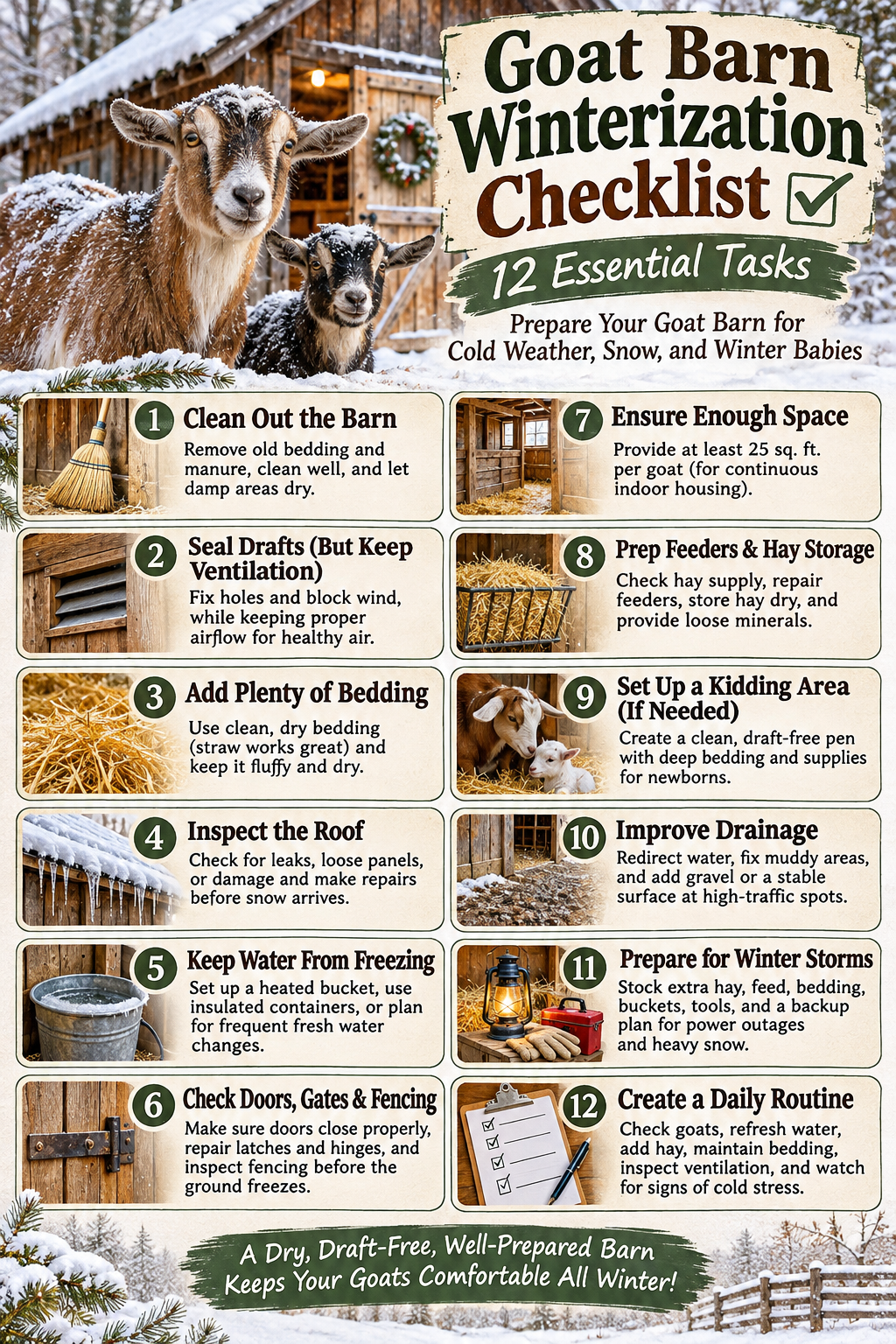
- ☐ Clean out wet bedding and manure.
- ☐ Inspect the roof for leaks.
- ☐ Fix drafts at goat level.
- ☐ Maintain proper ventilation.
- ☐ Add clean, dry bedding.
- ☐ Prepare a winter water system.
- ☐ Inspect gates, latches, and fences.
- ☐ Check hay and feed storage.
- ☐ Set up a kidding pen if needed.
- ☐ Fix drainage around entrances.
- ☐ Stock winter storm supplies.
- ☐ Create a daily winter chore routine.
Final Thoughts: A Warm Goat Barn Starts With Preparation
Winterizing a goat barn doesn’t have to involve expensive heaters, major renovations, or elaborate equipment. For most healthy adult goats, the basics are simple: a dry place to sleep, protection from harsh wind, fresh air, reliable water, and enough good-quality feed.
Here at Only Goats Farm, winter preparation is about making daily chores manageable while keeping animals comfortable. When you’re carrying buckets through snow and checking the herd during a January storm, you’ll be glad you prepared early.
The goal isn’t necessarily to make your goat barn warm. It’s to make it dry, safe, well-ventilated, and ready for winter.
What are your biggest challenges winterizing your goat barn? Do you use deep bedding, heated water buckets, or another method? Share your experiences in the comments!


Post your Comment About This Product