
Homesteading has a way of filling every minute. You head outside to water the goats, notice a loose fence, remember that the feed supply is low, and suddenly the morning is gone. You were working the whole time, yet the to-do list still looks untouched.
In a recent Only Goats Farm livestream, I talked with Kelsey Gascon—a professional trick rider, business owner, homeschooling mom, and homesteader—about the index-card system she uses to manage livestock, family responsibilities, and a busy business. She even described juggling customer-support emails while handling livestock that had torn down fencing. Her approach is a practical starting point for people who want to organize farm life without spending the entire day planning it.
Why Homestead To-Do Lists Never Seem to End
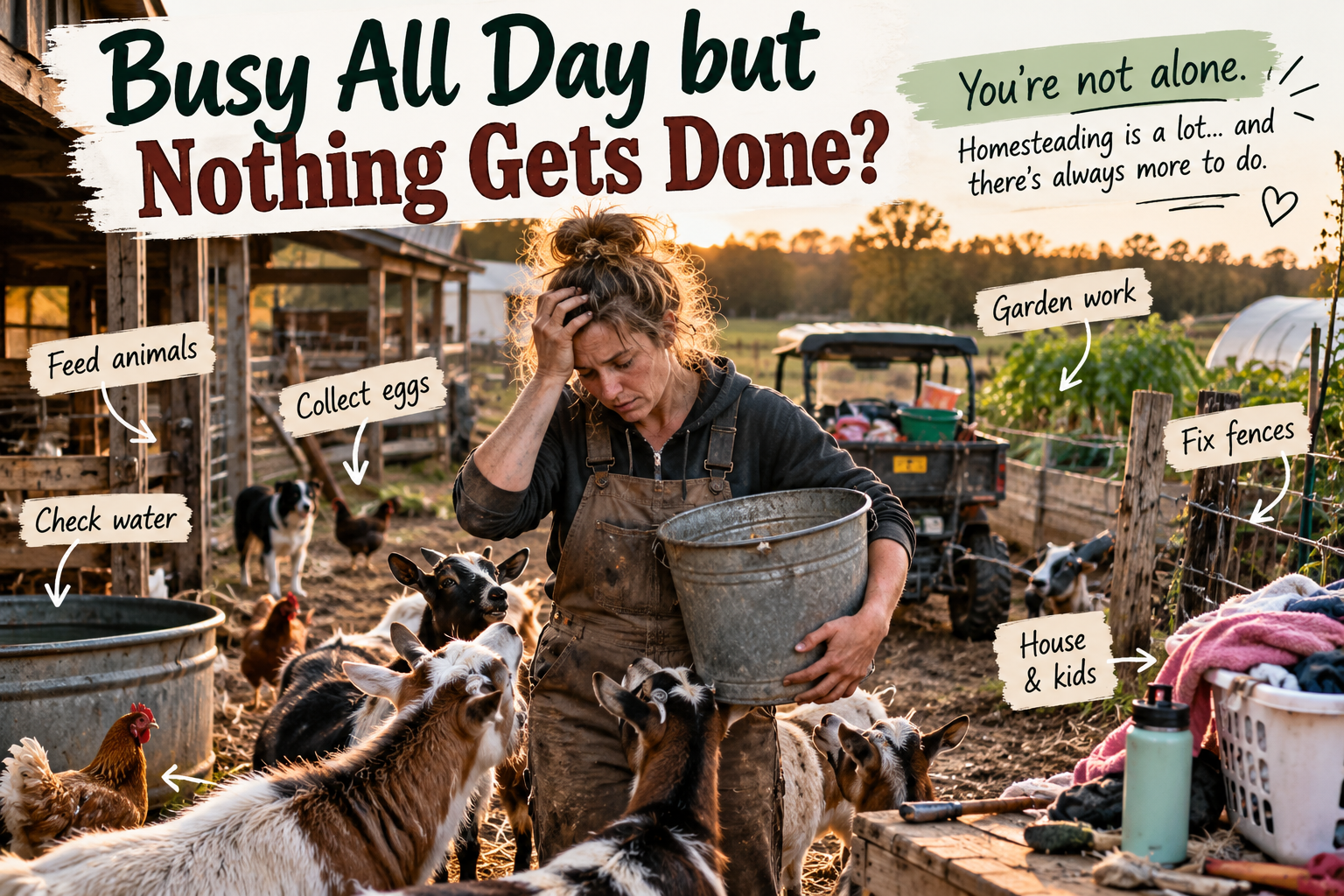
Feeding, watering, animal welfare checks, cleaning, fences, gardens, food preservation, and family responsibilities are not one neat project. Many of these chores repeat, while others are unexpected. Kelsey described a “distraction detour”: you start filling a water tank, go to feed animals, notice the fence line needs trimming, get sidetracked, and suddenly remember the water. It is funny because it is familiar—but overflowing tanks are a reminder to remain nearby or use a reliable shutoff.
Another problem is treating a huge project like one item. “Build a new goat shelter” is not one chore. It has planning, measurements, supplies, construction, and safety checks. A to-do list works better when its items are actions you can actually finish.
What Is the Index-Card Method?
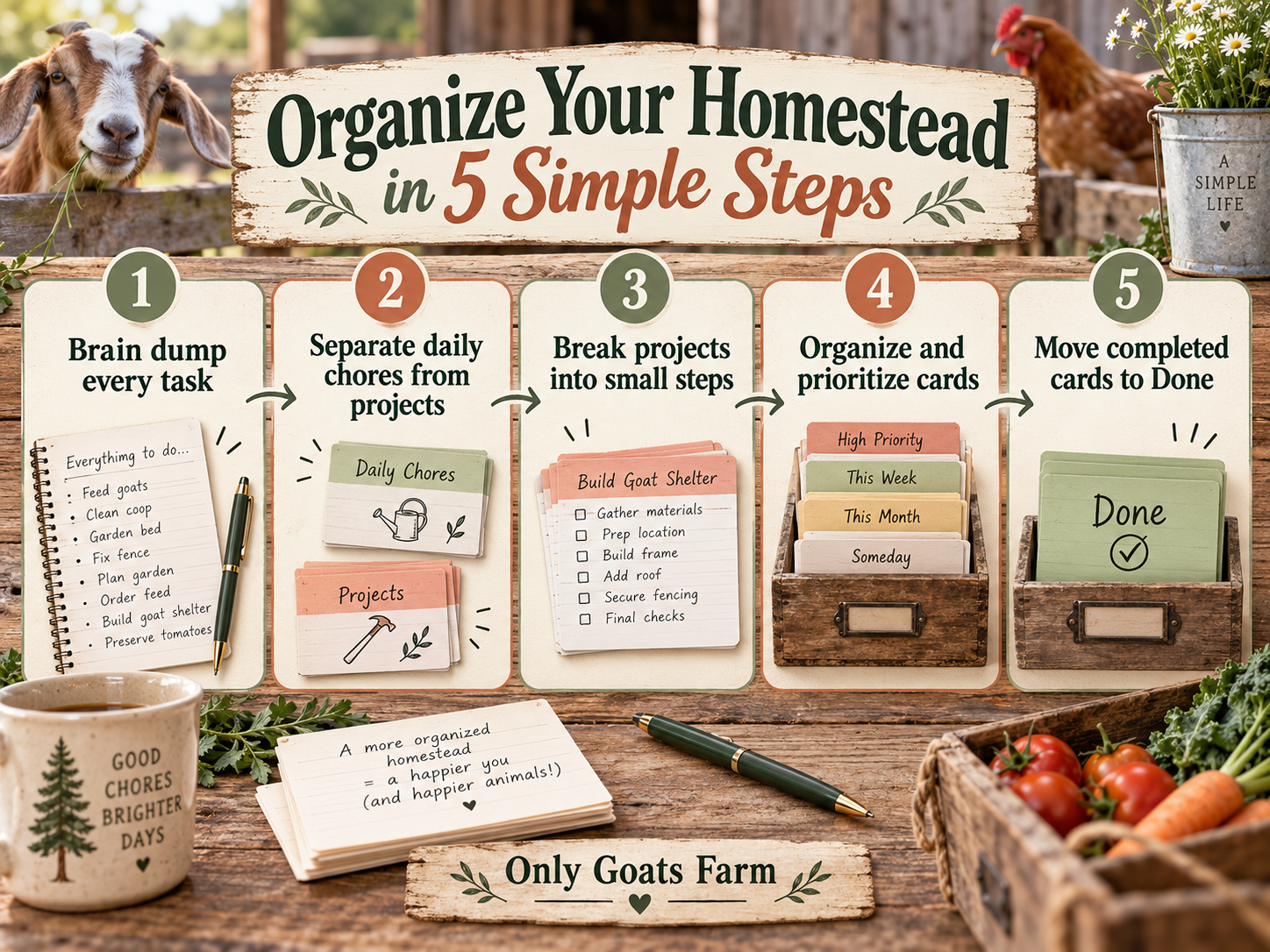
Kelsey uses 3-by-5 index cards to capture tasks, sort them into categories, schedule them, and move completed cards to a done pile. She uses different colors for categories and reusable cards for tasks that repeat. Green, for example, represents her farm. The aim is to stop carrying every commitment in your head while making your accomplishments visible. You can try her approach through the free 5-Day Index Card Challenge (referral link).
For more about Kelsey’s approach, you can visit the Index Card Challenge website.
Step 1: Brain Dump All Your Homestead Responsibilities
Write down everything you are thinking about, without worrying yet about priority. You might list feeding goats, checking water, collecting eggs, ordering hay, repairing a gate, cleaning rabbit cages, harvesting vegetables, preparing for winter, answering goatscaping inquiries, and managing family errands. Capture big goals too, even if you do not plan to start them this week.
Afterward, separate your list into non-negotiable animal care, recurring chores, one-time jobs, and larger projects. If preparing the goat barn is one of those projects, use my goat barn winterization checklist to break it into manageable tasks.
Step 2: Keep Animal Care Non-Negotiable
A productivity system should support essential livestock routines, not replace them. Animals must receive appropriate feed, clean water, monitoring, and any necessary treatment on schedule. Keep a reliable care checklist and backup reminders for time-sensitive responsibilities. Optional projects can move; urgent animal welfare needs cannot. If you’re starting with goats, my goats for beginners guide covers the broader responsibilities of keeping a herd.
Step 3: Create Recurring Chore Cards
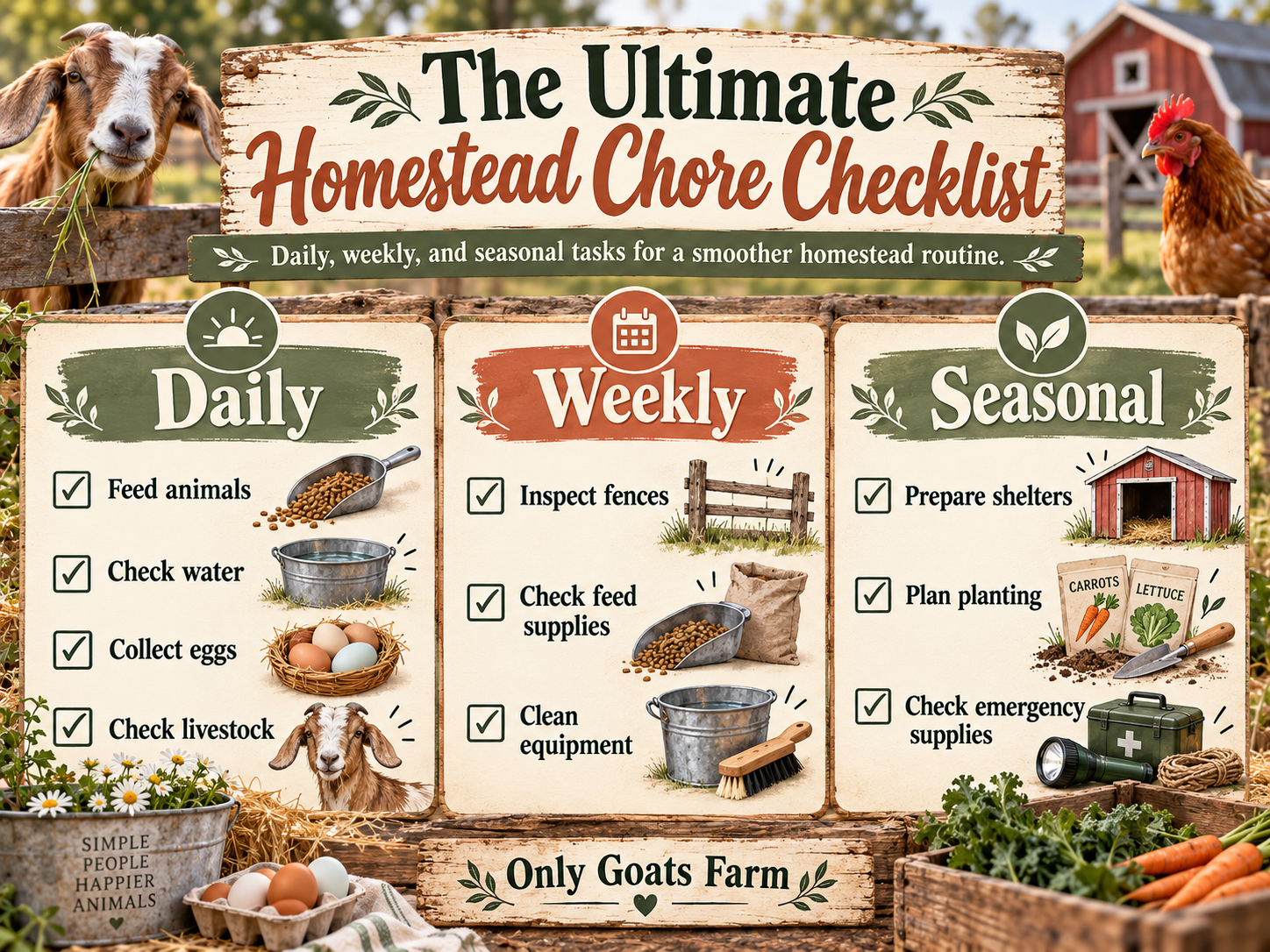
Rather than rewriting the same jobs every morning, create reusable cards suited to your own animals and season.
- Daily: Check animals, feed and water, assess shelters and gates, collect eggs where applicable, and record unusual observations.
- Weekly: Review supplies, maintain equipment and pens, inspect fencing, and look ahead at appointments and seasonal needs.
- Seasonal: Prepare shelters and water systems for changing weather, plan breeding or planting schedules, and check emergency supplies.
For seasonal planning ideas, see my Fall Homestead Checklist, Winter Homestead Chores, and Winter Livestock Emergency Kit.
Step 4: Break Big Farm Projects Into Small Actions
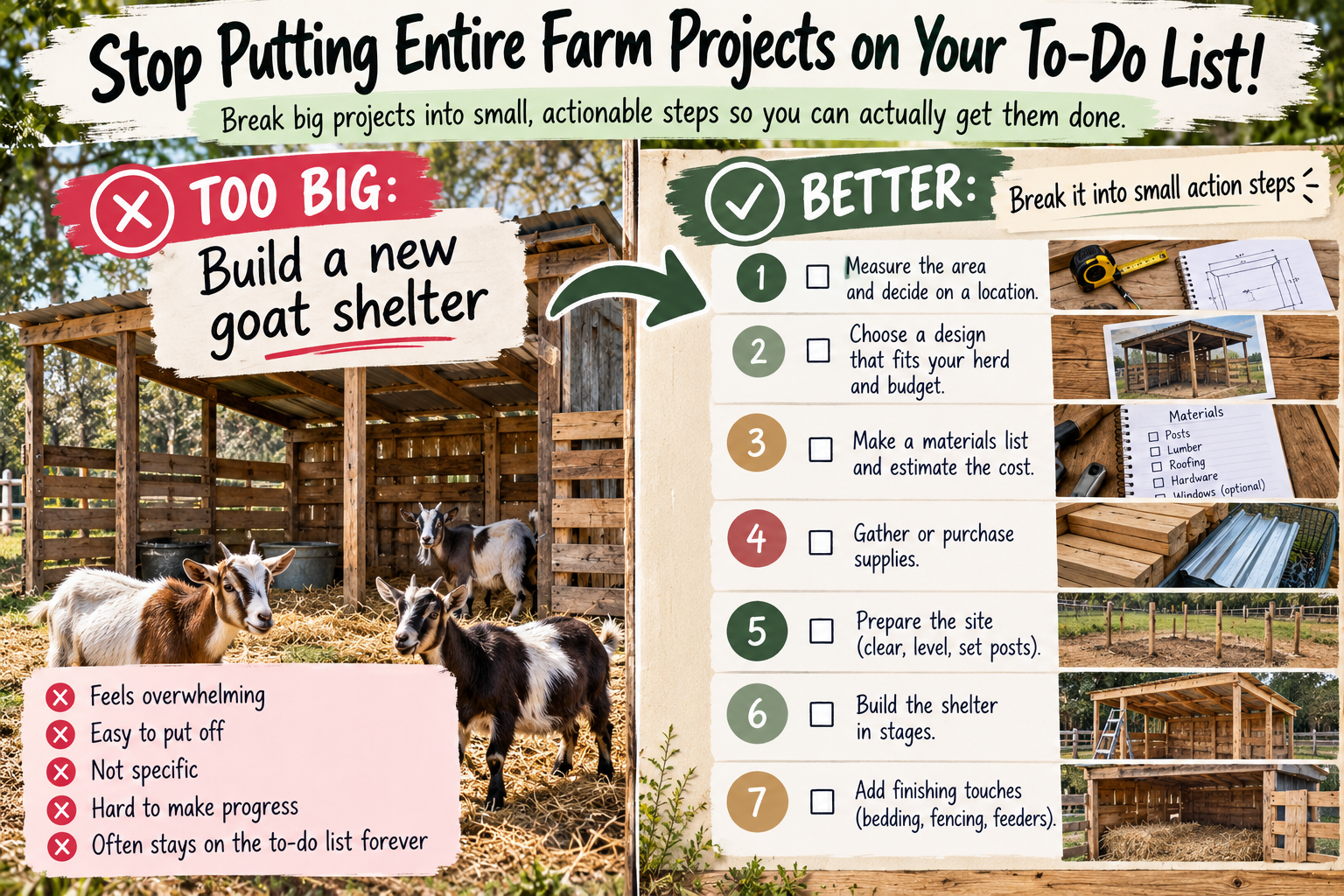
Instead of one card labeled “Build goat shelter,” create separate cards: measure the site; choose a design; check requirements; make a materials list; buy supplies; prepare the area; complete one construction stage; and inspect the finished shelter for hazards before animals use it.
For practical project ideas, browse my guides to building a pallet A-frame goat shelter and building a three-sided pallet goat shelter.
Step 5: Organize Cards by Category
Kelsey’s categories span different areas of her life. A homestead-friendly set might use green for livestock, yellow for gardening and preservation, blue for farm business, pink for household and family, and purple for personal projects. Those are suggested colors rather than official rules. The categories let you see whether one part of your life is absorbing all your available time.
Step 6: Sort Today, This Week, Later, and Done
Start with a few dividers: Inbox, Today, This Week, Later, and Done. Each day, choose a manageable number of flexible tasks after accounting for animal care and fixed appointments. Review the Later cards once a week so good ideas do not disappear forever. Kelsey also emphasizes counting unexpected completed tasks: if you spent two hours dealing with a broken fence, that was real work, even if it was not on the original list.
What an Organized Homestead Day Could Look Like
| Part of day | Non-negotiable focus | Possible action card |
|---|---|---|
| Morning | Livestock care and safety checks | List feed supplies to restock |
| Late morning | Family and scheduled work | Order fence repair materials |
| Afternoon | Animal monitoring and necessary chores | Repair one gate section |
| Evening | Livestock care and final checks | Move finished cards to Done |
| Weekly review | Review upcoming needs | Select next week’s farm projects |
This is only an example. Animal care frequency depends on species, health, weather, and housing; the card system organizes the flexible work around those needs.
Don’t Forget Farm-Business Tasks
Goatscaping estimates, event inquiries, invoices, equipment checks, and blog posts are part of running a working homestead. Write specific cards such as “reply to one customer,” “send one invoice,” or “check fencing supplies for Saturday’s job.” You can also plan ahead for seasonal earnings with my article on how farmers make money in winter.
Share Chores Without Losing Track
Visible task cards can help family members understand what needs doing and what is finished. Assign age-appropriate jobs, with supervision around livestock, tools, machinery, and electric fencing. “Put clean egg cartons in the packing area” is clearer than “help with the farm.”
What Happens When Farm Life Interrupts the Plan?
Sometimes an animal gets sick, a fence breaks, or weather changes everything. Handle urgent welfare and safety needs first. Then return to the cards, move optional tasks to another day, and give yourself credit for the work you did. A useful system should make your day more manageable, not create another reason to feel behind.
Try It in 20 Minutes
- Spend five minutes writing down your responsibilities.
- Separate recurring animal care from flexible projects.
- Break one large project into individual action cards.
- Create simple Today, This Week, Later, and Done sections.
This is my quick homestead adaptation of the ideas from Kelsey’s interview, not a prescribed timetable from her challenge.
Watch My Conversation With Kelsey Gascon
Watch our conversation about going from overwhelmed to organized, including how Kelsey uses index cards for her business, family, and farm responsibilities.
More on Getting Organized: Watch This Video
Final Thoughts
A homestead doesn’t need a perfect planner. It needs dependable animal care routines, manageable next steps for bigger projects, and a place for the ideas that never seem to fit into today’s schedule. Some days, caring for your animals and family is the accomplishment. Other days, you get to build something new. Both count.
What is one homestead project you could turn into three smaller action cards this week?
Join the FREE 5-Day Index Card Challenge
Try the organization system Kelsey shared and start turning your homestead to-do list into manageable action steps.
Referral link: Only Goats Farm may benefit from qualifying signups.

Post your Comment About This Product